Source Memory Foam Bed Pillow for Hotel, Massage, Neck
Explore 30 listings of Memory Foam Bed Pillow options from Dongguan suppliers. Buyers can compare features like cold resistance, customization, and packing details across various models to find suitable solutions for hotel, massage, and neck support applications.
Key considerations
Products List






Comprehensive Sourcing Guide
Strategic Sourcing Guide for Memory Foam Bed Pillows
Understanding Product Specifications and Material Composition
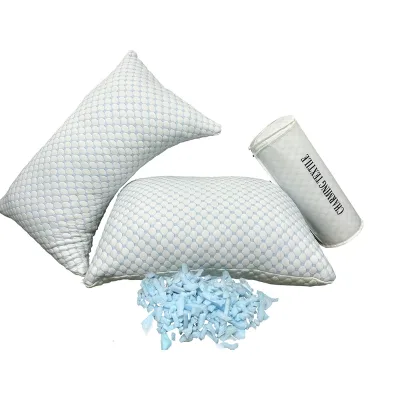
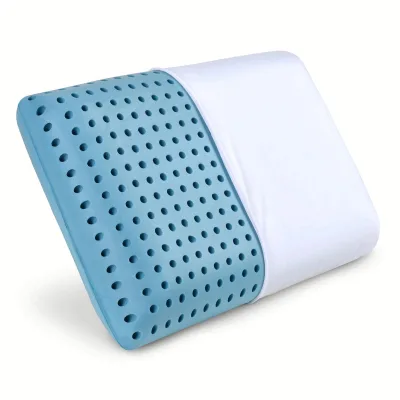
When sourcing memory foam bed pillows, the primary objective is to align product specifications with the intended end-use application, whether for hospitality, personal wellness, or specialized therapeutic needs. The market offers a diverse array of configurations, but the core material composition remains a critical differentiator. Based on available industry data, the most prevalent material used in these products is Polyurethane (PU), often combined with Memory Foam as the primary filling to ensure the characteristic contouring and pressure-relieving properties. However, buyers must also account for variations where 100% Polyester is utilized, particularly in cases where the product serves a dual purpose as a decorative or woven item rather than a pure therapeutic cushion.
The physical dimensions of the pillow are equally significant, as they dictate compatibility with bedding sets and ergonomic requirements. Standardized dimensions observed in the market include specific measurements such as 6035119cm, 661512cm, and 6038*14cm. These figures represent length, width, and height, often varying based on the specific model, such as ASD08, JTY135, or JK27#. It is essential to note that while some models adhere to fixed standard sizes, others offer fully customized dimensions, allowing buyers to tailor the product to specific brand requirements or unique ergonomic designs. The shape of the pillow also varies, with Oblong and Rectangle being the most common forms, influencing the sleeping experience and the specific body part targeted, primarily the head and neck.
The construction technique further defines the product's quality and durability. Sourcing options range from Woven techniques to Handmade production methods. The Woven approach often implies a specific texture and structural integrity suitable for high-volume manufacturing, whereas Handmade techniques may suggest a higher level of artisanal attention to detail, potentially commanding a different price point or perceived value. Additionally, the product features often include attributes like Cold-resistant, Heat-resistant, Impact-resistant, and Wear-resistant properties, which are crucial for ensuring longevity in various environmental conditions. Some advanced models may also incorporate features such as Anti-Static, Magnetic, Inflatable, Musical, or Therapy capabilities, though these should be verified against specific supplier capabilities rather than assumed as standard across all inventory.
Compliance, Certification, and Safety Standards
Navigating the regulatory landscape is a fundamental aspect of B2B procurement, particularly for products intended for direct consumer contact like pillows. The supply chain for memory foam bed pillows often operates under a framework of international certifications that validate safety and environmental compliance. High-confidence data indicates that many suppliers in this sector provide products certified under CE, ISO, and RoHS standards. These certifications are not merely marketing terms but represent adherence to specific safety, quality management, and restriction of hazardous substances protocols.
The CE marking signifies conformity with health, safety, and environmental protection standards for products sold within the European Economic Area. ISO certification, typically referring to ISO 9001 for quality management or ISO 14001 for environmental management, ensures that the manufacturing process meets rigorous international benchmarks. RoHS compliance is particularly relevant for electronic or hybrid components, though in the context of foam pillows, it often relates to the chemical composition of the materials used, ensuring that heavy metals and other hazardous substances are kept within permissible limits.
Buyers must also consider the "standard" attribute of the product, which can range from fixed specifications to fully customized standards. While some background knowledge suggests the existence of Oeko-Tex standards for textile safety, this should not be treated as a guaranteed fact for every listed product. Instead, procurement teams should explicitly request and verify Oeko-Tex certification or similar textile safety standards from the supplier during the due diligence phase. The absence of a specific certification in a product listing should not be interpreted as a failure of quality, but rather as a need for direct confirmation. Furthermore, the origin of the products, frequently cited as Dongguan, Guangdong, or generally China, implies a specific manufacturing ecosystem that buyers should understand in the context of local and international trade regulations.
Cost Drivers and Pricing Dynamics
The pricing structure for memory foam bed pillows is influenced by a complex interplay of material costs, customization levels, and order volumes. The observed price range in the market spans from $1.56 to $20.00 USD, a significant variance that reflects differences in quality, complexity, and order size. Several key factors drive these costs. First, the material composition is a primary driver; PU and Memory Foam generally carry different cost bases compared to 100% Polyester, and the density of the foam directly impacts the final price. Second, the level of customization plays a substantial role. Products that are "Customized" in terms of dimensions, color (White or Customized, Blue or Customized), or specific features like magnetic or anti-static properties will inherently cost more than standard off-the-shelf items.
The Minimum Order Quantity (MOQ) is another critical cost determinant. The market data shows an MOQ range from 1 to 1000 units, with specific models often requiring orders of 100 or 200 pieces. Suppliers typically offer tiered pricing structures where the unit cost decreases as the order volume increases. For buyers with smaller requirements, the unit price may be at the higher end of the observed range, while large-scale procurement can leverage economies of scale to access the lower price points. Additionally, the packaging method, often specified as "Carton Packing" or "Carton Packages," adds to the overall cost, especially if custom branding or specialized protective packaging is required.
Currency fluctuations and the "Us$" designation used in pricing also introduce variability. Buyers should be aware that while prices are listed in USD, the final transaction value may be subject to exchange rate changes or additional logistics costs depending on the supplier's location. The "After-Sales Service" offering, such as "Online Technical Support," can also influence the perceived value and cost structure, as it represents an added layer of service that may be factored into the pricing model. Understanding these drivers allows buyers to negotiate more effectively and align their budget with their specific volume and quality requirements.
Typical Applications and Usage Scenarios
Memory foam bed pillows serve a wide array of applications, extending beyond simple bedroom use to specialized commercial and therapeutic environments. The primary usage categories identified include Bedding, Massage, Neck support, and Hotel accommodations. In the hospitality sector, the demand for high-quality pillows is driven by the need to enhance guest comfort and satisfaction. The "Hotel" usage tag indicates that these products are suitable for bulk procurement by lodging establishments seeking to upgrade their room amenities. The "Bedding" application suggests integration into broader bedding sets, where the pillow's shape and material must complement other linens.
Therapeutic and wellness applications are also prominent, with specific features like "Massage," "Therapy," and "Healthy Deep Sleep" or "Healthy Sleep" functions highlighting the product's role in promoting well-being. The "Neck" and "Head" body part specifications confirm that these pillows are designed to provide ergonomic support, which is essential for individuals suffering from neck pain or those seeking improved sleep quality. The "Decorative" usage category adds another dimension, where the pillow serves an aesthetic purpose in addition to its functional role, often utilizing specific colors or styles like "Plain" to match interior design themes.
The versatility of these products is further enhanced by their adaptability to different age groups, with "Adults" being the primary target demographic. The "Style" attribute, often described as "Plain," suggests a minimalist design that appeals to a broad market, though customization options allow for more elaborate designs. The "Function" of promoting healthy sleep is a key selling point, and buyers should verify that the specific product features, such as the memory foam filling and shape, effectively deliver on this promise. Whether for a hotel chain, a wellness center, or a direct-to-consumer brand, the application dictates the required specifications, from durability to comfort levels.
Supplier Evaluation and Operational Capabilities
Selecting the right supplier requires a thorough evaluation of their operational capabilities, including manufacturing capacity, customization support, and logistical reliability. A key indicator of a supplier's flexibility is their support for OEM (Original Equipment Manufacturer) and ODM (Original Design Manufacturer) services. The data confirms that many suppliers offer "OEM: Yes" and "OEM&ODM: Support," indicating a willingness to produce products under the buyer's brand or to co-develop new designs. This is crucial for brands looking to differentiate their offerings in a competitive market.
The customization options available, such as "Customized" colors, dimensions, and standards, are vital for buyers with specific brand requirements. Suppliers that offer "Customized" as a standard attribute demonstrate a high level of adaptability. Additionally, the "After-Sales Service" provided, such as "Online Technical Support," is a significant factor in the long-term relationship between buyer and supplier. It ensures that any issues regarding product performance or usage can be addressed promptly.
Logistical considerations, such as the "prod_packing" method, also play a role in supplier selection. The standard "Carton Packing" or "Carton Packages" ensures that products are protected during transit, but buyers should verify if the packaging can be customized to meet specific retail or shipping requirements. The "prod_origin" location, frequently cited as Dongguan, Guangdong, or China, provides insight into the supply chain geography. Buyers should assess the proximity of the supplier to major ports and their experience in international shipping to ensure timely delivery.
Quality Control and Long-Term Procurement Strategy
Ensuring consistent quality is paramount in the procurement of memory foam bed pillows. Buyers should implement a robust quality control (QC) process that covers material verification, dimensional accuracy, and functional testing. The "Feature" attributes, such as "Memory," "Massage," "Anti-Static," and "Wear-resistant," should be validated through sample testing to ensure they meet the claimed specifications. The "Technics" used, whether "Woven" or "Handmade," should be inspected to confirm that the construction meets durability standards.
Long-term procurement strategies should focus on building a sustainable relationship with suppliers who can consistently deliver high-quality products. This involves establishing clear communication channels for quality feedback and maintaining a buffer stock to mitigate supply chain disruptions. The "MOQ" requirements, ranging from 1 to 1000 pieces, should be factored into inventory planning to optimize cash flow while ensuring product availability. Buyers should also consider the "Lead Time" and "Production Capacity" of the supplier, although specific data on these metrics should be requested directly rather than assumed.
Finally, buyers should remain vigilant regarding changes in standards and certifications. While current data highlights CE, ISO, and RoHS, the regulatory landscape is dynamic. Regular audits and re-verification of supplier certifications are necessary to maintain compliance. By focusing on these strategic elements, buyers can secure a reliable supply of high-quality memory foam bed pillows that meet both current market demands and future growth objectives.
Comparative Analysis of Product Attributes
To facilitate decision-making, the following table summarizes key product attributes observed in the market, highlighting the variations available to buyers.
| Attribute Category | Standard/Observed Values | Customization Options | Notes for Buyers |
|---|---|---|---|
| Material | PU, 100% Polyester | Available | Verify density and foam quality for comfort. |
| Filling | Memory Foam | Available | Essential for pressure relief and contouring. |
| Dimensions | 6035119cm, 661512cm, 6038*14cm | Fully Customized | Match to specific bedding or ergonomic needs. |
| Shape | Oblong, Rectangle | Available | Affects sleeping posture and support. |
| Color | White, Blue | Customized | Align with brand identity or interior design. |
| Certification | CE, ISO, RoHS | Verify per batch | Confirm current validity for target markets. |
| MOQ | 100, 200, 1-1000 | Negotiable | Higher volumes typically reduce unit cost. |
| Packing | Carton Packing | Customizable | Ensure protection during shipping. |
| Origin | Dongguan, Guangdong, China | N/A | Consider logistics and trade regulations. |
| Features | Memory, Massage, Anti-Static, etc. | Available | Validate specific functional claims. |
This comparative overview underscores the importance of detailed specification checks. While standard attributes provide a baseline, the ability to customize is a significant advantage for buyers seeking to differentiate their products. By carefully evaluating these attributes against their specific requirements, buyers can make informed decisions that balance cost, quality, and functionality.
FAQs
What certifications do memory foam bed pillows typically have?
Many products carry CE, ISO, and RoHS certifications. These standards ensure safety and quality compliance for international markets, though specific items must be verified individually.
Which materials are used for memory foam bed pillows?
The primary materials include PU and Memory Foam for filling. Some variations utilize 100% Polyester, often for decorative or woven applications rather than pure therapeutic cushioning.
Can I customize the dimensions and color of these pillows?
Yes, customization is available for dimensions and colors like white or blue. Buyers can request specific standard sizes or fully customized measurements to match brand requirements.
What is the minimum order quantity for these products?
The minimum order quantity ranges from 1 to 1000 units. Specific models often require orders of 100 or 200 pieces, with pricing varying based on volume.
Where are these memory foam bed pillows manufactured?
Products originate from Dongguan, Guangdong, and other regions in China. This location indicates a specific manufacturing ecosystem with established logistics for international trade.
What features do these pillows offer for sleep and comfort?
Features include memory foam filling, massage capabilities, and healthy deep sleep functions. Additional attributes may involve cold resistance, heat resistance, and wear resistance for durability.
How are these pillows packaged for shipping?
Items are typically packed in carton packages or carton packing. This standard method ensures protection during transit, though custom branding options may be available upon request.