Source Metal Cutting Electric Jig Saw for Wood, Steel, and DIY Projects
Explore 30 listings for the Metal Cutting Electric Jig Saw to compare power, cutting capacity, and customization options. Buyers can evaluate models with varying speeds and voltage ratings to find the right tool for wood and steel applications.
Key considerations
Products List


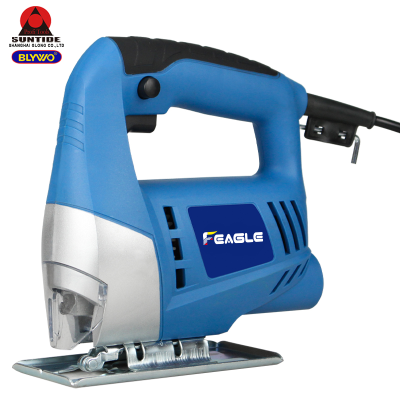


710W Wood Cutting Machine Electric Tools Power Tools High Quality Jig Saw
$7.00 - $45.00
MOQ: 10 Pieces

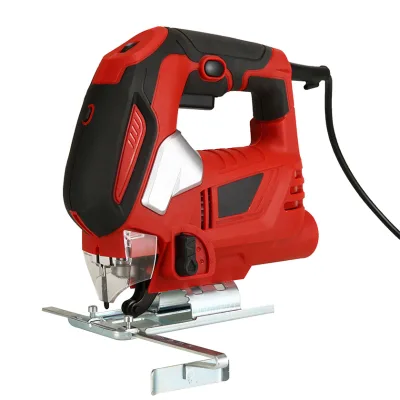


750W Wood Working Cutting Equipment Adjustable Machine Electric Jig Saw
$21.00 - $21.24
MOQ: 200 Pieces


Comprehensive Sourcing Guide
Strategic Sourcing Guide for Metal Cutting Electric Jig Saws
Understanding Technical Specifications and Performance Limits
When sourcing a Metal Cutting Electric Jig Saw, the primary objective is to align the tool's mechanical capabilities with the specific material thicknesses and cutting geometries required by your production line. The market offers a diverse range of models, but the technical parameters vary significantly even within the same product category. A critical observation from current product listings indicates that the no-load speed for many units operates within a range of 0 to 3000 revolutions per minute (r/min), while other high-performance variants may offer a narrower, higher range of 500 to 3000 rpm. This variability in speed control is a fundamental factor in determining the tool's suitability for different metals; lower speeds are generally preferred for harder metals to prevent blade overheating, while higher speeds facilitate faster cuts in softer materials.
Power consumption is another decisive specification. Buyers must distinguish between models rated at 500W, 550W, and those reaching up to 610W. The rated input power directly correlates with the tool's ability to maintain torque under load. For instance, a 550W unit is often cited with a standard cutting capacity for wood of 55mm and steel of 6mm. However, specific model variations, such as those designated with the model number JS013, may demonstrate a steel cutting capacity of up to 10mm, while others might be limited to 4mm for steel at a 90-degree angle. These discrepancies highlight the necessity of verifying the exact model number and its associated "prod_standard" before placing an order.
The physical dimensions of the cutting capacity are equally critical. While some units are specified with a maximum wood cutting capacity of 55mm, others in the same category may support up to 80mm. The maximum cutting capacity for steel typically ranges from 4mm to 10mm depending on the specific configuration. Furthermore, the voltage and frequency requirements must match the local power infrastructure. Most observed units operate on a voltage of 220~240V with a frequency of 50/60Hz, making them versatile for international markets, but this must be confirmed for every specific batch to avoid electrical incompatibility.
Compliance and Certification Verification Protocols
In the B2B procurement of power tools, compliance is not merely a formality but a prerequisite for market access and liability protection. The supply chain for electric jig saws, particularly those originating from manufacturing hubs in Zhejiang, China, frequently references the CE certification. This mark indicates conformity with health, safety, and environmental protection standards for products sold within the European Economic Area. However, the presence of a CE mark on a product listing should be treated as a claim that requires active verification rather than an automatic guarantee.
Buyers must scrutinize the "prod_standard" and "certification" fields in supplier documentation. While "CE" is a commonly observed standard in the provided data, relying solely on the visual presence of a logo is insufficient. The certification must be valid for the specific model being purchased, as manufacturers often hold certifications for a product family rather than every individual SKU. It is essential to request the actual test reports or certificates of conformity from the supplier to ensure the tool meets the specific safety directives applicable to your target market.
Additionally, the distinction between "Customized" and "Non-Customized" products plays a role in compliance. Some listings indicate a "Customized" status, while others are marked as "Non-Customized." Customized units may undergo different testing protocols or require specific documentation to validate that the modifications do not void existing safety certifications. Buyers should ensure that any customization, such as specific branding or minor mechanical alterations, is explicitly covered under the supplier's quality assurance framework and does not compromise the tool's certified status.
Cost Drivers and Pricing Dynamics
The pricing structure for electric jig saws is influenced by a complex interplay of power ratings, material quality, and packaging standards. The observed price range in the market spans from $3 to $120 USD, a wide disparity that reflects differences in build quality, brand positioning, and included features. Lower-priced units often correspond to basic models with lower wattage (e.g., 500W) and simpler packaging, while higher-priced units may feature higher power ratings (610W), advanced speed controls, and more robust construction materials.
Packaging standards also contribute to the final cost. Variations in packaging, such as "Color Box in Carton," "Color Box+Carton," or "Standard Export Colour Box and Carton Box," indicate different levels of protection and presentation. Units packaged in "Standard Export" configurations often command a premium due to the added cost of durable materials required for long-distance shipping. Furthermore, the "prod_packing" specifications, such as "10PCS/CTN," influence the logistics cost per unit. Bulk orders with optimized packing density can reduce shipping expenses, effectively lowering the total landed cost even if the unit price remains constant.
The Minimum Order Quantity (MOQ) is a significant cost driver in this sector. Listings show an MOQ range from 1 to 1000 units, with a specific high-confidence observation of an MOQ of 300 pieces for certain models. Suppliers with higher MOQ requirements often offer more competitive per-unit pricing due to economies of scale. Conversely, suppliers accepting lower MOQs may charge a premium to cover the setup costs for smaller production runs. Buyers must balance the desire for lower unit costs against the capital outlay required to meet the MOQ, ensuring that the inventory levels align with projected sales or production needs.
Typical Applications and Operational Versatility
The application scope of metal cutting electric jig saws extends beyond simple metal fabrication. While the core keyword focuses on metal cutting, the product data reveals that these tools are frequently marketed for dual applications, including "Wood Saw" and "Metal Saw." This versatility makes them attractive for general maintenance, construction, and light manufacturing environments where a single tool must handle multiple material types. The "Application" field in product specifications often lists both wood and metal, indicating a design that accommodates the different cutting speeds and blade types required for each material.
The layout of the saw is another factor influencing its application. Some units are designed with a "Vertical" layout, while others are classified as "Table Panel Saw" or "Portable." The portable nature of most units, combined with a "Single Speed" or variable speed control, allows for use in various settings, from fixed workshop benches to on-site construction projects. The "Automatic Grade" is listed as "Manual," meaning the operator controls the feed rate and cutting path, which requires a higher level of skill but offers greater flexibility for complex cuts.
For metal cutting specifically, the maximum cutting capacity determines the thickness of the material that can be processed. A tool with a 6mm steel capacity is suitable for light gauge sheet metal and structural angles, whereas a 10mm capacity unit can handle thicker bars and plates. The "No Load Speed" range is critical here; a tool capable of 0-3000 r/min offers the flexibility to start at a low speed for precision work and ramp up for faster cutting, whereas a fixed speed tool may be less adaptable. Buyers should match the tool's application profile to their most frequent use cases to ensure optimal performance and blade life.
Supplier Evaluation and Production Capabilities
Evaluating suppliers for electric jig saws requires a deep dive into their production capabilities and quality control systems. The "prod_origin" is consistently listed as "Zhejiang, China" or "China Zhejiang," indicating a concentration of manufacturing in this region. This geographic clustering suggests a mature supply chain with access to specialized components, but it also necessitates rigorous vetting to ensure the specific factory meets your quality standards. The "OEM" (Original Equipment Manufacturer) status is marked as "Yes" in several listings, indicating that suppliers are capable of producing goods under your brand or specifications.
When assessing a supplier, the "Customization" attribute is a key indicator of flexibility. Some suppliers offer "Customized" solutions, while others provide "Non-Customized" standard models. If your procurement strategy involves branding or specific technical modifications, you must prioritize suppliers with a proven track record in OEM services. The "Precision" attribute is listed as "High Precision" for some units, suggesting that the manufacturing process includes tight tolerances for critical components. However, this should be verified through sample testing rather than relying solely on marketing claims.
The "Material" composition, often listed as "Plastic" for housing components, should be evaluated for durability and heat resistance. While plastic housings reduce weight and cost, the quality of the plastic affects the tool's longevity and safety. Buyers should request material safety data sheets (MSDS) or specific grade information to ensure the housing can withstand the operational environment. Additionally, the "Controlling Mode" being "Artificial" implies a reliance on the operator's skill, which underscores the importance of supplier-provided training materials or user manuals.
Quality Control and Long-Term Procurement Strategy
Establishing a robust quality control (QC) framework is essential for mitigating risks in the procurement of electric jig saws. Given the variation in specifications such as "Max Cutting Capacity" and "Rated Input Power," a standardized QC protocol must be implemented to verify that every delivered unit matches the agreed-upon specifications. This includes verifying the "prod_model" against the physical product, checking the "Voltage" and "Frequency" compatibility, and testing the "No Load Speed" to ensure it falls within the specified range.
Long-term procurement considerations involve building a relationship with suppliers who can provide consistent quality over time. The "prod_packing" standards, such as "Standard Export Colour Box and Carton Box," are critical for protecting the tools during transit. Damaged goods due to poor packaging can lead to significant losses and delays. Therefore, suppliers should be evaluated on their packaging integrity, including the use of protective inserts and the durability of the outer cartons.
Furthermore, the "Lead Time" and "MOQ" dynamics should be factored into the long-term strategy. Suppliers with an MOQ of 300 pieces may offer better pricing but require careful inventory management. Buyers should negotiate flexible terms that allow for periodic replenishment without incurring excessive storage costs. The "Certification" status, particularly CE, should be monitored regularly to ensure ongoing compliance with changing regulations. Finally, the "Condition" of the product is listed as "New," but buyers should verify that the tools are indeed new and not refurbished units, as this impacts the warranty and expected lifespan of the equipment. By adhering to these rigorous standards, buyers can secure a reliable supply of high-performance metal cutting electric jig saws that meet their operational demands.
FAQs
What is the maximum cutting capacity for steel on these saws?
The maximum cutting capacity for steel varies by model, ranging from 4mm to 10mm at a 90-degree angle. Specific units like the JS013 can cut up to 10mm, while others are limited to 6mm or 4mm depending on the configuration and power rating.
Can these electric jig saws cut both wood and metal?
Yes, these tools are designed for dual applications including wood and metal sawing. They typically feature a no-load speed range of 0 to 3000 r/min to accommodate different material hardness and cutting requirements effectively.
Which voltage and frequency standards do these saws support?
Most units operate on a voltage of 220 to 240V with a frequency of 50 or 60Hz. This standard configuration ensures compatibility with international power infrastructure, though specific batches must be verified for electrical compatibility.
How much power do these metal cutting electric jig saws consume?
Rated input power varies between 500W and 610W depending on the specific model and performance tier. Higher wattage units generally provide better torque maintenance under load for thicker metal cutting tasks.
What is the typical minimum order quantity for these tools?
The minimum order quantity ranges from 1 to 1000 pieces, with some specific models requiring 300 pieces. Lower MOQs may incur higher per-unit costs, while bulk orders often benefit from economies of scale.
Are these saws available with CE certification for export?
Yes, CE certification is a commonly observed standard for these products originating from Zhejiang, China. Buyers should verify that the specific model holds valid certification rather than assuming all units in a listing are certified.
Which customization options are available for these electric saws?
Customization is available for some models, while others are sold as non-customized standard units. OEM services are offered, allowing for branding or minor mechanical modifications, but these must be covered under the supplier's quality assurance.