Source Metal Decorative License Plate for Car Decoration, Gifts, Souvenirs
Explore 30 listings for Metal Decorative License Plate options suitable for car decoration, gifts, and souvenirs. Buyers can compare materials like aluminum and steel, finishes including black oxide and powder coating, and customization features from verified Chinese manufacturers.
Key considerations
Products List


Comprehensive Sourcing Guide
Strategic Sourcing Guide for Metal Decorative License Plates
The global automotive aftermarket continues to demand high-quality customization, with metal decorative license plates serving as a primary vehicle for personal expression and vehicle identification. For procurement professionals and B2B buyers, navigating the supply chain for these components requires a disciplined approach to technical verification, supplier capability assessment, and quality assurance. The following guide synthesizes observed market data and product attributes to provide a robust framework for sourcing metal decorative license plates, ensuring that procurement decisions are grounded in verifiable facts rather than speculative claims.
Technical Specifications and Material Composition
Understanding the physical and chemical properties of the product is the first step in defining a successful procurement strategy. The core material for these plates is predominantly metal, with observed supply chains utilizing steel, aluminum, iron, tin, and plastic composites. Aluminum and steel are the most frequently cited materials, offering distinct advantages in terms of weight and corrosion resistance. The thickness of the metal sheet is a critical variable, with standard offerings ranging from 0.6mm to 1.0mm, alongside custom thickness options to meet specific structural or aesthetic requirements.
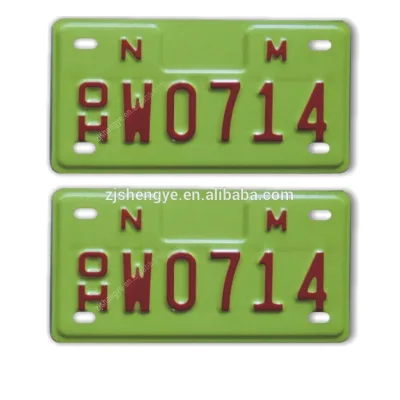
The manufacturing process typically involves punching and printing, which allows for the creation of complex shapes and detailed graphics. The surface finish is equally important for durability and visual appeal. Common finishes observed in the market include black oxide coating, black chrome, and powder coating. These finishes are not merely aesthetic; they serve as protective barriers against environmental degradation. The plates are often designed with a "universal" car fitment, though specific dimensions such as 30x15cm or customized sizes are available. Buyers must verify the exact dimensions and shape customization capabilities, as some suppliers offer "shapes customized" options while others adhere to standard rectangular formats.
| Attribute | Observed Standard Range | Customization Potential |
|---|---|---|
| Primary Material | Aluminum, Steel, Iron | Available (Steel, Plastic, Tin, Aluminum) |
| Thickness | 0.6mm, 0.8mm, 1.0mm | Custom thickness available |
| Surface Finish | Black Oxide, Black Chrome, Powder Coated | Custom finishes available |
| Dimensions | 30x15cm, 31x16x15cm (pack) | Customized size and shape |
| Color | Silver, Black, Customized | Full color customization |
Compliance, Certification, and Safety Standards
In the realm of automotive accessories, compliance is often a point of confusion for buyers. While some background data suggests the existence of certifications like CE, it is crucial to note that specific certification status cannot be universally asserted for every listed product without direct verification from the manufacturer. Procurement teams must treat certification claims as observations to be validated rather than guaranteed attributes. The primary standard for these products is often described as "customized," meaning the product meets the specific regulatory requirements of the destination market rather than a single global standard.
Buyers should prioritize verifying UV resistance and weatherproofing capabilities. The product attributes explicitly mention "UV Proof: Yes" and features such as "Durable, UV Resistant, Weather Proof." These claims are critical for products intended for outdoor use, where exposure to sunlight and precipitation can degrade materials. The sourcing guide advises buyers to request specific test data or material safety data sheets (MSDS) to confirm these claims, rather than relying solely on marketing descriptions. Additionally, the "Rust-resistant" attribute is a key performance indicator that must be tested against local humidity and salinity conditions, particularly for coastal regions.
Cost Drivers and Pricing Dynamics
The pricing structure for metal decorative license plates is influenced by several variables, including material costs, customization complexity, and order volume. The observed market price range for these items falls between $0.50 and $5.00 USD per unit. However, this range is highly dependent on the Minimum Order Quantity (MOQ). Data indicates a wide variance in MOQs, ranging from 100 pieces to 2,000 pieces, with some suppliers setting a standard MOQ of 500 pieces.
The cost drivers can be broken down into material selection, finishing processes, and packaging. Aluminum and steel prices fluctuate with global commodity markets, directly impacting the unit cost. The finishing process, such as black chrome or powder coating, adds a layer of processing cost compared to standard metal finishes. Furthermore, the level of customization plays a significant role; "Custom Designs" and "Shapes Customized" often incur higher setup fees and per-unit costs compared to standard OEM models. Buyers should also consider the single package size and gross weight, as these factors influence shipping logistics. For instance, a package size of 33x22x20 cm with a gross weight of 20.0 kg will incur significantly higher freight costs than a compact 31x16x2 cm package weighing 0.5 kg.
Typical Applications and Market Segmentation
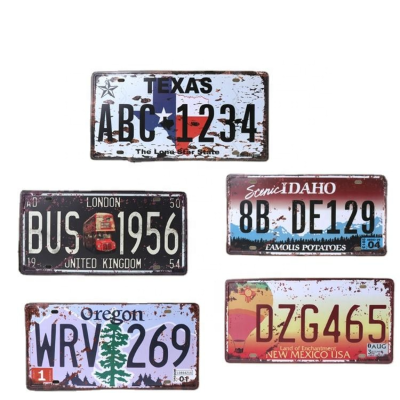
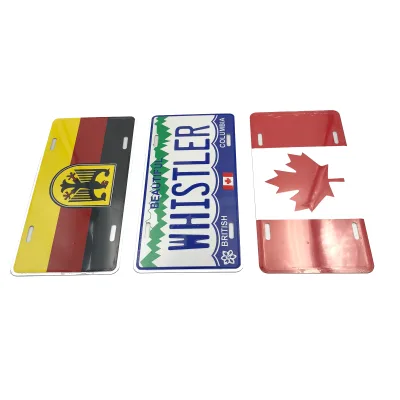
Metal decorative license plates serve a diverse range of applications beyond simple vehicle identification. The primary usage is "Car Decoration," where the plate acts as a stylistic element to enhance the vehicle's aesthetic appeal. Specific applications include normal decorative license plate frames, tying style frames, license plate trays, built-in frames, shutter remote control frames, and flop license plate frames. This versatility allows suppliers to target various niches within the automotive aftermarket.
Beyond decoration, these products are frequently utilized as gifts and souvenirs. The "Application" attribute lists "Gift, Souvenir, Car Decoration," indicating a dual-market potential. This dual nature means that procurement strategies must account for both functional durability for daily use and aesthetic appeal for gifting purposes. The "Universal" car fitment suggests a broad market applicability, making these products suitable for a wide array of vehicle models. However, buyers should verify the specific fitment requirements for their target demographic, as some custom shapes may require specific mounting hardware or vehicle modifications.
Supplier Evaluation and Supply Chain Verification
When evaluating potential suppliers, buyers must look beyond the product listing and assess the operational capabilities of the manufacturer. Key indicators of a reliable supplier include their supply ability, which is observed to be around 100,000 pieces per month for high-volume producers. This capacity ensures that the supplier can handle large orders without significant delays. The production time is another critical metric, with a typical lead time of around 15-20 days after layout approval. Buyers must factor this into their inventory planning to avoid stockouts.
Geographic location is also a vital consideration. The primary place of origin for these products is Zhejiang, China, a region known for its manufacturing prowess in automotive accessories. The port of dispatch is typically Shanghai or Ningbo, which are major logistics hubs. Buyers should verify the supplier's ability to handle international shipping and their experience with export documentation. Packaging details, such as the use of shrink film and OPP bags, are essential for protecting the product during transit. The "Customized" packaging option allows for branding opportunities, which can be a significant value-add for B2B clients looking to white-label products.
Quality Control and Long-Term Procurement Considerations
Ensuring consistent quality is paramount in the long-term success of a procurement relationship. The "Feature" attributes highlight durability, UV resistance, and weatherproofing as key quality markers. To maintain these standards, buyers should implement a rigorous quality control (QC) protocol. This includes inspecting the finish for uniformity, checking the thickness of the metal, and verifying the accuracy of the printing and punching processes. The "Rust-resistant" claim should be validated through salt spray testing or similar corrosion resistance tests, especially for products intended for harsh environments.
Long-term procurement considerations also involve the stability of the supply chain. The "Customization: Available" attribute suggests that suppliers are flexible, but this flexibility must be managed to prevent quality drift. Buyers should establish clear specifications for custom designs and maintain open communication with the supplier regarding any changes in material or process. The "Single gross weight" and "Single package size" data provided in product listings can vary significantly between batches; therefore, buyers should request sample shipments to verify that the physical attributes remain consistent over time.
Finally, the sustainability and environmental impact of the materials and processes should be considered. While specific environmental certifications are not universally confirmed in the provided data, the use of durable materials like aluminum and steel contributes to product longevity, reducing waste. Buyers should inquire about the recyclability of the materials and the environmental compliance of the finishing processes, such as the use of eco-friendly powders or coatings. By focusing on these long-term factors, buyers can build a resilient supply chain that delivers high-quality metal decorative license plates while maintaining operational efficiency and cost-effectiveness.
FAQs
What materials are used for metal decorative license plates?
These plates are primarily made from metal, including steel, aluminum, iron, tin, and plastic composites. Buyers can select from various materials based on durability needs, with aluminum and steel being the most common choices for corrosion resistance and weight.
How long does production take after layout approval?
Production typically requires around 15 to 20 days after the layout is approved. This timeline allows for the necessary punching, printing, and finishing processes like black oxide or powder coating to ensure the final product meets quality standards.
Can the size and shape of the license plate be customized?
Yes, customization is available for both size and shape, with options ranging from standard 30x15cm to fully customized dimensions. Suppliers offer various shapes and finishes to meet specific aesthetic or functional requirements for different vehicle models.
What is the minimum order quantity for these plates?
The minimum order quantity varies by supplier, ranging from 100 pieces to 2,000 pieces, with some setting a standard of 500 pieces. Buyers should verify the specific MOQ with their chosen vendor to ensure it aligns with their procurement volume.
Which surface finishes are available for these metal plates?
Common surface finishes include black oxide coating, black chrome, and powder coating to protect against environmental damage. These finishes not only enhance visual appeal but also provide essential durability and weatherproofing for outdoor use on vehicles.
Where are these metal decorative license plates manufactured?
The primary place of origin for these products is Zhejiang, China, with dispatch ports typically located in Shanghai or Ningbo. This region is known for its manufacturing capabilities in automotive accessories, ensuring a steady supply chain for international buyers.