Source Microfiber Towel Ring for Kitchen, Bath, and Car Use
Find 30 Microfiber Towel Ring options suitable for kitchen, bath, and car applications. Buyers can compare customization, materials, and packing details from verified suppliers offering export-standard products.
Key considerations
Products List


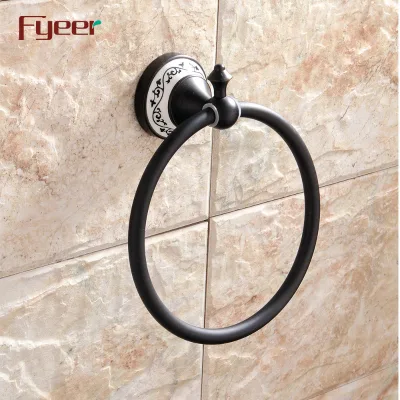


$6.75 - $6.95
MOQ: 500 Pieces


Comprehensive Sourcing Guide
Strategic Sourcing Guide for Microfiber Towel Ring Procurement
Navigating the global market for microfiber towel rings requires a disciplined approach that distinguishes between the specific hardware component and the broader category of microfiber cleaning and utility textiles. While the core keyword focuses on the ring mechanism, the supplied product data reveals a complex ecosystem of microfiber products, including cleaning towels, sports towels, and travel accessories, often sourced from the same manufacturing regions in China. Buyers must understand that the "Microfiber Towel Ring" is frequently part of a larger supply chain involving the fabric itself, the finishing processes, and the packaging standards. This guide synthesizes available factual data to provide a robust framework for evaluating suppliers, verifying technical specifications, and managing procurement risks without relying on unverified claims.
Technical Specifications and Material Verification
The foundation of any successful procurement for microfiber-based products lies in verifying the material composition and physical attributes. The supplied data explicitly identifies "Microfiber" as the primary material for a significant portion of the product listings. However, the term "microfiber" can vary in quality and density depending on the manufacturing process. Buyers must request detailed specifications regarding the GSM (grams per square meter) of the fabric, as the data indicates a wide range of available weights including 200GSM, 250GSM, 300GSM, 350GSM, 400GSM, 500GSM, and 600GSM. The selection of GSM directly impacts the absorbency, durability, and intended application of the product.
Beyond the fabric weight, the technical construction is critical. The data notes that "Knitted" is a specific technique used for certain items, while others may utilize different weaves. The shape of the product is also a variable specification, with listings showing "Rectangle," "Square," and "Towel Cap" configurations. When sourcing a towel ring, the compatibility between the ring's diameter and the towel's thickness (determined by GSM) is essential. A ring designed for a thin 200GSM towel may fail to secure a 600GSM heavy-duty cleaning towel. Furthermore, the data mentions specific model numbers such as MF014, MF016, MF025, and TJDH001, which serve as unique identifiers for distinct product configurations. Buyers should insist on these model numbers in their purchase orders to ensure consistency, as variations in the "Plain Dyed" or "Plain" style patterns can affect the final aesthetic and functional performance.
Compliance, Certification, and Standard Adherence
In the B2B procurement of textiles, compliance is not merely a formality but a prerequisite for market access and liability protection. The supplied facts highlight "ISO9001" as a specific certification associated with certain product lines. This indicates that the manufacturer has a documented quality management system, which is a positive signal for process consistency. However, buyers must verify that this certification is current and covers the specific manufacturing facility producing the towel rings. The data also references "Export Standard" and "AS CLIENT'S REQUEST" as product standards. This duality suggests that while some items adhere to a baseline international export protocol, others are highly customized.
Buyers must clarify whether the "Export Standard" refers to specific chemical regulations (such as REACH or Oeko-Tex) or general shipping and packaging requirements. The data lists "25*65cm" and "40cm× 40cm" under the "prod_standard" attribute, which appears to conflate physical dimensions with standard classifications. This ambiguity necessitates a rigorous verification step where the buyer explicitly defines the dimensional tolerance and the standard against which the product will be tested. Additionally, the "Hebei, China" origin is noted for specific items, while others simply list "China." Regional manufacturing hubs often have distinct regulatory environments and supply chain capabilities. Verifying the specific factory location against the ISO9001 certificate is crucial to ensure that the certification applies to the actual production site and not just a parent company or a different branch.
Cost Drivers and Pricing Dynamics
Understanding the cost structure of microfiber towel rings requires analyzing the variables present in the market data. The observed price range in USD spans from 0.08 to 10.00, a significant variance that reflects differences in material quality, customization levels, and order volume. The lower end of this spectrum likely corresponds to basic, non-customized items with minimal packaging, while the upper end may include premium GSM fabrics, complex embroidery, or specialized packaging solutions.
The Minimum Order Quantity (MOQ) is another critical cost driver. The data shows an observed MOQ range of 50 to 100,000 units. This wide range indicates that suppliers are flexible, catering to both small startups and large-scale distributors. The listing "Small Order Acceptable" suggests that some suppliers are willing to break the standard high-volume mold, which can be advantageous for buyers testing the market. However, the unit price will almost certainly be higher for smaller orders due to the fixed costs of setup and production lines. Buyers should also consider the cost implications of customization. The data confirms that "Customization" and "Customized" options are available, including logo application via "Embroidery, Printed or Emboss." These value-added services will increase the unit cost and may extend the lead time.
Typical Applications and Usage Scenarios
The versatility of microfiber products is evident in the diverse usage scenarios listed in the data. Applications range from "Kitchen, Bath, Car, Digital Products" to "Sports, Gifts, Hotel, Home," and even specific niches like "Airplane" and "Beach." This breadth of application means that a single supplier may offer a towel ring that serves multiple markets, but the specific requirements for each market differ. For instance, a towel ring intended for "Digital Products" cleaning likely requires a softer, lint-free microfiber with a lower GSM, whereas a "Car" or "Kitchen" towel ring might need a more durable, high-GSM fabric capable of absorbing oils and heavy moisture.
The data also highlights "Type Sport/Gym/Travel/Beach" as a specific category. These applications often demand quick-drying properties, which are explicitly listed as a feature in the product attributes ("Quick Dry Towel"). When sourcing for these specific sectors, buyers must verify that the microfiber blend and the ring mechanism can withstand the rigors of travel and frequent washing. The "Towel Cap" shape mentioned in the data suggests a specialized application, possibly for hair drying or specific automotive detailing, which requires a ring with a specific tension or shape to hold the cap securely. Understanding the end-use is essential for selecting the correct model number and material specification.
Supplier Evaluation and Production Capabilities
Evaluating a supplier for microfiber towel rings involves looking beyond the product listing to the operational capabilities of the manufacturer. The data indicates that "Cartons" and "1 PC/Poly Bag, 150PC Per Carton" are standard packing methods, but "as Client's Request" and "as Per Your Requirements" are also common. This flexibility is a strong indicator of a supplier's willingness to accommodate specific logistics needs. However, buyers should verify the supplier's capacity to handle "Sea Shipping" and their experience with international logistics, as the origin is listed as China and Hebei, China.
The availability of "Free Samples" is a significant advantage for buyers, allowing for physical verification of the microfiber quality and ring functionality before committing to a large order. The data confirms that sample orders are accepted, which is a standard practice in the industry but one that should be leveraged to test the "Ultra Soft Towel" claims. Buyers should also assess the supplier's ability to handle the "Customization" aspect, including logo placement and packaging design. The presence of specific model numbers like "TJ-TC-161" and "TJDH001" suggests a catalog of established products, but the ability to modify these models for custom requirements is what separates a commodity supplier from a strategic partner.
Quality Control and Long-Term Procurement Strategy
Quality control (QC) is paramount in the textile industry, where inconsistencies in dyeing, stitching, or material density can lead to significant returns and brand damage. The "ISO9001" certification mentioned in the data provides a baseline for quality management, but buyers should implement their own QC protocols. This includes verifying the "Plain Dyed" consistency and ensuring that the "Quick Dry" and "Ultra Soft" features meet the agreed-upon specifications. The data lists "2636cm, 3040cm" as size options, and buyers must ensure that the tolerance for these dimensions is strictly enforced during production.
For long-term procurement, establishing a clear communication channel regarding "As Client's Request" standards is vital. The data shows that standards can be "AS CLIENT'S REQUEST," which implies a high degree of customization. To manage this effectively, buyers should create a detailed technical dossier that includes the specific GSM, dimensions, logo placement, and packaging requirements. This dossier should be referenced in every purchase order to prevent drift in product quality. Additionally, the "Small Order Acceptable" policy allows for a phased approach to procurement, where buyers can start with smaller batches to validate the supply chain before scaling up to the 100,000 unit range. This strategy minimizes risk and allows for adjustments based on market feedback.
Comparative Analysis of Product Attributes
To facilitate decision-making, the following table summarizes key attributes observed in the supplied data, highlighting the variability buyers must navigate.
| Attribute Category | Observed Values | Procurement Implication |
|---|---|---|
| Material | Microfiber | Verify fiber blend and GSM (200-600) for intended use. |
| Shape | Rectangle, Square, Towel Cap | Ensure ring diameter matches towel thickness and shape. |
| Usage | Kitchen, Bath, Car, Sports, Hotel, Airplane | Match material density to specific application (e.g., car vs. digital). |
| Packing | Cartons, Poly Bag, As Client's Request | Confirm packaging costs and shipping efficiency. |
| Standard | Export Standard, 25*65cm, 40cm×40cm | Clarify if standard refers to dimensions or regulatory compliance. |
| Certification | ISO9001 | Verify validity and scope of certification for the specific factory. |
| Customization | Logo (Embroidery/Printed), Size, Packing | Budget for additional costs and lead time for custom orders. |
| Origin | China, Hebei, China | Assess logistics costs and potential trade tariffs. |
Conclusion
Sourcing microfiber towel rings in the current market requires a meticulous approach that balances the diverse product attributes with rigorous quality and compliance checks. The data reveals a market characterized by high customization, a wide range of material weights, and flexible ordering policies. Buyers must leverage the available information on GSM, model numbers, and certification to build a robust procurement strategy. By focusing on technical verification, clear communication of standards, and strategic supplier evaluation, buyers can secure high-quality microfiber towel rings that meet their specific operational needs while mitigating the risks associated with international trade. The flexibility observed in packaging and customization offers significant opportunities for differentiation, but it demands a disciplined approach to specification management to ensure consistency across all orders.
FAQs
What material is used for microfiber towel rings?
The primary material is microfiber, available in various GSM weights ranging from 200 to 600. Buyers must verify the specific GSM to ensure the ring can securely hold the towel thickness for its intended use.
Which certifications do manufacturers typically hold?
Some suppliers hold ISO9001 certification for quality management systems. Buyers should verify that this certification covers the specific factory location, such as Hebei, China, rather than just a parent company.
Can I request custom packaging for my order?
Yes, customization is available with options like cartons or poly bags as per client requests. Suppliers often allow specific packing requirements, such as 150 pieces per carton, to match logistics needs.
What is the minimum order quantity for these items?
The minimum order quantity ranges from 50 to 100,000 units depending on the supplier. Some vendors accept small orders, but unit prices will be higher for lower volume purchases compared to bulk orders.
How do I specify the towel dimensions for the ring?
Dimensions vary by model, with common sizes like 25x65cm or 40x40cm listed in product standards. Buyers must explicitly define the target dimensions to ensure the ring mechanism fits the specific towel shape.
Where are these microfiber products typically manufactured?
Products originate from China, with specific manufacturing hubs noted in Hebei. Buyers should confirm the exact factory location to align with shipping logistics and verify regional compliance standards.