Source Mild Steel Plasma Cutting Tip for Machinery, CNC, and Hand Use
Compare 30 listings for Mild Steel Plasma Cutting Tip compatible with models like SG51 and Yt-10pd. Buyers can evaluate specifications including voltage, cutting thickness, and material compatibility for industrial applications.
Key considerations
Products List


Stainless Steel Mild Steel Aluminum 85 105 125 151 Plasma Cutter for Sale
$499.00 - $6999.00
MOQ: 1 Sets
Comprehensive Sourcing Guide
Strategic Sourcing Guide for Mild Steel Plasma Cutting Tips
Technical Specifications and Material Compatibility
When sourcing mild steel plasma cutting tips, buyers must first distinguish between the consumable tip and the torch assembly, as the specific component requirements vary significantly based on the cutting machine's amperage and duty cycle. The core material composition is a primary determinant of performance and longevity. Available data indicates that high-quality tips are frequently manufactured from copper, brass, or specialized copper-zirconium (Cucrzr) alloys. These materials are selected for their superior thermal conductivity and resistance to erosion at the orifice, which is critical when cutting mild steel. The standard material profile often includes copper alloy construction to ensure the tip can withstand the intense heat generated during the plasma arc process.
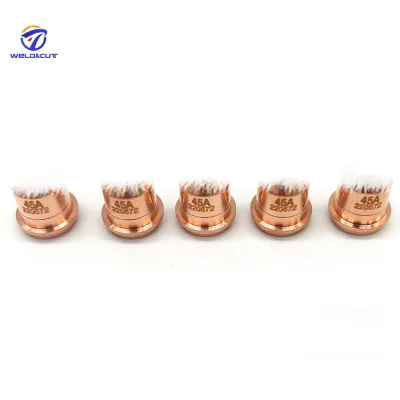
The physical dimensions and design of the tip are equally critical. Specifications for these components often list the size as "Standard" or "Portable," depending on the intended application environment. For industrial applications involving machinery, the tips are designed to fit specific torch models such as the Yt-10pd or are compatible with systems like the SG51 and Sg51 plasma cutters. The maximum welding thickness capability for the associated systems can exceed 15mm, suggesting that the tips selected must support high-amperage operations. Buyers should verify that the tip's orifice diameter matches the specific amperage range of their power supply, as the data references specific current ratings including 45A, 65-105A, and 130A. Using a tip rated for a lower amperage on a high-power machine can lead to rapid erosion or catastrophic failure, while an oversized tip may result in poor cut quality and excessive gas consumption.
The cutting mode is strictly defined as Plasma Cutting, and the layout of the torch system is often vertical. The control mode for the broader system may be CNC or manual, but the tip itself must be compatible with the specific nozzle and electrode configuration. For instance, some product listings specify the torch item as a Yt-10pd, while others reference model numbers like 220037, 220671, or 220798. It is essential to cross-reference the model number of the tip with the torch manufacturer's specifications to ensure a proper seal and gas flow. The rear connector is available in both standard and customized configurations, meaning buyers must confirm the connector type before placing an order to avoid compatibility issues with their existing torch handles.
Compliance, Certification, and Quality Standards
In the B2B procurement of industrial consumables, verifying compliance and certification is not merely a formality but a critical risk mitigation strategy. The supply chain for plasma cutting tips often involves manufacturers operating under various international standards. Observed data confirms that reputable suppliers provide products certified under ISO9001, CCC, CE, RoHS, and TUV. These certifications indicate that the manufacturing process adheres to quality management systems, electrical safety standards, and environmental regulations regarding hazardous substances. The presence of ISO9001 suggests a commitment to consistent quality control, while CE and RoHS compliance are often mandatory for selling products within the European market.
However, buyers must exercise caution regarding the interpretation of these certifications. While the data lists these standards, the specific application of the certification to a particular batch or model should be verified. Some product standards are noted as "Depend on the specific model," implying that not every SKU may carry the full suite of certifications. For example, a standard export package might be used for a specific model, while another model might require a paper carton or plastic bag depending on the customization level. The origin of the products is consistently listed as China, with specific manufacturing hubs identified in Changzhou and Jiangsu. While the location is a factual observation, buyers should ensure that the supplier can provide valid, up-to-date certificates for the specific lot being purchased, rather than relying on generic marketing claims.
The customization aspect of the product line is another area where compliance intersects with specification. The data indicates that customization is available, and products can be "Customized" to meet specific client needs. This flexibility allows buyers to request specific material grades or connector types, but it also introduces complexity in quality assurance. When ordering customized tips, the buyer must ensure that the supplier maintains the same rigorous testing and certification standards as their standard products. The "Standard Export Package" and "Neutral Packing" options suggest that the packaging itself is designed to protect the product during transit, but the internal quality of the tip remains the primary concern. Buyers should request test results or quality reports that specifically address the material composition and dimensional accuracy of the customized items.
Cost Drivers and Pricing Dynamics
Understanding the cost structure of plasma cutting tips is essential for effective budgeting and supplier negotiation. The observed price range in the market is exceptionally wide, spanning from 0.2 USD to 6999 USD. This vast disparity is not indicative of a single product type but rather reflects the difference between individual consumable tips and complete torch assemblies or specialized industrial systems. A single cutting tip, which is a small, high-wear component, typically falls at the lower end of this spectrum. In contrast, the higher price points likely correspond to complete torch units, CNC-compatible systems, or bulk orders of specialized, high-performance materials like copper-zirconium alloys.
The Minimum Order Quantity (MOQ) is another significant factor influencing the total cost of ownership. The observed MOQ range varies from 1 to 2000 units. For small workshops or maintenance departments, an MOQ of 1 allows for immediate procurement without significant capital outlay. However, for large-scale manufacturing facilities, an MOQ of 2000 may be required to secure a lower unit price. The volume discount structure is often tied to these MOQ thresholds. Buyers should analyze their consumption rates to determine the optimal order size that balances inventory holding costs with unit price savings.
Material costs are a primary driver of the price variation. Tips made from standard copper or brass are generally more affordable than those made from specialized copper-zirconium alloys, which offer superior resistance to erosion and longer service life. The "Rating" of 60% mentioned in the data likely refers to the duty cycle, which impacts the thermal stress the tip can endure. A tip rated for a higher duty cycle may command a premium price due to the advanced materials and manufacturing processes required. Additionally, the "Weight for Tip" is listed as 1kg per 50 pieces, which provides a baseline for calculating shipping costs. Buyers should factor in logistics expenses, especially when importing from China, as the origin locations in Changzhou and Jiangsu may involve different shipping routes and tariffs depending on the destination.
Typical Applications and Operational Context
Plasma cutting tips are designed for a diverse range of applications, from light-duty manual cutting to heavy-duty industrial automation. The data explicitly lists "Machinery" and "Hand" as application categories, indicating that these consumables serve both stationary CNC machines and portable handheld torches. The "Use Type" is specified as "Machine Use," suggesting that the primary design intent is for integration into automated or semi-automated systems. However, the availability of manual grades alongside automatic and semi-automatic options confirms their versatility in manual operations as well.
The specific amperage ratings provide further insight into the operational context. Tips rated for 45A are suitable for thinner mild steel sheets and general maintenance tasks, while those rated for 65-105A and 130A are intended for thicker materials and high-volume production environments. The maximum welding thickness capability of over 15mm suggests that the associated systems are robust enough for structural steel work. The "Cutting Material" list includes Copper, Carbon Steel, Iron, Aluminum, Metal Alloy, and Stainless Steel, confirming that these tips are multi-material compatible, though the specific tip geometry and gas flow requirements may vary for non-ferrous metals.
The layout of the torch system, described as "Vertical," is a common configuration for many plasma cutting machines, facilitating gravity-fed gas flow and stable arc performance. The "Control Mode" of CNC indicates that these tips are integral to automated cutting paths, where precision and consistency are paramount. In such environments, the wear rate of the tip is a critical metric, as a worn tip can degrade the cut quality and increase operational costs. Buyers should consider the duty cycle and the specific cutting parameters of their application when selecting the appropriate tip. For high-duty cycle applications, investing in higher-grade materials like copper-zirconium may result in lower total costs despite a higher initial unit price.
Supplier Evaluation and Quality Control Protocols
Evaluating suppliers for plasma cutting tips requires a rigorous approach that goes beyond simple price comparison. The presence of certifications like ISO9001, CCC, CE, RoHS, and TUV is a strong indicator of a supplier's commitment to quality, but buyers must verify the validity and scope of these certificates. The origin of the products is consistently China, with specific manufacturing locations in Changzhou and Jiangsu. While these regions are known for their manufacturing capabilities, buyers should conduct due diligence to ensure that the specific factory meets their quality standards. Requesting factory audits or third-party inspection reports can provide valuable insights into the production process and quality control measures.
Quality control should be a continuous process throughout the procurement lifecycle. Buyers should establish clear acceptance criteria for the tips, including dimensional accuracy, material composition, and surface finish. The "Standard" and "Portable" size specifications should be verified against the actual product received to ensure consistency. The "Rear Connector" being available in standard and customized versions means that buyers must physically inspect the connectors to ensure a proper fit and secure connection. Any deviation from the specified dimensions or material properties can lead to operational failures, such as gas leaks or arc instability.
The "Packing" options, ranging from "Paper Carton" to "Plastic Bag" and "Standard Export Package," also play a role in quality assurance. Proper packaging is essential to prevent damage during transit, especially for small, precision components like cutting tips. Buyers should verify that the packaging is robust enough to protect the tips from physical damage and environmental factors such as moisture and corrosion. The "Weight for Tip" of 1kg per 50 pieces provides a baseline for checking the quantity and weight of the shipment, which can serve as a quick quality check upon receipt.
Long-Term Procurement and Lifecycle Management
Sourcing plasma cutting tips is not a one-time transaction but an ongoing process that requires strategic planning and lifecycle management. The "Customization" and "Customized" attributes indicate that suppliers are willing to adapt their products to meet specific buyer needs, which can be beneficial for long-term partnerships. However, this also means that buyers must maintain clear communication with their suppliers to ensure that any changes in specifications or requirements are accurately reflected in the products delivered.
The "Rating" of 60% and the various amperage ratings suggest that the lifespan of the tips is a critical factor in procurement planning. Buyers should monitor the wear rate of the tips in their operations and adjust their ordering frequency accordingly. Implementing a predictive maintenance program can help identify when tips need to be replaced before they fail, reducing downtime and maintaining cut quality. The "Model Number" variations, such as 220037, 220671, and 220798, highlight the importance of maintaining an accurate inventory of compatible parts. Keeping a record of the specific model numbers used in different machines can streamline the reordering process and prevent errors.
Finally, buyers should consider the total cost of ownership rather than just the unit price. While a cheaper tip may seem attractive initially, a higher-quality tip with a longer lifespan and better cut quality can result in significant savings over time. The "Automatic Grade" options, including semi-automatic and automatic, suggest that the tips are designed for integration into modern, efficient cutting systems. By focusing on quality, compatibility, and lifecycle management, buyers can optimize their plasma cutting operations and achieve better results in the long run. The "Product Name" of "Cutting Electrode and Tip for Plasma Torch" underscores the importance of treating these components as a system, where the performance of the tip is directly linked to the performance of the electrode and the torch assembly.
FAQs
What materials are used for mild steel plasma cutting tips?
These tips are typically made from copper, brass, or copper-zirconium alloys. These materials provide superior thermal conductivity and resistance to erosion during the plasma arc process for cutting mild steel.
Which certifications should I look for in plasma cutting tips?
Reputable products often carry ISO9001, CCC, CE, RoHS, and TUV certifications. These standards indicate adherence to quality management, electrical safety, and environmental regulations for hazardous substances.
Can I find customized rear connectors for these tips?
Yes, rear connectors are available in both standard and customized configurations. Buyers must confirm the specific connector type before ordering to ensure compatibility with their existing torch handles.
What is the maximum welding thickness capability for these systems?
The associated systems can handle a maximum welding thickness greater than 15mm. This suggests the tips support high-amperage operations required for structural steel work and industrial applications.
How does the duty cycle rating affect tip performance?
A rating of 60% indicates the duty cycle, which impacts the thermal stress the tip can endure. Higher duty cycle ratings often command a premium due to advanced materials like copper-zirconium alloys.
Which amperage ranges are supported by these cutting tips?
The tips support specific current ratings including 45A, 65-105A, and 130A. Using a tip rated for lower amperage on a high-power machine can lead to rapid erosion or failure.
What packaging options are available for these consumables?
Packaging options include paper cartons, plastic bags, and standard export packages. The choice often depends on the customization level and the specific model being shipped from the manufacturer.