Source Milk and Soap Making Disinfectant and Homogenizer Mixer for Cream, Lotion, Shampoo
Compare 30 industrial units designed for the Milk and Soap Making Disinfectant and Homogenizer Mixer applications. These machines feature variable speed control, vacuum capabilities, and stainless steel construction suitable for viscous fluids and powders in pharmaceutical and chemical sectors.
Key considerations
Products List

Cosmetic Skin Care Milk Making Machine Mixing Machine Cream Homogenizer Mixer
$980.00 - $48750.00
MOQ: 1 Pieces


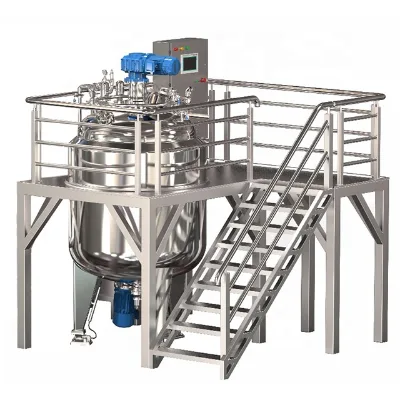


400L Stable Performance Homogenizer Versatile Mixer for Food Liquid Soap
$9000.00 - $18000.00
MOQ: 1 Pieces


18000L/H Disinfectant and Homogenizer Mixer Milk and Soap Making Machine
$27100.00 - $32000.00
MOQ: 1 Pieces


Comprehensive Sourcing Guide
Strategic Sourcing Guide for Industrial Milk, Soap, and Disinfectant Homogenizer Mixers
Understanding Core Technical Specifications for Viscous Processing
When sourcing equipment for the production of milk, soap, and disinfectants, the primary technical requirement is the ability to handle a diverse range of viscosities while ensuring homogenization. The market offers machines categorized by their specific mixing mechanisms, such as high-speed mixers and shear mixers. For applications involving milk and liquid soaps, a high-speed mixer is often the baseline requirement, capable of processing viscous fluids, powders, and liquids with suspended solids. In contrast, for more intensive emulsification required in certain disinfectant formulations, a shear mixer with a dedicated homogenizing head provides the necessary mechanical force to break down particles.
The physical configuration of the mixing vessel is equally critical. Buyers should look for conical mixing drums or circular groove designs, as these shapes facilitate better flow dynamics and prevent material dead zones. The mixing drum shape directly influences the efficiency of the scraping mechanism. A mixing process that includes a scraper ensures that viscous materials, such as thick soap bases or dairy creams, are continuously moved from the vessel walls into the center of the mixing zone. This is essential for maintaining uniform temperature and consistency. Furthermore, the volume range is a decisive factor; suppliers typically offer units ranging from 5 liters to 5000 liters, with specific models available for capacities between 100 and 249 liters or exceeding 1000 liters. The selection must align with the buyer's production scale, ensuring the machine can handle the specific batch sizes required for milk or soap manufacturing without underutilization or bottlenecks.
Material Integrity and Surface Finish Requirements
The material composition of the mixing vessel and internal components is non-negotiable when dealing with food-grade milk products or hygiene-critical disinfectants. The primary material for these industrial units is stainless steel, with specific grades such as SUS316L being the industry standard for high-purity applications. SUS316L offers superior corrosion resistance compared to standard grades, which is vital when processing acidic or alkaline formulations found in soaps and disinfectants. The main material specification must be verified to ensure it meets the hygiene standards required for pharmaceutical, food, and daily chemical industries.
In addition to the vessel material, the internal surface finish and the design of the mixing blades are crucial. The equipment often features a blade and homogenizer combination, where the homogenizing head is designed to operate at high speeds, typically ranging from 60 revolutions per minute and above. The speed control mechanism should be variable, allowing operators to adjust the shear force based on the specific viscosity of the product being processed. For milk and soap production, the ability to switch between different speeds ensures that the product is not damaged by excessive shear while still achieving the desired emulsion. The condition of the equipment should be new, and the surface finish must be smooth to prevent bacterial adhesion and facilitate cleaning.
Compliance, Certification, and Safety Standards
Navigating the regulatory landscape for food and chemical processing equipment requires strict adherence to international certifications. Buyers must verify that the machinery carries recognized certifications such as ISO, CE, and CCC. These certifications indicate that the equipment meets specific safety, quality, and environmental standards. The ISO certification generally ensures that the manufacturer follows quality management systems, while CE marking confirms compliance with European health, safety, and environmental protection standards. For markets in China, the CCC certification is a mandatory requirement.
Beyond general certifications, specific operational standards must be checked. The equipment should be designed to operate within specific vacuum ranges, such as -0.085MPa, which is beneficial for removing air bubbles from milk or soap mixtures to ensure product stability. The power supply requirements are also a critical compliance point; machines are typically designed to operate on 220V or 380V, supporting both single and three-phase power systems. This flexibility is essential for factories with varying electrical infrastructure. Additionally, the production standards should be documented, with some models adhering to specific dimensional and weight standards, such as those ranging from 10 liters to 10 tons in capacity, ensuring the machine is built to a verified industrial standard.
Functional Capabilities and Operational Versatility
The functional versatility of the mixer determines its suitability for a multi-product facility. Modern industrial mixers are designed with multiple functions, including mixing, heating, cooling, and homogenization. For soap and milk production, temperature control is paramount. The equipment should feature a robust cooling system, often utilizing water cooling, to manage the heat generated during high-speed mixing. Some models also include electric heating capabilities, allowing for precise temperature management during the melting of soap bases or pasteurization of milk components.
Advanced capabilities further enhance the utility of these machines. Many units offer vacuum functionality, which is critical for creating stable emulsions in lotions, creams, and liquid soaps by eliminating air pockets. Additional capabilities may include milling and coating functions, expanding the machine's application beyond simple mixing. The control system is another area of differentiation; while some units utilize button controls, more advanced models feature touch screen controls for precise parameter setting and data logging. This level of control is essential for maintaining batch-to-batch consistency, a requirement in the highly regulated food and chemical sectors. The cleaning mechanism, often involving CIP (Clean-in-Place) systems with cleaning balls, ensures that the vessel can be sanitized effectively between batches, preventing cross-contamination between different product runs.
Cost Drivers and Procurement Economics
The pricing of industrial homogenizer mixers is influenced by several key factors, including capacity, material grade, and the complexity of the control systems. The observed price range in the market spans from approximately $980 to $48,750, reflecting the vast difference between small-scale laboratory units and large-scale industrial production lines. The primary cost driver is the mixing capacity; units with a capacity of 1000 liters and above command a significantly higher price point than those in the 100-249 liter range. The material grade is another significant cost factor; vessels constructed from SUS316L are more expensive than those made from standard stainless steel due to the higher material costs and manufacturing precision required.
Additional cost considerations include the level of customization and the inclusion of advanced features. Machines with vacuum systems, advanced touch screen controls, and complex heating/cooling jackets will be priced higher than basic models. The packaging and shipping costs also contribute to the total landed cost, with equipment typically shipped in wooden cases to ensure protection during transit. Buyers should also consider the Minimum Order Quantity (MOQ), which in this sector is often as low as 1 unit, allowing for flexible procurement strategies. However, the total cost of ownership must also account for the installation and after-sales service. Some suppliers offer comprehensive packages that include engineer installation and worker training, which, while increasing the initial cost, can reduce long-term operational risks and downtime.
Supplier Evaluation and After-Sales Support
Selecting a reliable supplier is as important as selecting the right machine. Buyers should prioritize suppliers that offer comprehensive after-sales services, including online support, video technical support, and the provision of free spare parts. For international buyers, the availability of engineers to service machinery overseas is a critical differentiator. This ensures that any technical issues can be resolved quickly, minimizing production downtime. The warranty period is another key metric; a standard warranty of 18 months is common in the industry, providing a baseline for product reliability.
Installation and training services are also vital components of supplier evaluation. Suppliers should offer on-site installation services where engineers travel to the buyer's factory to install the machine. Furthermore, they should provide training programs to teach the buyer's workers how to operate and maintain the equipment effectively. This knowledge transfer is essential for maximizing the lifespan of the machinery and ensuring consistent product quality. The supplier's origin, typically China for these types of industrial mixers, should be verified, along with their ability to meet specific export standards. Buyers should request detailed documentation regarding the production model, such as the HMC series or specific models like CYJX-100L-ZKRHG, to ensure the equipment matches their technical requirements.
Long-Term Procurement and Quality Assurance Strategies
To ensure long-term success, buyers must implement a robust quality assurance strategy that extends beyond the initial purchase. This involves verifying the condition of the equipment, ensuring it is new and free from defects. The production process should be monitored to confirm that the machine meets the specified standards, such as the dimensions and weight listed in the product specifications. For example, specific models may have defined dimensions like 22909602160mm and weights of 951KG, which should be verified upon delivery.
Buyers should also plan for future scalability. The volume range of available mixers, from 5 to 5000 liters, allows for growth, but the initial purchase should be made with an eye toward future needs. Customization options, such as OEM/ODM services, should be explored to tailor the machine to specific production lines. The application area of the machine, which can range from pharmaceutical and metallurgy to food and agricultural chemicals, indicates its versatility. However, buyers must ensure that the specific application for milk and soap making is fully supported by the machine's design, including the mixing drum shape and the type of homogenizer head. Regular maintenance, facilitated by the availability of spare parts and technical support, will be essential to maintaining the high standards required for food and chemical production. By focusing on these long-term considerations, buyers can secure a reliable and efficient production asset that supports their business growth.
FAQs
What materials are used for the mixing vessel?
The mixing vessel is primarily constructed from stainless steel, with specific models using SUS316L for superior corrosion resistance. This material ensures compliance with hygiene standards required for food-grade milk and soap production while preventing contamination.
Can the machine handle viscous fluids and powders?
Yes, the equipment is designed to process viscous fluids, powders, and liquids with suspended solids effectively. It features a scraper mixing mechanism and a spiral stirring type to ensure uniform blending without dead zones in the conical or circular groove drums.
Which certifications do these mixers typically hold?
These machines typically hold ISO, CE, and CCC certifications to ensure safety and quality compliance. These marks verify that the equipment meets international standards for health, safety, and environmental protection required for pharmaceutical, food, and chemical industries.
How is temperature controlled during the mixing process?
Temperature control is achieved through a combination of water cooling and electric heating systems. The unit includes a cooling system to manage heat generated during high-speed mixing and heating capabilities for melting soap bases or pasteurizing milk components.
What is the maximum mixing capacity available?
The available mixing capacity ranges from 5 liters up to 5000 liters, with specific models exceeding 1000 liters. Buyers can select units based on their production scale, ranging from small 100-liter batches to large industrial volumes up to 10 tons.
Can the machine operate under vacuum conditions?
Yes, the machine can operate under vacuum conditions, specifically reaching -0.085MPa. This capability is essential for removing air bubbles from mixtures to ensure product stability and create stable emulsions for lotions, creams, and liquid soaps.
What after-sales services are provided by suppliers?
Suppliers provide online support, video technical assistance, free spare parts, and overseas engineer services. Installation includes on-site setup by engineers and training for your workers, supported by an 18-month warranty period to ensure long-term operational reliability.