Source Milk Bottles for Feeding, Storage, and Sterilizing
Find 30 verified Milk Bottles from Guangdong manufacturers featuring BPA-free materials like PP, glass, and PPSU. Compare capacities ranging from 150 mL to 260 ml, certifications including FDA and ISO, and customization options for nursing and drinking applications.
Key considerations
Products List
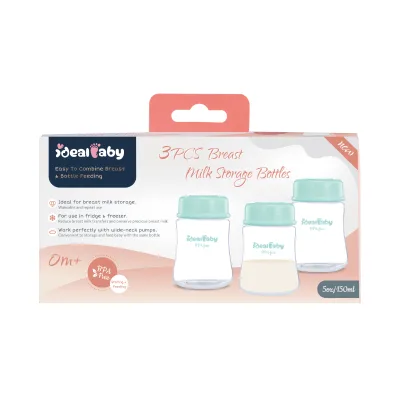


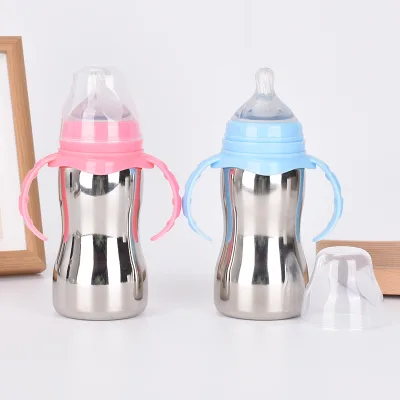


Wide-Caliber Baby Bottle for Newborns - Perfect for Breast Milk and Water
$1.13 - $1.27
MOQ: 126 Pieces


Comprehensive Sourcing Guide
Strategic Sourcing Guide for Milk Bottles and Feeding Systems
The global market for Milk Bottles and infant feeding systems has evolved into a complex landscape where material science, regulatory compliance, and supply chain reliability intersect. For procurement professionals and B2B buyers, sourcing these products requires a disciplined approach that prioritizes safety, functional integrity, and vendor capability over superficial marketing claims. This guide synthesizes observed market data and technical specifications to provide a framework for evaluating suppliers and products in this critical category. The focus remains on evidence-based decision-making, ensuring that every procurement strategy is grounded in verifiable facts rather than unconfirmed assertions.
Material Composition and Functional Specifications
The foundational decision in sourcing Milk Bottles involves selecting the appropriate material, as this dictates the product's safety profile, durability, and thermal resistance. Market observations reveal a diverse range of materials, including Polypropylene (P.P.), Glass, and Polyphenylsulfone (PPSU). Each material presents distinct advantages and operational constraints that must align with the intended application.
Polypropylene (P.P.) is frequently cited in product listings as a primary material for storage and feeding bottles. A critical attribute associated with P.P. variants in this sector is the "BPA Free" designation, a non-negotiable safety standard for infant products. These bottles often feature a "Wide Mouth" design, which facilitates easier filling, cleaning, and the addition of powdered formula. The "BPA Free" classification is a specific material feature observed in the supply chain, indicating the absence of Bisphenol A, a chemical of concern in plastic manufacturing.
Glass remains a dominant choice for buyers prioritizing purity and chemical inertness. Listings describe these as "Glass Baby Feeding Bottle" or "Glass Bottle for Feeding," often with capacities ranging from 150 mL to 260 mL. The "Wide Neck" and "Standard Neck" styles are common specifications, with the former generally preferred for ease of use and the latter for traditional handling. Glass bottles are noted for their durability in terms of chemical stability, though they require careful handling to prevent breakage.
PPSU (Polyphenylsulfone) represents a high-performance tier, often marketed for its strength and heat resistance. Products utilizing PPSU are described as having a "Wide Neck" style and are explicitly labeled as "BPA Free." The "Recyclable" feature is also highlighted for certain plastic variants, aligning with sustainability goals. When evaluating specifications, buyers must verify the exact capacity, which varies significantly across models, with observed sizes including 150 mL, 240 mL, 300 mL, and standard ounce equivalents like 8OZ and 5OZ. The "Mouth Size" and "Style" (Wide Neck vs. Standard Neck) are critical functional specifications that influence the user experience and the compatibility with sterilization equipment.
Regulatory Compliance and Certification Verification
In the infant feeding sector, certification is not merely a marketing tool but a prerequisite for market access and consumer trust. Procurement teams must rigorously verify that suppliers possess valid, current certifications from recognized bodies. The supply chain data indicates a strong emphasis on international standards, with specific certifications frequently appearing in product attributes.
Key certifications observed in the market include ISO 9001, which validates the supplier's quality management systems, and FDA (Food and Drug Administration) approval, which is essential for products intended for food contact in the United States. Additionally, BSCI (Business Social Compliance Initiative) and ISO certifications are noted, suggesting a focus on both product quality and ethical manufacturing practices. For European markets, the presence of EN71 and EN14350 certifications is critical, as these standards address safety requirements for toys and baby products, including mechanical and chemical safety.
The "SGS" certification is also mentioned, indicating third-party testing and verification of product safety and quality. Buyers should note that while "CE" marking is often associated with European compliance, its status in this specific dataset is listed as low-confidence background information. Therefore, procurement strategies should not rely on CE claims without direct verification from the supplier. Instead, buyers should request current, valid certificates for FDA, ISO, EN71, and SGS directly from the vendor. The "Advantage" of "No BPA / No Phthalates" is a common claim, but this must be substantiated by the aforementioned material certifications and test reports.
Cost Drivers and Pricing Structures
Understanding the cost structure of Milk Bottles is essential for budgeting and negotiating effective contracts. The observed price range in the market is exceptionally wide, spanning from $0.06 to $113,100. This vast disparity is not indicative of unit price volatility but rather reflects the difference between single-unit retail prices and bulk procurement contracts, or potentially the inclusion of complete sterilization systems versus individual bottles.
The primary cost drivers include the raw material type (Glass vs. P.P. vs. PPSU), the complexity of the mold, and the level of customization required. Customization options such as specific colors (Pink, Green, or Customized), branding, and packaging (Color Box, Color Window Box, Shrink Wrap) significantly impact the final unit cost. The "OEM Friendly" attribute suggests that suppliers are willing to produce private-label goods, which often involves setup costs for molds and branding.
Payment terms are a critical component of the financial agreement. Standard terms observed include a 30% deposit followed by a 70% balance before shipment or before deposit release. This structure is common in manufacturing to secure raw materials and cover initial production costs. Buyers should be aware that the "Selling Units" are often listed as "Single item" for catalog purposes, but actual procurement will be based on bulk quantities. The "MOQ" (Minimum Order Quantity) is a significant factor, with observed ranges from 1 to 30,000 units. A typical MOQ for specific models like the "52204" is 3,600 units, while others may require 3,000 pieces. These thresholds directly influence the unit economics and the feasibility of small-batch orders.
Supplier Evaluation and Operational Capabilities
Selecting the right supplier requires a deep dive into their operational capabilities, location, and business model. The majority of the observed supply originates from Guangdong, China, a region known for its robust manufacturing infrastructure in the plastics and glass sectors. The "Place of Origin" is a key identifier, and buyers should verify that the stated location matches the actual factory site to avoid intermediary markups.
The "Business Type" is predominantly listed as "Manufacturer," which implies direct control over the production process. This is advantageous for quality control and lead time management compared to trading companies. Suppliers emphasizing "Own Factory" and "Wholesale Price" as advantages suggest a direct-to-buyer relationship, which can result in better pricing and more transparent communication.
When evaluating suppliers, buyers should assess their customization capabilities. The market shows a high degree of flexibility, with "Customization" available for color, brand, and package. The "OEM Friendly" status confirms that suppliers can accommodate private labeling. However, the "Lead Time" is a critical operational metric. Observed delivery times range from 35 to 40 days after receiving the deposit. This timeline must be factored into the supply chain planning, especially for seasonal demand or urgent restocking needs. The "Payment" terms, typically 30% deposit and 70% balance, should be negotiated to align with production milestones rather than just shipment dates to mitigate risk.
Quality Control and Testing Protocols
Quality control (QC) is the backbone of a successful procurement strategy for infant feeding products. Given the sensitive nature of the end-use, buyers must implement rigorous QC protocols that go beyond the supplier's internal checks. The "Advantage" of "Durable" and "No BPA / No Phthalates" claims must be validated through independent testing.
Buyers should request detailed test reports that cover mechanical strength, thermal stability, and chemical migration. For glass bottles, impact resistance and thermal shock testing are essential. For plastic bottles, the verification of "BPA Free" status should be supported by GC-MS (Gas Chromatography-Mass Spectrometry) reports. The "Feature" of being "Recyclable" should also be verified against local recycling standards in the destination market.
The "Packing" method is also a quality control point. Options like "Color Box," "Color Window Box," and "Shrink Wrap" protect the product during transit. However, the integrity of the seal and the sterility of the bottle (if applicable) must be maintained throughout the shipping process. The "Usage" category, which includes "Nursing Bottle Sterilizer" and "Drinking," implies that the bottles must withstand repeated sterilization cycles without degrading. Buyers should specify the sterilization method (steam, dry heat, microwave) in their technical requirements to ensure the material can withstand the process.
Long-Term Procurement and Market Trends
Sourcing Milk Bottles is not a one-time transaction but a long-term partnership that requires strategic planning. The market trends indicate a shift towards sustainable materials and enhanced customization. The "Recyclable" feature and the availability of "Customized" colors and packaging suggest that buyers are increasingly expected to offer eco-friendly and brand-aligned products.
Future procurement strategies should focus on building relationships with manufacturers who demonstrate flexibility in "Customization" and adherence to evolving global standards. The "Model Number" variations, such as "SWBGS301," "WSUS002," and "SSPP305," indicate a diverse product portfolio. Buyers should maintain a dynamic supplier list that includes multiple models to mitigate supply chain disruptions.
Furthermore, the "Capacity" range, from 150 mL to 300 mL, allows for product diversification. Offering a range of sizes can cater to different stages of infant development, from newborns to older babies. The "Style" options, including "Wide Neck" and "Standard Neck," should be evaluated based on user feedback and market preferences in the target region.
In conclusion, sourcing Milk Bottles requires a meticulous approach that balances technical specifications, regulatory compliance, and supplier reliability. By focusing on verified certifications, clear material definitions, and robust quality control measures, buyers can navigate the complexities of this market effectively. The wide range of observed prices and MOQs underscores the importance of defining precise requirements before engaging with suppliers. Ultimately, a successful procurement strategy is built on transparency, verification, and a commitment to the highest standards of infant safety and product quality.
| Attribute Category | Observed Values / Options | Verification Requirement |
|---|---|---|
| Material | P.P., Glass, PPSU | Verify "BPA Free" certification and material safety data sheets. |
| Capacity | 150 mL, 240 mL, 260 mL, 300 mL, 5OZ, 8OZ | Confirm capacity accuracy against product specifications. |
| Certification | FDA, ISO 9001, EN71, EN14350, SGS, BSCI | Request current, valid certificates from recognized bodies. |
| MOQ | 1, 3,000, 3,600, up to 30,000 | Negotiate based on volume and budget constraints. |
| Lead Time | 35-40 Days (post-deposit) | Align with production schedules and inventory needs. |
| Customization | Color, Brand, Package, OEM | Define specific branding and packaging requirements early. |
| Payment Terms | 30% Deposit, 70% Balance | Ensure terms align with production milestones. |
| Origin | Guangdong, China | Verify factory location and business type (Manufacturer). |
FAQs
What materials are used for Milk Bottles?
Milk Bottles are commonly made from P.P., Glass, and PPSU materials. These options offer varying levels of durability and heat resistance, with P.P. and PPSU variants often featuring BPA Free properties for infant safety.
Which certifications should I verify for suppliers?
Suppliers should provide ISO 9001, FDA, BSCI, EN71, and SGS certifications. These documents verify quality management, food safety compliance, and ethical manufacturing practices required for infant feeding products in international markets.
What is the typical MOQ for Milk Bottles?
Minimum Order Quantities typically range from 1 to 30,000 units depending on the model. Specific models like 52204 require 3,600 units, while others may start at 3,000 pieces for standard production runs.
How long is the delivery time for orders?
Delivery times generally fall within 35 to 40 days after receiving the deposit. This lead time accounts for production scheduling and quality checks before the goods are shipped from the factory in Guangdong, China.
Can I customize the color and packaging?
Yes, customization is available for colors like Pink and Green, as well as brand and package designs. Suppliers offer OEM friendly services allowing for tailored Color Boxes, Shrink Wrap, or Customized packaging solutions.
What payment terms are standard for these orders?
Standard payment terms require a 30% deposit followed by a 70% balance before shipment. This structure secures raw materials and covers initial production costs while ensuring the buyer receives the goods as agreed.