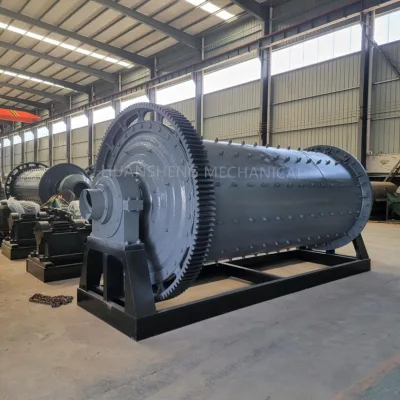
Source Mining Concentration Wet Ball Mill for mineral, chemical, and construction
Compare 30 verified Mining Concentration Wet Ball Mill options from Chinese manufacturers. Buyers can evaluate specifications like feeding size, production capacity, and motor power to select the right equipment for mineral operations, chemical industries, and construction projects.
Key considerations
Products List


$1000.00 - $80000.00
MOQ: 1 Pieces


Nile Machinery High Efficiency Mining Equipment Ore Wet Grinding Ball Mill
$4600.00 - $5000.00
MOQ: 1 Pieces


Dry and Wet Industrial Ball Mill for Mine Grinding and Processing, Ball Grinding Mill
$5600.00 - $200000.00
MOQ: 1 Pieces

Wet and Dry Continuous Ball Mill for Mineral Processing, Ball Grinding Mill
$5600.00 - $200000.00
MOQ: 1 Pieces



Comprehensive Sourcing Guide
Strategic Sourcing Guide for Mining Concentration Wet Ball Mills
Understanding Core Technical Specifications and Operational Parameters
When sourcing a wet ball mill for mining concentration, the primary objective is to identify equipment capable of reducing ore to a fine particle size suitable for subsequent separation processes. The wet grinding method is particularly favored in mineral processing for its ability to handle sticky or fine-grained materials efficiently, preventing dust generation and ensuring a uniform slurry consistency. Based on observed market data, these units typically feature a diameter ranging up to 6 meters, indicating a capacity for large-scale industrial operations. The feeding granularity is a critical parameter, with standard inputs ranging from 0 to 25 millimeters, though some heavy-duty configurations can accommodate feed sizes up to 500 millimeters for large-scale crushing applications prior to milling.
The production capacity is another vital specification, with observed throughput rates varying between 10.6 and 125 tons per hour. This wide range suggests that buyers must align the mill's capacity with their specific mine's daily output requirements. The output size is generally targeted between 0.074 and 0.4 millimeters, which is the optimal range for many mineral liberation processes. The rotational speed of the mill drum is a key mechanical variable, typically observed in the range of 16 to 25 revolutions per minute, depending on the specific model and liner configuration. For instance, smaller models may operate at higher speeds (23-25 r/min) compared to larger units (16-18 r/min) to maintain the necessary grinding media dynamics. The motor power required can vary significantly, with examples ranging from 7.5KW for smaller units to 180KW for larger industrial machines, necessitating a careful assessment of the local power infrastructure.
Compliance, Certification, and Standard Verification
In the international procurement of heavy industrial machinery, verifying compliance with international standards is essential for safety and operational reliability. The observed market data indicates that many suppliers adhere to ISO certification standards, which serves as a baseline for quality management systems. However, buyers must recognize that "ISO" is a broad category, and specific technical standards for the mill's design, such as those related to pressure vessels or electrical safety, should be explicitly requested. Some product listings reference specific model numbers like 3660 or 2200*5500, which may correspond to internal manufacturer standards or specific dimensional configurations rather than universal industry codes.
It is crucial to distinguish between the product's origin and the standards it meets. The majority of the observed supply originates from China, with specific manufacturing hubs noted in Henan province. While the origin is a known fact, the application of standards such as "12070* 5000*3970mm" suggests that dimensional tolerances and structural specifications are often customized or tied to specific model requirements. Buyers should verify if the "according to the customer's requirement" standard mentioned in listings implies a bespoke engineering approach or a deviation from standard industry norms. Furthermore, the material composition, often described as high-quality steel casting, must be verified against the specific corrosion and wear resistance requirements of the ore being processed. Ensuring that the steel grade matches the abrasiveness of the mineral is a non-negotiable aspect of compliance in wet milling applications.
Cost Drivers and Financial Considerations in Procurement
The pricing structure for wet ball mills is influenced by a complex interplay of factors, including capacity, customization, and logistical requirements. The observed price range in the market spans from 1,000 to 2,800,000 USD, reflecting the vast difference between small-scale laboratory units and massive industrial processing plants. This extreme variance underscores the importance of defining the exact scope of the project before requesting quotes. The cost is heavily driven by the motor power, the diameter of the mill, and the quality of the grinding media and liners. For example, a unit with a 180KW motor and a 6-meter diameter will command a significantly higher price than a 7.5KW unit with a smaller footprint.
Customization is a major cost driver, as many suppliers offer "Customized" or "Customizable" options for model specifications, packing, and standard compliance. While customization allows for a perfect fit with existing mine infrastructure, it often extends the lead time and increases the unit price. The observed lead time of 45 days is a baseline for standard configurations, but custom orders may require additional time for engineering and manufacturing. Additionally, the packing method, whether "Wooden Cases," "Container," or "Suitable for Long Distance and Sea Transportation," impacts the final landed cost. Buyers should factor in the logistics of transporting a 37-ton unit, as the weight of the grinding media and the mill itself requires specialized shipping arrangements. The "Semiautomatic" grade of the equipment also influences cost, as fully automated systems with advanced control interfaces will be more expensive than those requiring manual intervention.
Typical Applications and Industry Suitability
Wet ball mills are versatile pieces of equipment designed for a wide array of applications within the mining and processing sectors. The primary application is mineral operation, specifically for the concentration of ores such as gold, silver, copper, and iron. The ability to process these materials in a wet state allows for efficient separation of valuable minerals from the gangue. Beyond mining, these mills are also utilized in the chemical industry and construction sectors, where fine grinding of raw materials is required. The "Application Industry" data confirms suitability for mining, metallurgy, and construction, highlighting the machine's adaptability to different material properties.
The grinding method, whether dry or wet, is a critical selection criterion. Wet grinding is preferred for its ability to produce finer particles and reduce the risk of dust, which is particularly important in environmentally sensitive mining operations. The mill's ability to handle "Applicable Raw Materials" like gold and iron mines suggests a robust design capable of dealing with high-density and abrasive ores. The "High Grinding Efficiency" and "Stable Grinding Capacity" are essential attributes for maintaining consistent output in continuous mining operations. Buyers should ensure that the selected mill is compatible with their specific ore type, as the hardness and abrasiveness of the material will dictate the wear rate of the liners and the grinding media. The "Easy-to-replace wear parts" feature is particularly valuable in this context, as it minimizes downtime during maintenance cycles.
Supplier Evaluation and Quality Assurance Protocols
Evaluating a supplier for a wet ball mill requires a rigorous assessment of their technical capabilities, after-sales support, and manufacturing history. The presence of "Engineers Available to Service Machinery Overseas" is a significant indicator of a supplier's commitment to long-term support, which is crucial for remote mining operations. Buyers should verify the supplier's ability to provide spare parts for the "Whole Life" of the machine, as the availability of components directly impacts the operational continuity of the mine. The "Brand" recognition, such as "Hongke," can serve as a proxy for reliability, but it should not be the sole criterion for selection.
Quality control should be a central part of the procurement process. Buyers must request detailed documentation regarding the manufacturing process, including material certifications for the steel casting and welding procedures. The "Automatic Grade" being "Semiautomatic" implies a need for human oversight, so the control systems should be evaluated for ease of use and reliability. The "Maintenance" aspect, characterized by low maintenance costs and easy-to-replace parts, should be validated through case studies or references from existing clients. Additionally, the "Production" capacity of the supplier should be assessed to ensure they can meet the required delivery timelines, especially given the 45-day lead time observed in the market. A supplier with a proven track record in exporting to regions like Africa, as suggested by the "Container/Africa Local Transportation" packing options, is likely to have experience with the logistical challenges of international trade.
Long-Term Procurement and Lifecycle Management
The acquisition of a wet ball mill is a long-term investment that requires careful planning for lifecycle management. The "Customization" and "Customized" options allow for future-proofing the equipment, ensuring it can adapt to changes in ore processing requirements. However, this flexibility must be balanced against the complexity of maintenance and the availability of spare parts. The "After-Sales Service Provided" is a critical factor, as the ability to troubleshoot issues remotely or on-site can prevent costly production stoppages. Buyers should negotiate service level agreements that cover regular inspections, part replacements, and technical training for local operators.
The "Lead Time" of 45 days is a standard expectation, but buyers should account for potential delays in shipping and customs clearance, especially for large equipment like a 37-ton mill. The "Packing" standards, such as "Standard Export Package" or "Wooden Cases," must be verified to ensure the equipment arrives in optimal condition. The "Color" requirement, while seemingly minor, can be part of a broader branding or safety protocol for the mine site. Finally, the "Supply Spare Parts" commitment for the "Whole Life" of the machine ensures that the mill remains operational for decades, maximizing the return on investment. By focusing on these long-term considerations, buyers can secure a reliable asset that supports their mining concentration operations efficiently and sustainably.
Comparative Analysis of Key Mill Attributes
To facilitate decision-making, the following table summarizes the key attributes observed in the market for wet ball mills, highlighting the variations buyers may encounter.
| Attribute | Observed Range/Value | Procurement Implication |
|---|---|---|
| Model Specifications | 3660, 22005500, 9001100, Customizable | Verify dimensions against site constraints; custom models offer flexibility but higher cost. |
| Diameter | Up to 6 Meters | Larger diameters increase capacity but require more robust foundations and higher power. |
| Feeding Granularity | 0~25 mm (Standard), Up to 500 mm (Large) | Ensure pre-crushing equipment matches the mill's feed requirements. |
| Production Capacity | 10.6 ~ 125 T/H | Select capacity based on daily ore throughput targets; avoid under-sizing. |
| Output Size | 0.074 - 0.4 mm | Critical for downstream separation efficiency; verify with lab tests if possible. |
| Motor Power | 7.5KW ~ 180KW | Match power supply infrastructure; higher power correlates with larger capacity. |
| Rotational Speed | 16-25 r/min | Affects grinding efficiency; verify liner design compatibility with speed. |
| Grinding Media Weight | 37 T (Example) | Calculate logistics and foundation load-bearing requirements accurately. |
| Certification | ISO | Verify specific ISO standards apply to the specific machine components. |
| Origin | China (Henan) | Consider logistics costs and lead times associated with this region. |
| Lead Time | 45 Days (Standard) | Plan production schedules accordingly; custom orders may take longer. |
| Maintenance | Easy-to-replace parts, Low cost | Prioritize suppliers with accessible spare parts networks. |
This comparative overview underscores the necessity of a tailored approach to sourcing. Buyers must align the specific technical parameters with their operational needs, ensuring that the selected wet ball mill delivers the required performance while remaining cost-effective over its entire lifecycle. By adhering to these guidelines and rigorously verifying the supplied facts, procurement teams can mitigate risks and secure high-quality equipment for their mining concentration operations.
FAQs
What is the typical production capacity for these mills?
Production capacity ranges from 10.6 to 125 tons per hour depending on the specific model selected. This wide range allows buyers to match the mill's output directly to their mine's daily processing requirements.
How long is the standard lead time for delivery?
The standard lead time is typically 45 days for most configurations. Customized orders or specific model requirements may extend this timeline beyond the baseline period observed in the market.
Which certifications are commonly available for these machines?
Many units come with ISO certification as a baseline for quality management. Buyers should verify specific technical standards for safety and design compliance before finalizing procurement agreements.
Can the mill handle large feed sizes for crushing applications?
Yes, some heavy-duty configurations can accommodate feed sizes up to 500 millimeters. Standard feeding granularity usually ranges from 0 to 25 millimeters for typical grinding operations.
What is the maximum diameter available for these ball mills?
The maximum diameter observed in the market is up to 6 meters. Larger diameters generally indicate higher capacity suitable for large-scale industrial mining operations.
How is the equipment packed for long-distance shipping?
Packing options include wooden cases, containers, or packages suitable for sea transportation. These methods ensure the equipment remains secure during long-distance and international logistics.
What is the rotational speed range for the mill drum?
Rotational speeds typically range between 16 and 25 revolutions per minute. Smaller models often operate at higher speeds while larger units function at lower speeds to maintain grinding dynamics.