Source Modern Ceramic Dinner Plate Set for Restaurants, Hotels, and Catering
Explore 30 listings for the Modern Ceramic Dinner Plate Set, featuring options in bone china and glazed porcelain. Compare specifications like size, certification, and customization availability to find suitable tableware for daily use or commercial hospitality; compare the available evidence and request quotations based on your requirements.
Key considerations
Products List


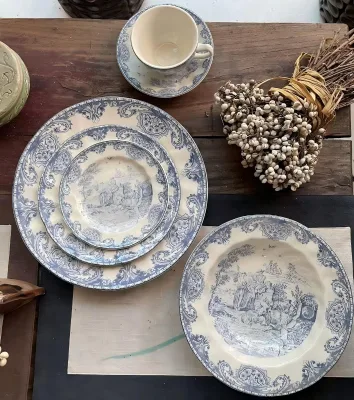


18PCS Dinnerware Dish Set for 6, Ceramic Tableware Set, Modern Plates and Bowls Set
$17.80 - $18.00
MOQ: 500 Sets


Ceramic Tableware Porcelain Side Dinner Plates Set for Hotel and Restaurant
$1.38 - $6.88
MOQ: 100 Pieces


Comprehensive Sourcing Guide
Modern Ceramic Dinner Plate Set Sourcing Guide
Sourcing a Modern Ceramic Dinner Plate Set requires careful attention to material composition and manufacturing origin, as the market features distinct variations in porcelain quality. Buyers should verify that suppliers explicitly state the use of high-grade porcelain or bone china, which ensures the necessary density and translucency for premium tableware. The observed product data indicates a strong presence of manufacturers from Liling, Hunan, and Chazhou, Guangdong, regions known for specialized ceramic production capabilities.
Procurement decisions must also account for the specific customization options available, such as custom logos or unique color schemes like multicolor or blue finishes. While some listings offer stock items, others provide OEM and ODM services with sample offerings, allowing buyers to validate design intent before mass production. Understanding whether the product is handmade or glazed is critical, as these techniques directly influence the final aesthetic and durability of the dinnerware set.
Product Scope and Observed Listing Signals
The product scope for modern ceramic dinner plates spans various functional categories, including daily use sets and specialized eco-friendly collections. Listings frequently highlight features such as thermostability and health care benefits, suggesting these items are designed for frequent, safe use in household environments. The observed data confirms that products range from simple, glazed plates to complex sets with specific dimensions, such as 8-inch plates or bowls with capacities between 240ml and 400ml.
Buyers must distinguish between stocked inventory and fully customized orders, as this distinction dictates lead times and minimum order quantities. The market shows a wide range of MOQs, from small batches of 10 units to large industrial orders of 5000 pieces, with some specific models requiring a baseline of 3000 pieces. Packaging varies significantly between brown boxes and cartons, which impacts shipping costs and the protection of fragile ceramic items during transit.
Technical Specifications to Verify
Technical verification begins with precise dimensional standards, as the observed listings specify exact measurements like 152.2cm or 303cm for different plate sizes. Buyers should confirm that the listed model numbers, such as FS13924 or 9046, correspond to the intended physical specifications to avoid receiving mismatched components in a set. The standardization of sizes is crucial for ensuring that plates, bowls, and cups within a set are compatible and aesthetically consistent for the end consumer.
Material integrity is another critical technical parameter, with suppliers often citing raw materials like porcelain or ceramics and techniques such as glazing. It is essential to verify the making method, whether the items are handmade or machine-produced, as this affects the uniformity and finish of the product. Additionally, the presence of specific features like handles on cup accessories or the color finish, such as blue or multicolor, must be confirmed against the physical sample to ensure it matches the design requirements.
Compliance and Safety Documentation
Compliance documentation is non-negotiable for ceramic dinnerware intended for food contact, requiring suppliers to provide valid certifications from recognized bodies. The observed data lists multiple certifications including CE/EU, FDA, CIQ, LFGB, and EEC, which are essential for verifying that the glazes and materials do not leach harmful substances into food. Buyers must request current certificates for each specific model to ensure that the production batch adheres to the safety standards claimed in the product listing.
Safety verification also extends to the functional claims made by the supplier, such as thermostability and discoloring resistance. These attributes are critical for ensuring the dinnerware can withstand repeated washing and heating cycles without degrading or releasing toxins. Procurement teams should cross-reference the provided certification list with the specific product model number to confirm that the safety standards apply to the exact item being purchased rather than a generic category.
Cost Drivers and Commercial Terms
Cost drivers in the ceramic dinnerware market are heavily influenced by the level of customization, material quality, and order volume. While base prices for standard items may be low, the addition of custom logos, specific color schemes, or unique shapes can significantly increase the unit cost. Buyers should analyze the relationship between the observed price range and the specific material composition, noting that bone china and handmade techniques typically command a premium over standard ceramic alternatives.
Commercial terms and payment structures vary widely, with common options including TT, DP at sight, LC at sight, and Western Union. The minimum order quantity acts as a primary cost driver, as smaller orders often incur higher per-unit costs due to setup and production inefficiencies. Suppliers may offer different packing options, such as cartons or brown boxes, which can affect the total landed cost depending on the shipping method and the fragility of the ceramic items.
Supplier Qualification and Quality Control
Supplier qualification requires a thorough review of their production capabilities, including their location and specific manufacturing methods. The observed data highlights suppliers in Liling, Hunan, and Chazhou, Guangdong, which are established hubs for ceramic production, but buyers must verify the specific factory's capacity to handle their required order volume. Confirming that the supplier accepts OEM and ODM requests is vital for ensuring they can adapt their production lines to meet unique design specifications.
Quality control protocols must be established before production begins, focusing on the verification of samples and the consistency of the glazing process. Buyers should insist on receiving an OEM sample to test for durability, color accuracy, and dimensional precision before authorizing a full production run. Establishing clear acceptance criteria for defects, such as chipping or uneven glazing, is essential to maintain the high standards expected for modern ceramic dinnerware sets.
Long-Term Procurement Checks
Long-term procurement success depends on maintaining consistent quality and supply chain reliability over multiple order cycles. Buyers should implement a system for periodic re-verification of certifications and material standards to ensure that the supplier continues to meet safety and performance requirements. Regular audits of the production process can help identify potential issues early, such as changes in raw material sources or shifts in manufacturing techniques that might affect product integrity.
Building a strategic partnership with the supplier involves clear communication regarding future design needs and volume fluctuations. Suppliers that offer flexible payment terms and robust sample services are better positioned to support long-term growth and adaptation to market trends. Establishing a history of successful transactions and consistent quality delivery will facilitate smoother negotiations and potentially better pricing terms as the procurement volume increases over time.
FAQs
What certifications are available for these ceramic dinner plates?
The products hold CE/EU, FDA, CIQ, LFGB, and EEC certifications. These credentials ensure compliance with international safety and quality standards for food contact materials. Buyers can verify specific documentation for each model to meet regional regulatory requirements before placing bulk orders.
Can I customize the logo on the ceramic dinner plates?
Yes, custom logo printing is available for these ceramic items. The supplier accepts OEM and ODM requests, allowing buyers to brand the products with their own designs. This customization option supports private labeling strategies for retailers and distributors seeking unique product offerings.
What is the minimum order quantity for these ceramic plates?
The standard minimum order quantity is 3000 pieces. However, observed ranges vary from 10 to 5000 pieces depending on the specific model and stock availability. Buyers should confirm the exact MOQ with the supplier for their selected product code to ensure order feasibility.
Which specifications are offered for the Modern Ceramic Dinner Plate Set?
Specifications include sizes like 8-inch plates and models such as FS13924 and 4236. Dimensions range from 15x2.2cm to 30x3cm, with capacities between 240ml and 400ml. These varied sizes cater to different table settings, from side dishes to main course servings.
Where are these ceramic dinner plates manufactured?
These ceramic products originate from China, specifically Liling in Hunan province and Chazhou in Guangdong province. These regions are known for their ceramic manufacturing expertise. Buyers can trace the origin to ensure alignment with their sourcing preferences and supply chain logistics.
What payment terms are accepted for these ceramic dinner plates?
Accepted payment terms include T/T, D/P at Sight, L/C at Sight, and Western Union. These flexible options accommodate different transaction sizes and risk preferences. Buyers should discuss specific terms with the supplier to finalize the purchase agreement and secure production schedules.