Source Modern Casting Glass Flower Vase for Home Decor
Explore 30 listings for the Modern Casting Glass Flower Vase, comparing styles like creative and fashion designs suitable for home decoration. Buyers can review specifications including sizes, glaze types, and customization options from suppliers in China.
Key considerations
Products List


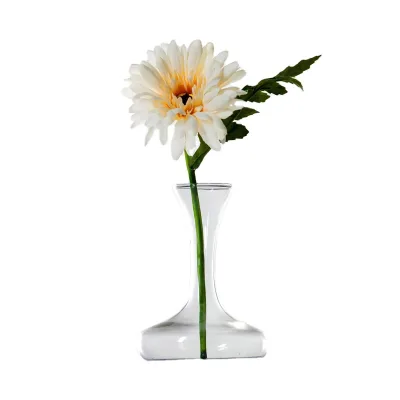
Glass Product Brown Modern Glass Flower Vase for Home Decor Factory Supply
$2.00 - $5.00
MOQ: 300 Pieces


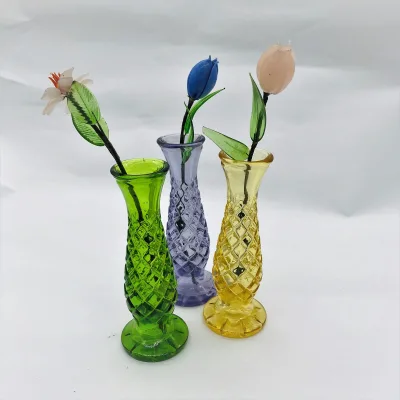
Modern Home Colored Design Decorate Glass Flower Vase for Home Decoration
$2.00 - $5.00
MOQ: 300 Pieces






Comprehensive Sourcing Guide
Strategic Sourcing Guide for Modern Casting Glass Flower Vases
Understanding the Technical Landscape of Glass Vase Manufacturing
The Modern Casting Glass Flower Vase represents a convergence of traditional craftsmanship and contemporary industrial design. When sourcing these items, buyers must first distinguish between the specific processing methods observed in the current market. The supply chain for these products is dominated by two primary techniques: blown glass and hand-made processes. Blown glass production typically yields vessels with a more uniform, organic curvature, often associated with the "1946-20SL" and "glass vase" model designations found in current catalogs. Conversely, hand-made processing, as indicated by specific product attributes, suggests a higher degree of artisanal variation, where each piece may possess unique textural qualities or slight dimensional deviations that are characteristic of the "1766-25/1766-18" and "XBYJESSICA1-1889--8" model lines.
The material composition is consistently identified as glass, yet the finish and glaze types vary significantly, influencing both the aesthetic and functional utility of the product. Buyers will encounter items described with a "Color Glazed" finish, which provides a vibrant, opaque appearance suitable for decorative accents. In contrast, "Transparent" and "Clear" finishes offer a minimalist aesthetic, allowing the natural beauty of the flowers to remain the focal point. The "Colored" finish attribute further expands the palette, often resulting in a tinted or stained glass effect. It is critical to note that while "Glass" is the universal material, the specific "Glaze Type" and "Finish" must be verified against the intended design language of the buyer's brand. The standard dimensions observed range from "Small" to "Medium" sizes, with specific height specifications such as "14.5x20cm H", "9x16m H", "18x14.5cm H", and "12x30cm H". These variations indicate that the market does not adhere to a single standardized size but rather offers a diverse range of proportions to suit different floral arrangements and interior design schemes.
Compliance, Certification, and Regulatory Verification
Navigating the regulatory landscape for glass products requires a rigorous verification of supplier certifications and factory audits. The sourcing environment for these items, particularly those originating from China and Jiangsu, includes suppliers that have undergone specific third-party evaluations. Key audit standards observed in the market include BSCI (Business Social Compliance Initiative) and FSC (Forest Stewardship Council). The presence of these audits suggests that the supply chain is monitored for social responsibility and environmental sustainability, particularly regarding packaging materials. Buyers should verify that the "Factory Audit" status is current and directly applicable to the specific manufacturing facility producing their order, as certifications are often facility-specific rather than company-wide.
Regarding product-specific certifications, the market data indicates the existence of "ISOColor:Transparent" designations. This suggests that some manufacturers adhere to specific color consistency standards or ISO-related quality benchmarks for transparent glass products. However, buyers must exercise caution and not assume that all listed products automatically possess these certifications. The "Certification" attribute is often listed as a capability or a specific product feature rather than a blanket guarantee for the entire supplier portfolio. When evaluating a potential partner, procurement teams should request valid, up-to-date certification documents that explicitly cover the production line for the requested "Modern Casting Glass Flower Vase" models. Additionally, while "OEM" and "ODM" capabilities are widely advertised, indicating a supplier's ability to customize designs and develop new technologies, these services should be validated through a formal development agreement that outlines intellectual property rights and quality control protocols.
Cost Drivers and Pricing Dynamics
The pricing structure for modern glass flower vases is influenced by a complex interplay of factors, including material costs, processing complexity, customization levels, and order volume. The observed price range in the market spans from $0.20 to $19.99 USD, reflecting the vast diversity in product quality, size, and design intricacy. At the lower end of the spectrum, products are likely mass-produced, utilizing standard "Blown" or automated processes with minimal customization. These items often feature "Carton" or "Brown Box" packing and are designed for high-volume, low-margin distribution. Conversely, the upper end of the price range typically corresponds to "Hand-Made" items, which command a premium due to the labor-intensive nature of the production process and the unique aesthetic value of each piece.
Customization is a primary driver of cost variance. Suppliers offering "Customized" solutions, including specific "Logo" placements (with options for "Six Different Logo" variations) and tailored "Glaze Types," will inevitably charge higher unit prices. The "MOQ" (Minimum Order Quantity) also plays a pivotal role in the final cost per unit. The market exhibits a wide MOQ range, from as low as 2 units for sample orders or small boutique runs, up to 20,000 units for large-scale industrial contracts. Specific product lines have defined MOQ thresholds, such as 100 units for certain models and 2,000 units for others. Buyers must balance their budget constraints with their volume requirements; ordering below the standard MOQ may result in significantly higher per-unit costs or require the payment of a sample fee. Furthermore, the "Sample" availability and the "Stocked" status of certain models can impact lead times and initial costs, with stocked items generally offering faster delivery and potentially lower pricing due to economies of scale.
Typical Applications and Design Integration
The functional versatility of modern casting glass flower vases extends across multiple sectors, driven by their specific attributes and design capabilities. The primary application is "Decorative" use within "Home" environments, where the "Fashion" and "Creative" styles of these vases serve as statement pieces in living rooms, entryways, and dining areas. The "Everyday" and "Modern" age classifications indicate that these products are designed for contemporary lifestyles, moving away from traditional or antique aesthetics toward sleek, minimalist, or bold artistic forms. The "Small" and "Medium" sizes are particularly well-suited for tabletop arrangements, while larger dimensions support floor-standing displays.
Beyond residential use, the "Personal Care Product" classification suggests a secondary market application where these glass vessels are repurposed or designed for bathroom accessories, such as holding cotton swabs, toothbrushes, or decorative soaps. The "No" sealing type attribute confirms that these are open vessels, making them unsuitable for liquid storage without modification but ideal for dry decorative displays or fresh floral arrangements. The "OEM/ODM" support allows brands to integrate these vases into their own product lines, whether for home decor retailers, hospitality chains, or lifestyle brands. The ability to customize the "Logo" and "Style" enables businesses to create branded merchandise that aligns with their specific identity. Whether for a high-end hotel lobby or a boutique retail store, the "Glass" material offers a timeless appeal that complements various interior design themes, from industrial chic to Scandinavian minimalism.
Supplier Evaluation and Production Capabilities
Selecting the right supplier requires a deep dive into their manufacturing capabilities and operational flexibility. The market data highlights a clear distinction between suppliers offering "OEM" (Original Equipment Manufacturer) services and those providing "ODM" (Original Design Manufacturer) solutions. OEM suppliers are best suited for buyers who have specific design requirements and need a partner to execute their exact specifications, such as the "1946-20SL" or "1162-30SL" models. ODM suppliers, on the other hand, are ideal for buyers seeking innovation and design development, leveraging the supplier's "Development Tech" to create unique products that may not yet exist in the market.
When evaluating potential partners, buyers should prioritize suppliers with a proven track record in "Hand-Made" or "Blown" glass processing, depending on the desired product quality. The "prod_packing" attributes, ranging from "Carton" to "Carton+Pallet" and "Brown Box," indicate the supplier's capacity for different shipping and storage requirements. For large orders, the "Carton+Pallet" option suggests a robust logistics capability that ensures product safety during transit. Additionally, the "Stocked: Yes" attribute is a valuable indicator of a supplier's ability to fulfill urgent orders without long lead times. Buyers should also verify the "prod_origin" to ensure alignment with their sourcing strategy, with "China" and "Jiangsu" being prominent regions known for glass manufacturing expertise. The presence of "Six Different Logo" options demonstrates a supplier's flexibility in branding, which is crucial for companies looking to establish a distinct market presence.
Quality Control and Long-Term Procurement Strategy
Ensuring consistent quality in glass vase procurement requires a robust quality control (QC) framework. Given the fragility of glass and the variability inherent in "Hand-Made" processes, buyers must establish clear acceptance criteria before production begins. This includes verifying the "prod_standard" dimensions, such as "18.7x12x25cm" or "10*30cm", to ensure they meet the design specifications. The "Glaze Type" and "Finish" must be inspected for consistency, ensuring that "Color Glazed" items do not exhibit uneven coloring and that "Transparent" items are free from bubbles or distortions.
For long-term procurement, buyers should focus on building a relationship with suppliers who offer "Sample" services and demonstrate a commitment to continuous improvement. The availability of samples allows for rigorous testing of durability, aesthetics, and packaging integrity before committing to large orders. Additionally, the "Custom" and "Customized" attributes suggest that suppliers are willing to adapt to changing market trends, which is essential for maintaining a competitive edge. Buyers should also consider the environmental impact of their procurement, leveraging suppliers with "FSC" certified packaging to support sustainability goals. By maintaining a clear understanding of the "MOQ" requirements and pricing structures, buyers can optimize their inventory levels and cash flow, ensuring a steady supply of high-quality glass flower vases that meet the evolving demands of the modern market.
FAQs
What processing methods are used for these glass vases?
These vases are produced using blown and hand-made processing methods. Blown glass offers uniform curvature, while hand-made techniques provide unique artisanal variations and textural qualities for specific model lines.
Which certifications are available for these glass products?
Some manufacturers hold BSCI and FSC factory audits for social and environmental compliance. Specific products may also feature ISOColor designations for transparent glass, though these are product-specific rather than blanket guarantees.
How does customization affect the minimum order quantity?
Customization options like logos and glaze types often require higher minimum order quantities. Standard models may start at 100 units, while customized runs can require up to 2,000 units or more depending on the design complexity.
What are the typical size specifications for these vases?
Sizes range from small to medium with specific heights like 14.5x20cm H or 12x30cm H. Buyers should verify exact dimensions against their floral arrangement needs as no single standard size applies to all listed models.
Can I get samples before placing a large order?
Yes, suppliers provide samples for most product lines to verify quality and aesthetics. Stocked items may offer faster delivery, but custom designs typically require sample approval before full production begins to ensure design accuracy.
Where are these glass vases primarily manufactured?
The primary manufacturing origins are China and the Jiangsu region. These locations are known for glass manufacturing expertise, offering a mix of OEM and ODM capabilities for various design and customization requirements.
What packaging options are available for these products?
Packaging includes carton, brown box, and carton plus pallet options. The choice depends on order volume and shipping requirements, with palletized packaging often used for large industrial contracts to ensure product safety during transit.