Source Modern European Rustic Flower Vase for Kitchen, Restaurant, Gift
Compare 30 listings of Modern European Rustic Flower Vase featuring geometric and round shapes in multicolor or black. These decorative vases suit kitchen, restaurant, and gift applications with customizable sizes and logos.
Key considerations
Products List

European Ceramic Vase Custom Modern Decorative Ceramic Vase Outdoor Indoor Tall Flower Vase
$1.50 - $3.00
MOQ: 3000 Pieces

Round Ceramic Decorative Vase Custom Gift Flower Vase Modern Ceramic Vase
$1.00 - $3.00
MOQ: 3000 Pieces


High Quality Modern Ceramic Vase Custom Decorative Ceramic Vase Minimalist Ceramic Flower Vase
$1.50 - $3.00
MOQ: 3000 Pieces

Factory Simple Flower Vase Custom Ceramic Plant Vase Black Indoor Flower Vase
$1.50 - $3.00
MOQ: 3000 Pieces


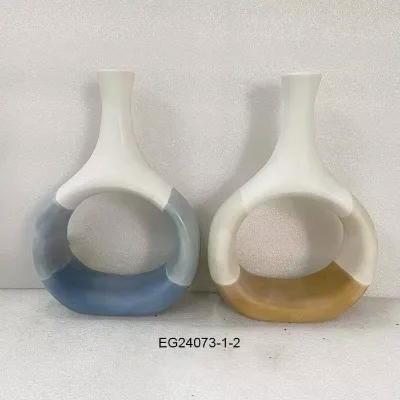
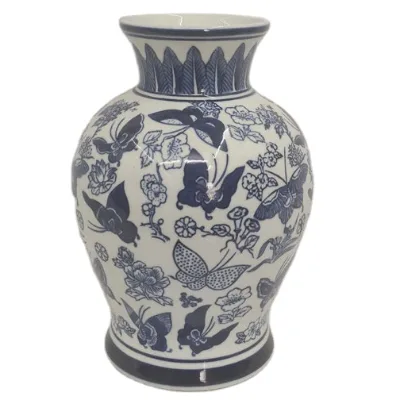
Flower Vase Blue and White Ceramic, New, Vintage, Chinese, Decorative Home
$9.00 - $33.43
MOQ: 300 Minimum


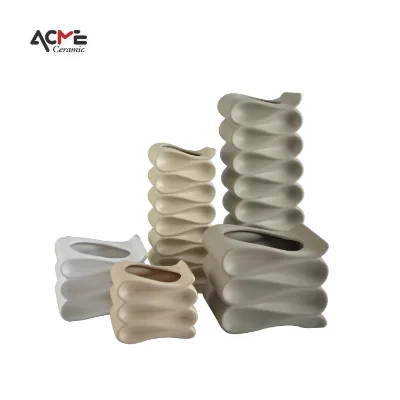
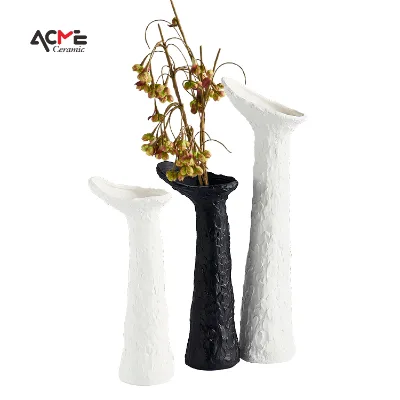
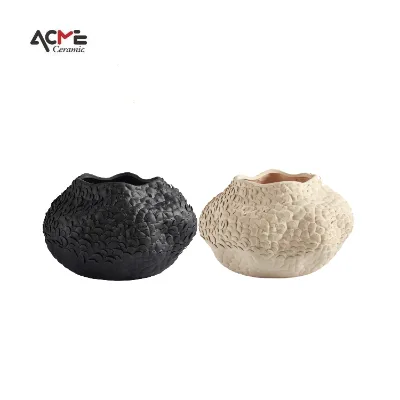
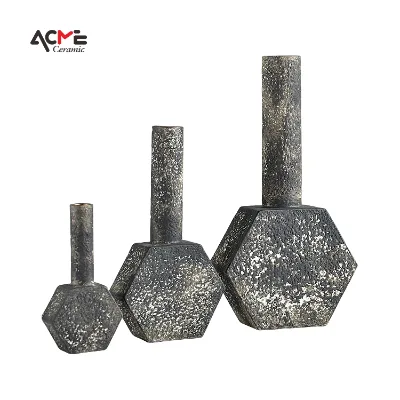


Comprehensive Sourcing Guide
Strategic Sourcing Guide for Modern European Rustic Flower Vases
The global market for home decor has seen a sustained shift toward styles that blend contemporary aesthetics with traditional craftsmanship. Within this landscape, the "Modern European Rustic Flower Vase" represents a specific niche where clean lines meet textured, earthy finishes. For B2B procurement professionals, sourcing this category requires a nuanced understanding of material properties, dimensional standards, and the specific customization capabilities of suppliers. This guide provides a structured approach to identifying viable suppliers and products that align with the "modern European rustic" aesthetic while adhering to strict quality and compliance standards.
Defining the Aesthetic and Material Profile
The term "modern European rustic" often implies a fusion of functional simplicity with organic textures. In the context of the available product data, this style is frequently associated with "Creative" and "Fashion" design attributes. Buyers should look for products that exhibit a "Multicolor" palette or specific finishes like "Black" and "Color Glazed" to achieve the desired rustic yet modern look. The material composition is a critical differentiator; the data indicates a strong presence of "Glass" and "Ceramic" options.
Glass vases in this category often feature a "Transparent" glaze type or a "Colored" finish, achieved through "Blown" processing techniques. This method allows for the creation of unique, irregular shapes that contrast with the "Round" or "Geometric" forms found in ceramic counterparts. The "Irregular" shape attribute is particularly relevant for rustic designs, as it mimics natural forms, while "Round" shapes often cater to the more structured, modern European interpretation. When evaluating potential inventory, procurement teams must verify if the product's "Style" aligns with the "Creative" or "Fashion" descriptors provided in the supplier catalog, ensuring the visual output matches the target market's expectations.
Technical Specifications and Dimensional Standards
Precision in dimensions is paramount for logistics and display planning. The supplied product data reveals a wide variance in standard sizes, ranging from small decorative pieces to large statement vases. Buyers must carefully cross-reference the specific "prod_standard" values against their logistical constraints. For instance, one observed standard is "Top dia. 6xBottom8.7xH20.2cm," while another is "Top Dia. 2xW7.5xH13.5cm." Larger models may reach dimensions such as "18.78.630cm H" or "15826cm H."
The following table summarizes the observed dimensional ranges and model identifiers to assist in technical verification:
| Product Model | Standard Dimensions (Approx.) | Size Category | Shape Attribute |
|---|---|---|---|
| VG-K1047 | Top dia. 6xBottom8.7xH20.2cm | Medium | Irregular |
| VG-K1042 | Top Dia. 2xW7.5xH13.5cm | Small | Round |
| GA946-30D | 18.78.630cm H | Large | Irregular |
| 1946-20SL | 14.5x20cm H | Medium | Geometric |
| Custom | 1316cm H to 1616.5cm H | Small/Medium | Round |
It is crucial to note that "Customized Size" is a frequently available option. However, when ordering custom dimensions, buyers must verify the "prod_standard" explicitly, as the "Customized" attribute implies a deviation from the baseline models. The "Size" attribute is further categorized as Small, Medium, or Large, which aids in determining the appropriate "Application Scenario," such as "Kitchen," "Restaurant," or "Market" settings.
Compliance, Quality Standards, and Certification
In the B2B sector, quality assurance is non-negotiable. The product data specifies a "Quality Standard" of "a-B Grade, or According to Your Requirements." This indicates that while there is a baseline tiered quality system, the most reliable approach for high-end procurement is to define specific requirements contractually. Buyers should not assume that all listed products meet a universal "Top" tier without explicit verification.
Regarding certifications, the background information mentions "FSC" with low confidence. Consequently, procurement teams should not assert that a specific product is FSC certified unless the supplier provides current, verifiable documentation. Instead, buyers must request proof of compliance for any specific certification required by their target market. For glass and ceramic products, verifying the "Glaze Type" is essential for safety and durability. The data lists both "Transparent" and "Color Glazed" options. Buyers must ensure that the "Color Glazed" finishes meet food safety standards if the vases are intended for "Kitchen" or "Restaurant" use, even if the primary "Usage" is listed as "Decorative."
Cost Drivers and Minimum Order Quantities
Understanding the cost structure is vital for budgeting. The observed price range for these items is significant, spanning from $0.38 to $33.43 USD. This wide disparity is driven by several factors, including material complexity, processing methods, and customization levels. "Blown" glass vases generally command a higher price point due to the labor-intensive nature of the "Processing" method compared to standard ceramic molding.
Minimum Order Quantities (MOQ) also vary considerably, with an observed range of 5 to 5000 units. A specific model, identified by the brand "EG," lists an MOQ of 800 pcs. This suggests that certain high-volume or custom-branded items require substantial commitment. Buyers with smaller budgets or those testing new designs should prioritize suppliers offering lower MOQs (e.g., 5-100 units) to mitigate inventory risk. Conversely, for established retail chains, negotiating MOQs closer to the 5000-unit ceiling may yield better unit economics. The "prod_packing" method, typically "Carton," also influences the final landed cost, as larger or irregularly shaped vases require more robust packaging to prevent breakage during transit.
Supplier Evaluation and Customization Capabilities
When evaluating potential suppliers, the ability to customize is a key differentiator. The data confirms that "Customization" is "Available" and that the "Logo" can be "Customized." This allows brands to create unique product lines that reflect their specific identity. Suppliers offering "Customized Color" and "Customized Size" options provide the flexibility needed to meet diverse design briefs.
However, buyers must exercise caution when interpreting "Customization." The "prod_standard" for custom items is listed simply as "Customized," which requires clear communication of the exact specifications to avoid production errors. A robust supplier evaluation should include a review of the supplier's "Processing" capabilities. For example, if a buyer requires a "Blown" glass vase with a specific "Color Glazed" finish, they must confirm the supplier has the technical capacity to execute this specific combination. The "Brand Name" "EG" appears in the data, but buyers should not rely on a single brand; instead, they should seek a diverse pool of suppliers who can demonstrate consistent quality across different "prod_model" numbers.
Typical Applications and Market Segmentation
The versatility of modern European rustic vases allows them to serve multiple "Application Scenario" segments. The data explicitly lists "Kitchen," "Restaurant," "Market," "Gift," and "Promotion" as valid use cases. In a "Home" setting, these vases function as "Table Centerpiece" items or standalone "Decorative" pieces. The "Usage" attributes also include "Vase Set," suggesting that suppliers often bundle items for cohesive display arrangements.
The "Age" demographic for these products is listed as "All People," "Everyday," and "Modern," indicating a broad appeal that transcends specific age groups. This makes them suitable for mass-market retail as well as boutique gift shops. Specific occasions, such as "Easter," are also highlighted, suggesting seasonal demand spikes. Buyers should align their procurement cycles with these "occasion" peaks to maximize inventory turnover. The "Suitable for: Home" attribute reinforces the primary market, but the "Restaurant" and "Market" applications suggest a secondary B2B market for hospitality and event planning sectors.
Long-Term Procurement Considerations
Sourcing these products is not merely a transactional exercise but a strategic partnership. Long-term success depends on maintaining consistent quality and reliable supply chains. The "Quality Standard" of "a-B Grade" implies a tiered system; buyers should establish a clear agreement on which grade corresponds to their specific price point and quality expectations. Furthermore, the "prod_origin" is listed as "China," which is a major manufacturing hub but requires careful logistics planning regarding lead times and import regulations.
Buyers should also consider the "Finish" of the product, such as "Colored," as a potential point of variation over time. Ensuring that the color consistency remains stable across different production batches is critical for brand integrity. Finally, the "prod_packing" method must be validated for durability, especially for "Irregular" shaped items that are more prone to damage. By focusing on these technical and logistical details, procurement professionals can build a resilient supply chain that delivers high-quality modern European rustic flower vases to the market.
FAQs
What customization options are available for these vases?
Customization is available for logos, colors, and sizes. Suppliers can adjust the product standard to meet specific requirements, allowing buyers to request unique dimensions or branding for their orders.
Which materials are used to make these flower vases?
The primary materials observed are glass and ceramic. Glass options often feature transparent glazes or colored finishes achieved through blown processing, while ceramic items may have color glazed surfaces.
Can I find vases with specific dimensional standards?
Yes, specific dimensional standards are listed for various models. Examples include a top diameter of 6cm with a height of 20.2cm or a size of 18.7 by 8.6 by 30cm for larger units.
How do minimum order quantities vary for these products?
Minimum order quantities range from 5 to 5000 units depending on the supplier and model. Some specific branded items like those under the EG brand may require a minimum of 800 pieces.
What is the typical quality standard for these vases?
The quality standard is typically listed as A-B Grade or according to your specific requirements. Buyers should verify the exact grade with the supplier to ensure it meets their quality expectations.
Where are these modern European rustic flower vases manufactured?
The product origin is listed as China. This location is a major manufacturing hub for glass and ceramic home decor items with various processing capabilities like blowing and glazing.
What packaging methods are used for shipping these vases?
The standard packaging method is carton packing. This is used to protect the items during transit, especially for irregular shapes or larger sizes that are more prone to damage.