Source Modern Flexible Dimming Desk Lamp for Office Study Home
Compare 30 listings of Modern Flexible Dimming Desk Lamp options featuring LED light sources, adjustable brightness, and various power ratings. Buyers can evaluate specifications like material, certifications, and customization availability from verified Chinese manufacturers.
Key considerations
Products List




White Glass Table Lamp Dimmable Lamp with Touch Control and USB Ports Desk Lamp
$13.00 - $58.00
MOQ: 1 Pieces

Office Table Lamp Modern Decorative Luminous Metal Desk Lamp for Bedroom
$15.00 - $30.00
MOQ: 1 Pieces


Modern Minimalist LED Desk Lamp for Living Room Rechargeable Mushroom Shade
$17.65 - $18.95
MOQ: 20 Pieces


Modern Gooseneck Adjustable Dimmable LED Desk Lamp for Office Desktop Lamps
$8.00 - $12.00
MOQ: 100 Pieces

Comprehensive Sourcing Guide
Modern Flexible Dimming Desk Lamp Sourcing Guide
Sourcing a Modern Flexible Dimming Desk Lamp requires a careful balance between aesthetic versatility and functional reliability. These lighting solutions are designed to adapt to diverse workspace environments, offering adjustable positioning and customizable light intensity to reduce eye strain and enhance productivity. Buyers must navigate a market where "flexible" can refer to both the physical articulation of the lamp arm and the electronic control of brightness levels. Understanding the specific mechanical and electrical capabilities of each unit is essential to ensure the selected product aligns with the intended use case, whether for detailed technical work, creative design, or general office tasks.
The procurement process involves verifying that the lamp’s design features, such as its shade shape and material composition, meet both ergonomic and durability standards. Modern designs often prioritize sleek, minimalist aesthetics while incorporating robust internal components to support frequent adjustment. Buyers should focus on suppliers who provide clear documentation regarding the lamp’s structural integrity and electronic performance. This guide outlines the critical verification steps, compliance requirements, and commercial considerations necessary to secure a high-quality supply chain for these specialized lighting fixtures.
Product Scope and Observed Listing Signals
The current market landscape for modern flexible desk lamps reveals a wide variance in specifications, with observed price points ranging from $0.51 to $80 USD. This broad range indicates significant differences in component quality, brand positioning, and included features. Buyers must recognize that lower price points may correspond to basic plastic constructions or limited functionality, while higher tiers often feature metal housings, advanced dimming circuits, and premium certifications. The minimum order quantity (MOQ) typically spans from 1 to 1,000 pieces, allowing for both small-scale prototyping and large-volume industrial procurement. Understanding these market signals helps buyers set realistic expectations for cost and volume negotiations.
Observed product attributes highlight a strong emphasis on customization and modern styling. Many listings offer customizable sizes and packing dimensions, such as cartons measuring 35x14x13 cm or specific single-package sizes like 37x16x10 cm. The style is predominantly modern, with some variants offering European design influences, catering to diverse interior preferences. Materials vary between metal and plastic, with metal options generally providing greater durability and a premium feel. Buyers should carefully review the product model numbers, such as 2511141418, 1231, or M006, to distinguish between different feature sets and ensure the selected model matches the required physical and electrical specifications.
Technical Specifications to Verify
Power consumption and light source technology are primary technical differentiators in this category. Listings indicate power ratings ranging from ≤5W to 21-30W, with specific models operating at 16-20W. The light source is predominantly LED, offering energy efficiency and long lifespan, with some units featuring energy-saving classifications. Buyers must verify the color temperature range, which typically spans from 2800K to 6500K, allowing for warm to cool white light adjustments. Additionally, the Color Rendering Index (Ra) is a critical metric for visual accuracy, with observed values around Ra 80. Ensuring the lamp supports the desired CCT range and high CRI is vital for tasks requiring precise color discrimination.
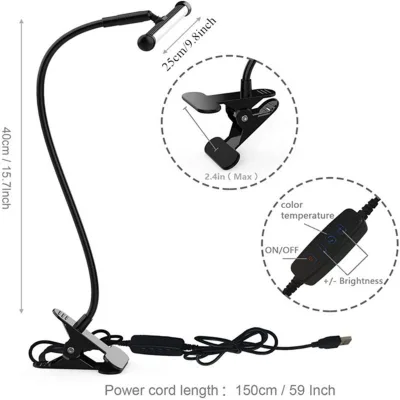
Dimming functionality and physical adjustability define the user experience of a flexible desk lamp. Key features include 10-level dimming adjustments and support for external dimmers, providing granular control over light intensity. The switch type is often a push-button mechanism, though buyers should confirm the interface layout for ease of use. The lamp’s flexibility is characterized by its ability to bend or articulate, with some models featuring a round shade shape and middle-sized lamp dimensions. Product dimensions, such as 340x130x80mm, and hose lengths up to 400mm, should be verified to ensure the lamp fits the intended workspace without obstructing other items. Battery inclusion is not universal, with some models requiring AC power sources, so buyers must confirm the power delivery method.
Compliance and Safety Documentation
Certification requirements are non-negotiable for market access, particularly in regulated regions like Europe and North America. Observed certifications include GS, VDE, RoHS, CE, FCC, and PSE, each addressing specific safety and environmental standards. GS and VDE certifications are particularly relevant for the German and broader European markets, indicating rigorous testing for electrical safety. RoHS compliance ensures the absence of hazardous substances, while CE marking confirms conformity with health, safety, and environmental protection standards. FCC certification is essential for electronic devices sold in the United States to prevent radio frequency interference. Buyers must request valid certificates for each target market to avoid customs delays or product recalls.
Beyond certifications, documentation regarding lighting solutions and circuitry design adds value for professional procurement. Some suppliers offer lighting and circuitry design services, which can be beneficial for custom projects or integrated office environments. Buyers should verify that the internal circuitry is designed to handle the specified power load and dimming functions safely. The presence of a rechargeable battery in some models requires additional safety documentation regarding battery type and charging mechanisms. Ensuring that all electrical components meet the relevant international standards protects the buyer from liability and ensures the product’s reliability in daily use.
Cost Drivers and Commercial Terms
Several factors influence the final cost of a Modern Flexible Dimming Desk Lamp, including material choice, certification scope, and customization level. Metal constructions and advanced dimming circuits typically command higher prices than basic plastic models with fixed brightness. The inclusion of multiple certifications, such as GS and VDE, adds to the testing and compliance costs, which are reflected in the unit price. Customization options, such as tailored sizes or branding, also impact the cost structure. Buyers should analyze the total cost of ownership, considering not just the unit price but also the implications of shipping, tariffs, and potential returns due to non-compliance.
Commercial terms, including MOQ and lead times, play a crucial role in supply chain planning. An observed MOQ of 100 pieces suggests a balance between accessibility for small buyers and efficiency for manufacturers. Delivery times typically range from 15 to 30 days, depending on the order volume and customization requirements. Buyers should negotiate clear terms regarding payment schedules, shipping responsibilities, and warranty coverage. Understanding the lead time variability is essential for managing inventory levels and meeting customer demand. Early communication with suppliers about production schedules can help mitigate delays and ensure timely delivery.
Supplier Qualification and Quality Control
Supplier qualification begins with verifying the origin and manufacturing capabilities of the provider. Most observed products originate from China, with specific manufacturing hubs in Jiangsu and Guangdong provinces. These regions are known for their robust electronics manufacturing ecosystems, but buyers should conduct due diligence to ensure the supplier has a proven track record of quality. Requesting samples is a critical step to evaluate the physical build quality, dimming responsiveness, and overall user experience. Buyers should inspect the lamp’s flexibility, the stability of its base, and the durability of its switches and joints.
Quality control processes should be clearly defined and agreed upon before production begins. Buyers should inquire about the supplier’s internal testing procedures, including electrical safety tests and longevity checks. Establishing a clear acceptance criteria for defects, such as flickering lights or unstable joints, is essential. For larger orders, implementing third-party inspections during production or before shipment can provide an additional layer of assurance. Buyers should also verify the supplier’s ability to provide consistent quality across batches, ensuring that every unit meets the specified technical and aesthetic standards.
Long-Term Procurement Checks
Sustaining a successful procurement relationship requires ongoing monitoring of product performance and supplier reliability. Buyers should establish feedback loops with end-users to identify any recurring issues, such as dimming inconsistencies or mechanical failures. Regularly reviewing supplier performance metrics, including on-time delivery rates and defect percentages, helps in making informed decisions about future orders. Maintaining open communication with the supplier regarding any changes in regulations or market trends ensures that the product remains compliant and competitive.
Long-term checks also involve assessing the supplier’s capacity for innovation and continuous improvement. As technology evolves, suppliers may introduce new features, such as improved energy efficiency or smart connectivity options. Buyers should stay informed about these developments to leverage potential upgrades. Additionally, reviewing the warranty terms and after-sales support structure ensures that any post-purchase issues are resolved efficiently. By proactively managing these aspects, buyers can secure a reliable supply of high-quality modern flexible dimming desk lamps that meet their evolving business needs.
FAQs
Can I customize the size of the Modern Flexible Dimming Desk Lamp?
Yes, the product size can be customized to meet specific requirements. The standard dimensions vary, but customization is available for the product model and packing dimensions to suit your needs.
What certifications does the Modern Flexible Dimming Desk Lamp have?
The lamp holds multiple certifications including GS, VDE, RoHS, CE, FCC, and PSE. These ensure compliance with safety and environmental standards for various international markets.
How long is the delivery time for the Modern Flexible Dimming Desk Lamp?
The delivery time typically ranges from 15 to 30 days after order confirmation. This lead time applies to standard orders and may vary based on specific customization requests.
What is the minimum order quantity for the Modern Flexible Dimming Desk Lamp?
The minimum order quantity is 100 pieces for this product. However, some listings indicate an MOQ range starting from 1 piece, so verify specific supplier terms before ordering.
Does the Modern Flexible Dimming Desk Lamp support dimming functions?
Yes, the lamp supports dimming with 10 levels of brightness adjustment. It also supports external dimmers, allowing users to control the light intensity according to their preference.
What material is used to construct the Modern Flexible Dimming Desk Lamp?
The lamp is constructed from metal and plastic materials. This combination ensures durability while maintaining a modern and flexible design suitable for various desk environments.