Source Modern Floral Printed Baju Kurung for fashion, modest wear, and events
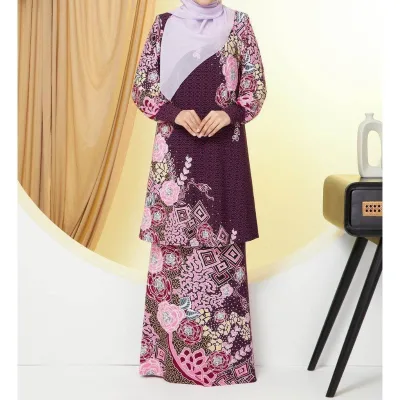
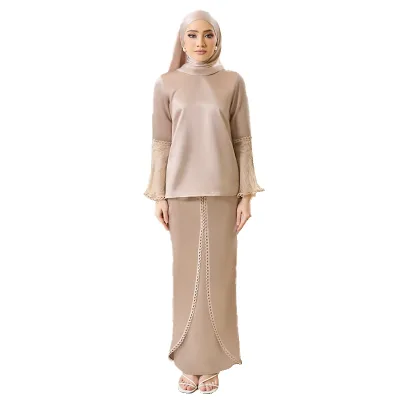
Explore 24 listings of Modern Floral Printed Baju Kurung with varying colors, sizes, and materials like polyester and cotton. Buyers can compare OEM services, lead times, and fabric types to find suitable suppliers for wholesale needs.
Key considerations
Products List
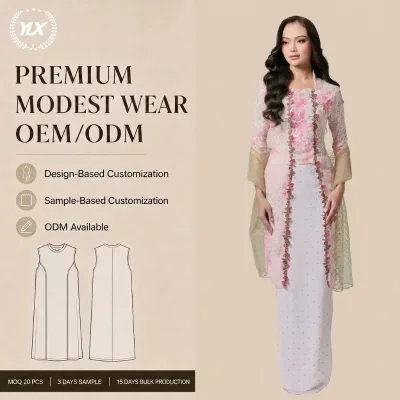
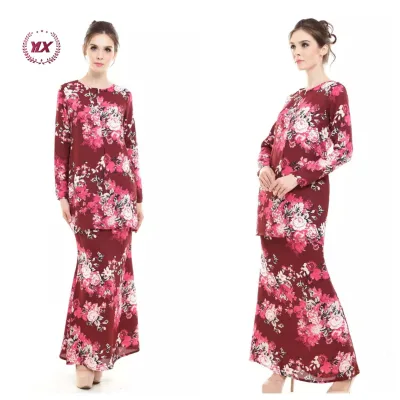
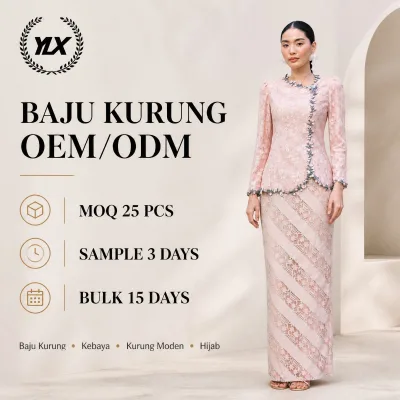
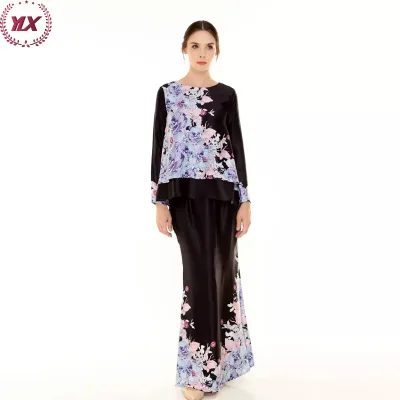
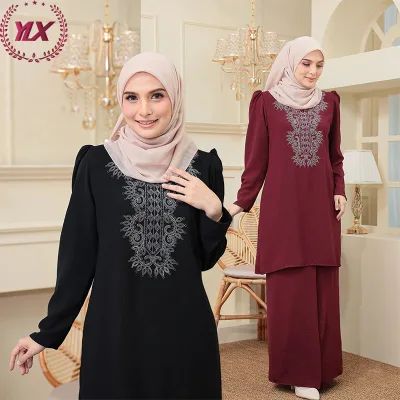
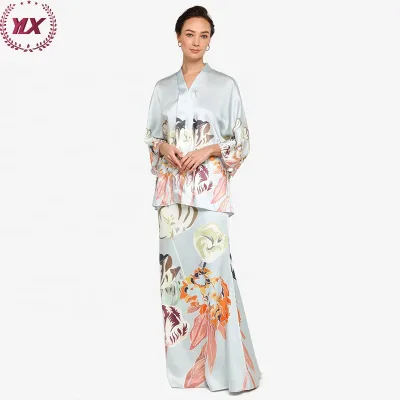
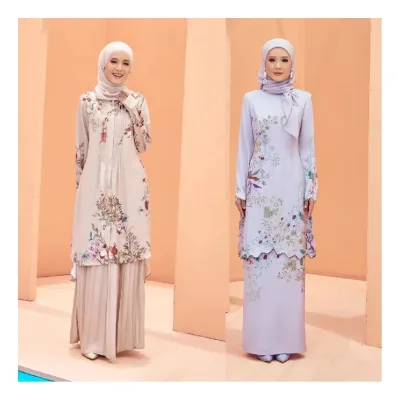


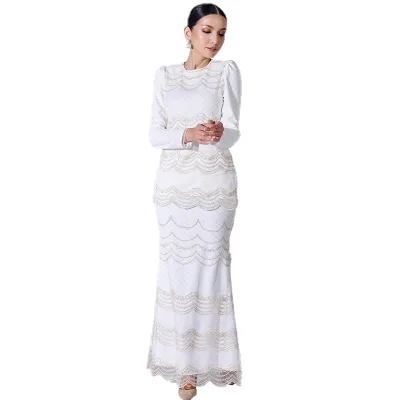


High Quality Tudung Malaysia Printed Hijab Bawal Premiumle Sale Cotton Voile
$1.98 - $2.28
MOQ: 100 pieces


Muslim Printed Dress Women's Spring Sundress Casual Long Sleeve Floral Abaya
$8.00 - $9.50
MOQ: 10 Pieces
Comprehensive Sourcing Guide
Strategic Sourcing Guide for Modern Floral Printed Baju Kurung
The global demand for modest fashion has elevated the Modern Floral Printed Baju Kurung from a regional traditional garment to a significant category in international B2B apparel procurement. This specific item, often categorized under modern kebaya or casual dresses, represents a convergence of cultural heritage and contemporary textile technology. For procurement professionals, sourcing this product requires a nuanced understanding of its specific material composition, sizing complexities, and the supply chain dynamics inherent to its production in regions like Guangdong, China. This guide provides a disciplined framework for evaluating suppliers and managing the acquisition of these garments, ensuring that the final product meets both aesthetic and functional requirements without relying on unverified claims.
Technical Specifications and Material Composition
The foundation of a successful procurement strategy for Modern Floral Printed Baju Kurung lies in the precise definition of technical specifications. The product is not a monolithic item; rather, it exists within a spectrum of variations defined by fabric, pattern, and construction. Based on available market data, the material composition is a critical differentiator. Buyers must distinguish between garments made from 100% polyester and those utilizing a polyester/cotton blend. The 100% polyester variant often aligns with a crepe fabric type, offering a specific drape and texture suitable for the "modest Muslimah styling" aesthetic. Conversely, the inclusion of cotton in the blend introduces breathability, which is a key feature for garments intended for summer wear or tropical climates.
The construction technique is equally vital. The sourcing guide must account for two primary technical approaches observed in the market: plain dyed and embroidered. Plain dyed items typically rely on the fabric's base color and a printed floral pattern, often achieved through embossed print methods. In contrast, embroidered versions offer a higher tactile value and visual depth, aligning with the "floral printed" descriptor but elevating it through stitch work. The weaving method is consistently identified as woven, which distinguishes these garments from knitted casual wear and ensures structural integrity. Furthermore, the collar style is predominantly O-Neck, a design choice that complements the modest styling requirement while maintaining a modern silhouette.
| Feature Category | Observed Variations | Procurement Implication |
|---|---|---|
| Material | 100% Polyester, Polyester/Cotton | Verify blend ratio for breathability vs. durability. |
| Fabric Type | Crepe, Chiffon, Cotton | Select based on desired drape and seasonal use. |
| Technic | Plain Dyed, Embroidered | Embroidery increases cost and lead time; plain dyed is faster. |
| Pattern Type | Solid, Floral | Floral is the core keyword; ensure print clarity. |
| Collar | O-Neck | Standard for this style; confirm fit tolerance. |
Sizing Complexity and Fit Standards
One of the most significant challenges in sourcing modern baju kurung is the variability in sizing specifications. Unlike standard Western apparel, this category often utilizes a mix of alphanumeric codes that can vary significantly between suppliers. The observed size ranges include standard letters (XS, S, M, L, XL, XXL, XXXL) as well as numeric designations (2 XL, 3 XL). Some listings specify a "Regular" fit type, while others may offer custom sizing. The presence of "Full Length" as a length specification is a defining characteristic of the baju kurung, distinguishing it from shorter tunics or dresses.
Procurement teams must exercise extreme caution when defining size charts for bulk orders. A supplier listing sizes as "2 XL, M, L, 3 XL, S, Xl" indicates a non-sequential or potentially inconsistent size run that requires immediate clarification. Buyers should request detailed measurement charts for every size point, specifically focusing on the full length and chest circumference, as these are the primary determinants of the garment's modesty and fit. The absence of a standardized global size chart for this specific cultural garment means that the buyer must treat each supplier's size data as unique and verify it against a physical sample before committing to a large order. The observed MOQ (Minimum Order Quantity) ranges from 1 to 500 pieces, suggesting that smaller batches are possible but may incur higher unit costs or require specific negotiation regarding size distribution.
Cost Drivers and Supply Chain Economics
Understanding the cost structure of Modern Floral Printed Baju Kurung is essential for budgeting and margin analysis. The primary cost drivers include the material composition, the complexity of the printing or embroidery technique, and the supply type. Suppliers offering "OEM Service" allow for customization, which often involves additional setup costs for custom logos or specific fabric blends. The supply ability of a manufacturer, observed at 1200 pieces per day, indicates a capacity for rapid scaling, but this capacity must be balanced against the lead time for sample orders.
A critical observation in the current market is the inconsistency regarding sample order lead times. Some suppliers support a 7-day sample order lead time, while others explicitly do not support it. This discrepancy directly impacts the procurement timeline. If a buyer requires a 7-day turnaround for samples to validate the floral print and fabric quality, they must filter suppliers who explicitly support this capability. Conversely, suppliers who do not support this timeline may require longer lead times for sample production, which can delay the entire sourcing cycle. Additionally, the single package size and weight (e.g., 35x30x3 cm, 0.650 kg) are vital for calculating freight costs. The lightweight nature of the fabric (often chiffon or crepe) suggests that shipping costs will be volume-driven rather than weight-driven, making efficient packaging a key factor in logistics optimization.
Compliance, Certification, and Feature Verification
In the realm of B2B apparel, "compliance" extends beyond legal regulations to include feature verification and material safety. The product attributes often list features such as "Eco-Friendly," "Waterproof," "Anti-Static," "Breathable," "Anti-Pilling," and "Quick Dry." It is imperative for buyers to treat these as claims that require verification rather than guaranteed attributes. The presence of "Eco-Friendly" as a feature suggests the use of sustainable dyes or recycled fibers, but without specific certification data, this remains an observation. Similarly, "Waterproof" is a functional claim that is unusual for a cotton or polyester blend dress and requires rigorous testing to validate, especially given the fabric types like chiffon and crepe which are typically permeable.
Buyers must verify the origin of the product, with "Guangdong, China" being a common place of origin. This location is a major hub for textile manufacturing, but it necessitates a thorough check of the supplier's labor practices and environmental compliance. While specific certification names are not provided in the general data, buyers should request documentation for any claimed standards. The payment terms, observed as "50% Deposit," are standard in the industry but require a clear contract to protect the buyer's capital. The port of dispatch, identified as "Shenzhen," is a strategic advantage for logistics, offering efficient access to global shipping routes, but buyers should confirm if the supplier handles all export documentation or if the buyer is responsible for customs clearance.
Supplier Evaluation and Quality Control Protocols
Evaluating a supplier for Modern Floral Printed Baju Kurung requires a multi-dimensional approach that goes beyond price comparison. The "Brand Name" associated with these products, such as "YILIXIN," indicates that some suppliers operate with a distinct identity, while others may be pure OEM manufacturers. A robust evaluation process should include a review of the supplier's "Supply Type." Those offering OEM services are generally more flexible for buyers seeking custom branding, including the acceptance of custom logos. However, the ability to accept a custom logo does not guarantee the quality of the application, which must be verified through a physical sample.
Quality control (QC) is paramount, particularly for items with "Floral" patterns where print alignment and color consistency are critical. The "Technic" of embroidery or plain dyeing introduces different failure points. Embroidery requires inspection for loose threads or misaligned stitches, while plain dyed items need checks for color bleeding or uneven dye distribution. The "Feature" list includes "Anti-Pilling," which is a specific quality metric that can be tested by rubbing the fabric against a standard surface. Buyers should implement a pre-shipment inspection protocol that focuses on the "Fit Type" (Regular) and the "Style" (Modest Muslimah Styling) to ensure the garment meets the intended market expectations. The "Single gross weight" of 0.650 kg provides a baseline for checking if the packaging and garment weight match the specifications, serving as a quick indicator of whether the correct materials were used.
Long-Term Procurement and Market Adaptability
Sourcing Modern Floral Printed Baju Kurung is not merely a transactional event but a strategic relationship building exercise. The "Season" attribute, identified as "Summer," suggests a cyclical demand pattern. Procurement plans must account for this seasonality, ensuring that inventory levels are sufficient for peak summer months while avoiding overstocking during off-season periods. The "Selling Units" being listed as "Single item" indicates that the product is often sold individually, which influences how the packaging and branding are presented to the end consumer.
Long-term considerations also involve the adaptability of the supplier to changing trends. The "Keywords" associated with the product, such as "Kebaya Modern Baju Kurung," reflect a specific market niche. Suppliers who can pivot between "Solid" and "Floral" patterns, or between "Crepe" and "Chiffon" fabrics, offer greater resilience against market shifts. The "Payment Terms" of a 50% deposit are standard, but for long-term partnerships, buyers should negotiate terms that allow for flexibility in order volume adjustments. The "Lead Time" for sample orders, which varies between "Support" and "Not Support," is a critical metric for agility. A supplier that supports rapid sampling allows for faster iteration and quicker time-to-market, which is essential in the fast-paced fashion industry.
In conclusion, sourcing Modern Floral Printed Baju Kurung requires a disciplined approach that balances the cultural nuances of the garment with the rigorous demands of international trade. By focusing on the verified technical specifications, understanding the complex sizing landscape, and rigorously evaluating supplier capabilities, buyers can mitigate risks and secure high-quality products. The observed data provides a solid foundation for decision-making, but the ultimate success of the procurement strategy depends on the buyer's ability to verify claims, validate samples, and maintain clear communication with suppliers regarding the specific requirements of the modern modest fashion market.
FAQs
What materials are used for Modern Floral Printed Baju Kurung?
The garments are primarily made from 100% polyester or a polyester cotton blend. Buyers should verify the specific fabric type, such as crepe or chiffon, to ensure the desired drape and breathability for summer wear.
Which sizes are available for this modest Muslimah styling dress?
Available sizes range from XS to XXXL, including numeric options like 2XL and 3XL. Since sizing varies by supplier, buyers must request detailed measurement charts to confirm the regular fit and full length specifications.
Can suppliers provide custom logo services for this product?
Yes, many manufacturers accept custom logo requests as part of their OEM service offerings. Buyers should confirm the printing method and lead time before placing an order to ensure the branding meets quality standards.
How long is the sample order lead time for these dresses?
Lead times vary significantly, with some suppliers supporting a 7-day sample order while others do not. Procurement teams must verify this capability early to avoid delays in validating fabric quality and print clarity.
What is the typical minimum order quantity for bulk purchases?
The minimum order quantity ranges from 1 to 500 pieces depending on the supplier. Some specific listings indicate a standard MOQ of 30 pieces, but buyers should negotiate based on their specific size distribution needs.
Where are these Modern Floral Printed Baju Kurung garments manufactured?
The products originate from Guangdong, China, a major hub for textile manufacturing. Buyers should verify the port of dispatch, often Shenzhen, to calculate accurate freight costs and manage logistics efficiently.
Which construction techniques are used for the floral patterns?
The garments utilize woven techniques with either plain dyed or embroidered finishes. Buyers must distinguish between these methods as embroidery increases cost and lead time compared to the embossed print methods used for plain dyed items.