Source Modern Leather Living Room Chair for Hotel Study Bedroom
Find a curated selection of 30 Modern Leather Living Room Chair options suitable for hotels, study rooms, and bedrooms. Buyers can compare specifications, customization features, and pricing details to identify the best fit for their sourcing needs.
Key considerations
Products List


Modern Living Room Furniture Home Wooden Armchair Canvas Leather Chair
$211.00 - $244.00
MOQ: 5 Pieces


Modern Leather Leisure Armchair Room Brown Accent Furniture Living Room Chair
$250.00 - $5000.00
MOQ: 10 Pieces

Modern Leather Leisure Armchair Room Brown Accent Furniture Living Room Chair
$250.00 - $5000.00
MOQ: 10 Pieces

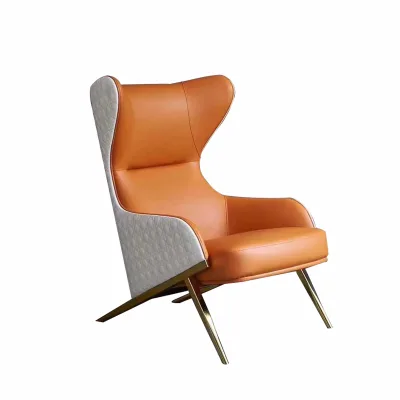
High Back Modern Leather Leisure Armchair Room Brown Accent Furniture Living Room Chair
$250.00 - $5000.00
MOQ: 10 Pieces


Home Furniture Modern Chair Living Room Furniture Chair and Sofa Chair
$290.00 - $396.00
MOQ: 1 Pieces




Comprehensive Sourcing Guide
Strategic Sourcing Guide for Modern Leather Living Room Chairs
Understanding the Product Category and Design Attributes
When sourcing a Modern Leather Living Room Chair, buyers must first distinguish between the broad category of leisure furniture and the specific design requirements of contemporary living spaces. The market offers a diverse array of options, ranging from rotary mechanisms to fixed-base structures, each serving different functional needs within a home or hospitality environment. The core keyword "modern" implies a specific aesthetic direction, often characterized by clean lines, minimalist silhouettes, and a focus on material quality. In the current supply landscape, the "Modern" style is frequently paired with "Leisure Chair" classifications, indicating a product designed for relaxation rather than strict formal dining or office utility.
Material selection is paramount in this category. The primary material observed in high-quality modern leather chairs is genuine leather. This distinguishes the product from synthetic alternatives and aligns with premium market expectations. The condition of the product is consistently listed as "New," ensuring that buyers receive items in pristine state without prior use. A critical design variable is the armrest configuration. Sourcing guides must account for models that feature "With Armrest" configurations, which offer enhanced support and a traditional luxury feel, as well as "Without Armrest" options that provide a sleeker, more open aesthetic suitable for smaller living rooms or modern minimalist interiors.
The shape of the chair also plays a significant role in the visual integration of the furniture. While many modern chairs adopt angular or rectangular forms, the supply data indicates the availability of "Round" shapes. This geometric variation allows buyers to select pieces that soften the angularity of a room or serve as a focal point in a circular seating arrangement. Furthermore, the "Folded" attribute is noted as "Unfolded," suggesting that the chairs in this specific dataset are rigid structures rather than collapsible or folding units. This is a crucial distinction for logistics, as rigid chairs require more precise packaging strategies to prevent damage during transit compared to foldable counterparts.
Technical Specifications and Dimensional Standards
Technical specifications form the backbone of any procurement decision, ensuring that the selected furniture fits the intended physical space and meets ergonomic requirements. The supply data reveals a wide variance in dimensional standards, reflecting the diversity of the modern chair market. Buyers must verify specific measurements for each model, as dimensions can range significantly. For instance, one model specification lists a standard of 757089 cm, while another indicates 808296 cm. These figures represent the overall footprint and height, which are critical for ensuring the chair does not overwhelm a living room or clash with existing wall decor.
Height specifications are particularly important for user comfort. The data includes seat height (SH) indicators, such as 485 mm and 490 mm, which are standard for dining and study applications but may vary for leisure chairs. A specific standard listed as 550560860 with a seat height of 490 mm suggests a focus on ergonomic seating for extended periods. Conversely, other models like the one with a standard of 454988 appear to be smaller or perhaps represent a different product category entirely, necessitating careful verification of the model number against the intended use case.
Volume and packaging efficiency are also technical considerations that impact shipping costs. The unit cubic meter (Cbm) is a key metric for logistics planning. Data indicates a unit Cbm of 0.5 per piece for certain models, while others are listed at 0.51 cbm per piece. These seemingly minor differences can accumulate significantly when ordering large quantities, directly affecting the total landed cost. Packaging standards are equally vital; the "Export Standard Package" and "Carton Box" options are common, with some suppliers offering customized packing solutions. One specific standard mentions a composite packing method of EPE (Expanded Polyethylene) + Carton + Plastic Bag, which provides a multi-layered defense against scratches and impact during international shipping.
Compliance, Certification, and Safety Standards
Navigating the regulatory landscape is essential for international procurement, especially when dealing with furniture that may be sold in regulated markets like the UK or USA. The supply data highlights several critical certifications and standards that buyers should verify. The "SGS" certification appears frequently, indicating that the products have undergone third-party testing for quality and safety. This is a baseline expectation for reputable suppliers, but buyers should ensure that the specific SGS report covers the relevant safety parameters for the target market.
Fire safety is a non-negotiable aspect of modern furniture sourcing. The data explicitly references "BS5852 for UK" and "Ca117 for USA" as fire retardant standards. These are rigorous benchmarks that ensure the upholstery and filling materials meet specific ignition resistance requirements. A supplier claiming compliance with these standards must provide valid test reports. Additionally, the "FSC" (Forest Stewardship Council) certification is mentioned in the background context, suggesting that the wood components used in the frame may come from responsibly managed forests. While this is a strong value proposition for eco-conscious buyers, it requires verification of the specific wood sources used in the chair's construction.
Other certifications listed include "BSCI," "API Audit," and "Certipur-Us." BSCI (Business Social Compliance Initiative) addresses social responsibility and labor practices, ensuring that the manufacturing process adheres to ethical standards. Certipur-Us is a specific certification for foam safety, guaranteeing that the foam used in the chair does not emit harmful volatile organic compounds (VOCs). These certifications collectively build a profile of a supplier that prioritizes both product safety and social responsibility. Buyers should request copies of these certificates before finalizing orders to ensure that the claims are current and applicable to the specific batch of goods being purchased.
Cost Drivers and Pricing Dynamics
The pricing structure for modern leather living room chairs is influenced by a complex interplay of factors, including material quality, customization options, and order volume. The observed price range in the market spans from $13.6 to $5,000 USD. This vast disparity indicates that the market includes both entry-level options and high-end, bespoke pieces. The lower end of the spectrum likely corresponds to smaller models, synthetic leather alternatives, or high-volume production runs, while the upper end reflects genuine leather, complex designs, and premium finishes.
Material grade is a primary cost driver. The "Grade AAA" designation suggests a top-tier quality of leather, which commands a higher price point compared to lower grades. The availability of "300+ Colour Options" for both brown/black/gray and tan/black/gray palettes adds another layer of cost variability. Custom color requests often incur additional charges due to the need for specialized dyeing processes and minimum order thresholds for specific pigments.
Customization is a significant factor in pricing. The attribute "Customization: Available" and "Customized: Customized" indicates that buyers can tailor dimensions, materials, and finishes. While this flexibility is valuable, it typically increases the unit cost and extends the lead time. The "OEM/ODM: Welcome" attribute further confirms that suppliers are open to private labeling and design modifications, which are premium services.
Order volume also plays a crucial role in determining the final price. The Minimum Order Quantity (MOQ) ranges from 1 to 300 units, with a specific observation of an MOQ of 5 for certain models. Buyers ordering small quantities, such as single units or small batches, will likely face higher per-unit costs compared to those placing large orders that meet the higher MOQ thresholds. The lead time, observed as 30 to 35 days, is another cost consideration, as longer lead times can impact inventory planning and cash flow. Buyers must balance the desire for customization and low MOQs against the potential for higher unit costs and longer delivery windows.
Typical Applications and Usage Scenarios
Modern leather living room chairs are versatile products designed to fit a variety of environments beyond the traditional living room. The data indicates usage in "Hotel," "Study," "Bar," "Dining Room," and "Bedroom" settings. This versatility makes them attractive to buyers in the hospitality sector, where durability and aesthetics are equally important. In hotel lobbies and suites, these chairs provide a comfortable seating option that aligns with modern interior design trends. The "Rotary" attribute, which can be either "Rotary" or "Fixed," suggests that some models may feature swivel bases, enhancing their utility in hotel reception areas or home offices where users need to turn frequently.
The "Style Application" is noted as "European, American, Canada," indicating that the design language is tailored to meet the preferences of these major markets. European styles often favor sleek, minimalist lines, while American and Canadian markets may appreciate a blend of comfort and robust construction. The "Warranty: 3 Years Against Manufacturing Defect" is a strong indicator of the product's intended durability and suitability for high-traffic environments. This warranty period provides buyers with confidence in the product's longevity, making it a viable option for commercial applications where furniture undergoes heavy use.
In residential settings, the chair's ability to serve multiple functions is a key selling point. A chair that can be used in a study for reading, in a bedroom for relaxation, or in a dining room for casual meals offers excellent value. The "Kind: Leisure Chair" classification reinforces its primary function as a piece of furniture designed for comfort and relaxation, making it an ideal addition to a living room where family members gather. The "Folded: Unfolded" attribute ensures that the chair maintains its structural integrity and aesthetic appeal in these varied settings, without the need for assembly or disassembly.
Supplier Evaluation and Quality Control Protocols
Selecting the right supplier is critical to ensuring the quality and reliability of the modern leather living room chairs. The supply data highlights "Foshan, China" as a primary origin, a region known for its robust furniture manufacturing ecosystem. Buyers should evaluate suppliers based on their ability to meet the specific certifications mentioned, such as SGS, BSCI, and Certipur-Us. A supplier that can provide up-to-date test reports for fire retardancy (BS5852, Ca117) and foam safety demonstrates a commitment to quality and compliance.
Quality control should be a continuous process throughout the procurement lifecycle. Buyers should verify the "prod_packing" standards, ensuring that the packaging method (e.g., EPE+Carton+Plastic Bag) is sufficient to protect the chairs during transit. The "Export Standard Package" is a baseline, but for high-value items, additional protective measures may be necessary. Inspecting the "Quality Grade: Grade AAA" leather is essential, as this grade implies a high level of consistency and finish. Buyers should request samples to verify the texture, color consistency, and stitching quality before placing large orders.
The "Lead Time: 30~35 Days" is a standard timeframe, but buyers should confirm this with the supplier to account for potential delays. Communication regarding the "prod_model" numbers is crucial, as different models may have different lead times and quality profiles. For instance, the "A039" and "F11" models may have distinct production requirements compared to the "C094" or "ZPQ8010" models. Buyers should establish a clear communication channel with the supplier to track production progress and address any issues that arise during the manufacturing process.
Long-Term Procurement and Strategic Considerations
Sourcing modern leather living room chairs is not just a one-time transaction but a strategic decision that impacts long-term business operations. The "Warranty: 3 Years Against Manufacturing Defect" is a key factor in this strategy, as it reduces the risk of post-purchase issues and provides a safety net for buyers. However, buyers should also consider the long-term availability of replacement parts and the supplier's ability to support the product over time.
The "OEM/ODM: Welcome" attribute suggests that suppliers are capable of adapting to changing market trends. As consumer preferences evolve, buyers may need to update their product lines with new styles or features. A supplier that offers flexible customization options can help buyers stay competitive by quickly responding to market demands. The "300+ Colour Options" provide a wide range of choices, allowing buyers to differentiate their offerings and cater to diverse customer preferences.
Finally, buyers should consider the environmental impact of their procurement decisions. The mention of "FSC" certification indicates a potential focus on sustainability. Buyers who prioritize eco-friendly practices should seek out suppliers that can demonstrate a commitment to responsible sourcing and manufacturing. By aligning with suppliers who share these values, buyers can enhance their brand reputation and appeal to environmentally conscious consumers. The combination of high-quality materials, robust certifications, and flexible customization options makes modern leather living room chairs a valuable addition to any procurement strategy.
FAQs
What certifications do modern leather living room chairs have?
These chairs hold multiple certifications including SGS, BSCI, API Audit, Certipur-Us, and FSC. They also meet specific fire retardant standards like BS5852 for the UK and Ca117 for the USA to ensure safety compliance in international markets.
Which customization options are available for these chairs?
Customization is available for dimensions, materials, and finishes with OEM and ODM services welcome. Buyers can choose from over 300 color options including brown, black, gray, and tan, allowing for tailored designs to match specific interior styles.
How long is the lead time for these orders?
The standard lead time for these orders is 30 to 35 days. This duration accounts for the manufacturing process, quality control checks, and packaging preparation required to meet export standards for international shipping.
What is the minimum order quantity for these chairs?
The minimum order quantity ranges from 1 to 300 units depending on the specific model selected. Some models require a minimum of 5 units, while others may allow for single unit purchases to accommodate different buyer needs.
Can these chairs be used in hotels and studies?
Yes, these chairs are designed for versatile usage in hotels, studies, bars, dining rooms, and bedrooms. Their modern style and durable construction make them suitable for both residential leisure spaces and high-traffic commercial hospitality environments.
What packaging standards are used for shipping these chairs?
Packaging includes export standard packages, cartons, or customized options like EPE plus carton and plastic bags. This multi-layered approach ensures protection against scratches and impact during transit to meet international shipping requirements.