Source Modern Simple Shoe Rack for Home, Shop, and Office
Compare 30 listings for a Modern Simple Shoe Rack featuring wood construction, floor or wall mounting options, and custom dimensions. Buyers can evaluate storage capacity, layer counts, and OEM customization services directly from verified Chinese manufacturers.
Key considerations
Products List


Modern Shoes Rack for Entryways Shoe Rack Cabinet Organizer Shoe Racks
$195.00 - $235.00
MOQ: 5 Pieces


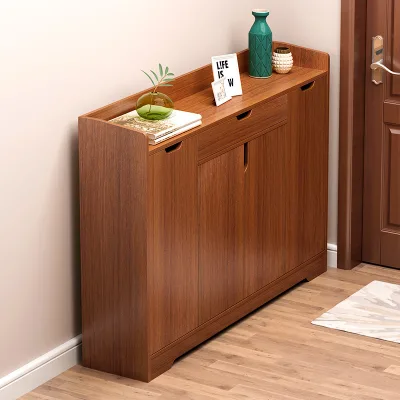
Wholesale Shoe Rack Simple and Economical Multi-layer Dustproof Household Shoe Cabinet
$21.80 - $37.80
MOQ: 2 Minimum

European Modern Shoe Cabinet Wooden Shoe Rack with 4 Drawers White Flip Modern Shoe Cabinet
$89.00 - $200.00
MOQ: 50 Square Feet

$89.00 - $299.00
MOQ: 50 Square Meters

Stylish Modern Shoe Storage Cabinet with Adjustable Shelves Furniture Lockable Modern Shoe Cabinet
$89.00 - $280.00
MOQ: 50 Square Meters


Modern Stainless Steel Shoe Box Storage Cabinet with Showcase Elegant Shoe Rack
$146.00 - $156.00
MOQ: 50 Pieces


Simple Home Large Capacity Bedroom Shoe Rack Shoe Storage Cabinet House Furniture
$70.00 - $90.00
MOQ: 50 Pieces

$5.00 - $20.00
MOQ: 50 Pieces

Comprehensive Sourcing Guide
Strategic Sourcing Guide for Modern Simple Shoe Racks
Understanding the Product Category and Market Context
The global demand for modern simple shoe racks has surged as residential and commercial spaces prioritize minimalist aesthetics alongside functional storage solutions. In the B2B procurement landscape, these units are not merely furniture items but essential organizational tools that bridge the gap between entryway utility and interior design coherence. The core keyword "Modern Simple Shoe Rack" encompasses a diverse range of products, from floor-standing cabinets to wall-mounted units, all sharing a common design philosophy of clean lines and uncluttered forms.
Procurement professionals must recognize that this category is highly fragmented. The market offers products ranging from single-layer units designed for compact apartments to multi-layer systems suitable for high-traffic commercial environments like shops and hotels. The "modern" aspect typically implies a focus on contemporary materials and finishes, while "simple" suggests a lack of ornate detailing, favoring functionality and ease of assembly. Buyers entering this market must navigate a supply chain where customization is a standard feature rather than an exception. The majority of suppliers in this sector, particularly those originating from major manufacturing hubs in China, offer extensive OEM (Original Equipment Manufacturer) and ODM (Original Design Manufacturer) capabilities. This allows buyers to tailor dimensions, materials, and branding to specific market needs without the prohibitive costs associated with traditional tooling.
Technical Specifications and Design Parameters
When evaluating potential suppliers, the technical specifications of the shoe rack serve as the primary filter for quality and suitability. The supplied data indicates a wide variance in design parameters, which buyers must carefully audit against their specific requirements. A critical observation is the diversity in installation methods. The market offers both floor-mounted and wall-mounted configurations. Floor-mounted units, such as those described with dimensions like 600240475mm or 600D290W505, are designed for stability and higher load-bearing capacity, often featuring a single layer or multiple tiers depending on the model. Conversely, wall-mounted units, which may feature three layers, are optimized for space-saving in narrow corridors or commercial settings where floor space is at a premium.
Material composition is another pivotal specification. The dominant material observed in this category is wood, which offers a warm aesthetic and durability suitable for home environments. However, the specific type of wood or engineered wood product is not universally standardized in the provided data, necessitating direct inquiry into the core material grade. The "Simple" style often correlates with specific hardware choices, such as the inclusion of handles for easy access, though some minimalist designs may utilize push-to-open mechanisms.
Dimensions and tolerances are critical for logistics and fitment. The data highlights a tolerance range of +/- 0.10mm for certain customized components, indicating a high level of precision in manufacturing processes. Standard dimensions vary significantly, with examples ranging from compact units measuring 508.529.5cm to larger cabinets. Buyers must verify that the supplier's standard dimensions align with their target market's spatial constraints. Furthermore, the "Layer" specification is a key differentiator; products are available as single-layer storage units or multi-layer systems (e.g., 3 layers), directly impacting the storage capacity and the physical footprint of the unit.
Customization Capabilities and Production Flexibility
One of the most defining characteristics of the Modern Simple Shoe Rack market is the high degree of customization available. The data explicitly lists "Customized" as a standard attribute for product models, standards, and specifications. This means that buyers are rarely purchasing off-the-shelf inventory; instead, they are engaging in a co-creation process with the manufacturer. The "Service Scope" typically encompasses design, processing, assembly, and OEM services, allowing suppliers to handle the entire lifecycle from concept to final delivery.
Customization extends beyond mere dimensions. Buyers can often request specific packing configurations, ranging from flat packing for efficient shipping to mail packing or regular carton box packing. The "prod_packing" attribute shows that suppliers can adapt to "Per Customer Request," which is vital for buyers with unique logistical requirements or those needing to optimize container utilization. For instance, some models are designed for flat packing to reduce shipping volume, while others come in brown cartons or specialized packaging to protect the finish during transit.
The "Model No" field often reflects the customized nature of the product, with identifiers like "SB-010," "SUN-FU," or "RYH-W-0136" serving as internal references for specific configurations. This flexibility allows buyers to create a unique product identity, including logo placement via OEM customization. The ability to customize the standard, such as altering the 600240475mm specification to fit a specific niche, is a significant advantage for brands looking to differentiate themselves in a crowded market.
Cost Drivers and Pricing Dynamics
Understanding the cost structure of modern simple shoe racks is essential for maintaining healthy profit margins. The observed price range in the market spans from $1.77 to $299, a variance that reflects differences in material quality, size, complexity, and order volume. Several factors drive these costs. First, the material choice is paramount; solid wood units will naturally command a higher price point compared to engineered wood alternatives. Second, the level of customization directly impacts the unit cost. While standard models may be produced at scale, highly customized orders involving unique dimensions or specific finishes require additional setup time and resource allocation.
Minimum Order Quantity (MOQ) is another significant cost driver. The data reveals a wide MOQ range, from as low as 1 piece to 500 pieces, or even "One 20FT Container" for bulk industrial orders. Buyers with smaller budgets or those testing a new market may find suppliers with low MOQs (1-5 pieces) advantageous, though the unit price will likely be higher. Conversely, buyers securing large volume contracts can leverage economies of scale to reduce the per-unit cost, provided they can meet the container-level MOQs.
Lead times also influence the overall cost of procurement. The data indicates sample lead times of within 7 days and delivery times of within 20 days for standard orders. However, these timelines can extend for highly customized projects. Buyers must factor in these lead times when planning their inventory cycles to avoid stockouts or rushed shipping costs. The "Delivery Time" of within 20 days suggests a relatively efficient supply chain, but this should be verified for specific custom orders to ensure it aligns with the buyer's sales timeline.
Supplier Evaluation and Quality Assurance
Selecting the right supplier requires a rigorous evaluation process that goes beyond price comparison. Given the "Customized" nature of the products, the supplier's capability to manage the design-to-production workflow is critical. Buyers should assess the supplier's "Service Scope" to ensure they offer comprehensive support, including design assistance, processing, and assembly. A supplier that only offers basic manufacturing without design support may struggle to deliver a truly "modern simple" product that meets aesthetic expectations.
Quality control is paramount, especially when dealing with wood products where finish and structural integrity are visible. The observed tolerance of +/- 0.10mm suggests that precision is a priority for some manufacturers, but buyers must verify this claim through sample inspection. When evaluating suppliers, request physical samples to check for consistent finishing, sturdy joinery, and accurate dimensions. The "Function" of the product, whether for storage or display, must be validated to ensure the unit can withstand the intended load without sagging or wobbling.
Compliance and certification checks are also necessary, although the provided data only mentions "FSC" as a low-confidence background fact. Buyers should not assume FSC certification is present unless explicitly confirmed by the supplier. Instead, they should request documentation regarding the wood source and any relevant environmental or safety certifications. The "Standard" attribute, which often lists dimensions or "as customized," should be cross-referenced with the buyer's technical requirements to ensure the final product meets all specifications.
Typical Applications and Market Segmentation
Modern simple shoe racks serve a variety of applications, primarily segmented into residential and commercial markets. In the residential sector, the "Usage" is typically "Home," where the focus is on aesthetics and space efficiency. These units are often placed in entryways, hallways, or bedrooms, serving as a first impression of the home's style. The "Simple" design fits well with modern interior trends, offering a clean look that does not overwhelm small spaces.
In the commercial sector, the usage expands to include "Shop" environments. Here, the shoe rack functions as both a storage solution and a display unit, often integrated into retail spaces or hotel lobbies. The "Advantage" of being "Multifuction" is particularly relevant in these settings, where the unit must provide storage while maintaining a professional appearance. The "Layer" count becomes a critical factor here; commercial units often require multiple layers to accommodate high volumes of footwear.
The "Installation" method also dictates the application. Floor-mounted units are ideal for homes and retail stores where floor space is available, while wall-mounted units are preferred for commercial corridors or homes with limited floor area. The "Keyword" of "Shoe Rack" and "Shoe Racks for Home" indicates a strong consumer search intent, suggesting that these products are frequently purchased for immediate functional needs.
Long-Term Procurement Considerations
Sourcing modern simple shoe racks is not a one-time transaction but a long-term partnership that requires strategic planning. Buyers should consider the scalability of their supplier relationship. As the business grows, the ability to increase order volumes without compromising quality or lead times is essential. The "Customization" capability should be viewed as a long-term asset, allowing the buyer to adapt the product line to changing market trends or seasonal demands.
Sustainability is another long-term consideration. While the data mentions FSC as a background fact, buyers should proactively inquire about the sustainability of the wood used. Ensuring that the supply chain adheres to environmental standards can enhance the brand's reputation and appeal to eco-conscious consumers. Additionally, the "Packing" method should be evaluated for its environmental impact; recyclable materials like brown cartons are preferable to single-use plastics.
Finally, buyers must plan for after-sales support and inventory management. The "Delivery Time" of within 20 days is a baseline, but supply chain disruptions can occur. Establishing a relationship with a supplier who can provide reliable lead times and maintain consistent quality is crucial. By focusing on these long-term factors, buyers can build a resilient supply chain that supports the growth of their furniture business in the competitive Modern Simple Shoe Rack market.
FAQs
How long does it take to receive samples for a Modern Simple Shoe Rack?
Samples are typically delivered within 7 days. This lead time applies to customized models and standard units, allowing buyers to verify quality and dimensions before placing larger orders.
What is the minimum order quantity for a Modern Simple Shoe Rack?
The minimum order quantity ranges from 1 piece to 500 pieces depending on the supplier. Some vendors accept single set orders while others require bulk container loads for specific customizations.
Can I customize the dimensions of a Modern Simple Shoe Rack?
Yes, customization is available for dimensions and specifications. Suppliers offer flexible standard sizes like 600*240*475mm or fully custom requests to fit specific spatial requirements.
Which materials are commonly used for modern simple shoe racks?
Wood is the primary material observed for these units. This material provides durability and a warm aesthetic suitable for home entryways and commercial shop environments.
How are modern simple shoe racks packaged for shipping?
Packaging options include flat packing, carton boxes, or mail packing based on customer requests. Suppliers adapt packing methods to optimize container utilization and protect the finish during transit.
What is the delivery time for a standard order of a Modern Simple Shoe Rack?
Standard delivery is completed within 20 days after order confirmation. This timeline covers production and shipping for most models, though highly customized items may require additional processing time.
Can I add my logo to a Modern Simple Shoe Rack?
OEM logo customization is available for most orders. Suppliers provide design, processing, and assembly services to integrate branding directly onto the product for retail or commercial use.