Find Modern Stainless Steel Basin Tap for Kitchen, Hotel, and Restaurant
Source 30 listings for the Modern Stainless Steel Basin Tap suitable for kitchen, hotel, and restaurant applications. Buyers can compare specifications, prices, and customization options from verified suppliers in China.
Key considerations
Products List

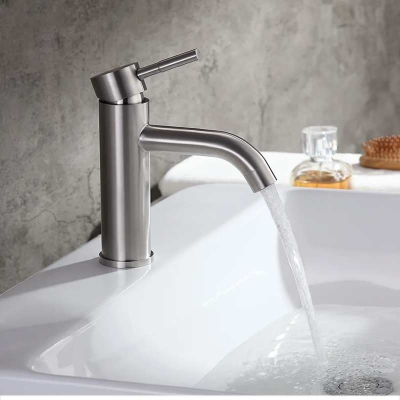


Stainless Steel Basin Tap Cupc Approved Professional Anti-Corrosion Finish
$9.82 - $10.34
MOQ: 300 Pieces


Modern Water Tap Attachment for Stainless Steel Basin with High-Arc Faucet Feature
$18.41 - $20.48
MOQ: 50 Pieces


Comprehensive Sourcing Guide
Strategic Sourcing Guide for Modern Stainless Steel Basin Taps
Navigating the global market for modern stainless steel basin taps requires a disciplined approach that balances aesthetic requirements with rigorous technical verification. The core keyword "Modern Stainless Steel Basin Tap" often leads to a diverse array of product listings where material composition, surface finishing, and functional capabilities vary significantly. Buyers must distinguish between products that are genuinely constructed from stainless steel and those that merely feature a stainless steel finish or are made from brass with a stainless steel appearance. This guide provides a structured framework for evaluating suppliers, verifying specifications, and ensuring long-term value in procurement contracts.
Technical Specifications and Material Verification
The foundation of any successful procurement begins with a precise definition of technical specifications. In the context of modern basin taps, the material composition is the primary differentiator. While the search term emphasizes stainless steel, market data indicates a prevalence of brass products with stainless steel finishes or chrome plating. A critical verification step involves confirming the core material. True stainless steel taps offer superior corrosion resistance and a distinct matte or brushed aesthetic that does not require plating. Conversely, brass taps, which are common in the supply chain, rely on electroplating to achieve a silver or chrome look.
Buyers must scrutinize the "Material" attribute in supplier catalogs. Observed listings show a mix of "Stainless Steel" and "Brass" as the primary material. When sourcing a modern stainless steel tap, the specification should explicitly state "Stainless Steel" rather than "Brass" with a "Chrome" or "Brushed" finish. The surface treatment is equally vital. The "Surface Treatment" attribute often lists "Polished" or "Brushed." A brushed finish is typically preferred for modern designs as it hides water spots and minor scratches better than a high-polish finish. Furthermore, the valve core material is a hidden but critical component. High-quality units utilize a "Ceramic" cartridge, often specified as a "35mm Ceramic" or "Ceramic Cartridge" with a rated lifetime of 500,000 opening cycles. This specification ensures durability and drip-free operation, which is essential for high-traffic commercial environments.
Compliance, Certification, and Safety Standards
In the B2B sector, compliance is not merely a formality but a prerequisite for market access and liability protection. When sourcing basin taps, particularly for international projects, verifying certifications is mandatory. The supply chain data indicates that "CE" certification is a common attribute listed for products originating from China. The CE mark signifies conformity with health, safety, and environmental protection standards for products sold within the European Economic Area. Buyers should request valid test reports and certificates of conformity to validate these claims.
Beyond CE, other standards may apply depending on the destination market. While some background information mentions ISO9001 or EN 248, these should be treated as verification targets rather than guaranteed attributes. EN 248, for instance, relates to water supply equipment, and ISO9001 pertains to quality management systems. A supplier may claim adherence to these standards, but the buyer must request current, third-party audit reports to confirm active compliance. Additionally, the "Product Standard" attribute in some listings refers to "Stainless Steel," which implies adherence to specific metallurgical grades. Buyers should verify the specific grade of stainless steel (e.g., 304 or 316) to ensure it meets the corrosion resistance requirements of the intended application environment, such as a coastal hotel or a high-humidity hospital.
Cost Drivers and Pricing Dynamics
Understanding the cost structure of modern stainless steel basin taps is essential for budgeting and negotiation. The observed price range in the market spans from $0.50 to $59.07 USD, a wide variance that reflects differences in material quality, manufacturing complexity, and brand positioning. The primary cost driver is the raw material. Genuine stainless steel components generally command a higher price point than brass alternatives due to the cost of the alloy and the machining processes involved. However, the price can also be influenced by the "Surface Finishing" process. A high-quality brushed or polished finish requires additional labor and quality control, increasing the unit cost.
Another significant factor is the "Cartridge Lifetime" and the complexity of the valve mechanism. Units featuring a "500,000 Times Opening Ceramic Cartridge" or advanced "Touchless" sensor technology will inherently cost more than basic manual taps. The "MOQ" (Minimum Order Quantity) also plays a crucial role in the final landed cost. The observed MOQ range is 1 to 3,000 units. For buyers with smaller volume requirements, the unit price may be higher due to the lack of economies of scale. Conversely, large orders often benefit from tiered pricing. Buyers should also consider the "Packing" specifications. Products requiring "Export Carton" with "Foam If Needed" or custom packaging for "Laser Logo" and "OEM" services will incur additional logistics and packaging costs. These variables must be factored into the total cost of ownership rather than just the unit price.
Typical Applications and Functional Requirements
The application environment dictates the specific functional requirements of the basin tap. The market data reveals a broad spectrum of usage scenarios, ranging from "Kitchen, Restaurant and Buffet Equipment" to "Hotel, Bathroom, Bedroom, Hospital, School, Mall," and "Sports Venues." For residential or boutique applications, the "Design Style" might lean towards "Classic" or "Contemporary," whereas commercial projects often prioritize durability and ease of maintenance.
A critical functional distinction is the faucet type. Listings show both "Straight out Faucet" and "Induction" or "Touchless" sensor types. In post-pandemic environments, "Touchless" or "Sensor Type" taps are increasingly demanded for hygiene in public restrooms, hospitals, and schools. These units often feature "Metered Faucets" to control water usage. For commercial kitchens and buffets, the "Single Hole" structure and "Single Handle" design are preferred for their ease of use and space efficiency. The "Installation Type" is another key specification; "Deck Mounted" is the standard for most basin applications, but buyers must verify the compatibility with the sink's mounting holes. Furthermore, the "After-sale Service" capabilities, such as "Online Technical Support," "Onsite Installation," and "Free Spare Parts," are vital for large-scale projects where downtime is costly. Suppliers offering "Total Solution for Projects" and "Cross Categories Consolidation" can streamline the procurement process for complex developments.
Supplier Evaluation and Operational Capabilities
Evaluating a supplier goes beyond checking a product catalog. Buyers must assess the supplier's operational capabilities and their ability to deliver consistent quality. The "Brand Name" and "Project Solution Capability" are indicators of a supplier's maturity. A supplier offering "Graphic Design," "3D Model Design," and "OEM/ODM" services demonstrates a higher level of customization and technical support. This is particularly important for buyers seeking "Customized Size" or specific branding elements like "Laser Logo."
Geographic location is also a factor in the supply chain. Many products originate from "Guangdong, China," with specific hubs like "Foshan" known for sanitary ware manufacturing. While this concentration of industry can offer competitive pricing and specialized expertise, buyers should verify the specific factory location to ensure transparency. The "Place of Origin" and "Product Origin" details should match the supplier's declared capabilities. Additionally, the "Single Package Size" and "Single Gross Weight" are critical for logistics planning. For example, a unit with a single package size of "30X20X7 cm" and a gross weight of "1.350 kg" allows for accurate freight cost calculations. Buyers should also inquire about the "Lead Time" and "Production Capacity," although these specific metrics are not provided in the current data, they are essential questions to ask during the RFQ process.
Quality Control and Long-Term Procurement Considerations
Ensuring long-term value requires a robust quality control (QC) strategy. The "Warranty" period is a strong indicator of a supplier's confidence in their product. Listings show a "5 year" warranty and a "Quality Guarantee" of "5 Years," which is a favorable term for B2B buyers. However, the warranty should be clearly defined in the contract, covering defects in materials and workmanship. Buyers must also verify the "Cartridge Lifetime" claims, as the ceramic core is the most common point of failure. A "500,000 Times Opening" rating suggests a high durability standard, but independent testing or third-party verification adds an extra layer of security.
Long-term procurement considerations also include the availability of spare parts and the supplier's responsiveness to after-sales issues. The "After-sale Service" attributes listed, such as "Return and Replacement" and "Onsite Inspection," are crucial for maintaining operational continuity. Buyers should establish a clear protocol for handling defective units and ensuring that replacement parts are readily available. Furthermore, the "Feature" list often includes terms like "stainless steel sink faucet" or "copper basin faucet," which can be confusing. Buyers must ensure that the product description aligns exactly with the physical specifications to avoid receiving mismatched goods. Finally, maintaining a relationship with a supplier who offers "Total Solution for Projects" can facilitate future expansions or renovations, ensuring consistency in design and performance across different facilities.
Conclusion
Sourcing modern stainless steel basin taps is a multifaceted process that demands attention to detail in material verification, compliance checks, and supplier evaluation. By focusing on the core attributes of stainless steel construction, ceramic cartridge durability, and appropriate surface finishes, buyers can navigate the wide price and quality spectrum effectively. The observed market data highlights the importance of distinguishing between genuine stainless steel products and plated alternatives, as well as understanding the implications of various certifications and warranty terms. A disciplined approach that prioritizes technical specifications and long-term service capabilities will result in a procurement strategy that delivers reliability, aesthetic consistency, and value for money in both residential and commercial projects.
FAQs
What materials are used for modern stainless steel basin taps?
Products are available in stainless steel or brass with stainless steel finishes. Buyers must verify the core material attribute to ensure genuine stainless steel construction rather than plated brass alternatives.
Which certifications are commonly listed for these basin taps?
CE certification is a common attribute for products originating from China. Buyers should request valid test reports to validate compliance with health and safety standards for international markets.
How long does the ceramic cartridge last in these faucets?
High-quality units feature a ceramic cartridge rated for 500,000 opening cycles. This specification ensures durability and drip-free operation essential for high-traffic commercial environments like hotels and hospitals.
Can buyers request customized sizes for these basin taps?
Yes, customized size is a listed specification for many models. Suppliers also offer OEM and ODM services including laser logo customization for specific project branding requirements.
What is the typical warranty period for these faucets?
A five-year warranty is a standard quality guarantee for these products. This coverage typically includes defects in materials and workmanship, providing long-term value for B2B procurement contracts.
Where are these modern basin taps typically manufactured?
Products originate from Guangdong, China, with specific hubs in Foshan. Buyers should verify the specific factory location to ensure transparency and assess logistics capabilities for international shipping.