Source Monitor Type Coaxial IP Extenders for CCTV, Security, and Surveillance
Explore 30 listings of monitor type coaxial IP extenders designed for CCTV, security, and surveillance applications. Buyers can compare data rates, transmission distances, and power requirements to find the right solution for their infrastructure needs.
Key considerations
Products List


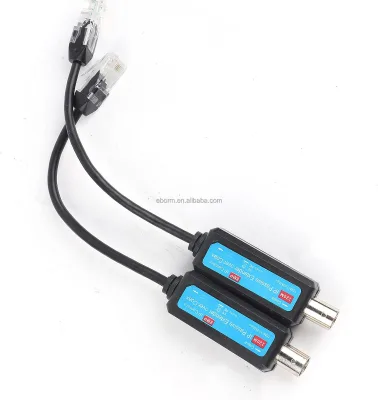
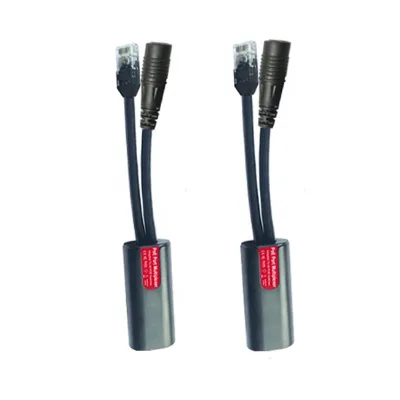


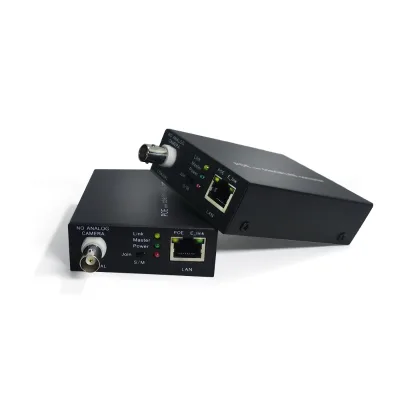
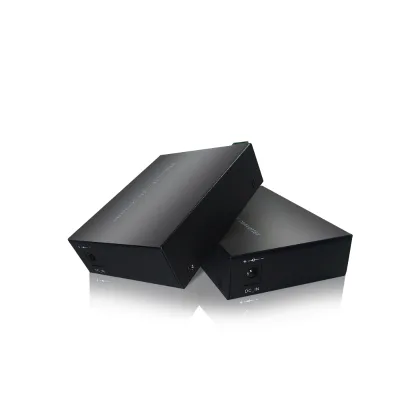




Comprehensive Sourcing Guide
Strategic Sourcing Guide for Monitor Type Coaxial IP Extenders
The procurement of monitor type coaxial IP extenders represents a critical decision point for infrastructure projects requiring reliable video and data transmission over existing cabling. Buyers entering this market must navigate a landscape defined by diverse transmission mediums, varying signal compression techniques, and specific environmental constraints. This guide synthesizes available product attributes and industry standards to provide a structured approach for evaluating potential suppliers and selecting the appropriate hardware for CCTV IP and general monitoring applications. The focus remains on evidence-based selection criteria, ensuring that procurement decisions are grounded in verifiable technical specifications rather than marketing assertions.
Understanding Transmission Mediums and Interface Configurations
The fundamental distinction in this product category lies in the transmission medium utilized. Buyers must first determine whether the existing infrastructure supports twisted-pair cabling or coaxial cable, as this dictates the physical layer of the extender. Products designed for twisted-pair environments typically utilize RJ45 interfaces combined with 2-wire ports, facilitating data rates of 10/100Mbps. These units often support Power over Ethernet (PoE) integration, allowing for simplified power delivery alongside data transmission. In contrast, coaxial-based solutions employ BNC ports and are engineered specifically for coaxial cable transmission. These units are frequently optimized for longer distances, with observed specifications indicating transmission capabilities extending up to 1500 meters, significantly surpassing the 0-500 meter range typical of twisted-pair variants.
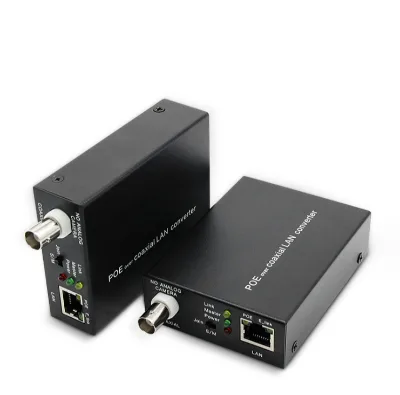
When evaluating interface configurations, the presence of specific port types is a primary verification step. A standard twisted-pair extender will list an interface of 1RJ45+12wire Port, whereas a coaxial solution will specify 1RJ45+1BNC Port. The choice between these configurations directly impacts the cabling strategy and the compatibility with legacy video systems. Buyers should verify that the selected unit's interface matches the physical connectors available in the installation site. Furthermore, the data rate is a critical performance metric; while many units operate at 10/100Mbps, the specific application requirements for bandwidth-intensive video feeds must be cross-referenced against these specifications to prevent signal degradation or latency issues.
Technical Specifications and Performance Parameters
Beyond the physical interface, the technical performance of the extender is governed by power requirements, environmental operating ranges, and resolution capabilities. Power supply specifications vary significantly between product types. Twisted-pair models often utilize a DC44V~57V input at 1A, which aligns with standard PoE voltage ranges. Conversely, coaxial variants and fiber optic extenders may require DC12V1A or external DC5V 1A power supplies. Procurement teams must ensure that the site's power distribution infrastructure can support these specific voltage and amperage requirements without the need for extensive retrofitting.
Environmental resilience is another non-negotiable parameter. The operating temperature range is a key indicator of hardware durability. Available data indicates a working temperature range of 0-70 degrees Celsius for several models, which suggests suitability for standard indoor and controlled outdoor environments. However, for installations in extreme climates, buyers must verify if the specific unit meets the necessary thermal tolerance, as this attribute is not universal across all listed products. Additionally, physical dimensions and weight are relevant for rack mounting and space-constrained enclosures. Product sizes observed in the market range from compact units measuring 706524mm to larger chassis at 11510827mm. The weight per pair also varies, with some units listed at 0.8kg/pair and others at 1.5kg/pair, influencing shipping costs and structural load requirements.
Resolution support is particularly critical for monitor-type applications. While some coaxial and twisted-pair extenders are optimized for standard CCTV IP feeds, fiber optic variants offer higher fidelity. For instance, uncompressed DVI fiber optic extenders support a maximum resolution of 4K2K at 30Hz, whereas compressed HDMI fiber extenders may be limited to 19201200@60Hz (1080P). Buyers must align the resolution requirements of their monitors with the maximum output capabilities of the extender to ensure a clear, lag-free display.
Compliance, Certification, and Regulatory Standards
In the B2B procurement of electronic hardware, compliance with international standards is a primary risk mitigation strategy. The supply chain for these devices often includes products certified under ISO, RoHS, and CE standards. These certifications indicate adherence to quality management systems, restrictions on hazardous substances, and safety requirements for the European market, respectively. When evaluating a potential supplier, buyers should request documentation proving that the specific model under consideration holds these certifications, as product attributes can vary even within the same manufacturer's catalog.
It is essential to distinguish between general company certifications and product-specific compliance. While a supplier may hold ISO certification, the specific extender model must also meet RoHS and CE requirements to be legally sold in regulated markets. Buyers should verify the validity of these certifications against the specific product model number, such as UT-1E1EP-S/M for twisted-pair units or UT-1E1C-S/M for coaxial variants. Additionally, the product standard weight, such as 1.5kg/pair or 0.8kg/pair, serves as a physical specification that can be used to verify the authenticity of the hardware during quality control inspections.
Cost Drivers and Procurement Economics
The cost structure of monitor type coaxial IP extenders is influenced by several factors, including transmission distance, interface complexity, and power delivery capabilities. The observed price range in the market spans from 1 to 9999 USD, reflecting the vast difference between basic copper extenders and high-performance fiber optic solutions. A primary cost driver is the transmission medium; coaxial and fiber optic extenders that support distances of 1km to 1500m generally command a higher price point than twisted-pair units limited to 500 meters.
Minimum Order Quantity (MOQ) is another significant economic factor. The market observes an MOQ range of 1 to 1000 units, offering flexibility for small-scale pilots or large-scale deployments. Buyers should note that packaging configurations, such as 50 pairs per carton for twisted-pair models or 40 pairs per carton for fiber variants, can impact logistics costs and inventory management. The origin of the product, often listed as Shenzhen or Guangdong in China, influences shipping lead times and tariffs. While specific lead times are not universally standardized, the location of the manufacturer can provide insights into the supply chain's responsiveness. Buyers must balance the unit price against the total cost of ownership, including shipping, potential tariffs, and the cost of additional power adapters or mounting hardware.
Typical Applications and Use Cases
The versatility of these extenders allows them to serve a wide array of applications, with CCTV IP systems being the most prominent. The integration of PoE support in twisted-pair models makes them ideal for IP camera deployments where power and data need to be delivered over a single cable run. This configuration reduces cabling complexity and installation time, particularly in large-scale security installations. Coaxial extenders, with their BNC interfaces and long-distance capabilities, are often utilized in legacy CCTV upgrades where existing coaxial cabling is retained, allowing for the transmission of video signals over distances up to 1500 meters without signal loss.
Fiber optic extenders, including both uncompressed DVI and compressed HDMI variants, are essential for high-definition applications requiring long-distance transmission with minimal latency. These are commonly found in control rooms, broadcast facilities, and command centers where 4K resolution and high refresh rates are required. The use of single-mode single-fiber technology in these units allows for compact cabling solutions that can span kilometers, making them suitable for campus-wide or city-wide monitoring networks. The specific application dictates the choice of interface; for example, a DVI 18+1pin port is necessary for uncompressed video signals, while Sc or FC fiber connectors are required for the optical transmission path.
Supplier Evaluation and Quality Assurance
Evaluating suppliers requires a rigorous approach to verifying product attributes and service capabilities. Buyers should prioritize suppliers who provide clear documentation regarding product models, such as UT-1H1F-T/R-S20, and who can demonstrate consistent adherence to the listed specifications. The warranty period is a key indicator of supplier confidence; observed warranties range from 1 year to 3 years, with higher-value fiber optic units sometimes offering shorter terms due to the complexity of the technology. A 3-year warranty on a twisted-pair extender suggests a robust build quality and a supplier willing to stand behind their product.
Quality control measures should include verification of the working temperature range, power supply stability, and physical dimensions. Buyers can request sample units to test the actual performance against the claimed specifications, such as the 10/100Mbps data rate or the 0-70 degree operating temperature. It is also crucial to verify the packing standards, ensuring that the units are packaged securely to prevent damage during transit. The presence of a "New" condition status for all listed products is a baseline requirement, but buyers should also inspect the physical condition of the units upon delivery to ensure they match the "New" designation.
Long-Term Procurement Considerations
Sourcing these devices is not merely a transactional event but a strategic decision that impacts long-term operational stability. The availability of customization is a significant factor for buyers with unique deployment requirements. Suppliers offering customization services can tailor the interface, power supply, or physical dimensions to fit specific project needs. However, buyers must weigh the benefits of customization against the potential for longer lead times and higher costs.
Future-proofing is another critical consideration. As video resolutions increase and network demands grow, the selected extender must be capable of handling future upgrades. While current models support up to 4K resolution, buyers should consider the scalability of the solution. The choice of transmission medium also plays a role; fiber optic solutions offer a clear path for future bandwidth expansion, whereas copper-based solutions may face limitations as data rates increase. Finally, the location of the supplier, whether in Shenzhen or Guangdong, should be factored into the logistics plan, as proximity to major shipping hubs can reduce lead times and improve responsiveness to supply chain disruptions. By carefully analyzing these factors, buyers can secure a reliable supply of monitor type coaxial IP extenders that meet their technical and operational requirements.
FAQs
What interface configurations are available for Monitor Type Coaxial IP Extender units?
Coaxial units typically feature a 1*RJ45 plus 1*BNC port interface for legacy video systems. Twisted-pair variants use a 1*RJ45 plus 1*2wire port configuration instead. Buyers must match the physical port type to their existing cabling infrastructure to ensure compatibility.
Which transmission medium supports the longest distance for these extenders?
Coaxial cable transmission supports distances up to 1500 meters for specific models. Twisted-pair cable variants generally cover a range of 0 to 500 meters. Fiber optic options extend reach further but require different connector types like LC or SC.
Can these devices support Power over Ethernet for simplified installation?
Yes, twisted-pair models support Power over Ethernet with a DC44V to 57V power supply. This feature allows data and power delivery over a single cable run. Coaxial and fiber units often require separate DC12V or DC5V power adapters instead.
What certifications do these electronic hardware products typically hold?
Products in this category often carry ISO, RoHS, and CE certifications for quality and safety. These standards ensure compliance with international regulations and hazardous substance restrictions. Buyers should verify that specific model numbers possess these valid certifications before purchase.
How does the warranty period vary between different extender models?
Twisted-pair models frequently offer a 3-year warranty period indicating robust build quality. Fiber optic extenders may come with a shorter 1-year warranty due to technical complexity. Buyers should check the specific product documentation to confirm the exact warranty term for their selected unit.
What is the maximum resolution supported by uncompressed fiber optic extenders?
Uncompressed DVI fiber optic extenders support a maximum resolution of 4K by 2K at 30Hz. Compressed HDMI variants are typically limited to 1920 by 1200 pixels at 60Hz. Selecting the correct model depends on the specific monitor resolution requirements of the installation.
Which supplier locations are common for sourcing these electronic devices?
Manufacturers are commonly located in Shenzhen or Guangdong, China. These regions are established hubs for producing networking and video transmission hardware. Buyers should account for shipping lead times and tariffs when sourcing from these specific Chinese origins.