Source Mud Pump Air Bag for Drilling, Oil Rig, and Pump Systems
Compare 30 verified listings for Mud Pump Air Bag components including bladder types, stabilizers, and washers. Buyers can review specifications like pressure ratings, materials such as alloy and stainless steel, and certifications including ISO and API for industrial applications.
Key considerations
Products List


API Standard Mud Pump Rubber Pulsation Damper and Air Bag for Oilfield
$190.00 - $200.00
MOQ: 1 Pieces
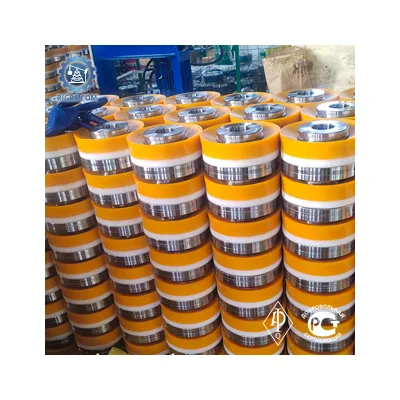


Comprehensive Sourcing Guide
Strategic Sourcing Guide for Mud Pump Air Bags
Understanding the Product Category and Technical Specifications
The term "Mud Pump Air Bag" refers to a critical component within the fluid end assembly of drilling mud pumps, specifically designed to dampen pressure pulsations and stabilize flow. In the context of industrial procurement, these components are frequently categorized under broader terms such as "Pulsation Dampener Bladder," "Stabilizer," or "Pressure Balance" devices. The primary function of these units is to absorb the high-pressure surges generated by the reciprocating action of the pump, thereby protecting downstream equipment and ensuring a consistent flow rate essential for efficient drilling operations.
When evaluating the technical specifications of available units, buyers must recognize that the market offers a diverse range of configurations. The observed product data indicates that these components are available in various pressure ratings, with specific models cited for 3000 Psi and 5000 Psi operations. For instance, item identifiers such as "K-10, 3000 Psi" and "K-20, 5000 Psi" suggest a modular approach where the bladder or dampener is matched to specific pump pressure requirements. Furthermore, the application is explicitly linked to "Mud Pump" systems, with some listings noting compatibility with specific pump series like the "F Pump" or "3nb Pump."
The material composition of these dampeners varies significantly based on the intended service environment. The supply data highlights the use of "Alloy," "Cast Steel," and "Stainless Steel" as primary construction materials. This variation implies that buyers must select materials based on the corrosive nature of the drilling fluid and the mechanical stress expected during operation. Additionally, the manufacturing processes observed include both "Forging" and "Casting," which are distinct metallurgical methods that influence the grain structure and durability of the component. Forging generally offers superior strength for high-stress applications, while casting may be utilized for complex geometries or specific housing components.
Compliance, Certification, and Standard Verification
In the heavy machinery and oilfield equipment sector, compliance with international standards is not merely a formality but a prerequisite for operational safety and insurance validity. The supplied product information explicitly mentions "ISO & API" certifications as key attributes for these dampeners. API (American Petroleum Institute) standards are particularly critical for equipment used in drilling operations, as they ensure that the product meets rigorous industry benchmarks for performance and safety.
Buyers should verify that the specific unit they are procuring carries valid API certification for the relevant pressure class. The data also references "ISO 9001" and "CE" as associated certifications, indicating that the manufacturer adheres to quality management systems and European safety directives, respectively. However, it is important to note that while these certifications are listed as available attributes, they are not universal across every listed product. A procurement strategy must include a direct request for current certification documents for the specific batch or model being purchased.
The standards governing these products are often tied to the pressure ratings. For example, specific models are associated with standards like "KB45" or general "API" standards. When a product lists a standard such as "standard" without a specific code, it requires further clarification from the supplier to ensure it aligns with the buyer's operational requirements. Additionally, the origin of the products is noted as "China" or specifically "Hebei," which may influence the specific regulatory framework the supplier follows. Buyers should confirm that the "Video Outgoing-Inspection" provided by the supplier is sufficient to verify that the certification markings are physically present on the final product before shipment.
Cost Drivers and Pricing Dynamics
The pricing for mud pump air bags and associated dampeners exhibits a wide variance, with observed ranges spanning from $0.10 to $12,000 USD. This broad spectrum is not indicative of inconsistent quality alone but reflects the diversity in component types, material costs, and pressure ratings. A low-cost item might represent a simple accessory like a "Washer," "Bolt," or "Stablizer Plate," whereas the high-end figures likely correspond to complete dampener assemblies or high-pressure bladders constructed from premium alloys or stainless steel.
Several factors drive the cost of these components. The material selection is a primary driver; stainless steel and high-grade alloys command higher prices than standard cast steel or basic alloys due to raw material costs and processing complexity. The manufacturing process also plays a role; forged components typically involve more labor and energy-intensive processes than cast parts, influencing the final unit price. Furthermore, the pressure rating is a significant cost determinant. A bladder rated for 5000 Psi requires more robust engineering and testing than one rated for 3000 Psi, leading to a higher price point.
Customization is another variable that impacts cost. The product data confirms that "Customization" is available, and attributes such as "Voltage" and "Power Source" (Hydraulic or Pneumatic) can be tailored. Custom orders often incur additional setup fees and longer lead times, which are factored into the final price. Buyers should be aware that the "MOQ" (Minimum Order Quantity) ranges from 1 to 5 pieces, suggesting that small-batch procurement is feasible but may carry a higher per-unit cost compared to bulk orders. Understanding these cost drivers allows buyers to budget effectively and negotiate based on the specific requirements of their drilling project.
Typical Applications and Operational Context
The primary application for mud pump air bags is in the drilling industry, where they serve as essential components for maintaining system stability. The data explicitly identifies the "Mud Pump" as the core application, with specific references to "Sand Pump" and "Liquid Gas Separator" functionalities. These components are integral to the fluid end of the pump, where they manage the pulsating flow of drilling mud to prevent damage to the piping and ensure efficient cuttings removal from the wellbore.
The operational context often involves high-pressure environments. The observed "Operation Pressure" ranges from "Vacuum" to "High Pressure," with specific models rated for 3000 Psi and 5000 Psi. This indicates that these components are designed to withstand the extreme conditions found in deep drilling operations. The "Power Source" for the associated systems can be either "Hydraulic" or "Pneumatic," depending on the specific pump configuration and the energy source available at the drilling site.
In addition to pressure stabilization, these components may serve auxiliary functions such as "Pressure Balance" and acting as a "Stabilizer." The variety of types listed, including "Bladder," "Stabilizer," "Stablizer Plate," "Washer," and "Bolt," suggests that the term "Mud Pump Air Bag" can encompass a family of related parts. Buyers must ensure they are sourcing the exact component required for their specific pump model, as a "Pulsation Dampener" for an "F Pump" may differ significantly from one designed for a "3nb Pump." The "Condition" of the products is listed as "New," which is standard for critical safety components, ensuring that the buyer receives a unit with full operational life and no prior wear.
Supplier Evaluation and Origin Considerations
When evaluating potential suppliers for mud pump air bags, the origin of the product is a key consideration. The data indicates that products originate from "China," with specific mentions of "Hebei" as a manufacturing hub. While this geographic concentration can offer competitive pricing and a high volume of available inventory, it necessitates a rigorous vetting process to ensure quality consistency. Buyers should verify the supplier's ability to provide "Video Outgoing-Inspection," which serves as a remote quality assurance tool to confirm the physical condition and specifications of the goods before they leave the factory.
The "prod_packing" attributes reveal that suppliers utilize various packaging methods, including "Wooden Bad," "Wooden Box," "Common Export Packing," and "Standard Packet." The use of wooden crates is particularly important for heavy industrial components to prevent damage during sea shipment. Buyers should confirm that the packaging is robust enough to withstand long-distance logistics, especially for high-value items like 5000 Psi dampeners. The "Sea Shipment" option mentioned in the data suggests that these products are frequently exported, and the supplier should have experience in handling international freight and customs documentation.
Supplier reliability can also be assessed through their certification status and adherence to standards. A supplier offering "ISO & API" certified products demonstrates a commitment to quality management. However, buyers should not assume that all listed attributes apply to every product from a specific supplier. It is essential to request specific documentation for the exact model number, such as "Kb-45" or "Kb-75," to verify that the claimed certifications are valid for that specific unit. The availability of "Customization" is another indicator of a supplier's flexibility and technical capability, suggesting they can adapt products to unique drilling requirements.
Quality Control and Long-Term Procurement Strategy
Ensuring the quality of mud pump air bags requires a proactive approach to quality control (QC). Given the high-pressure nature of the applications, any failure in these components can lead to significant downtime and safety hazards. The "Condition" of the product is listed as "New," but buyers must verify this through inspection protocols. The "Video Outgoing-Inspection" feature provided by some suppliers is a valuable tool for initial verification, but it should be supplemented with clear acceptance criteria regarding surface treatments like "Spray-Paint" or "Polishing." These treatments are not merely aesthetic; they protect the underlying material from corrosion and wear in harsh drilling environments.
For long-term procurement, buyers should establish a relationship with suppliers who offer consistent quality and reliable lead times. The "MOQ" of 1 to 5 pieces allows for flexibility in initial testing, but for sustained operations, negotiating volume discounts and establishing a supply chain for critical spares is advisable. The "prod_model" and "Model Number" variations, such as "F/Pz/P/Nb Series" or "KQBY," indicate a complex product line. Buyers should maintain a detailed inventory of the specific models required for their equipment to avoid compatibility issues during replacement.
Furthermore, the "Advantage" of "High Performance" listed in the data suggests that buyers should prioritize suppliers who can demonstrate the durability and efficiency of their products through technical data or case studies. While specific test results are not provided in the general data, the presence of "ISO 9001" and "API" certifications implies a structured quality management system. Buyers should incorporate regular audits or third-party inspections into their procurement strategy to ensure that the "High Performance" claims are consistently met over time. By focusing on these quality control measures and strategic planning, buyers can secure a reliable supply of mud pump air bags that support safe and efficient drilling operations.
Comparison of Product Attributes and Specifications
To facilitate a clearer understanding of the variations in the market, the following table summarizes the key attributes observed in the product data. This comparison highlights the diversity in materials, pressure ratings, and certifications available to buyers.
| Attribute Category | Observed Variations | Key Considerations for Buyers |
|---|---|---|
| Material | Alloy, Cast Steel, Stainless Steel | Select based on corrosion resistance and pressure requirements. |
| Pressure Rating | 3000 Psi, 5000 Psi, High Pressure, Vacuum | Match the rating to the specific pump model and operating depth. |
| Manufacturing Process | Forging, Casting | Forging generally offers higher strength; casting offers complex shapes. |
| Certification | ISO & API, ISO 9001, CE | Verify specific certification validity for the model being purchased. |
| Application | Mud Pump, Sand Pump, Liquid Gas Separator | Ensure compatibility with the specific pump series (e.g., F Pump, 3nb). |
| Packaging | Wooden Box, Wooden Bad, Export Packing | Confirm packaging is suitable for sea shipment and heavy components. |
| Origin | China, Hebei | Verify supplier location and export capabilities for logistics planning. |
| Customization | Available | Leverage customization for specific voltage or power source needs. |
This structured overview aids buyers in navigating the complex landscape of Mud Pump Air Bag procurement, ensuring that all technical and commercial requirements are met with precision and confidence.
FAQs
What materials are used for mud pump air bags?
These components are constructed from Alloy, Cast Steel, or Stainless Steel depending on the specific model. Buyers must select the material based on the corrosive nature of the drilling fluid and the mechanical stress expected during high-pressure operations.
Which certifications are available for these dampeners?
Available certifications include ISO, API, ISO 9001, and CE for specific models. Buyers should verify that the specific unit carries valid API certification for the relevant pressure class before finalizing any procurement decision.
Can I find customization options for mud pump air bags?
Yes, customization is available for various attributes including voltage and power source. Buyers can request tailored solutions for specific pump models like the F Pump or 3nb Pump to ensure exact compatibility.
How are these products packed for sea shipment?
Products are packed in Wooden Boxes, Wooden Bad, or Common Export Packing to ensure safety. This robust packaging is designed to withstand long-distance logistics and prevent damage during international sea shipment.
What is the minimum order quantity for these items?
The minimum order quantity ranges from 1 to 5 pieces depending on the specific supplier and model. This low MOQ allows for small-batch procurement, though bulk orders may offer better per-unit pricing.
Which manufacturing processes are used for these components?
Manufacturing processes include Forging and Casting, which influence the grain structure and durability of the component. Forging generally offers superior strength for high-stress applications compared to casting methods.
What pressure ratings are available for these dampeners?
Models are available with ratings of 3000 Psi and 5000 Psi to match specific pump requirements. Buyers must ensure the selected unit aligns with the operational pressure of their drilling mud pump system.