Source Multi Cavity Medical Molds for Car, Household Appliances, Electronic
Explore 30 listings for Multi Cavity Medical Molds designed for daily used commodities, automotive parts, and electronic housings. Buyers can compare specifications like cavity counts, runner types, and material options from verified Chinese manufacturers.
Key considerations
Products List


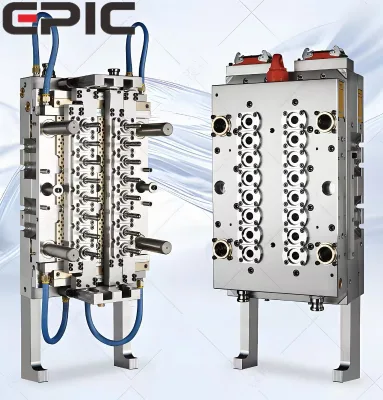
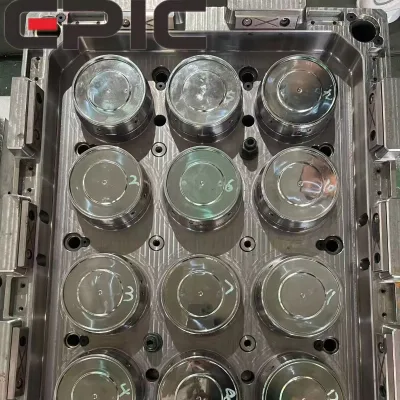


OEM Medical Supplies Molds Medical Devices Parts Mold Mould Medical Equipment Molding
$800.00 - $10000.00
MOQ: 1 Sets

Plastic Injection Syringe Mold for Medical Syringe Moulding Machine Injection Molding
$600.00 - $10000.00
MOQ: 1 Sets


Comprehensive Sourcing Guide
Strategic Sourcing Framework for Multi-Cavity Medical Molds
The procurement of multi-cavity medical molds represents a critical intersection of precision engineering, regulatory compliance, and high-volume manufacturing efficiency. In the context of B2B sourcing, buyers must navigate a complex landscape where the "multi-cavity" designation implies not just the number of imprints within a single mold base, but the rigorous consistency required to produce medical-grade components at scale. The core keyword "multi-cavity medical molds" suggests a demand for high-throughput production capabilities, where the mold design directly influences the unit cost, cycle time, and final product quality. Sourcing guides for this category must prioritize technical verification over marketing claims, ensuring that the selected supplier possesses the specific engineering capabilities to handle the complexities of medical-grade injection molding.
Technical Architecture and Mold Configuration
The fundamental architecture of a multi-cavity mold determines its suitability for medical applications. In the observed market data, specific configurations such as 16, 24, 32, 48, 64, 72, 96, and even single-cavity setups are available, indicating a wide spectrum of production capacities. The selection of cavity count is a strategic decision balancing initial tooling investment against long-term production volume. For medical devices, where sterility and dimensional accuracy are paramount, the mold must maintain tight tolerances across all cavities. The data indicates that these molds often utilize a "Single Cavity or Multi Cavities" approach, with specific high-volume examples citing 16 or 12 cavities for preform production.
The runner system is another critical technical specification. The supply chain offers both "Cold Runner" and "Hot&Cold runner" configurations, with a specific emphasis on "Hot Runner" systems for high-efficiency applications. In medical molding, hot runner systems are often preferred to minimize material waste and ensure consistent melt temperature across all cavities, which is vital for preventing defects in sensitive medical components. The mold base itself is frequently sourced from established standards such as "LKM or as required," ensuring structural integrity. Furthermore, the design software utilized for these molds includes industry-standard tools like "Ug, Solidworks, PRO-E," and "CAD/CAM," which are essential for simulating flow and predicting potential failure points before physical tooling begins.
Material Compatibility and Processing Standards
Medical molds must be compatible with a diverse range of polymers, each presenting unique processing challenges. The observed product attributes list a comprehensive array of materials including "ABS, PPR, PC, PP, PVC, POM, PMMA, PS, PE, PET, PA, PBT, PEI," and others. This variety underscores the necessity for suppliers to demonstrate expertise in handling different thermal and chemical properties. For instance, "Thermosetting Plastic" is noted as a specific plastic form, while "Granule" is the input state. The "Product Material" section highlights "PET PP etc. Preform" and "PP material etc," suggesting a strong focus on preform molding for bottles and containers, which are common in medical packaging.
The processing capabilities required to handle these materials are extensive. The mold processing methods listed include "CNC, High-speed engraving, Digital controller lathes, etc," which are necessary to achieve the fine details required for medical components. Surface finish is equally critical; the observed data mentions "Corrosion Resistance, Polishing Process, Wire Drawing Treatment," and "Nitrogen treatment" for mold hardness. These treatments ensure the mold can withstand the abrasive nature of certain fillers or the corrosive environment of sterilization processes. The "Mold Life" is cited as "Ten million cycles" in some contexts, a figure that buyers must verify against their specific production forecasts, as medical molds often require longer lifespans due to the high cost of downtime.
Regulatory Compliance and Certification Verification
While the provided data does not explicitly list specific medical certifications like ISO 13485 or FDA compliance for every listed item, the "Standard" attributes provide a baseline for quality assurance. The observed standards include "Dme," "HASCO," and "Musumi," which are recognized international mold standards. Buyers must understand that adherence to these mechanical standards is a prerequisite but not a substitute for medical-specific regulatory compliance. The "Standard" attribute also lists "PC" as a product standard, which may refer to the material property or a specific industry protocol.
When evaluating suppliers, procurement teams must verify that the manufacturing environment meets the necessary hygiene and quality control standards. The "QC" attribute mentions "100% Testing," which is a positive indicator of a rigorous internal quality process. However, for medical applications, this must be expanded to include validation of the entire production process, including material traceability and cleanroom manufacturing capabilities. Buyers should request documentation proving that the "Customization" and "Design" capabilities (ODM/OEM) are supported by a Quality Management System (QMS) that aligns with medical device regulations. The absence of explicit certification data in the general product list necessitates a proactive verification step where the buyer confirms the supplier's specific compliance status for the intended medical application.
Cost Drivers and Economic Considerations
The cost of multi-cavity medical molds is driven by several interrelated factors, primarily the number of cavities, the complexity of the design, and the material of the mold steel. The observed price range in the market spans from $0.1 to $100,000, a vast disparity that reflects the difference between simple prototype tooling and complex, high-precision medical molds. The "MOQ" (Minimum Order Quantity) ranges from 1 to 1000, suggesting flexibility for both low-volume prototyping and high-volume production runs.
A significant cost driver is the "Mold Surface Treatment" and "Mold Hardness Treatment." Processes like "Polishing" and "Nitrogen treatment" add to the tooling cost but are essential for achieving the required surface finish and longevity in medical applications. Additionally, the "Runner" system choice impacts cost; hot runner systems are more expensive upfront but can reduce material waste and cycle time, offering a lower total cost of ownership for high-volume medical parts. The "Design Software" and "Mold Design" complexity also contribute to the initial investment, as advanced simulations and custom engineering require specialized labor. Buyers must analyze the total cost of ownership, considering that a higher initial investment in a multi-cavity mold with a longer "Mold Life" (e.g., ten million cycles) can yield significant savings over time compared to cheaper, lower-quality alternatives.
Supplier Evaluation and Manufacturing Capabilities
Selecting the right supplier requires a deep dive into their manufacturing capabilities and track record. The "Place of Origin" is listed as "China," with specific mentions of "Zhejiang, China," a region known for its manufacturing density. While the "Brand Name" "EPIC" is observed, buyers should not rely on brand recognition alone but rather on the technical specifications provided. The "Shaping Mode" includes "Preform Mould," "Thin walled Mould," and "Injection Mould," indicating a diverse portfolio of capabilities.
Suppliers should be evaluated on their ability to handle "Compound Die" processes and their proficiency with "Digital controller lathes." The "Installation" method is noted as "Fixed," which implies a need for stable, industrial-grade setups. A critical evaluation point is the "Customization" availability. Medical devices often require unique geometries, and the ability to leverage "UG, Solidworks, PRO-E" for custom design is a key differentiator. Buyers should also assess the "Application" scope, which ranges from "Daily Used Commodity" to "Car, Household Appliances, Electronic." While the latter categories are broad, the presence of medical-grade materials and precision standards suggests that the supplier has the technical foundation to support medical applications, provided the specific regulatory requirements are met.
Quality Control and Long-Term Procurement Strategy
Quality control in medical mold procurement extends beyond the final product inspection to the entire lifecycle of the tooling. The "QC" attribute of "100% Testing" is a baseline expectation, but for medical molds, this must encompass dimensional verification, material certification, and functional testing of the mold itself. The "Specification" details, such as "16 cavity preform mold" or "96 cavity preform mold," highlight the need for consistent output across all cavities. Any variation in cavity performance can lead to product rejection, which is particularly costly in the medical sector.
Long-term procurement considerations involve the maintenance and repair of the molds. The "Mold Life" of "Ten million cycles" is a theoretical maximum that depends heavily on maintenance practices. Buyers should establish service level agreements (SLAs) that include regular maintenance schedules, spare part availability, and response times for mold repairs. The "prod_packing" methods, such as "PP+Box" or "Wooden Box," are essential for protecting the molds during shipping and storage, preventing damage that could compromise the precision of the tooling. Furthermore, the "Design" flexibility (ODM/OEM) ensures that the molds can be adapted for future product iterations, protecting the buyer's investment against obsolescence.
Comparative Analysis of Mold Specifications
To facilitate decision-making, the following table summarizes key technical attributes observed in the market for multi-cavity medical molds. This comparison helps buyers align their specific project requirements with available supplier capabilities.
| Attribute Category | Observed Specifications | Relevance to Medical Sourcing |
|---|---|---|
| Cavity Count | 1, 2, 4, 6, 8, 9, 12, 16, 24, 32, 48, 64, 72, 96 | Determines production volume and unit cost efficiency. |
| Runner System | Cold Runner, Hot Runner, Hot&Cold Runner | Hot runners preferred for material efficiency and consistency. |
| Mold Standards | DME, HASCO, Musumi, LKM | Ensures structural integrity and compatibility with industry norms. |
| Design Software | UG, Solidworks, PRO-E, CAD/CAM | Essential for precision simulation and custom design. |
| Surface Treatment | Polishing, Corrosion Resistance, Wire Drawing | Critical for sterility and preventing bacterial adhesion. |
| Material Compatibility | ABS, PP, PC, PET, PVC, POM, PEI, etc. | Must match the specific medical device material requirements. |
| Mold Life | Ten million cycles (observed) | Indicates long-term durability and ROI potential. |
| QC Protocol | 100% Testing | Baseline for ensuring defect-free production. |
Conclusion
Sourcing multi-cavity medical molds requires a meticulous approach that balances technical precision with regulatory compliance. The available data highlights a robust market with diverse capabilities in terms of cavity counts, material compatibility, and design software. However, the absence of explicit medical certification data in the general product listings necessitates a rigorous verification process by the buyer. By focusing on the technical specifications such as runner systems, surface treatments, and mold standards, and by demanding transparent quality control protocols, procurement teams can identify suppliers capable of delivering high-quality medical components. The long-term success of such procurement efforts depends on establishing partnerships that prioritize maintenance, adaptability, and adherence to the highest standards of medical manufacturing.
FAQs
What materials are compatible with Multi Cavity Medical Molds?
These molds can process a wide range of polymers including ABS, PP, PC, PET, and PVC. The specific material choice depends on the required product properties and sterilization needs, with granule forms commonly used as input.
Which cavity counts are available for high-volume production?
Buyers can select from various configurations ranging from single cavity up to 96 cavities. Common high-volume options include 16, 24, 32, 48, and 64 cavity setups designed for preform molding applications.
How is the mold surface treated for durability and finish?
Surfaces undergo treatments like polishing, wire drawing, and nitrogen hardening to ensure corrosion resistance. These processes enhance the mold life and maintain the precise dimensions required for medical component consistency.
Can suppliers provide custom designs using specific software?
Yes, customization is available using industry-standard design software like UG, Solidworks, and PRO-E. This allows for tailored mold geometries and ODM or OEM solutions to meet unique medical device specifications.
What runner systems are used in these injection molds?
Both cold runner and hot runner systems are utilized depending on the production efficiency requirements. Hot runner configurations are often preferred to minimize material waste and ensure consistent melt temperature across all cavities.
Which international standards do the mold bases follow?
Mold bases adhere to recognized standards such as DME, HASCO, and Musumi for structural integrity. These standards ensure compatibility with various injection molding machines and support high-precision manufacturing requirements.
What is the expected lifespan of a multi cavity mold?
Some high-quality molds are rated for up to ten million cycles of operation. This lifespan depends on the material hardness treatment and maintenance practices to ensure long-term reliability in medical manufacturing.