Source Multi Card Holder Women Wallet for Money Card Check
Explore 30 listings for the Multi Card Holder Women Wallet featuring leather and PU materials with embroidery or handmade techniques. Buyers can compare customization options, MOQs ranging from 100 to 500 pieces, and packing styles for money, card, and check storage needs.
Key considerations
Products List


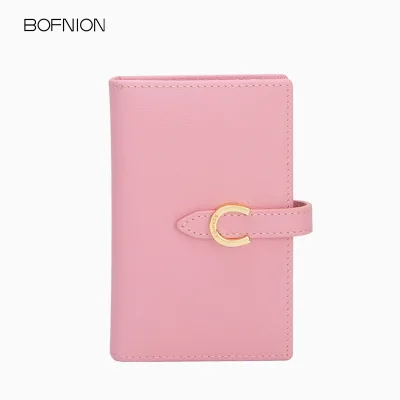
Mini Card Holder Genuine Leather Card Case Leather ID Card Wallet for Women
$3.25 - $7.85
MOQ: 200 Pieces






Comprehensive Sourcing Guide
Strategic Sourcing Guide for Multi-Card Holder Women Wallets
Defining Technical Specifications and Material Composition
When sourcing a multi-card holder women wallet, the primary objective is to align the product's physical attributes with the intended market segment. The technical landscape for these items is diverse, ranging from rigid structures to soft, pliable designs. Based on available product data, buyers must navigate a spectrum of material compositions. The exterior material is frequently listed as Leather or PU (Polyurethane), offering distinct aesthetic and durability profiles. PU options often provide a cost-effective alternative to genuine leather while maintaining a similar visual texture, sometimes featuring specific finishes such as Crocodile Grain to add a premium feel. The interior lining is critical for card protection and is commonly specified as Nylon, which offers a smooth surface to prevent card scratching and ensures longevity during frequent use.
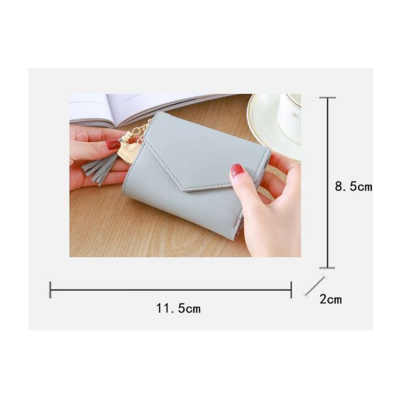
Hardness is another pivotal technical specification that dictates the wallet's form factor. The market presents options ranging from "Soft" to "Medium Soft." A soft wallet typically conforms to the shape of a pocket or bag, making it ideal for casual, leisure-style usage. Conversely, a medium-soft structure may offer slightly more rigidity, helping the wallet maintain its shape when holding multiple cards. The internal capacity is often defined by the usage requirements, specifically designed to hold Money, Cards, and Checks. Buyers should verify the exact dimensions against their inventory needs. While some listings specify a standard size of 1079cm, others offer custom sizes, indicating that the industry supports tailored dimensions for specific branding or functional requirements.
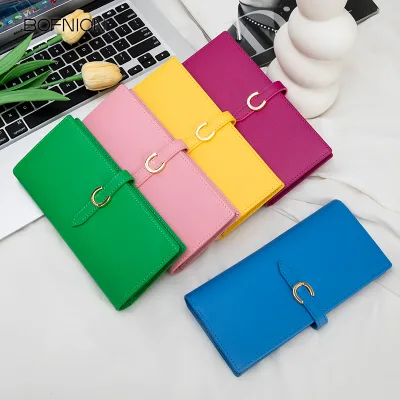
The construction techniques employed also vary significantly. Embroidery is a noted technique for adding decorative elements, while Handmade production suggests a higher level of artisanal attention to detail. These techniques often correlate with the "Fashion Element" of the product. Common design features include Contrast Color, Stitching Bag details, and Candy Color options. These elements allow buyers to target specific consumer preferences, from those seeking a Simplicity style to those looking for Trend-focused designs. The gender classification for these items is predominantly Unisex, though the specific design cues often lean towards women's fashion, particularly when utilizing elements like Crocodile Grain or specific color palettes.
Compliance, Certification, and Quality Standards
In the B2B procurement of leather and PU goods, verifying compliance and adherence to standards is essential for market entry. The supplied data indicates that products originate from China, with specific manufacturing hubs noted in Guangzhou. While the text does not list specific third-party certifications like ISO or OEKO-TEX, buyers must actively verify these independently. The absence of explicit certification data in the product listing does not imply non-compliance but necessitates a rigorous supplier audit.
Standardization in this sector often revolves around physical dimensions and packaging rather than abstract safety certifications. Some products adhere to a standard of 1079cm, while others are produced to "Custom" or "Customized" specifications. This variability requires the buyer to establish clear technical drawings or physical samples before mass production begins. The "prod_standard" field often reflects the physical size or the unit count (e.g., 1pcs), which serves as a baseline for quality control checks.
Packaging standards are equally critical for retail readiness. The data reveals a mix of packaging solutions, including Non-Woven Bags with Gift Boxes, individual Poly Bags, and OPP Bags. The choice of packaging impacts the perceived value and the cost of goods sold. A "Gift Box" presentation suggests a higher-end positioning, whereas a simple "Polybag" or "OPP Bag" is typical for bulk distribution or lower price-point items. Buyers must ensure that the packaging standard aligns with their retail strategy and that the materials used for packaging are durable enough to protect the wallet during transit. Furthermore, the origin location, whether general "Made in China" or specific to "Guangzhou," should be verified to ensure supply chain transparency and to assess the logistical implications of shipping from that specific region.
Cost Drivers and Pricing Dynamics
Understanding the cost structure of multi-card holder women wallets is vital for maintaining healthy profit margins. The observed price range in the market spans from $1.15 to $17.80 USD. This wide disparity is driven by several key factors, including material quality, production complexity, and order volume. The lower end of the spectrum likely corresponds to PU leather products with standard packaging and high-volume manufacturing, while the higher end may reflect genuine leather, intricate embroidery, or custom design elements.
Material costs are a primary driver. The choice between Leather and PU significantly influences the base cost. Additionally, the inclusion of specific fashion elements like embroidery or handmade stitching adds labor costs, which can push the unit price toward the upper limit of the observed range. The "Hardness" of the product also plays a role; a medium-soft structure may require more complex internal reinforcement than a soft, pliable one, affecting the bill of materials.
Order Volume is another critical cost determinant. The Minimum Order Quantity (MOQ) varies widely, with observed ranges from 2 to 1000 pieces, and specific listings citing 500PCS or 100PCS. Higher MOQs generally result in a lower unit price due to economies of scale in material purchasing and production line efficiency. Conversely, smaller orders, such as those with an MOQ of 2 or 100, will carry a premium per unit. Buyers must balance their inventory risk against the cost savings offered by larger orders.
Payment terms also impact the effective cost of procurement. Standard terms observed include a 30% deposit via T/T (Telegraphic Transfer) with the remaining 70% balance due before shipment. This structure requires buyers to manage cash flow effectively. Additionally, sample costs, observed at approximately $10, should be factored into the total acquisition cost. While small, these fees are necessary for validating quality before committing to a bulk order. Buyers should also consider the "Sample Time" of 7 to 15 days and the "Production Time" of about 35 days, as these lead times influence inventory planning and potential rush order fees.
Typical Applications and Market Segmentation
The versatility of multi-card holder women wallets allows them to serve diverse applications across various market segments. The "Season: All" attribute indicates that these products are not limited to specific seasonal trends, making them a staple item for year-round retail. The "Style" classifications, ranging from "Simplicity" to "Trend" and "Leisure," suggest that buyers can target different consumer psychographics.
For the "Simplicity" segment, the focus is on functionality and minimalism. These wallets are ideal for consumers who prioritize utility over ornamentation, often featuring neutral colors and standard stitching. The "Trend" segment targets fashion-forward buyers who seek items with distinct fashion elements like Contrast Color or Crocodile Grain. These products often appeal to younger demographics looking for statement pieces that complement current fashion cycles. The "Leisure" style suggests a casual, everyday use case, suitable for travel or relaxed social settings.
The "Gender: Unisex" classification expands the potential market, allowing these wallets to be marketed to a broader audience, although the design elements often lean towards women's fashion. The specific usage of holding Money, Cards, and Checks makes these wallets practical for daily transactions, reducing the need for a larger purse. The "Fashion Element" of Stitching Bag or Embroidery adds a decorative touch that can elevate the product from a basic utility item to a fashion accessory.
Buyers should also consider the packaging in relation to the application. A wallet packaged in a Non-Woven Bag with a Gift Box is well-suited for gifting occasions or premium retail environments. In contrast, a wallet in a simple Polybag or OPP Bag is more appropriate for high-volume, low-margin retail channels or as an add-on item in a larger purchase. The specific model numbers, such as RWL03, 2613, or W24, often correspond to specific design iterations that cater to these different applications.
Supplier Evaluation and Selection Criteria
Selecting the right supplier requires a systematic evaluation of their capabilities, reliability, and alignment with buyer requirements. The supply chain data indicates that manufacturers are located in China, with a specific concentration in Guangzhou. This region is known for its robust manufacturing ecosystem, particularly for leather and PU goods. However, the presence of multiple model numbers and varying specifications suggests a fragmented supplier base.
Buyers should prioritize suppliers who demonstrate flexibility in customization. The data shows that some suppliers offer "Custom" sizes and "Customized" standards, while others adhere to fixed dimensions like 1079cm. A supplier capable of accommodating custom requests is essential for brands seeking unique product differentiation. The ability to produce "Handmade" items or utilize specific techniques like "Embroidery" is another indicator of a supplier's technical capability and attention to detail.
Lead time consistency is a critical factor in supplier evaluation. The observed production time of about 35 days and sample time of 7 to 15 days provide a baseline for planning. Buyers must verify if these timelines are consistent across different order volumes and if the supplier has a track record of meeting deadlines. The payment terms, specifically the 30% deposit and 70% balance structure, are standard but should be negotiated to ensure cash flow stability.
Quality control capabilities must be assessed through sample evaluation. The sample price of $10 is a low barrier to entry for testing product quality. Buyers should inspect the sample for material consistency, stitching quality, and the accuracy of the "Fashion Element" descriptions. For instance, if a product is described as having "Crocodile Grain," the texture should be clearly visible and consistent. The "Hardness" should match the description, ensuring the wallet is neither too flimsy nor too rigid for its intended use.
Quality Control Protocols and Long-Term Procurement
Establishing robust quality control (QC) protocols is essential for maintaining product integrity and brand reputation. Given the variability in materials (Leather vs. PU) and construction techniques (Handmade vs. Embroidery), a standardized QC checklist is necessary. Buyers should verify the "Inside Material" (Nylon) for durability and smoothness, ensuring it does not snag cards. The exterior material should be inspected for defects such as uneven coloring, loose threads, or imperfections in the grain pattern.
Waterproofing is a specific attribute that varies among products. Some listings indicate "Waterproof," while others state "Not Waterproof" or "Non-Waterproof." This distinction is crucial for the intended application. If the wallet is marketed for outdoor or travel use, waterproofing is a key selling point. Buyers must test the product to confirm these claims, as the material composition (PU vs. Leather) significantly affects water resistance.
Long-term procurement considerations involve building a sustainable relationship with suppliers. The "Season: All" attribute suggests that these products have a stable demand, but buyers should monitor fashion trends to ensure the "Fashion Element" remains relevant. The ability to customize sizes and designs allows for product evolution without changing suppliers. Additionally, the "Payment" terms should be reviewed periodically to ensure they remain favorable as the business scales.
Packaging consistency is another long-term consideration. If a brand commits to a specific packaging style, such as the Non-Woven Bag with Gift Box, the supplier must be able to maintain this standard over time. Variations in packaging can lead to customer dissatisfaction and increased return rates. Finally, buyers should maintain open communication regarding lead times and production schedules to mitigate the risk of delays, ensuring a steady supply of inventory to meet market demand.
FAQs
What materials are used for multi card holder women wallets?
The exterior is commonly made of Leather or PU, while the interior lining typically uses Nylon. These materials offer durability and a smooth surface to protect cards from scratching during frequent use.
Can I customize the size of a Multi Card Holder Women Wallet?
Yes, many options allow for custom sizes rather than fixed dimensions like 10*7*9cm. Buyers should verify specific requests with the supplier to ensure the final product meets their exact inventory needs.
What is the typical MOQ for ordering multi card holder women wallets?
Minimum Order Quantities vary significantly, ranging from 100 pieces to 500 pieces depending on the supplier. Some listings also show lower thresholds, but higher volumes generally secure better unit pricing.
How long does production take for a Multi Card Holder Women Wallet?
Production time is approximately 35 days after sample approval. Buyers should also account for a sample time of about 7 to 15 days before the bulk manufacturing process begins.
Which payment terms are standard for multi card holder women wallets?
Standard terms usually require a 30% deposit via T/T with the 70% balance paid before shipment. This structure helps manage cash flow while securing the production schedule with the manufacturer.
Are multi card holder women wallets waterproof?
Waterproofing capabilities vary by product, with some listings specifying waterproof features while others are non-waterproof. Buyers must check specific product attributes to determine if the item suits their usage environment.
What fashion elements are available for multi card holder women wallets?
Design features include Contrast Color, Stitching Bag details, Crocodile Grain, and Candy Color options. These elements allow buyers to target specific styles ranging from Simplicity to Trend-focused designs.