Source Multi-Colour Printing Paper Bowl for Catering Events
Compare 30 listings for Multi-Colour Printing Paper Bowl options from verified Chinese manufacturers. Buyers can evaluate capacities ranging from 500ml to 2300ml, eco-friendly features, and customization availability for food service needs; compare the available evidence and request quotations based on your requirements.
Key considerations
Products List
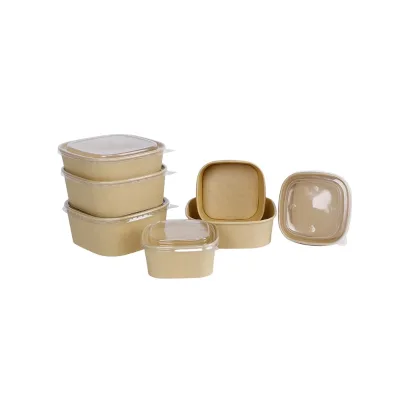


Custom Disposable Bowl Disposable Paper Bowl with Cover Kraft Salad Bowl
$0.01 - $0.10
MOQ: 10000 Pieces


Comprehensive Sourcing Guide
Multi-Colour Printing Paper Bowl Sourcing Guide
Sourcing multi-colour printing paper bowls requires a strategic balance between aesthetic appeal and functional integrity, particularly for brands seeking to stand out on retail shelves or in food service environments. The visual impact of vibrant, multi-colour designs is a primary driver for this product category, allowing businesses to communicate brand identity effectively through packaging. Buyers must recognize that achieving high-quality, multi-colour flexo or offset printing on paper substrates demands specific material properties and precise manufacturing controls to prevent ink bleeding or colour distortion.
This guide focuses on the technical and commercial realities of procuring these items, drawing from observed market data and standard industry practices. It addresses the critical intersection of design flexibility, material safety, and supply chain reliability. By understanding the nuances of paper bowl construction, including coating technologies and structural dimensions, buyers can make informed decisions that align with their operational needs and regulatory obligations. The following sections provide a structured approach to evaluating suppliers and products in this competitive segment.
Product Scope and Observed Listing Signals
The observed market for paper bowls reveals a diverse range of specifications, with capacities varying significantly from 500ml to 2300ml, catering to different serving sizes and use cases. Listings frequently highlight features such as eco-friendly materials, disposability, and freshness preservation, indicating a strong market trend toward sustainable and functional packaging solutions. Buyers should note that while many suppliers offer customization, the specific material composition, such as bamboo, wood, or standard paper, varies widely and must be verified against the intended application, whether for hot foods, cold desserts, or general tableware use.
Visual attributes are equally critical, with options ranging from multicolor and bicolor designs to unicolor and customized color schemes. The presence of PE coating, often cited at 20 gsm, is a common technical detail that ensures liquid resistance and structural integrity, which is essential for food-grade applications. Additionally, dimensions like 132*132mm and standard sizes such as 8oz to 36oz provide a baseline for compatibility with existing packaging lines or consumer expectations. Understanding these observed signals helps buyers filter through the noise of generic listings to identify products that truly match their specific operational requirements.
Technical Specifications to Verify
When evaluating technical specifications, the printing method is a key differentiator, with flexo and offset printing being the most commonly observed techniques for achieving multi-colour effects. Buyers must verify that the chosen printing method aligns with their design complexity and volume requirements, as offset printing often offers higher resolution for intricate graphics, while flexo may be more cost-effective for simpler, bold designs. The substrate quality, whether it is standard paper or specialized materials like bamboo and wood, directly impacts the printability and final aesthetic, so requesting physical samples is essential to assess ink adhesion and colour vibrancy.
Dimensional accuracy and capacity consistency are also vital technical parameters that require strict verification. Listings may indicate model numbers like HH2024 or standard sizes, but actual dimensions can vary between suppliers, affecting stackability and storage efficiency. Buyers should confirm the single package size and overall carton dimensions to optimize logistics and warehousing. Furthermore, the condition of the product, typically listed as new, and the availability of custom orders should be explicitly confirmed to ensure that the supplier can meet unique design or sizing requests without compromising on quality or lead times.
Compliance and Safety Documentation
Compliance with food safety standards is non-negotiable when sourcing paper bowls for food and beverage packaging. Buyers must request and verify relevant certifications, such as SGS, TUV, ISO, CE, or EU compliance, to ensure that the materials and printing inks are safe for direct food contact. These certifications provide assurance that the products meet international safety benchmarks, reducing the risk of contamination and ensuring regulatory adherence in target markets. It is crucial to distinguish between general quality certifications and specific food-grade approvals, as not all listed certificates may apply to the intended use case.
In addition to certifications, buyers should inquire about the specific standards governing the product, such as EN13432 for compostability or ASTM D6400 for biodegradability, if sustainability is a key brand value. While these standards are mentioned in background contexts, their applicability to specific products must be confirmed with the supplier. Documentation should also include material safety data sheets (MSDS) and migration test results to verify that no harmful substances leach from the paper or coating into the food. This due diligence protects brand reputation and ensures consumer safety.
Cost Drivers and Commercial Terms
The cost of multi-colour printing paper bowls is influenced by several factors, including material type, printing complexity, and order volume. Observed minimum order quantities (MOQs) range from 30,000 to 100,000 pieces, reflecting the economies of scale inherent in mass production. Buyers with lower volume needs may face higher per-unit costs or limited supplier options, so negotiating MOQs or exploring shared production runs can be beneficial. The availability of free samples is a common commercial term that allows buyers to assess quality before committing to large orders, reducing financial risk.
Packaging and logistics also play a significant role in total landed cost. Standard packing configurations, such as 50 pieces per 20 bags totaling 1,000 pieces per carton, impact shipping efficiency and storage requirements. Buyers should clarify whether packaging is included in the quoted price and if custom packaging options are available at an additional cost. Warranty terms are often listed as unavailable for disposable products, so buyers must rely on quality guarantees and return policies rather than traditional warranties. Understanding these commercial terms helps in accurate budgeting and total cost of ownership analysis.
Supplier Qualification and Quality Control
Supplier qualification involves assessing their production capabilities, quality control processes, and track record in the paper packaging industry. Buyers should verify the supplier’s place of origin, with Zhejiang, China, being a common hub for such manufacturing, and inquire about their production capacity and lead times. A robust quality control system should include in-process inspections and final random sampling to ensure consistency in colour, dimension, and structural integrity. Requesting references or case studies from previous clients can provide insights into the supplier’s reliability and responsiveness.
Quality control should also extend to the printing process, where colour matching and registration accuracy are critical for multi-colour designs. Buyers should establish clear acceptance criteria for colour variance and print defects, and consider implementing pre-shipment inspections for large orders. The ability to handle custom orders and provide customized solutions is a valuable indicator of a supplier’s flexibility and technical expertise. By thoroughly vetting suppliers, buyers can mitigate risks associated with production delays, quality inconsistencies, and communication barriers, ensuring a smoother procurement process.
Long-Term Procurement Checks
Long-term procurement success depends on establishing a sustainable and adaptable supply chain that can evolve with market trends and regulatory changes. Buyers should regularly review supplier performance metrics, including on-time delivery rates, defect rates, and responsiveness to issues. Building a relationship with multiple qualified suppliers can provide redundancy and leverage in negotiations, reducing dependency on a single source. Continuous monitoring of material costs and market dynamics allows for proactive adjustments to procurement strategies, ensuring cost competitiveness and supply security.
Additionally, buyers should stay informed about emerging sustainability standards and consumer preferences for eco-friendly packaging. Regularly updating product specifications to align with new regulations or brand initiatives ensures that the sourced products remain relevant and compliant. Engaging in periodic supplier audits and collaborative improvement initiatives can drive continuous quality enhancements and innovation. By maintaining a strategic focus on long-term partnerships and adaptability, buyers can secure a reliable supply of high-quality multi-colour printing paper bowls that support their business goals and brand values.
FAQs
What printing methods are available for multi colour printing paper bowls?
Flexo printing and offset printing are the primary methods used for these bowls. These techniques allow for high-quality multicolor designs and custom branding on the paper surface. The process supports detailed graphics while maintaining the structural integrity of the disposable container for food service applications.
Can I order custom multi colour printing paper bowls with specific sizes?
Yes, custom orders are accepted for various capacities including 500ml, 650ml, 750ml, 1000ml, 1200ml, and 1400ml. You can specify dimensions and colors to match your brand requirements. The manufacturer supports tailored specifications to ensure the bowls fit your specific packaging needs and volume expectations.
What certifications do these paper bowls hold for food safety?
These bowls hold SGS, TUV, and ISO certifications to ensure compliance with international standards. Additionally, CE and EU certifications are available for specific product lines. These credentials verify that the materials and manufacturing processes meet rigorous safety and quality requirements for food contact and industrial use.
What is the minimum order quantity for custom printed paper bowls?
The minimum order quantity is 30,000 pieces for standard production runs. This MOQ ensures efficient manufacturing and printing setup for bulk orders. Buyers seeking smaller quantities may need to inquire about sample availability or alternative options, as the standard threshold is set to optimize production costs and material usage.
Are these paper bowls eco-friendly and suitable for food packaging?
Yes, these bowls are designed as eco-friendly and disposable solutions for food and beverage packaging. They feature PE coating for freshness preservation and are made from paper materials. The design supports sustainable practices while providing a functional, single-use container that maintains food quality and meets industrial packaging standards.
How are the multi colour printing paper bowls packaged for shipment?
The bowls are typically packed in cartons with 50 pieces per 20 bags, totaling 1000 pieces per carton. This standardized packaging ensures safe transport and efficient storage. The bulk packing method protects the printed surfaces from damage and facilitates easy handling during logistics and warehouse operations for large orders.