Source Multi-level Steel Plate Storage Stand for Warehouse, Supermarket, and Industrial Use
Compare 30 listings for multi-level steel plate storage stand options including cantilever and pallet racking systems. Buyers can evaluate specifications like weight capacity, dimensions, and surface treatment for warehouse, industrial, and supermarket applications.
Key considerations
Products List




Comprehensive Sourcing Guide
Strategic Sourcing Guide for Multi-Level Steel Plate Storage Stands
The global demand for efficient industrial storage solutions has elevated the importance of multi-level steel plate storage stands, often categorized under pallet racking, cantilever systems, or heavy-duty shelving. For procurement professionals, navigating the market requires a disciplined approach that distinguishes between generic storage furniture and engineered industrial systems. The core keyword "multi-level steel plate storage stand" encompasses a diverse range of products, from light-duty warehouse racks to heavy-duty cantilever units designed for long materials. This guide synthesizes available market data and technical attributes to provide a framework for evaluating suppliers, verifying product specifications, and ensuring compliance without relying on unverified claims.
Technical Specifications and Structural Attributes
When sourcing multi-level steel plate storage stands, the primary focus must be on the structural integrity and material composition. The supplied data indicates that the foundational material for these units is typically steel, with specific references to Q235 as a common raw material grade. This steel grade is widely recognized in the industry for its balance of strength and weldability, making it suitable for load-bearing applications in warehouses and industrial settings. However, buyers must verify the specific steel grade for each order, as variations exist between light-duty and heavy-duty models.
The structural design of these stands varies significantly. Some units are described as having a "Rack" structure, while others are explicitly identified as "Cantilever Rack" systems. Cantilever racks are particularly relevant for the storage of long items like steel plates, pipes, or lumber, featuring horizontal arms that extend from a central upright. The data specifies that upright sections can vary, with dimensions such as 20060mm or 30090mm, and wall thicknesses ranging from 1.5mm to 3.0mm. The arm sections are similarly critical, with observed dimensions like 6040mm or 10050mm. The pitch holes, which allow for adjustable arm heights, are noted at a standard interval of 100mm, facilitating customization for different load heights.
Height and capacity are other vital technical parameters. The observed height range for these units spans from 0 to 5 meters, with specific upright heights noted between 2000mm and 5000mm. For cantilever configurations, the weight capacity per arm can reach up to 800kg, though this is a specific observation for certain models and not a universal standard. The depth of the units is equally variable, with options ranging from 800mm to 1200mm, and widths adjustable between 600mm and 1400mm or fully customized. Buyers should treat these numerical ranges as observations of available market inventory rather than fixed specifications for every supplier.
Surface Treatment and Material Durability
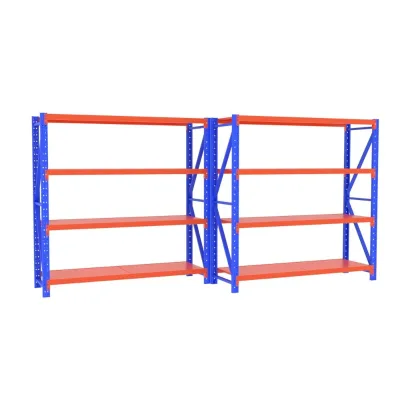
The longevity of a steel storage stand is heavily dependent on its surface treatment. The market data highlights two primary finishing processes: powder coating and galvanization. Powder coating is frequently cited as a standard treatment, offering a smooth, durable finish that resists chipping and provides a base for color customization. The observed color options include standard industrial hues like black, blue, and orange, with the capability for custom RAL colors to match corporate branding or safety protocols.
Galvanization is another critical process mentioned, particularly for environments where corrosion resistance is paramount, such as outdoor storage or facilities with high humidity. The distinction between "Powder Coated" and "Galvanized" finishes is significant for procurement decisions. While powder coating provides aesthetic versatility and moderate protection, galvanization offers superior resistance to rust and corrosion for heavy industrial use. Buyers must explicitly request the specific surface treatment in their purchase orders, as the cost and performance characteristics differ substantially. The data also notes that the product origin is often China, with specific manufacturing hubs like Nantong mentioned, which may influence the availability of specific finishing techniques based on local supplier capabilities.
Compliance, Certification, and Safety Standards
In the B2B procurement of industrial storage equipment, compliance with international standards is non-negotiable. The supplied facts list CE, ISO, and RoHS as certifications associated with these products. The CE mark indicates conformity with health, safety, and environmental protection standards for products sold within the European Economic Area. ISO certification suggests that the manufacturer adheres to international quality management systems, while RoHS compliance ensures the product is free of specific hazardous substances.
However, it is crucial to note that the presence of these certifications in general product descriptions does not guarantee that every specific unit or batch meets these standards. Procurement teams must verify the validity of these certificates for the specific supplier and the specific model being purchased. For instance, while "CE" is listed as a high-confidence fact, the actual certification status for a specific shipment should be confirmed via a valid certificate of conformity. Additionally, the data mentions a standard dimension of "20005002500," which likely refers to a specific model's footprint or packaging standard, but buyers should not assume this dimension applies to all multi-level stands. Verification of load-bearing standards, such as EN 15635 for pallet racking or specific local building codes, should be a mandatory step in the supplier evaluation process.
Cost Drivers and Economic Considerations
The pricing of multi-level steel plate storage stands is influenced by several dynamic factors. The observed price range in the market spans from $0.40 to $200.00 USD. This vast disparity reflects the difference between individual components, such as a single arm or upright, and complete assembled systems. A unit priced at $0.40 likely represents a small accessory or a component part, whereas a price near $200.00 may correspond to a complete rack section or a specific modular unit.
Minimum Order Quantity (MOQ) is another significant cost driver. The data indicates an MOQ range from 1 to 1000 units, with a specific observation of 10 pieces for certain models. Suppliers with lower MOQs may charge a premium per unit due to the inefficiencies of small-batch production, while high-volume orders often benefit from economies of scale. Lead times also impact the total cost of ownership. A standard lead time of 25 days is observed, but this can fluctuate based on raw material availability, production scheduling, and shipping logistics. Buyers should factor in these variables when budgeting, as expedited shipping or rush production orders can significantly increase the final cost. Furthermore, customization options, such as specific colors or dimensions, often incur additional charges that must be negotiated upfront.
Typical Applications and Operational Context
Multi-level steel plate storage stands are designed for a wide array of industrial and commercial applications. The observed usage categories include warehouse racking, industrial storage, food processing facilities, supermarkets, tool storage, clothing distribution, beverage handling, and general tool racks. This versatility makes them suitable for environments ranging from heavy manufacturing plants to retail backrooms.
The specific design features align with these applications. For instance, the "Cantilever Rack" design is ideal for storing long, irregular items like steel plates, pipes, or timber, which cannot be easily stored on standard pallet racking. The adjustable nature of the arms allows for flexible configuration as inventory types change. The "Light duty shelf" model, identified by the model number QF-Light duty shelf, is better suited for lighter loads in retail or office settings. Conversely, the heavy-duty cantilever units with 800kg per arm capacity are intended for industrial warehouses. The data also mentions usage in "Home, Gymnasium, Park, Community," suggesting that some variations of these steel structures may be repurposed for fitness equipment or public amenities, although the primary industrial application remains the dominant use case.
Supplier Evaluation and Quality Control Protocols
Selecting a reliable supplier is critical for ensuring the safety and longevity of the storage system. Buyers should prioritize suppliers who demonstrate transparency regarding their production processes and quality control measures. The data indicates that the product origin is primarily China, with Nantong being a specific location of note. While this provides a geographic context, it does not validate the quality of a specific vendor.
Quality control should focus on verifying the raw material grade (Q235), the consistency of the surface treatment (powder coating or galvanization), and the accuracy of the dimensions. Buyers should request mill test reports for the steel and inspection certificates for the welding and assembly processes. The "Safe" packing method mentioned in the data is a positive indicator, but it should be detailed further to ensure that components are protected during transit to prevent damage. The "Each in Polybag Then in Carton" packing method for certain models suggests a standard approach, but for heavy steel racks, additional bracing or steel bundling may be necessary to prevent deformation.
Long-Term Procurement and Maintenance Considerations
Beyond the initial purchase, long-term procurement considerations include the serviceability and adaptability of the storage stands. The data notes that the products are designed for "Common Use" and have "Adjustable" mobility, implying that they can be reconfigured as storage needs evolve. The "Folded: Unfolded" attribute suggests that some models may offer space-saving features, although this is more common in furniture than heavy industrial racking.
Maintenance requirements should be clearly understood. Powder-coated units require periodic cleaning to prevent dirt buildup, while galvanized units are more resistant to environmental degradation but may require inspection for scratches that could expose the underlying steel. The "Customization: Available" attribute is a key long-term advantage, allowing businesses to modify the rack dimensions or add accessories as their inventory changes. However, buyers must ensure that any customizations do not compromise the structural integrity or void existing certifications.
| Feature | Observation from Data | Procurement Verification Requirement |
|---|---|---|
| Material | Steel, Q235 | Request Mill Test Report for steel grade. |
| Surface Finish | Powder Coating, Galvanized | Verify specific finish type and RAL color codes. |
| Weight Capacity | Max 800kg/Arm (Cantilever) | Confirm load rating for specific model and configuration. |
| Dimensions | Height 0-5m, Width 600-1400mm | Validate exact dimensions against floor plan constraints. |
| Certifications | CE, ISO, RoHS | Request valid certificates for the specific batch. |
| Lead Time | 25 Days | Confirm current production schedule and shipping terms. |
| MOQ | 1-1000, 10 PCS (specific) | Negotiate MOQ based on total project volume. |
In conclusion, sourcing multi-level steel plate storage stands requires a meticulous approach that balances technical specifications, compliance verification, and cost analysis. By relying on the observed facts regarding material grades, surface treatments, and structural dimensions, buyers can make informed decisions without falling prey to unverified marketing claims. The flexibility of these systems, combined with their robust construction, makes them a vital asset for modern industrial and commercial logistics, provided that the procurement process adheres to strict quality and safety standards.
FAQs
What material is used for multi-level steel plate storage stands?
These stands are constructed from steel, specifically using Q235 as the common raw material grade. This steel grade offers a balance of strength and weldability suitable for heavy load-bearing applications in industrial settings.
Can the height of the rack be adjusted for different storage needs?
Yes, the height is adjustable and typically ranges from 0 to 5 meters. Specific upright sections can be configured between 2000mm and 5000mm to accommodate various warehouse inventory heights.
What surface treatments are available for corrosion protection?
The units are available with either powder coating or galvanization for surface treatment. Powder coating provides a smooth finish with color options, while galvanization offers superior resistance for harsh environments.
How much weight can a single arm of the cantilever rack hold?
A single arm can support a maximum weight capacity of 800kg. This capacity is specific to certain cantilever models and depends on the arm section dimensions and upright thickness.
What is the standard lead time for ordering these storage units?
The standard lead time for production is 25 days. This duration may vary based on customization requirements, raw material availability, and specific supplier production schedules.
Are certifications like CE and ISO available for these products?
Yes, products are often listed with CE, ISO, and RoHS certifications. Buyers must verify the validity of these certificates for the specific model and batch before finalizing procurement.