Source Multi-Tube Jet Grouting Drilling Machine for Piles, Anchors, and Slopes
Find 30 multi-tube jet grouting drilling machine models from Jiangsu, China, featuring rotary and directional jet grouting technologies. Compare specifications like drilling depth, torque, and power to select equipment for pile foundations, anti-floating anchors, and slope stabilization projects.
Key considerations
Products List

Micro-Disturbance Multi-Function Borehole Jet Grouting Drilling Rig Machinery for Tunnels
$148000.00 - $168000.00
MOQ: 1 Sets

Hydraulic Rotary Jet Grouting Drill Rig Machine Enables Direct Penetration
$35000.00 - $50000.00
MOQ: 1 Sets

Triple-Fluid High-Pressure Jet Grouting Rig Drilling Machine for Micro Piles
$35000.00 - $50000.00
MOQ: 1 Sets

Full-Hydraulic Rotary Jet Grouting Drilling Rig Machine Enables Direct Penetration
$39000.00 - $49999.00
MOQ: 1 Sets

Crawler Jet Grouting Borehole Drilling Rig Machine for Micropile Ground Improvement
$120000.00 - $155000.00
MOQ: 1 Sets

Crawler-Mounted Jet Grouting Borehole Drilling Rig Machine for Micro Piles
$38888.00 - $51111.00
MOQ: 1 Sets
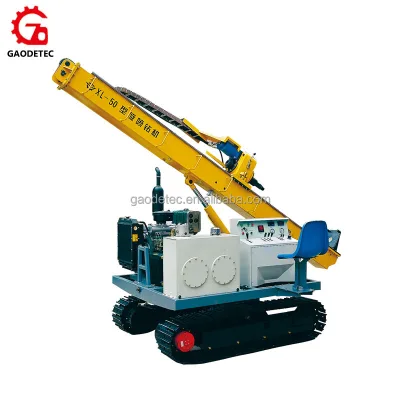
Engineering Foundation Hydraulic Crawler Drilling Machine for Jet Grouting
$20000.00 - $38000.00
MOQ: 1 Minimum


Deep Hole Anchoring Drilling Multi-Functional Jet Grouting Drilling Rig
$47000.00 - $60000.00
MOQ: 1 Pieces


Hot Selling Multifunctional Jet Grouting Machine Small Tunnel Drilling Rig Price
$9000.00 - $9500.00
MOQ: 1 Pieces

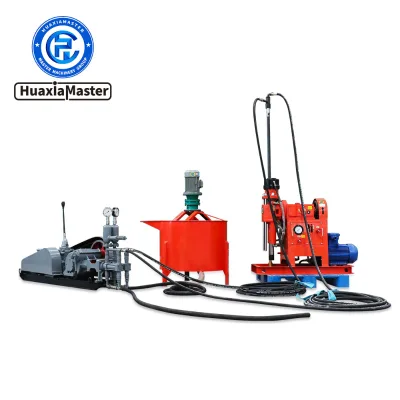


Comprehensive Sourcing Guide
Strategic Sourcing Guide for Multi-Tube Jet Grouting Drilling Machines
Procuring a multi-tube jet grouting drilling machine represents a significant capital investment for infrastructure projects requiring ground improvement, soil stabilization, and deep foundation anchoring. These specialized machines integrate high-pressure fluid injection with rotary drilling capabilities to create cementitious columns within the earth. Buyers must navigate a complex landscape of technical specifications, certification requirements, and operational parameters to ensure the selected equipment aligns with project demands. This guide provides a structured approach to evaluating potential suppliers and machines, focusing on verified attributes and industry standards without relying on unverified market claims.
Technical Specifications and Operational Capabilities
The core functionality of a multi-tube jet grouting machine relies on its ability to deliver precise pressure and rotation to specific depths. When evaluating a unit, buyers should prioritize the rotary output torque and speed, as these metrics directly influence the quality of the grout column. Available data indicates that high-performance units can achieve a rotary output torque of up to 11,000 n.M, which is critical for penetrating dense soil layers. The spindle bore size, observed at φ150mm in certain models, dictates the maximum diameter of the drill pipe and the flow capacity required for the grouting process.
Operating speeds vary significantly based on the drilling phase. For instance, Level-1 maximum operating speeds can reach 0-64r/Min, while Level-2 speeds may be limited to 0-32r/Min. This variability allows operators to adjust the machine's performance based on soil resistance. Furthermore, the travel speed of the machine, observed at 1.15km/H, is a factor in overall site productivity. The drilling method itself is versatile, supporting Mud Drilling, Air Drilling, and Jet Grouting techniques. The drill hole depth is a primary specification, with observed ranges extending from 70-100m to deeper capabilities of 100-150m. Buyers must verify that the specific model's depth rating matches the project's geotechnical requirements.
The physical dimensions and weight of the machine are equally critical for site logistics. Standardized dimensions for certain models include lengths around 5480mm, widths of 3430mm, and heights reaching 27,220mm. Weight specifications, such as 6500kgs, impact transportation costs and the stability of the crawler or track-mounted base. The high drill tower height, observed up to 25m, determines the maximum vertical reach for deep foundation applications. Additionally, the jet grouting capability supports single, double, or triple tube configurations, allowing for different column diameters ranging from 400mm to 1600mm.
Compliance and Certification Verification
In the B2B machinery sector, certification serves as a baseline indicator of manufacturing quality and safety compliance. The most frequently observed certification in this category is ISO 9001. However, buyers must scrutinize the specific type of certification listed. Data indicates variations such as "Type_Multi-Functional," "Type_Jet Grouting," or combined standards like "ISO 9001:CE." The presence of a certification alone is insufficient; the scope must be relevant to the specific machinery being purchased. For example, a certification labeled "Warranty_1 Year" suggests a commitment to after-sales support, while "Motor Power_45+15kw" might indicate a specific power configuration validated under the certification.
Buyers should also look for evidence of adherence to international standards regarding product dimensions and safety. While specific standard numbers like "415027807310mm" appear in product listings, these often refer to the physical footprint or standard configuration rather than a regulatory safety code. It is essential to verify if the machine meets the ISO 9001:2015 standard, which is a common background reference for quality management systems, though specific claims should be backed by the supplier's documentation. The "Certification: ISO 9001:CE" entry suggests compliance with both quality management and European safety directives, which is vital for exports to the European market.
Cost Drivers and Pricing Structure
The pricing of jet grouting drilling machines is influenced by a complex array of factors, including power output, drilling depth, and customization options. The observed price range for these units spans from $1 to $168,000, a wide disparity that reflects differences in model complexity, brand positioning, and included features. A unit with a power rating of 53.7kw or a high-speed rotary torque of 5300n.M will likely command a higher price point than a basic model. The "China Factory Wholesale Price" term indicates that the listed prices are often ex-works, excluding shipping, insurance, and import duties.
Minimum Order Quantity (MOQ) is another significant cost driver. The observed MOQ range is 1-10 units, suggesting that while single-unit purchases are possible, bulk orders may offer different pricing structures or terms. Customization is listed as "Available," which invariably adds to the base cost. Buyers should anticipate that requests for specific drill pipe diameters (φ73/φ89mm) or unique packing requirements, such as "in 40'hq Container," will influence the final invoice. Understanding the "Price Term" is crucial for budgeting, as it clarifies whether the quoted price includes logistics or if the buyer is responsible for freight from the origin point, typically Jiangsu, China.
Typical Applications and Project Suitability
Multi-tube jet grouting machines are primarily deployed in civil engineering projects requiring ground stabilization. The "Drilling Application" field explicitly lists "Jet Grouting Pile," "Anti-Floating Anchor," and similar uses. These machines are ideal for creating deep soil-cement columns that prevent structural uplift or reinforce weak soil strata. The ability to drill at angles ranging from 0 to 90 degrees makes them suitable for both vertical and inclined applications, such as slope stabilization or tunnel reinforcement.
The specific model selection depends on the required column diameter. The "Rotary Jet Grouting Pile Diameter" specification shows capabilities for 400~600mm, 600-1200mm, and 1200-1600mm columns. Projects requiring larger diameters will necessitate machines with higher torque and more robust hydraulic systems. The "Drilling Way" being "Rotary" confirms the machine's suitability for continuous rotation drilling, which is essential for mixing the grout with the soil effectively. The "Jet Grouting Technology" listed as "Directional Jet Grouting" and "Rotary Jet Injection" highlights the machine's versatility in handling complex geological conditions where directional control is necessary.
Supplier Evaluation and Geographic Considerations
When evaluating suppliers, geographic origin plays a role in logistics and communication. The "prod_origin" is consistently listed as "Jiangsu, China" or generally "China." Jiangsu is a known manufacturing hub for heavy machinery, but buyers should verify the specific factory location to assess supply chain reliability. The "Export Area" data indicates that suppliers typically serve Europe, Asia, America, Africa, and Australia, suggesting experience with international shipping and compliance.
Buyers should prioritize suppliers who offer "Customization" and clear "Warranty" terms. The presence of a "Warranty_1 Year" certification is a positive indicator of supplier confidence. Additionally, the "prod_packing" standard, described as "International Standard" or specific container configurations, is vital for ensuring the machine arrives without damage. The "Walking Way" being "Track / Crawler Mounted" is a standard feature for these machines, but buyers should verify the specific track type and condition for the intended terrain.
Quality Control and Long-Term Procurement
Quality control begins with the verification of technical attributes. Buyers should cross-reference the "prod_model" (e.g., DMS-50C-II, QXP-80, SA-180A) with the provided specifications to ensure consistency. The "Noise" attribute, listed as "With Noise," is a standard observation, but buyers should inquire about decibel levels if working in noise-sensitive environments. The "Bit Type" being "Drag Bit" is a specific detail that affects the drilling efficiency and should be matched against the soil type of the project.
Long-term procurement considerations include the availability of spare parts and the robustness of the "Power Source," which is "Electric" in the observed data. Electric power sources generally offer lower maintenance costs and reduced emissions compared to diesel, but the power supply infrastructure at the job site must be capable of handling the 53.7kw or higher loads. The "Rotary Stroke" of 4000mm and "Rotary Lifting Force" of 70kN are critical for the machine's longevity under heavy loads. Buyers should establish a maintenance schedule based on the "Level-1" and "Level-2" operating speeds to prevent premature wear on the rotary and hydraulic systems.
Comparative Analysis of Key Models
To assist in decision-making, the following table summarizes key technical attributes observed across different models. This comparison highlights the diversity in specifications available in the market.
| Attribute | Model DMS-50C-II | Model QXP-80 | Model DMS-50C-2G | Model SA-180A |
|---|---|---|---|---|
| Drill Hole Depth | 70-100m | Not Specified | Not Specified | 100-150m |
| Power | 53.7kw | Not Specified | Not Specified | Not Specified |
| Weight | 6500kgs | Not Specified | Not Specified | Not Specified |
| Dimensions (LWH) | 415027807310mm | 5480343027220mm | 522522903610mm | 580021002000mm |
| Certification | ISO 9001 (Multi-Functional) | ISO 9001 (Jet Grouting) | ISO 9001:CE | Not Specified |
| Packing | International Standard | Not Specified | Not Specified | in 40'hq Container |
| Drilling Method | Rotary | Mud, Air, Jet Grouting | Not Specified | Mud, Air, Jet Grouting |
This table illustrates that while some models share similar power ratings or drilling depths, their physical dimensions and certification scopes vary significantly. Buyers must align these attributes with their specific project constraints, such as site access limitations or regulatory requirements in the destination country.
Final Procurement Recommendations
Selecting the right multi-tube jet grouting drilling machine requires a meticulous review of technical data against project needs. Buyers should focus on verifying the "Rotary Output Torque" and "Drill Hole Depth" as primary performance indicators. The certification status, particularly ISO 9001 variants, should be confirmed with the supplier to ensure validity. Cost analysis must account for the "Price Term" and potential customization fees. Finally, long-term operational success depends on the availability of support and the durability of the machine's core components, such as the rotary system and hydraulic power source. By adhering to these evidence-based criteria, buyers can mitigate risk and secure equipment that delivers reliable performance in demanding ground improvement applications.
FAQs
What drilling depths can multi-tube jet grouting drilling machines achieve?
These machines typically achieve drilling depths ranging from 70 to 150 meters depending on the specific model. Units like the DMS-50C-II support depths of 70-100m, while the SA-180A can reach 100-150m for deeper foundation applications.
Which certifications are commonly associated with these drilling machines?
Most units carry ISO 9001 certification, often specified as Type_Multi-Functional or Type_Jet Grouting. Some models also display combined standards like ISO 9001:CE, indicating compliance with quality management and European safety directives.
How much torque do high-performance rotary systems generate?
High-performance units can generate a rotary output torque of up to 11,000 n.M. Specific models may also feature a high-speed rotary torque of 5300 n.M, which is critical for penetrating dense soil layers effectively.
Can these machines be customized for specific project requirements?
Yes, customization is available for these drilling machines to meet unique project needs. Buyers can request specific drill pipe diameters, packing configurations, or power source adjustments to align with site logistics and operational demands.
What is the typical price range for multi-tube jet grouting drilling machines?
The observed price range for these units spans from 1 to 168,000 USD. The final cost depends on factors like power output, drilling depth, and whether the price term is listed as China Factory Wholesale Price excluding shipping.
Which drilling methods are supported by these specialized machines?
These machines support Mud Drilling, Air Drilling, and Jet Grouting techniques. The technology includes Directional Jet Grouting and Rotary Jet Injection to handle complex geological conditions and create precise soil-cement columns.