Source Multifunction Trading Card Storage Box for games, gifts, and storage
Find 30 options for a Multifunction Trading Card Storage Box designed for board games, jewelry, and cosmetics. Buyers can compare PU and leather materials, custom sizes, and OEM services from verified Chinese manufacturers.
Key considerations
Products List


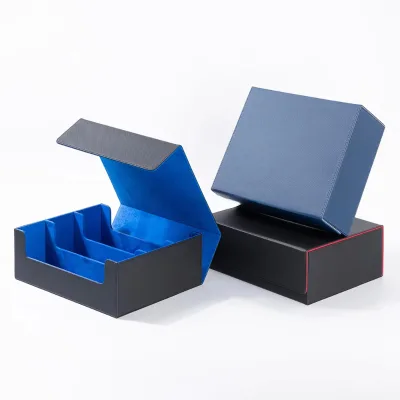
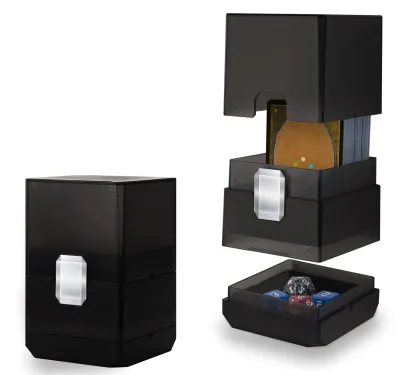


Trading Card Deck Storage Box Leather Poker Playing Game Cards Holder Case
$2.54 - $3.88
MOQ: 300 Pieces

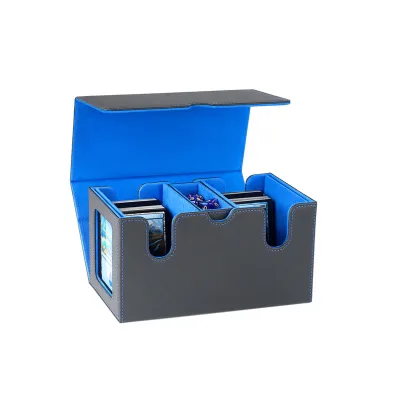
3 Slots Graded Card Storage Box Trading Card Carrying Case for Game Sports Cards
$26.50 - $29.90
MOQ: 10 Pieces


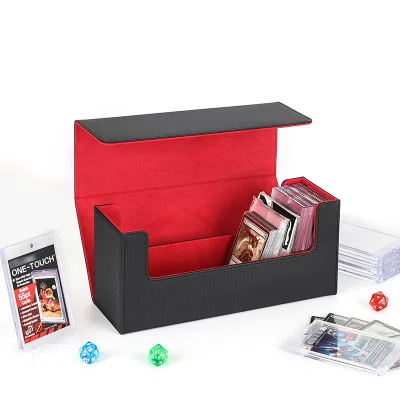
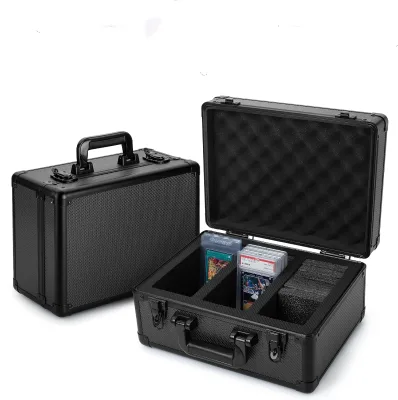
Custom Logo Card Storage Case Graded Card Toploader Storage Box for Card Collectors
$18.50 - $19.90
MOQ: 50 pieces


Comprehensive Sourcing Guide
Strategic Sourcing Guide for Multifunction Trading Card Storage Boxes
The global market for trading card storage solutions has expanded significantly, driven by the growing collector base for games like Magic: The Gathering, Pokémon, and Yu-Gi-Oh!, alongside the rising popularity of tabletop strategy games. For B2B procurement professionals, sourcing a "Multifunction Trading Card Storage Box" requires a nuanced understanding of material science, dimensional tolerances, and supply chain logistics. This guide synthesizes observed market data and technical specifications to provide a framework for identifying reliable suppliers and ensuring product quality without relying on unverified claims.
Technical Specifications and Material Composition
The foundation of a high-quality storage box lies in its material selection and dimensional accuracy. Based on observed product attributes, the market offers distinct material profiles, primarily PU (Polyurethane), Leather, and PP (Polypropylene). PU and Leather variants are typically associated with premium aesthetics and durability, often featuring a "Fashion" style and "Customized" color options. These materials are ideal for high-end retail or gift markets where tactile experience is paramount. Conversely, PP-based boxes are frequently transparent and designed for functional utility, offering a "Stackable" feature that maximizes storage density in living rooms or commercial display units.
Dimensional specifications vary widely depending on the intended application. Observed data indicates specific models, such as the ZX511168TA and ZX511169TA, which adhere to precise sizing standards. For instance, one observed specification lists dimensions of 8193102mm, suitable for standard card protection needs. Another category, labeled with the standard reference 9.56.36.5cm, suggests a more compact form factor for individual card storage or specific TCG (Trading Card Game) subsets. When sourcing, buyers must verify that the supplier's mold specifications align with the physical dimensions of the cards they intend to store. The "Customized" size attribute is common, allowing manufacturers to tailor the internal cavity to specific card types, such as oversized game cards or collectible figures.
The closure mechanism is another critical technical differentiator. While some units utilize simple slip-in designs, others feature a "Button" closure type, which provides enhanced security against accidental spills or drops. The surface handling processes, such as "Varnishing," are essential for protecting the exterior from wear and tear, ensuring the "Print" craftsmanship remains vibrant over time.
Compliance, Certification, and Safety Standards
In the B2B procurement of consumer goods, particularly those intended for "All Ages" or children's entertainment, compliance with safety standards is non-negotiable. While specific certification documents were not observed in the provided data, the "prod_standard" attribute often notes "as in the picture" or "Customized." This ambiguity requires buyers to explicitly request third-party test reports. For products originating from China, including those from Guangdong and Ningbo, buyers should verify adherence to international safety standards such as EN71 (European Toy Safety) or ASTM F963 (US Toy Safety), especially if the product is marketed as a toy or game accessory.
The material composition must also be scrutinized for hazardous substances. PP and PU materials are generally safe, but the inks used for "Customized Logo" printing and "Varnishing" processes must be non-toxic and solvent-free. Buyers should ensure that the supplier can provide Material Safety Data Sheets (MSDS) for the raw materials. Furthermore, if the product is intended for food or cosmetic packaging applications, as suggested by the "Usage" attributes covering "Food" and "Cosmetic," the materials must meet food-grade safety regulations. Without explicit certification data in the source material, the procurement strategy must prioritize suppliers who proactively offer compliance documentation rather than those who rely on general claims.
Cost Drivers and Pricing Dynamics
The pricing of multifunction storage boxes is influenced by a complex interplay of material costs, customization levels, and order volume. The observed price range in the market spans from $0.15 to $45 per unit. This significant variance is primarily driven by the choice of material and the complexity of the design. A basic PP box with a simple "OPP Bag+Color Card" packing method will sit at the lower end of the spectrum, whereas a PU or Leather box with a "Customized Logo," "Varnishing" finish, and premium "Carton" packaging will command a higher price point.
Order Volume (MOQ) is the second major cost driver. The observed MOQ range is extensive, spanning from 10 to 3000 units. Suppliers offering low MOQs (e.g., 10 units) often charge a premium per unit to cover the setup costs of custom molds and printing plates. Conversely, suppliers with high MOQs (e.g., 3000 units) can leverage economies of scale to offer lower unit prices. Buyers must balance their inventory needs against their budget constraints. For new product launches, a lower MOQ allows for market testing, while established brands should aim for higher volumes to reduce the cost of goods sold (COGS). Additionally, the "Customization" of the "Design" (OEM/ODM) adds a layer of cost that must be factored into the total landed cost calculation.
Typical Applications and Market Segmentation
Multifunction trading card storage boxes serve diverse market segments, ranging from hobbyists to commercial retailers. The "Application" attributes highlight uses in "Game," "Entertainment," and "Storage." Specifically, these boxes are designed for "TCG Card" storage, catering to the "Advanced" level of difficulty and "Abstract Strategy" genre enthusiasts who require organized storage for large collections. The "Time" attribute of ">2H" suggests these products are often used in conjunction with long-duration gaming sessions.
Beyond gaming, the versatility of these boxes allows for use in "Arts and Crafts," "Electronic Products," "Jewelry," "Garment & Shoes," "Greeting Cards," "Letters," "Gifts," "Cosmetic," and "Health Care Products." This multifunctionality makes them attractive to a broad range of B2B clients, including gift shops, cosmetic retailers, and craft supply distributors. The "Suit for: Living Room" attribute indicates that the design aesthetic is often tailored to blend with home decor, moving away from purely utilitarian plastic containers to more stylish options that match "Fashion" trends. Buyers should align their product selection with the specific needs of their target demographic; for example, transparent PP boxes are ideal for retail display, while opaque, customized PU boxes are better suited for private collectors or premium gift sets.
Supplier Evaluation and Origin Verification
When evaluating potential suppliers, the geographic origin plays a significant role in logistics and quality assurance. The observed data points to key manufacturing hubs in China, specifically "Guangdong" and "Ningbo." Guangdong is renowned for its advanced manufacturing capabilities in electronics and high-end plastics, while Ningbo is a major port city with a strong logistics network for exporting packaging goods. Buyers should verify the specific factory location to assess the supplier's proximity to shipping ports, which can impact lead times and freight costs.
Supplier credibility can be gauged by their willingness to provide detailed specifications. A reliable supplier will clearly define the "prod_model" (e.g., ST, hw, hw-65621, HD-2432) and provide clear images of the "Surface Handling" and "Craftsmanship." The "Customization" attribute, including "OEM.ODM" design acceptance, indicates a supplier's flexibility. However, buyers must be cautious of suppliers who claim "Customized" standards without providing concrete examples or samples. The "Member" attribute, listed as "Any," suggests that these products are generally accessible to various membership levels, but buyers should still verify the supplier's capacity to handle specific membership requirements if the product is intended for exclusive club distributions.
Quality Control and Inspection Protocols
Effective quality control (QC) is essential to mitigate the risks associated with "Customized" production. Since the "prod_standard" can be "as in the picture" or "Customized," visual inspection is the first line of defense. Buyers should establish clear acceptance criteria for color accuracy, logo placement, and surface finish. The "Varnishing" process, for instance, must be free of bubbles, scratches, or uneven coverage. For "Stackable" boxes, the dimensional tolerance must be tight enough to ensure stability when stacked, preventing toppling or misalignment.
Sampling is a critical step in the QC process. Before committing to a full production run, buyers should request pre-production samples to verify the "Material" (PU, Leather, or PP) and the "Closure Type" (Button). The "Packing" method, whether "CTN," "Carton Packaging," or "OPP Bag+Color Card," must be inspected for durability. The "Feature" of being "Stackable" should be tested under load to ensure the structural integrity holds. Additionally, buyers should verify the "Shape" (Rectangle) and "Spec" (Medium) against the agreed-upon specifications to ensure the product fits the intended use case.
Long-Term Procurement Considerations
Sourcing is not a one-time transaction but a long-term partnership. Buyers should consider the scalability of the supplier's production capabilities. The observed "MOQ" range of 10 to 3000 suggests that suppliers can accommodate both small and large orders, but the lead time and pricing structure may vary significantly between these extremes. Buyers should negotiate terms that allow for volume discounts as order quantities increase.
Sustainability is another emerging consideration. While not explicitly detailed in the provided data, buyers should inquire about the recyclability of the materials used. PP is generally recyclable, while PU and Leather may have different environmental impacts. Future-proofing the supply chain involves selecting suppliers who are adaptable to changing market trends and regulatory requirements. The ability to "Customize" the "Logo" and "Color" allows buyers to rebrand products quickly in response to market shifts, ensuring the product remains relevant over time.
Comparative Analysis of Product Attributes
To assist in decision-making, the following table summarizes the key attributes observed in the market, highlighting the trade-offs between different product types.
| Attribute | Premium/PU & Leather | Functional/PP & Transparent |
|---|---|---|
| Primary Material | PU, Leather | PP (Polypropylene) |
| Aesthetic Style | Fashion, Customized Color | Transparent, Stackable |
| Typical Application | Gifts, Cosmetics, High-end Storage | TCG Cards, Living Room Storage |
| Closure Type | Button, Custom | Slip-in, Open |
| Surface Handling | Varnishing, Print | Minimal, Clear |
| MOQ Range | Higher (often 500+) | Lower (often 10-100) |
| Price Point | Higher ($10-$45 range) | Lower ($0.15-$5 range) |
| Customization | High (OEM/ODM, Logo) | Medium (Color, Size) |
This comparison underscores the importance of aligning product selection with the specific needs of the target market. Premium materials offer superior aesthetics and durability but come at a higher cost and potentially higher MOQ. Functional materials offer versatility and lower entry barriers but may lack the premium feel required for high-end gift markets.
Conclusion
Sourcing multifunction trading card storage boxes requires a meticulous approach that balances technical specifications, material quality, and supply chain logistics. By focusing on verified attributes such as material composition, dimensional accuracy, and supplier location, buyers can navigate the complex B2B landscape effectively. The observed data highlights a diverse market with options ranging from budget-friendly PP boxes to premium PU and Leather solutions. Success in this sector depends on rigorous quality control, clear communication of customization requirements, and a strategic approach to supplier evaluation. Buyers must remain vigilant in verifying compliance and standards, ensuring that the final product meets the expectations of their end-users while maintaining profitability and operational efficiency.
FAQs
What materials are used for multifunction trading card storage boxes?
These boxes are primarily made from PU, Leather, or PP materials. PU and Leather variants offer a fashion style with customized colors, while PP options are transparent and stackable for functional living room storage.
Which dimensions are available for these storage boxes?
Standard models come in sizes like 81*93*102mm or compact 9.5*6.3*6.5cm. Many suppliers also offer customized sizes to fit specific card types or storage needs for various applications.
Can I customize the logo and color of the storage box?
Yes, customization is available for both logos and colors. Buyers can request customized logos and colors to match their brand, with surface handling options like varnishing and print craftsmanship.
What is the typical price range for these storage boxes?
The observed price range spans from 0.15 to 45 USD per unit. Costs vary significantly based on material choice, such as basic PP versus premium PU or Leather, and the level of customization required.
Where are these products manufactured and shipped from?
Products originate from manufacturing hubs in China, specifically Guangdong and Ningbo. These locations provide strong logistics networks for exporting packaging goods to global markets.
What is the minimum order quantity for these boxes?
The minimum order quantity ranges from 10 to 3000 units depending on the supplier. Lower MOQs allow for market testing, while higher volumes leverage economies of scale for better pricing.
How are these boxes packaged for shipping?
Packaging options include CTN, Carton Packaging, or OPP Bag with Color Card. The specific packing method depends on the product type and whether it is intended for retail display or bulk storage.