Source Multifunctional Manual Strength Training Frame for Gymnasium, Home, Park
Compare 30 listings for the Multifunctional Manual Strength Training Frame designed for home, gymnasium, and park use. Buyers can evaluate models like SQ-1051 and YW-S005, which feature steel construction, adjustable heights, and customization options from suppliers in Shandong and Guangdong.
Key considerations
Products List


Rehabilitation Standing Frame Children's Multifunctional Standing Frame for Training
$125.09 - $170.33
MOQ: 1 Pieces


Multi-Functional Strength Bench with Adjustable Backrest and Leg Holder
$125.90 - $137.90
MOQ: 1 Pieces


$688.00
MOQ: 1 Pieces


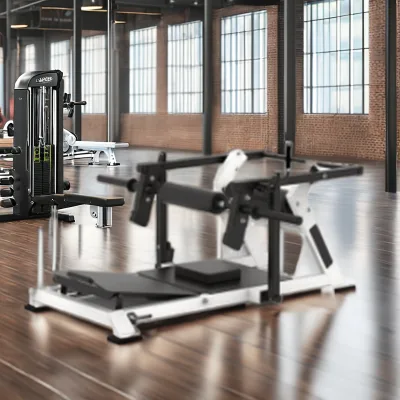


Professional Multi Functional Gym Equipment Exercise Frame Free Squat Rack
$169.00 - $177.00
MOQ: 1 Sets


Comprehensive Sourcing Guide
Sourcing Guide for Multifunctional Manual Strength Training Frames
Understanding Technical Specifications and Core Attributes
When sourcing a Multifunctional Manual Strength Training Frame, the primary objective is to identify equipment that balances structural integrity with functional versatility. Based on the available market data, these units are predominantly classified as fitness equipment designed for adult users. The core mechanism relies on manual power sources, meaning the equipment does not require electricity or pneumatic systems, which simplifies installation and reduces long-term maintenance costs. The physical construction is almost exclusively defined by the use of steel, often specified as high-quality steel, to ensure the frame can withstand repetitive loading without deformation.
The dimensions of these frames vary significantly depending on the specific model and intended application. For instance, specific models in the market have been observed with a length of 85 cm and a width of 68 cm, while others, such as full-frame racks, may reach dimensions of 1370 mm by 1720 mm. Height adjustability is a critical feature for multifunctional frames, with observed ranges extending from 110 cm to 140 cm to accommodate users of different statures. The structural capacity is equally important; buyers must verify that the frame supports a weight capacity of at least 200 kg, a standard observed in high-duty commercial units.
The functional scope of these frames extends beyond simple muscle isolation. While some units are specifically noted for targeting the arm, the broader classification includes "tissue repair" and general muscle exercise functions. The equipment is designed to be unfolded for operation, indicating a fixed or semi-fixed structure rather than a compact, foldable design suitable for home storage. The product models identified in the current market include identifiers such as SQ-1051, SQ-2026, SQ-1058, TMSW101, and YW-S005, suggesting a variety of configurations available for different training needs.
Compliance, Certification, and Safety Standards
In the B2B procurement of fitness equipment, verifying compliance is not merely a formality but a critical risk mitigation strategy. The market data indicates that reputable suppliers for these frames typically provide certifications such as CE and ISO, with some listings explicitly mentioning RoHS compliance. It is essential to note that while some product listings group certifications as "ISOCE," buyers should treat this as a composite reference and verify the specific, distinct standards (ISO and CE) individually to ensure they meet the regulatory requirements of the target export market.
Safety is paramount in strength training equipment. The observed product features explicitly list "Safety" as a primary attribute, alongside durability and adjustability. The material composition, specifically high-quality steel, serves as the first line of defense against structural failure. However, material quality alone is insufficient without adherence to recognized standards. Buyers should request proof of the "normal size" or specific dimensional standards (such as the 876233 cm standard observed in some listings) to ensure the equipment meets industry norms for user safety and ergonomics.
Furthermore, the origin of the product plays a role in compliance verification. The data shows origins in both Shandong and Guangdong provinces in China. While these regions are major manufacturing hubs, the specific certification status should be validated against the actual manufacturing facility rather than just the region. The presence of a "2 Years" warranty in some listings suggests a baseline expectation for product longevity and manufacturer confidence, which buyers should use as a negotiation point to ensure the warranty covers structural integrity and mechanical components.
Cost Drivers and Pricing Dynamics
The pricing for multifunctional manual strength training frames exhibits a wide range, observed between $0.8 and $850 USD. This variance is not indicative of quality differences alone but reflects the scale of the transaction, the specific model complexity, and the customization level. The lower end of the spectrum likely represents basic units or samples, while the higher end corresponds to fully featured, heavy-duty commercial racks with advanced adjustability and custom branding.
Several factors drive the final cost. First, the material specification is a primary driver; "High-Quality Steel" commands a premium over standard steel grades. Second, customization options significantly impact pricing. The market data confirms that customization is available, including the ability to add customized logos, choose from customized colors, and accept OEM & ODM services. These value-added services require additional tooling and labor, which increases the unit cost.
The Minimum Order Quantity (MOQ) is another critical cost driver. Observed MOQs range from 1 to 5 pieces, with specific listings noting an MOQ of 2 PCS. For buyers looking to minimize initial capital expenditure, suppliers with lower MOQs are preferable, though they may carry a higher per-unit price. Conversely, larger orders often unlock volume discounts. The shipping method, described as "Can Be Negotiated," also influences the landed cost. Buyers must account for the weight of the unit, which can be around 26 kg, and the packaging type, which varies between carton boxes and wooden cases or plywood cases. Wooden cases are typically more expensive but offer superior protection for international shipping, reducing the risk of damage and associated replacement costs.
Typical Applications and Operational Environments
The versatility of these frames allows them to be deployed across a diverse range of environments. The product attributes explicitly list applications in homes, gymnasiums, parks, and community centers. This broad applicability suggests that the design philosophy prioritizes durability and adaptability to different user bases.
In a home setting, the manual power source and compact footprint (where applicable) make these frames ideal for residential use where space is limited and noise reduction is desired. For gymnasiums and community centers, the focus shifts to high durability and high weight capacity. The observed 200 kg capacity weight limit is particularly relevant for commercial settings where multiple users may cycle through the equipment throughout the day. The "Full Frame Rack" and "Upright Smith" configurations mentioned in the data are specifically suited for heavy lifting and compound movements, which are staples in commercial fitness programming.
The "Theory" of operation, noted as "Radial" in some listings, implies a specific mechanical advantage or movement path that may be optimized for safety or muscle engagement. This theoretical basis should be understood by the procurement team to ensure the equipment aligns with the training philosophy of the facility. Whether for tissue repair in a rehabilitation context or intense muscle building in a commercial gym, the equipment must be robust enough to handle the specific demands of the environment. The "Unfolded" state requirement means that facilities must allocate sufficient floor space for the equipment's full operational dimensions, which can be substantial for full-frame models.
Supplier Evaluation and Sourcing Strategy
Evaluating suppliers for strength training frames requires a focus on their ability to meet customization and quality standards. The market data highlights that suppliers offering OEM & ODM services and customizable logos are prevalent. This indicates a mature supply chain capable of white-labeling products for different brands. When evaluating potential partners, buyers should verify the supplier's capacity to handle the specific model numbers observed, such as SQ-1051 or YW-S005, and ensure they can consistently deliver the "High-Quality Steel" specifications.
The origin of the product is a key factor in supplier selection. With manufacturing hubs in Shandong and Guangdong, buyers should consider the logistical advantages of each region. Shandong is noted for producing models like the Full Frame Rack, while Guangdong is associated with the Upright Smith. Buyers should request detailed production timelines and verify the supplier's ability to meet the "normal size" or specific dimensional standards required for their market.
Quality control is integral to the supplier evaluation process. The presence of a "2 Years" warranty in some listings suggests that reputable suppliers stand behind their products. Buyers should explicitly ask about the scope of this warranty, specifically whether it covers structural welds, moving parts, and surface finishes. Additionally, the "Feature" attributes of safety, durability, and adjustability should be validated through third-party testing reports or factory audits. The packaging method, whether "1 PC in One Carton Box" or "Plywood Case/Carton," should be assessed based on the shipping distance and the fragility of the components.
Quality Control and Long-Term Procurement Considerations
Ensuring the long-term viability of the procurement investment requires a rigorous quality control (QC) protocol. Given that the equipment is made of steel and designed for high-load applications, QC must focus on weld integrity, surface treatment quality, and the precision of adjustable mechanisms. The observed "Adjustable" feature, particularly the height range of 110-140 cm, must be tested for smooth operation and locking security. A failure in the adjustment mechanism can render the equipment unsafe or unusable.
Buyers should also consider the "Product Name" and "Classification" consistency. Ensuring that the delivered goods match the ordered specifications (e.g., "Upright Smith" vs. "Full Frame Rack") is essential to avoid operational disruptions. The "Without LCD Display" attribute simplifies the QC process by removing electronic components that could fail, but it places greater emphasis on the mechanical durability of the frame.
For long-term procurement, the availability of spare parts and the supplier's responsiveness to warranty claims are critical. The "Customization" aspect, including logos and colors, should be durable and resistant to fading or peeling, especially for equipment placed in public parks or high-traffic gyms. The "Type of Shipping" being negotiable allows buyers to optimize logistics, but they must ensure that the chosen shipping method protects the equipment from corrosion and physical damage during transit.
Finally, buyers should maintain a continuous dialogue with suppliers regarding updates to standards and certifications. As regulations evolve, the "CE" and "ISO" certifications must remain current. By focusing on these technical and operational details, buyers can secure a reliable supply of multifunctional manual strength training frames that meet the rigorous demands of modern fitness facilities.
| Feature Category | Observed Attribute | Procurement Verification Point |
|---|---|---|
| Material | Steel / High-Quality Steel | Verify steel grade and thickness specifications. |
| Certification | CE, ISO, RoHS | Request valid certificates for specific models. |
| Dimensions | 85x68x110-140 cm (varies) | Confirm exact L/W/H for facility planning. |
| Capacity | 200 Kg | Validate load testing reports. |
| Customization | Logo, Color, OEM/ODM | Review sample proofs for branding. |
| Warranty | 2 Years | Clarify coverage scope and claim process. |
| Packaging | Carton / Wooden / Plywood | Assess packaging for shipping durability. |
| Origin | Shandong / Guangdong | Verify factory location and export history. |
FAQs
What certifications do multifunctional manual strength training frames typically have?
These frames typically hold CE, ISO, and RoHS certifications to ensure safety and compliance. Some listings group these as ISOCE, but buyers should verify distinct standards individually. High-quality steel construction supports these safety requirements for commercial use.
Can I customize the logo and color of the strength training frame?
Yes, customization is available for logos and colors on these frames. Suppliers often accept OEM and ODM services to meet specific branding needs. Buyers should confirm that customized finishes are durable for high-traffic environments like gyms or parks.
What is the weight capacity of a Multifunctional Manual Strength Training Frame?
The observed weight capacity for these frames is at least 200 kg. This high capacity supports heavy-duty use in gymnasiums and community centers. Buyers must verify this limit for specific models to ensure structural integrity under load.
How is the Multifunctional Manual Strength Training Frame packaged for shipping?
Packaging varies between carton boxes, wooden boxes, and plywood cases depending on the model. Some units come in one carton box per piece, while others use protective wooden cases for international transit. The choice affects shipping costs and damage protection.
What is the minimum order quantity for these strength training frames?
The minimum order quantity ranges from 1 to 5 pieces, with some listings specifying an MOQ of 2 PCS. Lower MOQs allow for smaller initial orders but may carry higher per-unit costs. Buyers should negotiate based on their volume requirements.
Which materials are used to construct these manual strength training frames?
These frames are constructed from steel, often specified as high-quality steel for durability. The material ensures the structure withstands repetitive loading without deformation. Buyers should verify the steel grade to confirm long-term structural safety.
Where are these multifunctional manual strength training frames manufactured?
Manufacturing origins include Shandong and Guangdong provinces in China. Different models like the Full Frame Rack and Upright Smith are associated with specific regions. Buyers should consider these locations when evaluating logistics and supplier proximity.