Source Multifunctional Integrated Banana Slicer for Snacks, Catering, and Processing
Find 30 Multifunctional Integrated Banana Slicer options from verified Chinese manufacturers. Compare specifications, prices, and capacities for snack factories, commercial catering, and fruit processing plants to find the right equipment.
Key considerations
Products List
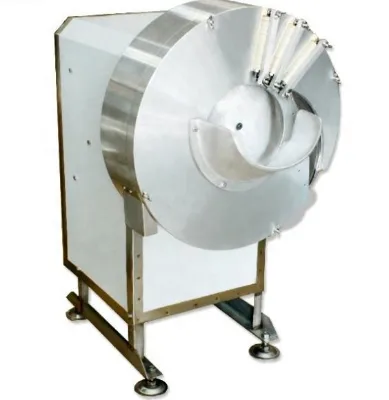
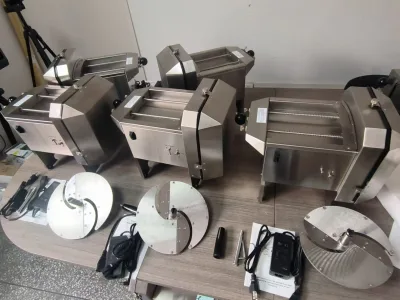


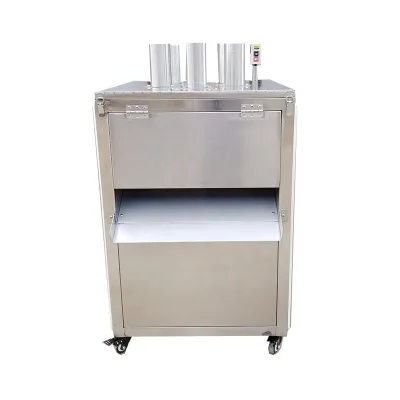

Multifunctional Vegetable Slicer
$50.00 - $55.00
MOQ: 10 Pieces
Hunan Dongfanghong Electromechanical Manufacturing Co., Ltd.

Multifunctional Vegetable Slicer
$50.00 - $55.00
MOQ: 10 Pieces
Hunan Dongfanghong Electromechanical Manufacturing Co., Ltd.


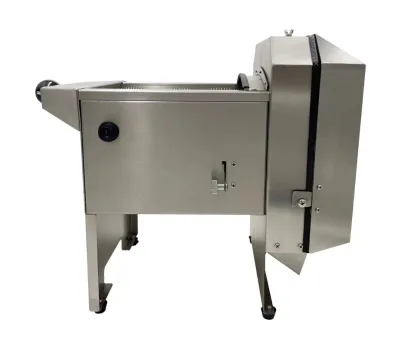
Factory Supply Banana Chips Cutter Machine Banana Long Chips Machine Slicer
$120.00 - $145.00
MOQ: 3 pieces


Comprehensive Sourcing Guide
Strategic Sourcing Guide for Multifunctional Integrated Banana Slicers
Understanding the Technical Landscape of Integrated Slicing Systems
When sourcing a Multifunctional Integrated Banana Slicer, buyers must first distinguish between the various technical configurations available in the global market. The term "multifunctional" often implies a machine capable of handling multiple processing stages, such as peeling, slicing, and potentially drying or packaging, though the core function remains the precise cutting of fruit. Based on observed market data, these machines are frequently categorized by their primary mechanical action. For instance, specific models are explicitly identified as "Peeler" units or "Electric cutting machines," indicating that the integration of peeling and slicing functions is a common design feature. The operational capacity of these units varies significantly; observed specifications include a throughput of 800kg/hr, which is critical for commercial-scale operations, while other units may be designed for lower-volume commercial catering or small-batch production.
The physical dimensions of the equipment are a primary constraint in facility planning. Buyers should anticipate a wide variance in footprint depending on the model. Observed dimensions range from compact units measuring 650490850mm to larger industrial models reaching 8506501050mm. This difference in size often correlates with the internal motor power and the complexity of the slicing mechanism. Power requirements are another critical technical specification. The market shows a clear split between voltage standards, with models available for 220V 50Hz European standards and 110V 60Hz American standards. Power ratings observed in the supply chain include 1hp units, which are typical for mid-range commercial applications. However, buyers must verify the specific voltage and frequency requirements of their local grid before ordering, as the "multifunctional" nature of the machine does not guarantee universal voltage compatibility without specific customization.
Compliance, Certification, and Safety Standards
In the B2B food processing sector, compliance is not merely a formality but a prerequisite for market entry and operational safety. When evaluating a Multifunctional Integrated Banana Slicer, the presence of recognized certifications is a primary indicator of manufacturing quality. The "CE" mark is a frequently observed certification in the product listings, signifying that the equipment meets the health, safety, and environmental protection standards for products sold within the European Economic Area. However, the presence of a certification in a general listing does not guarantee that every specific unit or batch carries the valid documentation. Buyers must treat certification claims as observations that require verification against the specific serial number and batch of the machine being purchased.
Beyond the CE mark, buyers should investigate the machinery test report status. In the current market data, some listings explicitly state that the machinery test report is "Not Available." This absence is a significant risk factor for procurement teams, as it indicates a lack of third-party validation for the machine's performance and safety under load. For operations in regulated markets, such as the United States or the European Union, the absence of a test report may be a dealbreaker. Additionally, while "REACH" is mentioned in background contexts, it should not be assumed as a guaranteed attribute of the product without explicit confirmation from the supplier. The material composition of the machine, particularly the parts in contact with food, must be verified to ensure they meet local food safety standards, even if the machine itself carries a CE certification.
Cost Drivers and Pricing Structure Analysis
The pricing structure for multifunctional integrated banana slicers is highly variable, reflecting the diversity in capacity, automation level, and customization options. The observed price range in the market spans from $0.48 to $3,200. This extreme variance suggests that the lower end of the spectrum may represent accessories, small-scale manual units, or perhaps incomplete listings, while the higher end represents fully automated, high-capacity industrial systems. A price point near the upper limit is typically associated with machines featuring higher throughput, such as the 800kg/hr capacity units, and those with advanced features like automatic grading or integrated peeling mechanisms.
Several factors drive the final cost of the equipment. First, the "Automatic Grade" of the machine is a significant cost determinant. Fully automatic units, which require complex motor systems and control interfaces, command a premium over semi-automatic or manual feed models. Second, customization plays a vital role. Listings indicate that "Customization" and "Customized" options are available. Buyers seeking specific dimensions, voltage configurations, or specialized slicing patterns will incur additional costs. Third, the packaging details influence the final landed cost. Units shipped in "Plywood cases suitable for international transportation" or "Standard Export Packaging" often have higher base prices due to the protective materials and labor involved, ensuring the machine arrives without damage. Finally, the weight of the unit, ranging from 25kg to 140KG, impacts shipping costs, which are often a separate line item but a critical component of the total cost of ownership.
Typical Applications and Operational Scope
The versatility of the Multifunctional Integrated Banana Slicer makes it suitable for a broad spectrum of industrial applications. The primary function is to cut bananas into slices, but the observed application fields extend well beyond this single use case. These machines are designed for use in Snack Food Factories, Fruit Processing Plants, and Vegetable Processing Plants, indicating their ability to handle a variety of produce types. Specific product attributes list the function as handling "vegetable fruit slice chips," suggesting that the same unit can process carrots, potatoes, and other root vegetables, not just bananas.
The operational scope also varies by the intended environment. Commercial Catering facilities may utilize smaller, more compact units, while Beverage Factories and Frozen Food Factories require high-capacity, robust machines capable of continuous operation. The "Purpose" of these machines is generally listed as "Cut off" or "slice," but the integration of peeling functions allows for a streamlined workflow in facilities where raw fruit preparation is a bottleneck. For example, a model identified as a "Banana Chip Machine" or "Banana chips cutter" is specifically optimized for the snack industry, where uniform slice thickness is critical for consistent frying or drying results. Buyers should match the machine's capacity, such as the 800kg/hr throughput, to their specific production volume to avoid underutilization or operational bottlenecks.
Supplier Evaluation and Verification Protocols
Evaluating suppliers for multifunctional integrated banana slicers requires a rigorous approach to verify the authenticity of the product attributes. The "Place of Origin" is consistently listed as China, with specific cities like Hangzhou mentioned as production hubs. While this provides a geographical context, it does not guarantee the quality of the individual supplier. Buyers must scrutinize the "Supply Ability," which is observed as 100 sets per month for certain models. This figure serves as a benchmark for the supplier's production capacity; if a buyer requires a large order that exceeds this monthly rate, the supplier may need to schedule production over multiple months, affecting the lead time.
The "Condition" of the equipment is another critical verification point. Listings typically state "New," but buyers must confirm the status of the core components, such as the motor. The "Core Components" are explicitly listed as the Motor in some descriptions, making the quality and origin of the motor a key factor in the machine's longevity. Furthermore, the "Warranty" period is a standard contractual element, with 1 Year being a common offering. Buyers should verify if this warranty covers the motor and other critical parts or if it is limited to general mechanical failures. The "Port of Dispatch" is listed as "Any seaport of China," which offers flexibility but requires the buyer to manage logistics carefully to ensure the chosen port aligns with their shipping contracts.
Quality Control and Long-Term Procurement Considerations
Implementing a robust quality control (QC) strategy is essential when importing multifunctional integrated banana slicers. Given the variance in observed specifications, such as the "Machinery Test Report" being "Not Available" for some units, buyers should consider engaging third-party inspection agencies to verify the machine's performance before shipment. This is particularly important for high-value units where the cost of failure is significant. The "Packaging Details" are a key aspect of QC; ensuring that the machine is packed in "Plywood cases" or "Carton" packaging that is suitable for international transportation helps prevent damage during transit.
Long-term procurement considerations extend beyond the initial purchase price. The "MOQ" (Minimum Order Quantity) ranges from 1 to 5000, offering flexibility for small businesses while accommodating large industrial buyers. However, buyers should be aware that lower MOQs might come with higher per-unit costs. The "Selling Units" are typically listed as "Single item," which simplifies the ordering process but requires careful inventory management. Additionally, the "Customization" availability allows for long-term adaptability; as production needs change, the ability to modify the machine's specifications can extend its useful life. Buyers should also consider the "Power Source" and "Voltage" compatibility for future-proofing, ensuring that the machine remains compatible with any changes in the facility's electrical infrastructure.
Comparative Analysis of Key Product Attributes
To facilitate a clearer decision-making process, the following table summarizes the key attributes observed in the market for multifunctional integrated banana slicers. This comparison highlights the diversity in specifications and helps buyers identify the features most relevant to their specific operational needs.
| Attribute Category | Observed Specification A | Observed Specification B | Observed Specification C |
|---|---|---|---|
| Model Number | JHFC501 | 220V50Hz European standard | f291 / f290 / f296 |
| Capacity | 800kg/hr | Not specified | Not specified |
| Dimensions (LWH) | 650490850mm | 8506501050mm | Not specified |
| Weight | 60kg | 25kg | 80 KG / 140KG |
| Power Source | Electric (1hp) | Electric | Electric |
| Voltage | 220V | 220V 50Hz / 110V 60Hz | Not specified |
| Certification | CE | CE | Not specified |
| Function | Cut banana into slice | Slice / Vegetable fruit slice chips | Cut off |
| Warranty | 1 Year | Not specified | Not specified |
| Supply Ability | 100 sets per Month | Not specified | Not specified |
| Packaging | Plywood cases | Carton | Standard Export Packaging |
This table illustrates that while the core function remains consistent, the technical specifications vary widely. Buyers must use this data to filter options based on their specific constraints, such as available floor space, electrical infrastructure, and required throughput. By aligning these observed attributes with their operational requirements, procurement teams can make informed decisions that minimize risk and maximize the efficiency of their banana processing operations.
FAQs
What is the typical capacity of a Multifunctional Integrated Banana Slicer?
Some models offer a capacity of 800kg per hour for commercial operations. Buyers should verify the specific throughput of the unit, as other models may have lower capacities suitable for smaller facilities.
Can the Multifunctional Integrated Banana Slicer be customized for different voltages?
Yes, customization is available for voltage standards like 220V 50Hz or 110V 60Hz. Buyers must specify their local grid requirements to ensure the machine operates safely without additional adapters.
Which certifications are commonly found on these slicing machines?
The CE certification is frequently observed on these units to meet European safety standards. However, buyers should verify if a machinery test report is available, as some listings indicate this document is not provided.
How does the price of a Multifunctional Integrated Banana Slicer vary?
Prices range widely from 0.48 to 3200 USD depending on capacity and automation. Higher prices typically correspond to fully automatic units with greater throughput and advanced customization options.
What is the minimum order quantity for purchasing this equipment?
The minimum order quantity can be as low as one set for some models. Other suppliers may require up to 5000 units, so buyers should check the specific MOQ before placing an order.
Where are these multifunctional integrated banana slicers typically manufactured?
The place of origin is consistently listed as China, with specific hubs like Hangzhou. Buyers should note that the port of dispatch is any seaport in China, requiring careful logistics planning.
What is the standard warranty period for this machinery?
A 1-year warranty is commonly offered for these electric cutting machines. Buyers should confirm if the warranty covers core components like the motor or is limited to general mechanical failures.