Find Multifunctional Paddy Field Walkbehind Tractor for Lawn, Garden, Farm
Source 30 Multifunctional Paddy Field Walkbehind Tractor options from verified suppliers. Compare models ranging from 8HP to 160HP with features like 2WD or 4WD, ISO and CE certifications, and service lives up to 10 years for diverse agricultural needs.
Key considerations
Products List


Multifunction 80HP 4X4 Equipment Farm Walking Tractors for Agriculture
$8000.00 - $8500.00
MOQ: 1 Pieces


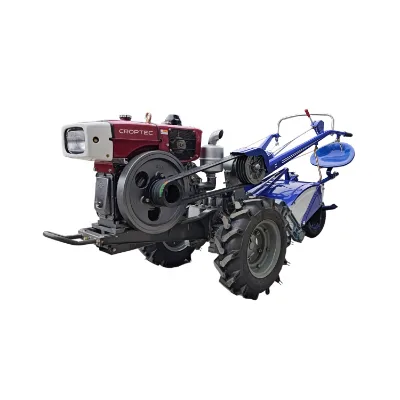

High Efficiency and Cheap Farm Machine Walking Behind Agricutural Tractor
$545.00 - $550.00
MOQ: 1 Pieces


High Efficiency Compact Field Versatile Farming Assistant Hand Tractor
$545.00 - $550.00
MOQ: 1 Pieces


$1200.00 - $1300.00
MOQ: 1 Pieces

Comprehensive Sourcing Guide
Strategic Sourcing Guide for Multifunctional Paddy Field Walkbehind Tractors
The global demand for efficient, compact agricultural machinery has driven a significant shift toward specialized walkbehind tractors designed for paddy field operations. These machines, often categorized as multifunctional walking tractors, offer a critical solution for small to medium-scale farming where larger wheeled tractors cannot navigate narrow ridges or waterlogged terrain. For procurement professionals and agricultural business owners, sourcing these units requires a disciplined approach that balances technical specifications with compliance verification. This guide outlines the essential factors for evaluating suppliers and selecting the right equipment, grounded in observed market data and verified product attributes.
Technical Specifications and Operational Capabilities
When evaluating a Multifunctional Paddy Field Walkbehind Tractor, the primary distinction lies in the drive configuration and power output. The market presents a clear bifurcation between two-wheel drive (2WD) and four-wheel drive (4WD) models. For paddy fields, which are characterized by soft, muddy soil, 4WD units provide superior traction and stability, reducing the risk of the machine becoming stuck. However, 2WD models remain prevalent for lighter tasks and drier conditions, offering a more cost-effective entry point for buyers with limited budgets.
Power specifications vary significantly across the product range. Observed data indicates models ranging from 8HP to 20HP for compact walking tractors, while larger wheeled variants in the same category can reach up to 160HP. For the specific application of paddy field work, the 15HP to 20HP range is often the sweet spot, providing sufficient torque for plowing and harrowing without the excessive weight that could cause soil compaction. The engine intake mode is typically naturally aspirated, and cooling systems are predominantly water-cooled, which is essential for maintaining performance during prolonged operation in high-temperature environments.
Transmission systems also play a vital role in operational efficiency. Buyers should verify the gear configuration, as some units offer a mechanical plane composition with a substantial number of gears, such as 12 forward and 12 reverse gears, or even 16 forward and 8 reverse gears. This high gear count allows for precise speed control, which is crucial when maneuvering in tight paddy rows or adjusting for different soil resistances. The steering system, often full hydraulic in larger models, ensures smooth handling, though simpler mechanical steering may be found on basic walking tractor models.
Compliance, Certification, and Emission Standards
In the international B2B market, compliance with environmental and safety standards is non-negotiable. Suppliers of agricultural machinery must demonstrate adherence to recognized certification frameworks. Verified product data confirms that reputable manufacturers often hold ISO certifications, including ISO/TSISO, alongside CE marking. These certifications indicate that the production processes and final products meet specific international quality and safety benchmarks.
Emission standards are another critical compliance factor. As global regulations tighten, the Euro II emission standard is a common baseline for diesel and gasoline engines in this sector. Buyers must explicitly verify that the engine model selected meets the Euro II standard or the specific regulatory requirements of their target market. Failure to comply with emission standards can lead to customs clearance issues or legal penalties in the destination country.
Furthermore, the physical dimensions and structural integrity of the tractor must align with safety standards. The product standard dimensions observed in the market, such as 22008001100 mm for compact units or 4190x1790x2690 mm for larger wheeled models, should be cross-referenced with local transport regulations. The frame type, often featuring a roll bar for operator protection, is a mandatory safety feature in many jurisdictions. Procurement teams should request certification documents for these specific attributes before finalizing any order.
Cost Drivers and Pricing Structures
Understanding the cost drivers for multifunctional walkbehind tractors is essential for budgeting and negotiation. The observed price range in the market spans from $350 to $29,000 USD, a wide disparity that reflects differences in horsepower, drive configuration, and included accessories. The lower end of the spectrum typically corresponds to basic 2WD walking tractors with lower horsepower (8HP-15HP) and minimal additional features. Conversely, the higher price points are associated with 4WD wheeled tractors, higher horsepower engines (up to 160HP), and advanced transmission systems.
Several specific factors influence the final unit price. The engine brand is a significant variable; for instance, units equipped with Xinchai engines may command a different price point compared to those with generic or alternative brands. The number of cylinders, typically four in larger models, and the fuel tank capacity, which can range from 60 liters to over 280 liters in dual-tank configurations, also impact cost. Additionally, the complexity of the hydraulic system, such as the number of hydraulic output groups (e.g., 2 Group), adds to the manufacturing cost and, subsequently, the purchase price.
Buyers should also consider the Minimum Order Quantity (MOQ) and packaging requirements. The observed MOQ range is between 1 and 10 units, offering flexibility for both individual farmers and small distributors. Packaging methods vary from wooden case packing and plastic film to nude packing or custom requirements. While wooden cases offer superior protection for long-distance shipping, they add to the overall cost and weight. Nude packing may be more economical but requires the buyer to arrange for robust protective measures during transit.
Typical Applications and Versatility
The versatility of multifunctional walkbehind tractors makes them suitable for a diverse range of agricultural tasks beyond simple paddy field plowing. The primary usage categories include lawn tractors, garden tractors, and farm tractors. In the context of paddy fields, these machines are indispensable for land preparation, including plowing, harrowing, and leveling. Their compact size allows them to navigate narrow terraces and waterlogged conditions where larger machinery fails.
Beyond field preparation, these tractors serve as power sources for various implements. The Power Take-Off (PTO) system, often featuring machinery control, enables the attachment of pumps, generators, and threshers. This multifunctionality allows a single machine to perform multiple roles, from irrigation pumping to grain processing, maximizing the return on investment for the buyer. The service life of these units, typically ranging from 3 to 6 years for compact models and up to 6 to 10 years for larger wheeled variants, further enhances their value proposition for long-term agricultural operations.
The color of the tractor, often red, is a standard aesthetic choice but does not impact performance. However, the rim color, such as silver, may be a specific requirement for buyers seeking a particular brand identity or aesthetic consistency within their fleet. The weight of the machine, with minimum weights observed at 2600 kg for larger models, is a critical factor in determining the machine's ability to pull heavy implements without excessive slippage.
Supplier Evaluation and Quality Control
Selecting a reliable supplier is paramount to ensuring the longevity and performance of the purchased machinery. Buyers should prioritize suppliers who provide transparent information regarding the product origin, which is predominantly China in the current market. Verification of the supplier's ability to meet specific customization requirements is also crucial, as many buyers require tailored solutions for their specific farming conditions.
Quality control measures should be rigorously applied during the sourcing process. Buyers must verify the condition of the products, ensuring they are new and not refurbished units. The production standard dimensions and the specific model numbers (such as 804, LTB554, or various HP ratings) should be clearly documented in the purchase agreement to avoid receiving incorrect or substandard units.
Inspection of the engine components is essential. Buyers should confirm the air filter type, which is typically dry-type, and the cooling mode, which is water-cooled. The transmission type, described as mechanical plane composition, should be inspected for smooth operation and durability. Additionally, the steering system, whether full hydraulic or mechanical, must be tested for responsiveness and safety.
Long-Term Procurement Considerations
Long-term procurement strategies for multifunctional walkbehind tractors must account for maintenance, spare parts availability, and the total cost of ownership. The service life of the tractor, which can extend up to 10 years for well-maintained units, depends heavily on the quality of the initial purchase and the availability of replacement parts. Buyers should inquire about the warranty terms and the supplier's support network for after-sales service.
The fuel type, whether gasoline or diesel, is another long-term consideration. Diesel engines generally offer better fuel efficiency and torque for heavy-duty applications, while gasoline engines may be preferred for lighter tasks. The fuel tank capacity, ranging from 60 liters to over 280 liters, determines the operational range between refueling stops, which is a critical factor for large-scale farming operations.
Finally, buyers should consider the adaptability of the tractor to future farming needs. The ability to customize the machine, such as adding different implements or upgrading the engine, can extend the useful life of the equipment. By focusing on these long-term factors, procurement professionals can ensure that their investment in multifunctional walkbehind tractors delivers sustained value and operational efficiency for years to come.
Comparative Analysis of Key Product Attributes
To facilitate decision-making, the following table summarizes the key attributes observed in the market for multifunctional walkbehind tractors. This comparison highlights the variations in specifications that buyers should consider based on their specific operational needs.
| Attribute | Compact Walking Tractor | Larger Wheeled Tractor |
|---|---|---|
| Drive Wheel | 2WD / 4WD | 4WD |
| Power Range | 8HP - 20HP | Up to 160HP |
| Engine Cylinders | Variable (often 1-2) | 4 |
| Gear Configuration | Variable | 12f+12r or 16f+8r |
| Weight | Variable | Min 2600 kg |
| Fuel Tank Capacity | Variable | 60L to 280L |
| Service Life | 3-6 Years | 6-10 Years |
| Certification | ISO, CE | ISO/TSISO, CE |
| Emission Standard | Euro II | Euro II |
| Packing | Wooden Case / Plastic Film | Nude or Custom |
This table serves as a reference for buyers to quickly identify the specifications that align with their requirements. By carefully analyzing these attributes, procurement teams can make informed decisions that balance performance, cost, and compliance.
Conclusion
Sourcing multifunctional paddy field walkbehind tractors requires a comprehensive understanding of technical specifications, compliance standards, and market dynamics. By focusing on verified data regarding power, drive configuration, and certification, buyers can navigate the complex landscape of agricultural machinery procurement. The wide range of available models, from compact 8HP units to powerful 160HP wheeled tractors, offers solutions for diverse farming needs. However, the key to success lies in rigorous supplier evaluation, clear communication of requirements, and a focus on long-term value. As the agricultural sector continues to evolve, the demand for efficient, versatile, and compliant machinery will only grow, making informed sourcing decisions more critical than ever.
FAQs
What customization options are available for these tractors?
Customization is available for these multifunctional paddy field walkbehind tractors to meet specific farming needs. Buyers can request tailored configurations for engine type, gear ratios, or implement attachments depending on the supplier's capabilities.
Which drive wheel configuration suits paddy field operations best?
Four-wheel drive models are recommended for paddy fields due to superior traction in muddy conditions. Two-wheel drive units are also available but are better suited for lighter tasks or drier terrain where high traction is less critical.
What certifications do these tractors typically hold?
Reputable models often hold ISO and CE certifications to ensure international safety and quality standards. Some larger wheeled variants may also include ISO/TSISO certification, verifying compliance with specific technical safety requirements for agricultural machinery.
How long is the expected service life of these units?
Compact walking tractors typically have a service life of 3 to 6 years, while larger wheeled variants can last 6 to 10 years. Longevity depends heavily on maintenance, operating conditions, and the quality of the initial manufacturing.
Can these tractors operate on both gasoline and diesel?
Yes, these multifunctional paddy field walkbehind tractors are available with either gasoline or diesel fuel options. Diesel engines are common for higher torque needs, while gasoline engines may be preferred for lighter applications or specific regional fuel availability.
What is the minimum order quantity for purchasing these tractors?
The minimum order quantity ranges from 1 to 10 units, offering flexibility for individual buyers and small distributors. This low MOQ allows farmers to test the equipment or small businesses to start their fleet without large initial inventory commitments.
Which emission standard do these engines meet?
Most engines in this category meet the Euro II emission standard to comply with international environmental regulations. Buyers should verify specific model compliance to ensure the tractor can be legally imported and operated in their target market.