Source Muscle Pain Relief Kinesiology Tape for Strain, Sprain, and Physiotherapy
Compare 30 listings of Muscle Pain Relief Kinesiology Tape featuring FDA and CE certifications. Buyers can evaluate customized options, waterproof designs, and specific applications like cervical spondylitis and sports protection from suppliers in Jiangsu, China.
Key considerations
Products List




Comprehensive Sourcing Guide
Strategic Sourcing Guide for Muscle Pain Relief Kinesiology Tape
Understanding Product Specifications and Material Composition
When sourcing Muscle Pain Relief Kinesiology Tape, the primary objective is to identify products that balance elasticity with adhesive reliability while ensuring material safety. The market offers a diverse array of specifications, ranging from standard therapeutic tapes to specialized variants designed for specific anatomical areas. A critical observation in the current supply landscape is the prevalence of specific model identifiers such as KTCY005, KTP003, TAPEKIN001, and SH3500, which often denote distinct manufacturing batches or design iterations. Buyers must recognize that these model numbers do not inherently guarantee a uniform performance profile but rather serve as internal tracking mechanisms for suppliers.
The material composition is a fundamental differentiator. One observed standard indicates a blend of 95% cotton and 5% spandex, a ratio that suggests a focus on breathability and skin compatibility while maintaining the necessary stretch for therapeutic application. Conversely, other product lines are described simply as "customized" in their standard specifications, implying that the base material can be altered to meet specific client requirements. The physical dimensions are equally variable; documented specifications include a standard size of 5CM by 5M, while other variants are listed as 5cm by 25cm. This variance necessitates a precise definition of the required length and width before initiating procurement to avoid compatibility issues with existing physical therapy protocols.
The functional attributes of the tape also vary significantly across the supply base. While the core function remains muscle relief and pain relief, specific applications are highlighted, including sports protection, muscle physiotherapy, and the prevention of strain. Some products are explicitly designed for "Cold Hot Dressing Application," targeting conditions such as muscle strain, sprain, psoatic strain, and cervical spondylitis. This distinction is vital for buyers targeting the rehabilitation market, as it separates general athletic support from clinical-grade therapeutic aids. Furthermore, the presence of active ingredients, such as 4% Lidocaine in certain strips, introduces a pharmaceutical dimension to the product, shifting the regulatory burden and safety considerations significantly compared to inert adhesive tapes.
Compliance, Certification, and Regulatory Standards
Navigating the regulatory landscape is perhaps the most critical step in sourcing medical-grade kinesiology tape. The supply chain presents a complex array of certifications, and buyers must verify that the specific product they intend to purchase holds the necessary approvals for their target market. The observed certification landscape includes FDA clearance, CE marking, and ISO standards. Specifically, references to ISO13485 and ISO certification for disinfection indicate a commitment to medical device quality management systems and hygiene protocols. However, inconsistencies exist in the data; some entries list "FDA,CE" while others cite "FDA,ISODisinfection:Disinfection" or "FDA,ISOCE." These variations suggest that not all listed products may possess the full suite of certifications, or that the terminology used in listings may be non-standard.
Buyers must exercise extreme caution when interpreting these claims. The presence of "GMP" (Good Manufacturing Practice) certification is another critical indicator of manufacturing quality, particularly for products containing active ingredients like Lidocaine. For items claiming to be "Ethylene Oxide Sterilized," the buyer must ensure that the sterilization process is validated and that the supplier can provide a Certificate of Analysis (CoA) confirming the absence of residual ethylene oxide. The distinction between "Disinfection" and "Sterilization" is legally and medically significant; a product marked only for disinfection may not be suitable for use on broken skin or in clinical settings requiring aseptic conditions.
Furthermore, the "CE" marking often implies compliance with the European Union's Medical Device Regulation (MDR), but the specific directive (e.g., MDD vs. MDR) should be verified. The "FDA" status must be confirmed against the specific product classification in the US market, as kinesiology tape can fall under different regulatory categories depending on its intended use and claims. A product claiming "FDA" status without a specific 510(k) clearance number or listing in the FDA database may be operating in a regulatory gray area. Buyers should treat the certification list as a starting point for due diligence rather than a final guarantee of compliance.
Cost Drivers and Pricing Dynamics
The pricing structure for kinesiology tape is influenced by a multitude of factors, including material composition, certification status, packaging complexity, and order volume. The observed price range in the market spans from $0.10 to $5.24 USD per unit, a wide disparity that reflects the heterogeneity of the product offerings. At the lower end of the spectrum, prices likely correspond to generic, non-sterile, or basic cotton-spandex blends with minimal packaging. Conversely, the higher price points are typically associated with specialized formulations, such as those containing active ingredients like Lidocaine, products with advanced sterilization, or those packaged in premium formats like paper tubes or individual boxes.
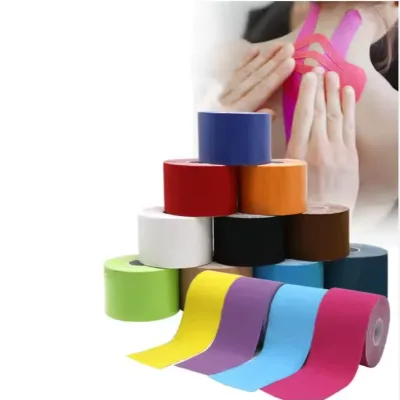
Order volume plays a decisive role in cost optimization. The Minimum Order Quantity (MOQ) observed ranges from as low as 2 units to as high as 5,000 units. This flexibility allows buyers to scale their procurement based on immediate needs or long-term inventory strategies. However, the relationship between MOQ and unit price is rarely linear. Suppliers offering high customization services, such as ODM (Original Design Manufacturing) and OEM (Original Equipment Manufacturing), often require higher MOQs to justify the setup costs for custom molds, labels, and packaging. The "Customized" attribute is frequently listed as "Accept" or "Available," indicating that buyers can request specific colors (red, blue, pink, black, beige, skin tone) or dimensions, but these requests will inevitably impact the final unit cost and lead time.
Packaging is another significant cost driver. The supply base offers options ranging from simple rolls to complex configurations like "1 Roll/Box" with "144 Boxes/Carton" or "20 Tape Strips/Roll" in a "Paper Tube." The choice between "with Box" and "without Box" packaging directly affects the retail-ready status of the product and the associated logistics costs. Corrugated cases and cartons are standard for bulk shipping, but the internal packaging determines the product's shelf appeal and protection during transit. Buyers must weigh the cost of premium packaging against the perceived value in their target market, as a higher price point may be justified by a more robust and consumer-friendly presentation.
Typical Applications and Usage Scenarios
The versatility of Muscle Pain Relief Kinesiology Tape is evident in the diverse range of applications documented in the product specifications. The primary use case is "Muscle Relief" and "Pain Relief," serving as a cornerstone for physical therapy and sports medicine. The tape is designed to be used for "External Use Only," with specific indications for preventing strain and supporting injured tissues. The "Cold Hot Dressing Application" feature expands the utility of the tape beyond simple support, allowing it to be used in conjunction with thermal therapies for conditions like muscle strain, sprain, and cervical spondylitis. This multifunctionality makes the product suitable for a broad spectrum of users, from professional athletes to patients recovering from orthopedic injuries.
The operational environment for these products is described as "All," suggesting that the tape is designed to withstand various conditions, including "Good Waterproof and Weather Resistance." This attribute is crucial for athletes who may need to wear the tape during training in wet or humid environments. The "Ventilation" function further enhances comfort by allowing the skin to breathe, reducing the risk of irritation during prolonged wear. The "Disposable" nature of the product aligns with hygiene standards in clinical settings, ensuring that the tape is replaced after each use to prevent cross-contamination.
Specific anatomical applications are also highlighted, with models designated for the shoulder, wrist, and general muscle areas. The "Kinesiology Tape Shoulder" and "K Tape Wrist" models indicate a tailored approach to joint support, addressing the unique biomechanical needs of these body parts. The "Type: Bandage" classification reinforces the product's role in wound care and support, bridging the gap between athletic taping and medical bandaging. Buyers should align their procurement with the specific clinical or athletic needs of their end-users, ensuring that the selected tape possesses the necessary elasticity, adhesion, and durability for the intended application.
Supplier Evaluation and Quality Control Protocols
Evaluating suppliers for kinesiology tape requires a rigorous assessment of their manufacturing capabilities, quality control systems, and track record. The supply base includes manufacturers located in Xinghua, Taizhou, Jiangsu, and generally in China, regions known for their textile and medical device production. However, the location alone is not a guarantee of quality. Buyers must verify the supplier's adherence to the claimed standards, such as GMP and ISO13485, through on-site audits or third-party verification reports. The presence of "ODM & OEM / Customize Service" indicates a supplier's ability to adapt to specific client needs, but it also requires a robust quality assurance framework to ensure that customizations do not compromise product integrity.
Quality control should be a central component of the procurement strategy. Given the variability in product attributes, such as the "Nature: Yes" (likely indicating a natural or specific material property) and the "Active Ingredient: 4% Lidocaine," buyers must demand batch testing results. For products claiming to be "Ethylene Oxide Sterilized," the supplier must provide sterilization validation data. The "Feature: Disposable" attribute necessitates strict controls over packaging integrity and shelf life. Buyers should establish clear acceptance criteria for visual defects, adhesive strength, and material consistency. The "Packing" options, ranging from "Box" to "Corrugated Case," should be inspected to ensure that the product remains protected and uncontaminated during shipping.
The "Customized" and "Customization: Available" attributes suggest that suppliers are willing to work with buyers on branding and product design. However, this flexibility must be balanced with strict quality control measures. Buyers should require that any customizations, such as specific colors or dimensions, are tested for compliance with the original performance standards. The "Standard" attribute, whether it is a fixed ratio like "95% Cotton; 5% Spandex" or "customized," must be consistently maintained across all production batches. A reliable supplier will have a documented quality management system that tracks these parameters from raw material sourcing to final product delivery.
Long-Term Procurement Considerations and Supply Chain Resilience
Sourcing Muscle Pain Relief Kinesiology Tape is not merely a transactional exercise but a strategic decision that impacts long-term business operations. The "Lead Time" and "Location" factors, while not explicitly quantified in the provided data, are critical for supply chain resilience. Suppliers located in Jiangsu, China, may offer competitive pricing and high customization capabilities, but buyers must consider the potential for logistical delays, especially during global disruptions. The "Operational Environment: All" claim suggests durability, but the long-term stability of the adhesive and material properties under varying storage conditions must be verified.
The "Packing" and "prod_packing" details, such as "1 Roll/Box 144 Boxes/Carton," provide insight into the scalability of the supply chain. Buyers should assess whether the supplier can handle volume fluctuations without compromising quality or delivery schedules. The "MOQ" range of 2 to 5,000 units offers flexibility, but buyers must align their inventory strategy with their sales forecasts to avoid overstocking or stockouts. The "Customized" nature of the product means that lead times may be longer than for standard off-the-shelf items, and buyers should factor this into their planning.
Furthermore, the regulatory landscape is dynamic, and certifications like FDA and CE may require renewal or updates. Buyers should establish a long-term relationship with suppliers who are proactive about regulatory compliance and can adapt to changing standards. The "Active Ingredient" aspect, particularly for products containing Lidocaine, introduces additional regulatory complexities that may evolve over time. A supplier with a strong track record in GMP and ISO13485 is better positioned to navigate these changes. Ultimately, the goal is to build a supply chain that is not only cost-effective but also resilient, compliant, and capable of delivering high-quality products consistently over the long term.
FAQs
What certifications are available for Muscle Pain Relief Kinesiology Tape?
Available certifications include FDA, CE, ISO13485, and GMP depending on the specific product model. Some variants also list disinfection or sterilization standards like Ethylene Oxide. Buyers must verify the exact certification listed for each model number before procurement.
Can I find customized Muscle Pain Relief Kinesiology Tape with specific colors?
Yes, customization is available for colors such as red, blue, pink, black, beige, and skin tone. Suppliers offer ODM and OEM services to meet specific client requirements for dimensions and branding. Custom orders may require higher minimum order quantities to justify setup costs.
Which specifications are standard for Muscle Pain Relief Kinesiology Tape dimensions?
Standard specifications vary, with common sizes including 5CM by 5M or 5cm by 25cm. Some models are defined by specific identifiers like KTCY005 or KTP003 which denote distinct design iterations. Buyers should confirm the exact length and width required for their physical therapy protocols.
How is Muscle Pain Relief Kinesiology Tape packaged for bulk shipping?
Packaging options range from individual rolls in boxes to corrugated cases containing 144 boxes per carton. Some products are packed in paper tubes with 20 strips per roll, while others are shipped without individual boxes. The choice affects retail readiness and logistics costs significantly.
What is the minimum order quantity for Muscle Pain Relief Kinesiology Tape?
The minimum order quantity ranges from 2 units to 5,000 units depending on the supplier and customization level. Basic generic tapes often have lower MOQs, while custom ODM orders typically require higher volumes. Buyers should negotiate based on their immediate inventory needs and budget constraints.
Where are Muscle Pain Relief Kinesiology Tape manufacturers located?
Manufacturers are primarily located in Xinghua, Taizhou, Jiangsu, and other regions within China. These areas are known for textile and medical device production capabilities. Buyers should verify specific factory locations to ensure compliance with their sourcing policies and shipping requirements.
Does Muscle Pain Relief Kinesiology Tape contain active ingredients like Lidocaine?
Some specific tape strips contain 4% Lidocaine as an active ingredient for enhanced pain relief. These pharmaceutical variants require GMP certification and carry different regulatory burdens compared to inert adhesive tapes. Buyers must distinguish between standard therapeutic tape and medicated strips for safety compliance.