Source Na2CO3 Soda Ash for water treatment, glass, and food
Find 30 verified listings for Na2CO3 Soda Ash suitable for industrial alkali, food grade, and water treatment applications. Compare specifications, packaging options, and pricing from multiple suppliers to identify the best fit for your procurement needs.
Key considerations
Products List


Industry Grade Na2co3 Powder 99.2% Min Purity Sodium Carbonate Named Soda Ash
$192.00 - $195.00
MOQ: 100 Tons

Wholesale Sodium Carbonate Price Good Quality Na2co3 99.2% Min Light Soda Ash
$223.00 - $227.00
MOQ: 27 Tons


Wholesale Price Per Ton Industry Uses Na2co3 Light Sodium Carbonate Soda Ash
$155.00 - $215.00
MOQ: 10 Tons

Industry Grade Na2CO3 Sodium Carbonate Dense Soda Ash for Metallurgical Industry
$170.00 - $180.00
MOQ: 20 Tons

Sodium Carbonate 99.2% Na2CO3 Dense Soda Ash for Industry Use with 25kg/bag
$170.00 - $180.00
MOQ: 20 Tons


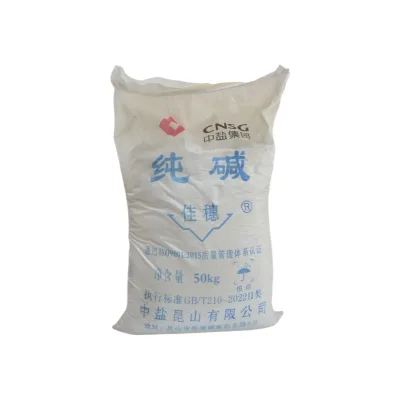
Manufacturer's direct supply of spot industrial grade soda ash with 99% purity sodium carbonate
$0.15 - $0.26
MOQ: 25000 kilograms
Comprehensive Sourcing Guide
Strategic Sourcing Guide for Sodium Carbonate (Na2CO3) Procurement
Navigating the global market for sodium carbonate, commonly known as soda ash, requires a disciplined approach to technical verification and supplier validation. This chemical compound, identified by the molecular formula Na2CO3, serves as a critical industrial alkali and dietary component across diverse sectors. Buyers must distinguish between the various grades available, as the product specifications vary significantly based on the intended application. The market offers products ranging from industrial grade to food grade, each with distinct purity thresholds and physical properties. Understanding these nuances is essential for aligning procurement with operational requirements and regulatory compliance.
Technical Specifications and Physical Properties
The core of any sodium carbonate procurement strategy lies in the precise definition of technical specifications. The product is fundamentally characterized as a white powder with a specific appearance that is solid in nature. The density of the material is a critical physical parameter, with observed values around 2.532g/Cm³, which influences handling and storage logistics. Solubility is another defining characteristic; the substance is noted for being easily soluble in water, a trait that facilitates its use in water treatment and various chemical processes.
Purity levels are the primary differentiator between product tiers. High-quality industrial and food-grade variants often boast purity levels of 99% or higher, with specific observations noting a total alkali content of 99.5%. However, buyers must remain vigilant, as some market listings indicate a broader purity range of 90% to 99%. Ignition loss is a key quality metric, with specific data points showing values as low as 0.08%, indicating high stability and low volatile content. Similarly, the water-fast substance content is a measure of insoluble impurities, with observed figures around 0.007%.
Particle size distribution is vital for process efficiency. Specifications often reference a particle size of 180 micrometers, with a specific percentage of 87.8% passing through this mesh size. This granular detail ensures the material performs correctly in mixing and reaction processes. The flash point of the substance is recorded at 169.8 ℃, a parameter that informs safety protocols during storage and transport. While the substance is generally odorless, it is classified as hazardous, specifically regarding inhalation risks, necessitating strict safety handling procedures.
Compliance, Certification, and Grade Standards
Verifying compliance is non-negotiable when sourcing sodium carbonate, particularly for applications in food processing or water treatment. The market presents a dichotomy in grade standards, with products explicitly labeled as "Industrial Grade" and others designated as "Food Grade" or "M2COGrade Standard:Food Grade." This distinction dictates the allowable impurity levels and the rigorousness of the manufacturing process.
Certification serves as the primary evidence of compliance. Reputable suppliers typically provide documentation such as ISO certification, RoHS compliance, and Certificate of Analysis (COA). These documents validate that the product meets international safety and quality benchmarks. For food-grade applications, the certification must explicitly confirm the material's suitability for dietary use, distinguishing it from industrial variants that may contain higher levels of heavy metals or other contaminants.
Buyers should verify that the product standard aligns with the specific application. While some listings reference a standard of 99.2%, others may cite packaging standards like 25KG or 1000KGS as a reference point for the standard itself, which can be confusing. It is crucial to separate packaging specifications from chemical standards. The molecular formula Na2CO3 remains constant, but the purity and impurity profiles must match the regulatory requirements of the destination market.
Cost Drivers and Pricing Dynamics
The pricing of sodium carbonate is influenced by a complex interplay of factors, including raw material costs, energy consumption for production, and logistics. The observed price range in the market is substantial, spanning from 0.15 USD to 555 USD. This wide variance is not indicative of a single product but rather reflects differences in grade, packaging, order volume, and shipping terms.
Minimum Order Quantity (MOQ) is a significant cost driver. The market exhibits an MOQ range from 1 unit up to 25,000 units. Smaller orders typically command a higher unit price due to fixed handling and administrative costs, whereas bulk purchases can significantly reduce the cost per kilogram. Packaging also impacts the final price; options include 25kg bags, 40kg bags, 50kg bags, and 1000kg jumbo bags. The choice of packaging affects the handling efficiency and the total cost of the transaction.
Shipping marks and loading quantities further influence the economic equation. A standard 20-foot container (20FCL) can typically accommodate 20 to 22 metric tons of the product. Efficient loading maximizes the utility of the shipping container, thereby reducing the per-unit freight cost. Buyers should also consider the origin of the product, with major supply hubs located in China, specifically in regions like Dalian. Geographic proximity to the supplier can reduce lead times and freight expenses, but the total landed cost must be calculated comprehensively.
Typical Applications and Usage Scenarios
Sodium carbonate is a versatile chemical with a broad spectrum of applications. Its primary use is as an industrial alkali, where it serves as a pH regulator, a water softener, and a precursor in the manufacture of other sodium compounds. In the water treatment industry, its solubility and alkalinity make it ideal for neutralizing acids and precipitating heavy metals.
The food industry utilizes food-grade sodium carbonate as a dietary alkali. In this context, the purity and absence of harmful contaminants are paramount. The product is used in baking, pasta production, and as a processing aid in various food manufacturing processes. The classification of the product as "Food Grade" is a mandatory requirement for these applications, and using industrial grade material in food processing is a severe compliance violation.
Beyond food and water treatment, the chemical is employed in the glass manufacturing industry, detergents, and pulp and paper production. Its ability to dissolve easily in water and its strong alkali properties make it a fundamental ingredient in many chemical formulations. The specific application dictates the required grade; for instance, glass manufacturing may tolerate slightly different impurity profiles compared to food processing.
Supplier Evaluation and Origin Verification
Selecting a reliable supplier is as critical as selecting the right product specification. The origin of the product is a key indicator of supply chain stability. Most of the observed supply originates from China, with specific mentions of Dalian as a production hub. Buyers should verify the specific location of the manufacturing facility to ensure it aligns with their risk management strategies.
Brand reputation and product consistency are also vital. While specific brand names like "Haihua" appear in market listings, buyers should not rely solely on brand recognition. Instead, they should evaluate the supplier's ability to consistently meet the specified parameters, such as the 99.5% total alkali content and the specific particle size distribution. The availability of customization is another factor; some suppliers offer tailored packaging or specific purity levels, which can be advantageous for large-scale industrial buyers.
Stability and storage requirements must be confirmed with the supplier. The product requires storage in a cool and dry place to maintain its quality and prevent caking or degradation. The expiration period is typically around 2 years, which buyers must factor into their inventory management plans. The supplier's ability to provide a COA for every batch ensures that the product meets the agreed-upon specifications at the time of shipment.
Quality Control and Long-Term Procurement Strategy
Implementing a robust quality control (QC) process is essential for mitigating the risks associated with chemical procurement. Buyers should mandate a Certificate of Analysis (COA) for every shipment, verifying key parameters such as purity, ignition loss, and water-fast substance content. Regular third-party testing can provide an additional layer of assurance, ensuring that the product remains consistent over time.
Long-term procurement considerations involve building a resilient supply chain. This includes diversifying suppliers to avoid single points of failure and establishing clear communication channels for quality issues. The hazardous nature of the product, particularly the inhalation risk, requires that suppliers adhere to strict safety standards during packaging and transport. The product should be marked appropriately, although some listings indicate "No" for specific shipping marks, which requires clarification to ensure compliance with international transport regulations.
Stability is a key attribute for long-term storage. The product is described as having good stability, but this is contingent upon proper storage conditions. Buyers should ensure that their storage facilities meet the requirements of keeping the product in a cool, dry place. By maintaining strict QC protocols and fostering strong supplier relationships, buyers can secure a reliable supply of sodium carbonate that meets their technical and operational needs.
Summary of Key Product Attributes
To facilitate quick reference, the following table summarizes the critical attributes observed in the market for sodium carbonate procurement.
| Attribute Category | Key Observation / Range |
|---|---|
| Chemical Identity | Molecular Formula: Na2CO3; Type: Sodium Carbonate |
| Appearance | White Powder; Solid; Odorless |
| Purity | ≥99% (Common); Range 90%~99% (Market Variation) |
| Grade Standard | Industrial Grade; Food Grade |
| Solubility | Easily Soluble in Water; Soluble Alkali |
| Density | 2.532g/Cm³ |
| Particle Size | 180um (87.8% passing) |
| Packaging | 25kg, 40kg, 50kg, 1000kg Bags; PP Bags |
| Certification | ISO, RoHS, COA |
| Origin | China (e.g., Dalian) |
| Storage | Cool and Dry Place; 2 Years Expiration |
| Hazard Class | Hazardous (Inhalation Risk) |
This comprehensive overview underscores the necessity for buyers to conduct thorough due diligence. By focusing on verified specifications, certified compliance, and reliable supplier networks, organizations can effectively manage the procurement of sodium carbonate for their diverse industrial and commercial needs.
FAQs
What grade standards are available for Na2CO3 Soda Ash?
The product is available in Industrial Grade and Food Grade standards. Buyers must verify the specific grade to ensure compliance with their intended application, such as water treatment or dietary use.
How is the purity of Na2CO3 Soda Ash defined?
Purity levels typically range from 90% to 99%, with high-quality variants reaching 99.5% total alkali content. Specific listings may also reference a standard of 99.2% for certain industrial applications.
Which certifications should I look for in Na2CO3 Soda Ash?
Reputable products often carry ISO, RoHS, and Certificate of Analysis (COA) certifications. These documents validate that the material meets international safety and quality benchmarks for industrial or food use.
Can I customize the packaging for Na2CO3 Soda Ash orders?
Yes, customization is available for packaging requirements. Options include 25kg, 40kg, 50kg, and 1000kg bags, as well as PP bags and jumbo bags depending on the supplier's capabilities.
Where are the primary sources for Na2CO3 Soda Ash located?
Most supply originates from China, with specific production hubs noted in Dalian. Buyers should verify the exact manufacturing location to ensure alignment with their supply chain risk strategies.
How does the minimum order quantity affect Na2CO3 Soda Ash pricing?
The MOQ ranges from 1 to 25,000 units, significantly impacting the unit price. Smaller orders typically command higher prices due to fixed handling costs, while bulk purchases reduce the cost per kilogram.
What are the storage requirements for Na2CO3 Soda Ash?
The product must be stored in a cool and dry place to maintain stability and prevent caking. It has an expiration period of 2 years and requires careful handling due to inhalation hazards.