Source Nano Ceramic Car Window Film for Vehicles, Homes, Offices
Find 30 Nano Ceramic Car Window Film options with varying VLT, UV rejection, and heat insulation features. Compare specifications from Chinese manufacturers to select the right solar control film for vehicles, homes, or offices.
Key considerations
Products List




Comprehensive Sourcing Guide
Strategic Sourcing Guide for Nano Ceramic Car Window Film
The global automotive aftermarket continues to demand high-performance window films that balance aesthetic appeal with functional protection. Among the various technologies available, Nano Ceramic Car Window Film has emerged as a premium solution for vehicle owners and fleet managers seeking superior heat rejection without compromising visibility. For procurement professionals, sourcing this specific category requires a nuanced understanding of material science, performance metrics, and supply chain variables. This guide provides a disciplined framework for evaluating nano ceramic films, ensuring that buyers can make informed decisions based on verified product attributes and industry standards rather than marketing assertions.
Understanding Nano Ceramic Material Composition and Performance
The fundamental differentiator of nano ceramic film lies in its material composition. Unlike traditional dyed films or metallic films that rely on reflection, nano ceramic technology utilizes non-conductive ceramic nanoparticles to absorb and reject solar energy. This distinction is critical for buyers evaluating thermal performance. The supplied product data indicates that specific models in this category, such as the IR6090 and IR7090 series, are explicitly classified as "Nano Ceramic Film." These products are engineered to offer high heat insulation and heat reflection capabilities, which are primary drivers for their adoption in the automotive sector.
When assessing technical specifications, buyers must look beyond generic claims of "heat rejection" and examine specific transmission and rejection metrics. The observed data highlights that certain nano ceramic variants achieve a Visible Light Transmission (VLT) of 60%, allowing for sufficient daylight penetration while maintaining privacy. Simultaneously, these films demonstrate robust Ultra Violet Radiation (UVR) rejection rates, with some models citing 99% to 100% protection. This level of UV blocking is essential for preserving interior materials and protecting occupants from skin damage. Furthermore, Infrared Radiation (IRR) rejection is a key performance indicator; observed figures suggest an 87% rejection rate for specific models, which directly correlates to the reduction of cabin heat.
The physical properties of the film also play a pivotal role in its application. The standard thickness observed in this category is 2 mils, which provides a balance between flexibility for installation on curved glass and durability against abrasion. Some product lines emphasize a "4mil Safety Anti Explosion" feature, indicating a thicker variant designed for enhanced security. The adhesive technology is another critical component; high-quality nano ceramic films utilize imported self-adhesive glue, with specific references to brands like Henkel or Ashland, ensuring strong bonding without damaging the glass or leaving residue upon removal.
Technical Specifications and Customization Parameters
Procurement of nano ceramic film requires precise alignment with vehicle requirements and regulatory standards. The standard roll dimensions observed in the market are 1.52 meters in width by 30 meters in length, a size that accommodates most vehicle window configurations while minimizing waste. However, customization is a significant advantage of this product category. The data confirms that dimensions can be tailored, and buyers should verify if the supplier can accommodate specific roll sizes or cut-to-order requirements for fleet applications.
Color and aesthetic options are diverse, with grey, blue, and black being the most common finishes observed. The "Color Changing" attribute listed in the product features suggests advanced formulations that may shift appearance under different lighting conditions, adding a unique selling point for luxury vehicle applications. Additionally, the film's ability to provide "High Definition" and "High Perspective" ensures that the driver's view remains unobstructed, a non-negotiable safety requirement. Anti-glare properties are also integrated into the design, reducing eye strain during high-contrast driving conditions.
The application scope extends beyond standard side windows. While the primary use case is "Car Window Glass," the product data also notes suitability for "Windshield Stickers" and general "Solar Control" applications. This versatility allows buyers to source a single product line for multiple vehicle zones, simplifying inventory management. The "Self Healing" and "Anti Scratch" features mentioned in specific models indicate a durable top coat that can withstand minor abrasions from cleaning or environmental debris, extending the operational lifespan of the film.
Compliance, Certification, and Safety Standards
In the B2B procurement of automotive accessories, compliance with safety and environmental standards is paramount. While the supplied data does not list specific third-party certifications (such as ISO or ASTM numbers), buyers must rigorously verify that the nano ceramic film meets local automotive safety regulations. The "Explosion-Proof" and "Safety and Explosion-Proof" attributes imply that the film is designed to hold shattered glass together in the event of an impact, a critical safety feature for both passenger vehicles and commercial fleets.
Buyers should request documentation regarding the adhesive's chemical composition to ensure it does not off-gas harmful volatile organic compounds (VOCs) that could affect vehicle air quality. The use of imported glue from reputable manufacturers like Henkel or Ashland is a positive indicator of quality, but verification of the specific adhesive batch compliance is necessary. Furthermore, the "100% Uvr" claim requires validation through independent testing reports, as UV protection levels can degrade over time if the ceramic nanoparticles are not properly stabilized.
Environmental compliance is another consideration. The "Standard Export Packing" and the use of PA (Polyamide) in roll wrapping suggest adherence to international shipping standards, but buyers should confirm that the packaging materials are recyclable or compliant with destination country waste regulations. For fleets operating in regions with strict emissions or safety laws, ensuring that the film does not interfere with electronic signals (a common issue with metallic films) is essential. Nano ceramic films are generally non-conductive, but verification of signal transparency is recommended for vehicles with advanced driver-assistance systems (ADAS).
Cost Drivers and Pricing Structure Analysis
The pricing of Nano Ceramic Car Window Film is influenced by several variables, including material quality, technological complexity, and order volume. The observed price range of 2 to 620 USD reflects the vast difference between sample units, small retail rolls, and bulk commercial orders. The minimum order quantity (MOQ) varies significantly, ranging from a single roll to 3000 units, depending on the supplier's capacity and the buyer's negotiation power. Some suppliers offer "None MOQ" options, which can be advantageous for small businesses or trial orders, while others require a minimum of 1.52x30m rolls to maintain production efficiency.
Cost drivers include the proprietary nature of the ceramic nanotechnology, the thickness of the film (2 mil vs. 4 mil), and the quality of the adhesive. Higher VLT options or specialized colors like blue may command a premium over standard grey or black variants. The inclusion of "OEM Support" and "Customization" services also adds to the cost structure, as these require additional setup and engineering resources. Buyers should be aware that the "Free Sample" offerings, typically A4 size or 2-meter samples, are valuable for testing but should not be conflated with bulk pricing.
When evaluating cost, buyers must consider the total cost of ownership, which includes installation labor, warranty claims, and replacement frequency. High-performance films with "High Heat Insulation" and "Reduce Air Conditioning Energy Consumption" features can lower operational costs for fleets by reducing the load on vehicle HVAC systems. This long-term savings can offset the higher initial purchase price of premium nano ceramic films.
Supplier Evaluation and Quality Assurance Protocols
Selecting the right supplier is critical for ensuring consistent product quality and reliable delivery. The product data indicates that origins are primarily in China, with specific mentions of Guangdong as a manufacturing hub. While this provides insight into the supply chain geography, buyers should not rely solely on location data. Instead, they must evaluate suppliers based on their ability to provide consistent specifications, such as the 60% VLT or 99% UVR rejection rates, across different production batches.
Quality control protocols should be a central part of the supplier evaluation. Buyers should request sample testing results for key performance indicators, including heat rejection, UV blocking, and adhesion strength. The "High Definition" and "Anti Glare" features should be verified through visual inspection of the sample to ensure there are no distortions or haze. Additionally, the "Self Healing" and "Anti Scratch" claims require practical testing to confirm durability.
The availability of "OEM Support" and "Customization" options indicates a supplier's flexibility and technical capability. Suppliers that support branding and custom sizing are better positioned to meet the specific needs of large buyers. However, buyers must ensure that customization does not compromise the core performance metrics of the nano ceramic technology. Communication regarding lead times and production capacity is also essential, as the observed MOQ range suggests that suppliers may have varying production capabilities.
Long-Term Procurement and Application Strategy
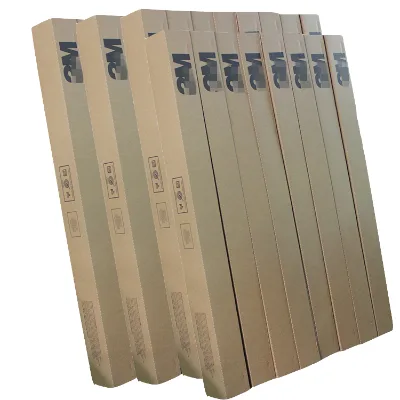
For long-term procurement, buyers should focus on building a strategic relationship with suppliers who can provide consistent quality and support. The "Standard Export Packing" and "Roll up Each Film with PA" details suggest that the supplier has established logistics protocols, but buyers should verify packaging integrity to prevent damage during transit. The "Free Sample" policy is a useful tool for initial vetting, allowing buyers to test the film's performance in real-world conditions before committing to large orders.
Application strategy should align with the specific needs of the end-users. For luxury vehicles, the "Color Changing" and "High Perspective" features may be prioritized. For commercial fleets, the "Explosion-Proof" and "Heat Insulation" attributes are likely more critical. The "Reduce Air Conditioning Energy Consumption" feature is particularly relevant for fleets operating in hot climates, where fuel efficiency and passenger comfort are paramount.
Buyers should also consider the lifecycle of the product. Nano ceramic films are designed for longevity, but the "Anti Scratch" and "Self Healing" features are key to maintaining their appearance over time. Regular maintenance protocols should be established to ensure the film remains effective. Finally, buyers should stay informed about regulatory changes regarding window tinting, as VLT limits vary by region. Ensuring that the selected film complies with local laws is essential to avoid legal issues and ensure customer satisfaction.
Comparative Analysis of Product Attributes
To facilitate decision-making, the following table summarizes the key attributes observed in the Nano Ceramic Car Window Film market based on the provided data. This comparison highlights the variations in specifications that buyers should consider when selecting a product.
| Attribute | Observation A (IR6090 Series) | Observation B (IR7090 Series) | Observation C (HT35100 Series) |
|---|---|---|---|
| Material | PET | PET | PET |
| Type | Nano Ceramic Film | Nano Ceramic Film | Car Window Film |
| VLT | 60% | 5-75% | Not Specified |
| UVR Rejection | 99% | 100% | Not Specified |
| IRR Rejection | 87% | Not Specified | Not Specified |
| Thickness | Not Specified | 2 Mil | Not Specified |
| Key Features | UV Proof, Sand Proof, Privacy | Self Healing, Anti Scratch | High Heat Insulation, UV Protection |
| Adhesive | Self-Adhesive Glue Imported | Henkel/Ashland | Not Specified |
| MOQ | 1 Roll | 1.52X30m | None MOQ |
| Sample | A4 Size (Free) | 2 Meters Sample for Free | Available (Free Sample) |
| Origin | China | Guangdong, China | Not Specified |
This table illustrates that while the core material (PET) and general function (Solar Control) remain consistent, specific performance metrics and order terms vary significantly. Buyers must align these attributes with their specific operational requirements to ensure optimal procurement outcomes.
FAQs
What is the visible light transmission for this nano ceramic film?
The visible light transmission is 60% for the IR6090 model, allowing clear visibility while filtering sunlight. Other models offer a range from 5% to 75% to suit different privacy needs. This ensures drivers maintain high definition and high perspective views.
How much UV radiation does the film block for skin protection?
The film blocks 99% to 100% of ultra violet radiation to provide complete skin care protection. This high rejection rate prevents interior fading and shields occupants from harmful rays. It is a standard feature across the nano ceramic product lines.
Can I get free samples before placing a bulk order?
Yes, free samples are available in A4 size or 2 meters length for testing purposes. Buyers can evaluate the heat insulation and clarity before committing to larger quantities. This allows verification of the self-healing and anti-scratch features.
What is the minimum order quantity for purchasing the film?
The minimum order quantity varies, with some options starting at 1 roll or 1.52 by 30 meters. Certain suppliers offer no minimum order quantity for trial purchases. Buyers should check specific model requirements like IR7090 for exact limits.
Which adhesive brands are used in the self-adhesive glue?
The film uses imported self-adhesive glue from reputable brands like Henkel or Ashland. These adhesives ensure strong bonding without damaging the glass or leaving residue. This high-quality glue supports the explosion-proof and safety features of the product.
Does the film offer explosion-proof safety for car windows?
Yes, the film includes 4mil safety anti-explosion features to hold shattered glass together. This protects occupants during accidents and deters theft attempts. The explosion-proof capability is a key safety attribute alongside heat insulation.
What are the standard dimensions for the nano ceramic film rolls?
Standard roll dimensions are 1.52 meters in width by 30 meters in length. These sizes can be customized to fit specific vehicle window requirements. The standard export packing ensures the rolls are protected during shipping.