Source Natural Olive Leaf Powder for Pharma, Food, and Supplements
Compare 30 listings of Natural Olive Leaf Powder to evaluate assay levels, extraction methods, and packaging options. This guide helps buyers verify specifications and identify suitable suppliers for their specific production needs; compare the available evidence and request quotations based on your requirements.
Key considerations
Products List


Bulk Price Olive Leaf Extract 10%-70% Oleuropein Powder Olive Leaf Extract Oleuropein
$10.00 - $15.00
MOQ: 1 kilogram




Comprehensive Sourcing Guide
Natural Olive Leaf Powder Sourcing Guide
Sourcing Natural Olive Leaf Powder requires a disciplined approach to verifying botanical authenticity and extraction integrity. Buyers must distinguish between generic herbal powders and standardized extracts, as the latter offer consistent bioactive profiles essential for pharmaceutical and high-end health product applications. The primary active compound, oleuropein, dictates the product’s efficacy, making precise assay verification a non-negotiable step in the procurement process. Without rigorous testing, buyers risk acquiring material with negligible therapeutic value, undermining the quality of their final formulations.
Procurement teams should prioritize suppliers who provide transparent documentation regarding the botanical source, specifically Olea Europaea L.. This scientific designation ensures the raw material is derived from the correct species, which is critical for maintaining regulatory compliance in international markets. Additionally, understanding the extraction method, such as liquid-solid extraction, helps buyers assess the purity and concentration of the final powder. This knowledge allows for more accurate cost-benefit analyses and ensures that the selected supplier can meet the specific potency requirements of your product line.
Product Scope and Observed Listing Signals
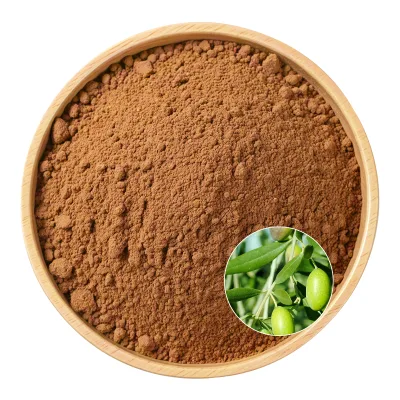
Market listings for Natural Olive Leaf Powder typically present the material as a brown or brown-yellow fine powder, often available in mesh sizes like 80 mesh for uniform particle distribution. These physical attributes are crucial for formulators who need consistent flowability and solubility in various delivery systems. The observed product range includes both raw botanical powders and standardized extracts, with some listings explicitly highlighting oleuropein content. Buyers should carefully review these descriptions to ensure the product aligns with their specific formulation needs, whether for capsules, tablets, or other dosage forms.
Commercial signals in the market indicate a wide variability in minimum order quantities, ranging from small sample sizes of 10 grams to bulk drums. This flexibility allows buyers to test quality before committing to large-scale purchases, reducing initial risk. Packaging options frequently include foil bags, cartons, and drums, designed to protect the powder from moisture and light degradation. Understanding these packaging standards is vital for logistics planning, as improper storage can compromise the shelf life and potency of the olive leaf extract during transit and warehousing.
Technical Specifications to Verify
Assay verification is the most critical technical parameter when sourcing olive leaf powder, with many suppliers claiming a 99% purity level for standardized oleuropein extracts. Buyers must request recent chromatographic data, preferably using HPLC or HPLC-MS methods, to confirm these claims. UV spectroscopy is also commonly used for assay determination, but it may lack the specificity required for complex matrices. Verifying the assay method ensures that the reported potency is accurate and comparable across different suppliers, preventing discrepancies in final product efficacy.
Particle size and physical appearance are secondary but important specifications that affect processing efficiency. The powder should be free-flowing and consistent in color, typically described as brown or brown-yellow. Mesh size specifications, such as 80 mesh, indicate the fineness of the grind, which influences dissolution rates in liquid formulations. Buyers should also confirm the extraction type, ensuring it aligns with their sustainability and purity standards. Consistent technical specifications across batches are essential for maintaining quality control in large-scale manufacturing operations.
Compliance and Safety Documentation
Regulatory compliance is paramount when sourcing ingredients for food, medicine, and health care products. Buyers should verify that suppliers hold recognized certifications such as HACCP, FDA registration, ISO, and BRC. These certifications indicate that the supplier adheres to strict hygiene, quality management, and safety standards throughout the production process. Additionally, RoHS compliance may be relevant for certain applications, ensuring the absence of hazardous substances. Documentation of these certifications should be current and verifiable through official channels to mitigate regulatory risks.
Allergen and contaminant testing is another critical aspect of compliance. Buyers must ensure that the olive leaf powder is free from heavy metals, pesticides, and microbial contaminants. Suppliers should provide certificates of analysis that include results for these specific tests. Furthermore, understanding the origin of the raw material, such as Shaanxi or Shandong in China, can help assess the environmental and agricultural practices used. Transparent sourcing documentation helps buyers meet the stringent requirements of international markets and consumer safety expectations.
Cost Drivers and Commercial Terms
The cost of Natural Olive Leaf Powder is influenced by several factors, including the assay concentration, extraction method, and packaging requirements. Higher oleuropein content typically commands a premium price due to the additional processing and quality control involved. Buyers should also consider the minimum order quantity, which can range from 1 kg to larger bulk quantities. Smaller MOQs may offer flexibility for testing but often come with higher per-unit costs, while bulk orders can provide economies of scale.
Payment terms and lead times are key commercial considerations that impact cash flow and inventory management. Buyers should negotiate clear terms regarding sample availability, which is often available in small quantities like 10 grams for quality assessment. Shipping and packaging costs should be factored into the total landed cost, especially when importing from international suppliers. Understanding these commercial dynamics allows buyers to make informed decisions that balance cost efficiency with supply chain reliability and product quality.
Supplier Qualification and Quality Control
Supplier qualification involves a thorough assessment of their manufacturing capabilities and quality management systems. Buyers should conduct on-site audits or request detailed virtual tours to verify production facilities and testing laboratories. It is essential to confirm that the supplier has the capacity to maintain consistent quality across batches. Suppliers who offer OEM services, including custom labeling and packaging, can provide additional value by streamlining the supply chain for branded products.
Quality control protocols should be clearly defined and documented. Buyers should request information on the supplier’s internal testing procedures, including in-process controls and final product release criteria. Regular third-party testing can provide an additional layer of assurance regarding product safety and potency. Establishing a strong relationship with a qualified supplier ensures a stable supply of high-quality Natural Olive Leaf Powder, reducing the risk of supply chain disruptions and quality issues.
Long-Term Procurement Checks
Long-term procurement success depends on continuous monitoring of supplier performance and product quality. Buyers should establish key performance indicators, such as on-time delivery rates, defect rates, and response times to quality issues. Regular reviews of these metrics help identify potential problems early and foster a collaborative relationship with the supplier. Maintaining open communication channels ensures that any changes in production processes or raw material sources are promptly communicated and evaluated.
Adaptability to market changes and regulatory updates is also crucial for long-term sourcing strategies. Buyers should stay informed about evolving standards and requirements in their target markets, ensuring that their suppliers can comply with new regulations. Periodic re-qualification of suppliers helps maintain high standards and encourages continuous improvement. By proactively managing these aspects, buyers can secure a reliable and cost-effective supply of Natural Olive Leaf Powder for their ongoing production needs.
FAQs
What is the typical assay purity for Natural Olive Leaf Powder?
The typical assay purity for Natural Olive Leaf Powder is 99%. This high concentration is verified using standard analytical methods such as HPLC or UV spectroscopy. Buyers should confirm the specific assay method with the supplier to ensure the testing protocol matches their quality control requirements for pharmaceutical or food-grade applications.
Can Natural Olive Leaf Powder be customized for private labeling?
Yes, Natural Olive Leaf Powder customization is available for private labeling. Suppliers offer OEM services that include customizing labels and packing bottles to meet specific brand requirements. This service allows buyers to create unique product presentations while maintaining the standard quality and extraction methods associated with the core botanical ingredient.
Which certifications are commonly held by Natural Olive Leaf Powder suppliers?
Common certifications for Natural Olive Leaf Powder include HACCP, FDA, ISO, and BRC. These credentials indicate compliance with international food safety and quality management standards. Buyers in regulated industries should verify that the specific supplier holds the relevant certifications required for their target market and product application.
What is the minimum order quantity for Natural Olive Leaf Powder?
The minimum order quantity for Natural Olive Leaf Powder is typically 1kg. This low MOQ allows buyers to test product quality before committing to larger bulk purchases. Some suppliers may offer sample sizes of 10g for evaluation purposes, enabling thorough assessment of the powder's appearance and assay results.
How should Natural Olive Leaf Powder be stored to maintain quality?
Natural Olive Leaf Powder should be stored in a cool and dry place to maintain its stability and potency. The product typically has a shelf life of two years or more than twelve months when stored correctly. Proper packaging, such as foil bags or drums, helps protect the powder from moisture and light exposure.
What forms can Natural Olive Leaf Powder be processed into?
Natural Olive Leaf Powder can be processed into various forms including capsules, tablets, pastes, suppositories, lotions, and injections. This versatility makes it suitable for diverse applications in medicine, health care products, and food industries. Buyers should specify their desired application form to ensure the supplier provides compatible processing capabilities.