Source No Sew Snap Buttons for Jackets, Bags, and Hats
Explore 30 listings for No Sew Snap Buttons suitable for jackets, bags, and hats. Buyers can compare metal and resin options, sizes ranging from 7.5mm to 21mm, and customization features like laser engraving or custom logos from verified suppliers in China.
Key considerations
Products List


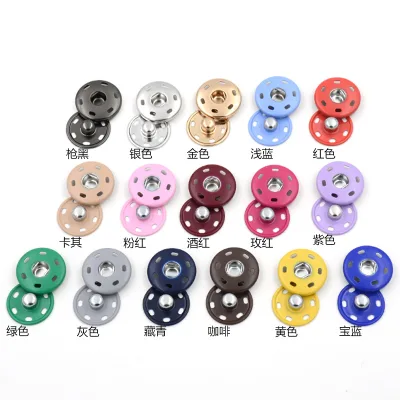

Screw-Free Button for Jeans, No Need for Nails or Sewing, Metal Snap Button
$0.05 - $0.70
MOQ: 1000 Pieces


Coats Metal Button Sewing Overcoat Button Sew on Garment Button Accessories
$0.04 - $0.25
MOQ: 5000 Pieces


Comprehensive Sourcing Guide
Strategic Sourcing Guide for No Sew Snap Buttons
Understanding Product Categories and Technical Specifications
When sourcing No Sew Snap Buttons, buyers must first navigate the diverse technical landscape presented in the market. The term "no sew" often implies a mechanism that secures without traditional needle and thread, typically utilizing prong or stud-based systems that penetrate fabric layers or adhesive-backed variants. However, the supplied product data reveals a complex mix of attributes where "Sew on Snap" and "Prong Snap Button" coexist as distinct categories. This distinction is critical for procurement accuracy. The observed product range includes items explicitly labeled as "Prong Snap Button" with a "4PCS/Set" configuration, alongside "Alloy Sew on Snap Button" and "Sew on Snap" variants.
The technical specifications for these fasteners vary significantly in size and material composition. Available sizes range from 7.5mm to 21mm, with specific standard offerings including 7.5mm, 9.5mm, 11mm, 11.5mm, 15mm, 17mm, and 21mm. Crucially, many suppliers offer "Custom Size" options, allowing for tailored solutions for specialized garments. The material composition is equally diverse, with the primary materials identified as Metal (specifically Iron and Brass) and Resin. Some listings also mention "Alloy" as a material class. The finishing techniques observed include Plating, Laser decoration, and Covered technics, which directly influence the aesthetic and durability of the final product.
A comparison of the observed product attributes highlights the variance in application and construction:
| Attribute Category | Observed Variants | Implication for Sourcing |
|---|---|---|
| Installation Type | Prong Snap, Sew on Snap | Must verify if "no sew" is a requirement or if prong systems are acceptable alternatives. |
| Material | Metal (Iron, Brass), Resin, Alloy | Determines weight, corrosion resistance, and cost. Metal is dominant. |
| Size Range | 7.5mm to 21mm (Standard & Custom) | Must align button diameter with fabric thickness and garment type. |
| Decoration | Laser, Sequins, Custom Engraved | Affects visual appeal and potential for branding integration. |
| Packing | 2000set/Bag, 50 One Plastic Plate | Impacts logistics, storage, and inventory management efficiency. |
Buyers must carefully distinguish between "Prong Snap" systems, which may require a hammer or press tool for installation, and "Sew on" variants, which are explicitly designed for stitching. If the strict requirement is "no sew," the prong-based systems or adhesive-backed options (if available in the market) are the primary candidates, though the data shows a strong presence of sew-on options that buyers must filter out based on their specific manufacturing workflow.
Compliance, Certification, and Quality Assurance Standards
In the B2B procurement of fashion fasteners, compliance and quality assurance are non-negotiable elements that mitigate risk. The supplied product data indicates that a specific standard, SGS, is referenced as a product standard for certain items. This suggests that buyers should actively verify if the supplier can provide SGS certification or equivalent third-party testing reports for the specific batch being ordered. While the data mentions "100% QC Passed" as an attribute, this is a self-declared observation rather than a verified certification. Buyers must treat such claims as internal quality assertions and request independent validation.
The origin of the products is listed as Zhejiang, Guangdong China (Mainland) and Zhejiang, China. These regions are major manufacturing hubs, but the presence of multiple locations necessitates a clear definition of the factory of origin in the purchase order. When evaluating compliance, buyers should verify if the materials (Iron, Brass, Resin) meet international safety standards for textiles, particularly regarding heavy metal content and phthalate restrictions, especially if the buttons are intended for children's clothing or toys, as the "Usage" field explicitly lists "Toys."
Furthermore, the attribute "Sustainable" appears in the product list, indicating a growing market segment for eco-friendly fasteners. However, without specific certification data in the provided facts, buyers should not assume sustainability claims are verified. Instead, the procurement strategy should include a request for material safety data sheets (MSDS) and compliance with relevant environmental regulations such as REACH or RoHS, depending on the target market. The "7 Days Sample Order Lead Time" support mentioned in the data is a positive indicator for rapid prototyping and quality verification before mass production, allowing buyers to physically test the "100% QC Passed" claim on actual samples.
Cost Drivers and Pricing Dynamics
The pricing landscape for snap buttons is influenced by several dynamic factors, including material costs, customization levels, and order volume. The observed listed price range in the market data is 0.01 to 0.7 USD per unit. This wide range suggests that the base cost of a standard metal snap button is extremely low, but the price can escalate significantly with the addition of custom features.
The primary cost drivers include:
- Material Composition: Metal (Iron, Brass) generally commands a different price point compared to Resin or Alloy. Brass and high-grade alloys often incur higher material costs than standard iron.
- Customization: The availability of "Your Logo Available," "Customized Logo," and "Customized Engraved/Embossed Logo" introduces additional tooling and setup costs. Laser decoration and plating processes also add to the unit price.
- Order Quantity (MOQ): The observed Minimum Order Quantity (MOQ) ranges from 50 to 5000 units. Buying at the lower end of the MOQ spectrum (e.g., 50 units) will likely result in a higher per-unit cost compared to purchasing at the upper limit (5000 units). The "Stock" attribute indicates that some standard items are available for immediate shipment, which may offer cost savings by eliminating production lead times, whereas custom orders will incur longer lead times and potentially higher setup fees.
- Packing Requirements: Standard packing (e.g., 2000set/Bag, 20bag/CTN) is cost-effective. However, requests for "Custom" packing or "Neutro-Packing" may incur additional charges depending on the supplier's flexibility and the complexity of the packaging design.
Buyers should anticipate that the lower end of the price range (0.01 USD) likely corresponds to standard, non-customized, high-volume orders of basic metal or resin buttons. The upper end (0.7 USD) likely reflects custom-engraved, plated, or specialized size variants with lower order volumes.
Typical Applications and Usage Scenarios
The versatility of snap buttons is evident in the broad range of applications listed in the product data. The "Usage" field explicitly mentions Jacket, Trousers, Shoes, Sweater, Toys, Hat, Bags, and Overcoat Outerwear. This indicates that No Sew Snap Buttons are integral to a wide spectrum of the apparel and accessory industry.
For Outerwear and Jackets, the durability of the snap is paramount. Metal (Iron, Brass) options with "Plating" or "Laser" decoration are preferred for their strength and resistance to wear. The "Dry Cleaning" feature noted in the attributes is particularly relevant for high-end jackets and coats that require professional cleaning, ensuring the fastener does not degrade or discolor during the process.
In the Footwear and Toy sectors, the "Prong Snap Button" or "Sew on Snap" must be robust enough to withstand high stress and potential impact. The "Toys" application specifically raises safety concerns, requiring strict adherence to material safety standards to prevent choking hazards or toxicity. The "Resin" material might be preferred here for its lighter weight and potential for vibrant colors, provided it meets safety certifications.
For Bags and Hats, aesthetics play a larger role. The "Round" shape and "Monocolor" options, along with "Sequins" decoration, suggest that these fasteners are often used as both functional and decorative elements. The "Customized Logo" capability allows brands to use these buttons as a branding touchpoint on bags and hats, turning a simple fastener into a marketing asset.
Supplier Evaluation and Selection Criteria
Selecting the right supplier requires a rigorous evaluation process based on the available data points. The first step is verifying the Product Origin. The data points to Zhejiang and Guangdong as the primary manufacturing regions. Buyers should confirm the specific factory location to assess logistics costs and potential geopolitical risks.
Next, evaluate the Customization Capabilities. The data confirms that "Customization: Available," "OEM: Accepted," and "Custom Size" options are standard. A reliable supplier should demonstrate flexibility in handling "Customized Engraved/Embossed Logo" requests and "Custom" packing. The ability to support a "7 Days Sample Order Lead Time" is a strong indicator of a responsive and agile manufacturing partner.
Quality control is another critical evaluation metric. While the data lists "100% QC Passed," buyers must verify the supplier's actual quality control protocols. Requesting a copy of the SGS report or similar third-party certification is essential. Additionally, the "Feature: Sustainable" attribute should be backed by tangible evidence, such as material sourcing documentation or environmental management system certifications.
The Packing specifications also serve as a proxy for supplier professionalism. Standard packing like "2000set/Bag, 20bag/CTN" suggests an established production line. In contrast, "Neutro-Packing" or "Custom" packing options indicate a supplier willing to accommodate specific client needs, which is vital for private label brands.
Long-Term Procurement Considerations
Sourcing snap buttons is not merely a transactional activity but a strategic partnership that impacts the entire supply chain. Long-term considerations include the stability of the MOQ and Lead Time. The observed MOQ range of 50 to 5000 units offers flexibility for startups and large enterprises alike. However, buyers should negotiate terms that allow for volume scaling without drastic price increases. The "Stock" attribute suggests that some items are available for immediate delivery, which is beneficial for maintaining inventory buffers and responding to sudden demand spikes.
Sustainability is a growing long-term trend. The "Feature: Sustainable" attribute indicates a market shift towards eco-friendly materials. Buyers should plan for a transition to suppliers who can provide verified sustainable materials, potentially reducing the carbon footprint of their products and aligning with corporate social responsibility goals.
Finally, the Product Model and Standard consistency are crucial for long-term supply chain stability. The data lists specific models like "YM-SOB-006" and standards like "SGS." Buyers should ensure that any custom orders maintain these quality benchmarks and that the supplier can replicate the exact specifications for future re-orders. This consistency prevents production disruptions and ensures that the final garments meet the same quality standards over time. By focusing on these long-term factors, buyers can build a resilient supply chain that supports their brand's growth and reputation.
FAQs
Can I get custom logos on these snap buttons?
Yes, custom logos are available for most products listed. Suppliers accept OEM requests and offer options like engraved or embossed designs, though this may require a higher minimum order quantity and additional setup time compared to standard stock items.
What materials are used for these snap buttons?
The primary materials observed are metal, specifically iron and brass, as well as resin and alloy. Metal variants often feature plating or laser decoration, while resin options provide a lighter alternative suitable for specific garment types like toys or hats.
Which sizes are available for snap button fasteners?
Standard sizes range from 7.5mm to 21mm, including specific options like 11mm, 15mm, and 17mm. Many suppliers also offer custom size options to accommodate unique garment requirements, ensuring a precise fit for jackets, trousers, and bags.
How fast can I get sample orders delivered?
Support for sample orders is available with a lead time of approximately seven days. This allows for rapid prototyping and quality verification before committing to larger production runs, provided the supplier has the specific stock or tooling ready.
What is the minimum order quantity for these buttons?
The minimum order quantity varies significantly, ranging from 50 units to 5000 units depending on the supplier and product customization. Lower MOQs are often available for standard stock items, while custom logos or sizes typically require higher volume commitments.
Are these snap buttons suitable for dry cleaning?
Yes, specific product attributes indicate that some snap buttons are designed to withstand dry cleaning processes. This feature is particularly relevant for outerwear and jackets, ensuring the fasteners do not degrade or discolor during professional cleaning treatments.
Which certification standards apply to these products?
Some products reference SGS as a product standard, indicating third-party quality verification is possible. Buyers should request specific certification documents to confirm compliance with safety regulations, especially for items intended for use on toys or children's clothing.