Find Non Contact Radar Level Sensor for Water, Oil, and Chemical Tanks
Source 30 Non Contact Radar Level Sensor models with varying frequencies and output signals. Compare specifications including IP ratings, temperature resistance, and measurement accuracy for industrial applications.
Key considerations
Products List


Radar Level Transmitter Sensor Non Contact for Powder Solid Liquid Measurement
$321.00 - $447.00
MOQ: 1 Pieces


High Frequency 80gradar Signal Level Meter Wave Radar Level Sensor Radar
$120.00 - $155.00
MOQ: 1 Pieces

Radar Water Level Sensors for Continuous, Non-Contact Level Measurement of Liquids.
$500.00 - $860.00
MOQ: 1 Pieces


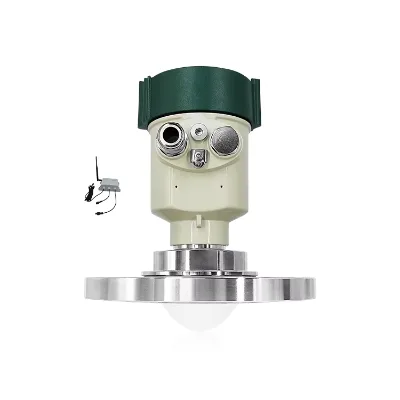


Radar Level Meter Non-Contact Level Measurement Level Sensors with High Accuracy
$290.00 - $330.00
MOQ: 1 Pieces


Comprehensive Sourcing Guide
Strategic Sourcing Guide for Non-Contact Radar Level Sensors
Procuring non-contact radar level sensors requires a disciplined approach that balances technical precision with supply chain reliability. These devices are critical for inventory management, fluid monitoring, and process control in industries ranging from water treatment to petrochemicals. The market offers a diverse array of models, each defined by specific frequency bands, antenna types, and environmental ratings. Buyers must navigate a landscape where specifications like operating frequency, measurement accuracy, and protection grades vary significantly between manufacturers. This guide outlines the essential factors for evaluating suppliers and selecting the right sensor technology without relying on unverified marketing claims.
Technical Specifications and Performance Metrics
The core functionality of a non-contact radar level sensor relies on the transmission of electromagnetic waves toward the product surface and the analysis of the reflected signal. A primary technical differentiator is the transmission frequency. The supplied data indicates that high-frequency models operate within the 76GHz to 81GHz range, while other variants may utilize frequencies around 25.3 GHz or 80 GHz. Higher frequencies generally allow for smaller antenna sizes and narrower beam angles, which is crucial for applications with limited installation space or obstacles. For instance, a beam angle of 3° is observed in specific lens antenna models, providing a highly focused signal that minimizes interference from tank walls or internal structures.
Measurement accuracy and range are equally critical. Buyers should verify that the sensor's specified range covers their specific tank dimensions. Observed ranges in the current market data span from 0-30 meters up to 1.3-115 feet (0.4-35 meters). Accuracy claims vary, with some units offering a resolution of 1 mm or an accuracy of ±3mm, while others specify a percentage-based accuracy of 0.1%. It is vital to distinguish between resolution (the smallest detectable change) and overall accuracy (the deviation from the true value). Furthermore, the measurement time, which can range from 2 to 20 seconds depending on the model, impacts the responsiveness of the control system. For dynamic processes requiring rapid updates, a sensor with a shorter measurement time or a warm-up time of only 1 minute may be preferable.
Environmental Ratings and Material Compatibility
Industrial environments often present harsh conditions that can compromise sensor longevity. The protection grade is a fundamental specification to verify. Data shows models rated at IP68, which implies complete protection against dust and continuous immersion in water, as well as IP65 ratings, which protect against water jets. Selecting the correct IP rating depends on whether the sensor will be exposed to direct washing, high humidity, or submerged conditions. Additionally, temperature resistance is a key constraint. Units are observed to operate within a process temperature range of -40°C to 120°C, with specific product temperatures ranging from -40°C to 85°C. Buyers must ensure the sensor's operating limits exceed the maximum and minimum temperatures of the medium being measured.
Pressure ratings also dictate suitability for pressurized vessels. The observed pressure ranges include -0.10.3 MPa and -0.12 MPa. In applications involving pressurized tanks, the sensor must withstand the internal pressure without deformation or failure. Material compatibility extends to the antenna type; lens antennas are noted for their ability to focus the beam, but the housing material must also be corrosion-resistant. Features such as "Corrosion Resistant" construction are essential for handling acidic or alkaline liquids. The explosion protection grade, specifically Exia II CT6, is a mandatory requirement for hazardous areas where flammable gases or dusts may be present.
Compliance, Certification, and Safety Standards
Navigating the regulatory landscape is a non-negotiable aspect of B2B procurement. The supplied facts highlight the presence of CE and RoHS certifications, which indicate compliance with European Union safety, health, and environmental protection requirements. However, buyers must verify that these certifications are current and applicable to the specific model being purchased. In hazardous environments, the explosion protection grade Exia II CT6 is a critical safety standard that ensures the device will not ignite a surrounding explosive atmosphere.
Beyond the listed certifications, buyers should request documentation for any additional regional standards required by their local jurisdiction. For example, if the sensor is to be used in North America, UL or FM certifications might be necessary. The "Customized" attribute suggests that suppliers may offer tailored solutions, but customization must not compromise the integrity of the safety certifications. It is the buyer's responsibility to confirm that any custom modifications maintain the original certification status. Furthermore, the signal output types, such as 4-20mA, RS485, Modbus, Hart, or Bluetooth, must be compatible with the existing control infrastructure. Ensuring that the communication protocol matches the plant's automation system prevents costly integration errors.
Cost Drivers and Pricing Dynamics
The pricing of non-contact radar level sensors is influenced by a complex interplay of technical specifications and market factors. The observed price range spans from $98 to $2,000 USD, reflecting the diversity in capabilities. Lower-cost units typically offer basic functionality with standard frequencies and lower accuracy, while premium models command higher prices due to advanced features like higher resolution (1 mm), wider frequency bands (76-81 GHz), and robust explosion-proof ratings. The power supply configuration also affects cost; units supporting dual power options like 15-28VDC with optional AC220V may be priced differently than those with fixed DC inputs.
Minimum Order Quantity (MOQ) is another significant cost driver. The data indicates an MOQ of 1 for the observed listings, which suggests a flexible purchasing environment suitable for both pilot projects and large-scale deployments. However, buyers should be aware that unit prices often decrease with volume, even if the listed MOQ is low. Packaging requirements, such as "Carton," "Wooden Box," or "Paper Box," can also influence logistics costs. For heavy or sensitive equipment, wooden boxes provide superior protection but add to the shipping weight and cost. Buyers should evaluate the total cost of ownership, including shipping, installation, and potential maintenance, rather than focusing solely on the unit price.
Supplier Evaluation and Quality Assurance
Selecting a reliable supplier is as important as selecting the right product. The origin of the products is listed as Shaanxi, China, or generally China. While this provides a geographical baseline, buyers should conduct due diligence on the specific manufacturing facility. A supplier with a history of "Integration" in their production process may offer more reliable quality control. The "Warranty" period, observed as 1 Year in the data, serves as a baseline indicator of manufacturer confidence. Buyers should negotiate warranty terms that cover both parts and labor, and clarify the process for handling defective units.
Quality control should extend beyond the initial inspection. Buyers should request test reports that verify the claimed accuracy, range, and protection grades. Since the data mentions specific models like ARLGS-07, ARLGS-10, and AS, buyers should ensure that the supplier can provide traceability for these specific part numbers. The "Customized" nature of some products requires a robust quality assurance process to ensure that modifications do not introduce defects. It is advisable to visit the supplier's facility or request a third-party audit report to verify their manufacturing capabilities and quality management systems.
Long-Term Procurement and Maintenance Considerations
Sourcing is not a one-time transaction but a long-term partnership. Buyers must consider the availability of spare parts and the ease of maintenance. The "Cable" length, observed as 10 M in some models, is a critical installation parameter that affects the overall system design. If the sensor requires a longer cable, the supplier must be able to provide custom cable solutions without compromising signal integrity. The "Output Signal Type" being "Analog Type" in some listings suggests compatibility with legacy systems, but buyers should verify if digital upgrades are available for future-proofing.
Maintenance requirements vary based on the sensor's design. Sensors with lens antennas may require periodic cleaning to maintain accuracy, especially in dusty or oily environments. The "Warm-up Time" of 1 minute indicates a quick recovery from power cycles, which is beneficial for systems that experience frequent power fluctuations. Buyers should also evaluate the supplier's technical support capabilities. A supplier that offers detailed installation guides, troubleshooting resources, and responsive technical support can significantly reduce downtime. Finally, buyers should plan for the lifecycle of the sensor, considering the typical lifespan of electronic components and the availability of firmware updates to address security vulnerabilities or performance improvements.
Comparative Analysis of Key Specifications
To facilitate decision-making, the following table summarizes the key technical variations observed in the market data. This comparison highlights the diversity in specifications that buyers must evaluate against their specific application requirements.
| Specification Category | Observed Range / Options | Application Implication |
|---|---|---|
| Transmission Frequency | 25.3 GHz, 76-81 GHz, 80 GHz | Higher frequencies (76-81 GHz) offer better resolution and smaller antennas; lower frequencies may be better for long-range or foam applications. |
| Measurement Accuracy | ±3mm, 0.1%, 1 mm Resolution | High-accuracy models are essential for custody transfer or precise inventory control; ±3mm is suitable for general process monitoring. |
| Protection Grade (IP) | IP65, IP68 | IP68 is required for submersion or high-pressure washing; IP65 is sufficient for splash protection in dry environments. |
| Operating Temperature | -40°C to 85°C, -40°C to 120°C | Must exceed the maximum process temperature; low-temperature limits are critical for outdoor or cryogenic applications. |
| Pressure Rating | -0.1 | Higher pressure ratings are mandatory for pressurized vessels; ensure the rating exceeds the maximum system pressure. |
| Signal Output | 4-20mA, RS485, Modbus, Hart, Bluetooth | Compatibility with existing PLCs or SCADA systems is essential; Hart is preferred for advanced diagnostics. |
| Explosion Protection | Exia II CT6 | Mandatory for hazardous areas; verify the specific gas/dust group and temperature class. |
| Power Supply | DC 24V, 15-28VDC, AC220V (Optional) | Ensure the power supply matches the plant's electrical infrastructure; dual-power options offer flexibility. |
Conclusion
Sourcing non-contact radar level sensors demands a rigorous evaluation of technical specifications, environmental ratings, and compliance standards. The market offers a wide spectrum of options, from basic 25.3 GHz units to advanced 81 GHz sensors with IP68 ratings and explosion-proof certifications. Buyers must carefully match these specifications to their specific operational needs, ensuring that the selected sensor can withstand the process conditions while providing the required accuracy and reliability. By focusing on verified data, understanding cost drivers, and maintaining a long-term view of supplier relationships, procurement teams can secure high-quality sensors that enhance operational efficiency and safety. The diversity in models, such as the ARLGS series and others, underscores the importance of detailed specification review before making a final purchasing decision.
FAQs
What is the measurement accuracy of these sensors?
The measurement accuracy is typically ±3mm or 0.1% depending on the model. Some units offer a resolution of 1 mm for high-precision applications, while others specify a range of 0.4 to 35 meters for general monitoring.
Which frequency bands are available for these sensors?
Available frequencies include 76GHz to 81GHz, 80 GHz, and 25.3 GHz. Higher frequencies like 76-81GHz provide narrower beam angles of 3 degrees, which helps minimize interference in tanks with obstacles.
Can these sensors operate in hazardous environments?
Yes, specific models carry an Exia II CT6 explosion protection grade for hazardous areas. These units are designed to prevent ignition in environments with flammable gases or dusts while maintaining safety compliance.
What power supply options are supported by the devices?
Most units operate on DC 24V or a range of 15-28VDC. Some models also offer an optional AC220V power supply, providing flexibility for different industrial power infrastructure requirements.
How do the protection grades differ between models?
Protection grades range from IP65 to IP68. IP68 offers complete dust protection and continuous water immersion, whereas IP65 protects against water jets, making the choice dependent on the specific environmental exposure.
What signal output types are compatible with control systems?
Signal outputs include 4-20mA, RS485, Modbus, Hart, and Bluetooth. These options ensure compatibility with various PLCs and SCADA systems for seamless integration into existing automation and monitoring networks.