Source Non-Contact Magnetic Encoder for CNC, Robotics, and Automation
Find 30 non-contact magnetic encoder options with varying resolutions, travel ranges, and signal outputs. Compare specifications from suppliers in China to identify the right sensor for your industrial automation needs.
Key considerations
Products List

High Resolution Non-Contact Magnetic Encoder for Measurement Measuring Systems
$65.00 - $150.00
MOQ: 1 Pieces

1um, 5um Contactless Magnetic Linear Sensor Magnetic Encoder for Bending Machine
$50.00 - $100.00
MOQ: 1 Pieces

Miniature Magnetic Encoder for for Automotive Encoder Measuring Systems
$50.00 - $150.00
MOQ: 1 Pieces


$5.00 - $10.00
MOQ: 500 Pieces

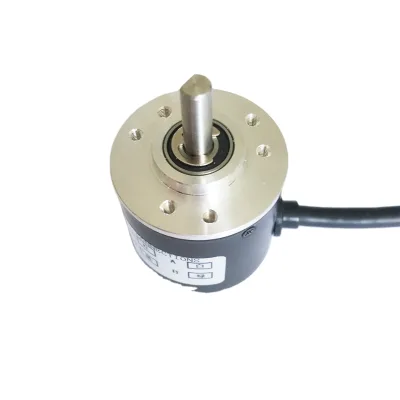


Encoder Magnetizer for ABS Encoder Ring and Magnetic Ring Inspection
$70794.00 - $79411.00
MOQ: 1 Pieces

High Precision ABS Encoder Magnetizing Fixture for Encoder Manufacturer Sale
$2018.00 - $2353.00
MOQ: 1 Pieces

Multi-Functional Encoder Magnetizer for Planar and Circumference Magnetization
$70794.00 - $79411.00
MOQ: 1 Pieces


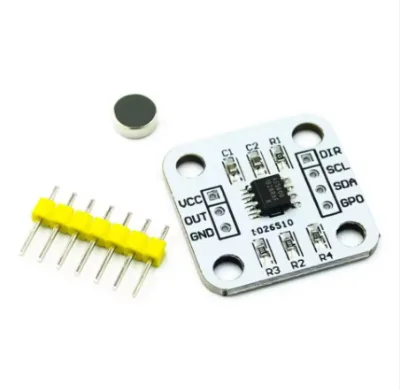

High Performance 17 Bit Magnetic Absolute Incremental Rotary Long Lasting Encoder
$10.00 - $30.00
MOQ: 10 Pieces

Comprehensive Sourcing Guide
Strategic Sourcing Guide for Non-Contact Magnetic Encoders
The global demand for precision motion control components has elevated the non-contact magnetic encoder to a critical position in modern industrial automation. These devices, which rely on magnetic fields to determine position without physical wear, offer distinct advantages over traditional mechanical encoders in harsh environments. For procurement professionals, navigating the market requires a disciplined approach to verifying technical claims, understanding cost structures, and ensuring compliance with international standards. This guide synthesizes available product data and industry knowledge to provide a robust framework for sourcing these components effectively.
Technical Specifications and Performance Verification
When evaluating non-contact magnetic encoders, the primary focus must be on the interplay between resolution, accuracy, and travel range. The supplied product data indicates a diverse landscape of specifications, ranging from high-precision models with resolutions as fine as 0.1 µm to units offering 1 µm or 5 µm steps. Buyers must distinguish between these tiers, as the choice directly impacts system performance and cost. For instance, a model with a resolution of 0.1 µm and an accuracy of less than 30 µm is suitable for high-end metrology, whereas a unit with 1 µm resolution and an accuracy of less than 50 µm may suffice for general automation tasks.
The travel range is another critical variable. The observed market data reveals significant variance, with some units supporting measuring lengths up to 16.4 meters, while others are limited to ranges between 170 and 570 mm. Procurement teams must align these specifications with the physical constraints of the application. A linear displacement sensor with a travel range of 50 meters suggests a capability for long-stroke applications, yet the travel speed must also be compatible. The data shows travel speeds ranging from 5 meters per second to 150 meters per minute. It is essential to verify that the selected encoder can handle the maximum velocity of the moving axis without signal degradation.
Furthermore, the working principle dictates the type of data output. The market includes both incremental and absolute magnetic encoders. Incremental types, often associated with specific output signals like TTL or RS232, require a reference point upon startup. In contrast, absolute types retain position data even after power loss, a feature highlighted by the "Absolute Magnetic" scale type in the provided data. The output signal type is equally vital; options include digital types, voltage outputs, and serial communications like RS422. Buyers should ensure the encoder's output protocol matches the controller's input requirements to avoid costly integration issues.
Compliance, Certification, and Standards
In the B2B procurement of industrial electronics, compliance is not merely a formality but a prerequisite for market access and safety. The supplied facts confirm that certain products in this category carry the CE certification, indicating conformity with health, safety, and environmental protection standards for products sold within the European Economic Area. However, procurement teams must not assume that all listed products possess this certification. Verification of the specific batch or model is necessary before finalizing a purchase order.
Beyond certification, physical and manufacturing standards play a role in quality assurance. The data references specific product standards, such as dimensions of 3x1.5x1 cm, 20x10x5 cm, and 50x16x18.6 mm. These dimensions likely refer to the packaging or the physical footprint of the sensor housing. It is crucial to verify that the physical dimensions of the actual unit match the design requirements of the machinery, as the "Axle Sleeve Type" installation form implies a specific mounting geometry. Additionally, the "SMD" and "PGA" package types indicate surface-mount and pin grid array configurations, which affect the assembly process on printed circuit boards.
The origin of the product is another compliance factor. The supplied context identifies China as the production origin for these units. While this is a major manufacturing hub, buyers should be aware of any specific trade regulations or import duties applicable to electronic components from this region. The "IP Rating" is listed as "IPMaterial:Metal," which suggests a metallic housing but requires clarification on the actual ingress protection level (e.g., IP65, IP67) to ensure resistance to dust and water in the intended operating environment.
Cost Drivers and Pricing Dynamics
The pricing for non-contact magnetic encoders exhibits a vast range, observed between $0.22 and $79,411. This extreme variance is driven by several factors, including the complexity of the technology, the resolution, the travel range, and the quantity ordered. The Minimum Order Quantity (MOQ) also varies significantly, from 1 unit to 5,000 units. For small-scale prototyping or low-volume production, buyers may find suppliers with an MOQ of 1, though the unit price will likely be at the higher end of the spectrum. Conversely, high-volume manufacturers can leverage economies of scale by ordering in bulk, potentially accessing lower price points but facing higher capital outlay.
Customization is a key cost driver. The data confirms that customization is available, which allows buyers to tailor the encoder to specific application needs, such as unique cable lengths, specialized connectors, or custom mounting flanges. However, custom orders often incur additional tooling costs and longer lead times. The production process, identified as "SemiConductor Integrated," suggests a high level of miniaturization and complexity, which can influence the base cost. Buyers should request detailed quotes that break down the cost of the base unit, customization fees, and any applicable tooling charges to avoid hidden expenses.
Typical Applications and Installation Considerations
Non-contact magnetic encoders are versatile and find applications across various industries, from automotive manufacturing to heavy machinery. The "Axle Sleeve Type" and "Servo Installation Type" attributes suggest these sensors are frequently used in rotary and linear motion systems where space is constrained. The "Magnetic Grid Encoder" and "Magnetic Displacement Sensor" classifications indicate their use in applications requiring precise position feedback, such as CNC machines, robotics, and automated assembly lines.
The installation form is a critical consideration for integration. The "Axle Sleeve Type" implies a design that fits around a shaft or axle, while the "Empty Type" designation may refer to a specific configuration of the sleeve or housing. Buyers must ensure that the mechanical interface matches the existing machinery. The "Non-Contact" readout mode is a significant advantage, as it eliminates mechanical wear and tear, making these encoders ideal for high-speed or high-cycle applications. However, the "Magnetoelectric Type" operating principle requires that the environment be free from strong external magnetic fields that could interfere with the sensor's operation.
Supplier Evaluation and Quality Control
Evaluating suppliers for non-contact magnetic encoders requires a multi-faceted approach. Since the data does not list specific supplier names, buyers must rely on the product attributes and documentation provided. A reliable supplier should be able to provide detailed technical datasheets that confirm the resolution, accuracy, and travel speed claims. The presence of specific model numbers like "LH200," "HB20," "Mini," and "HNAE" suggests a structured product line, which is a positive indicator of a mature manufacturer.
Quality control should focus on the repeatability and accuracy metrics. The data shows repeatability values as low as less than 1 µm and less than 2 µm. These figures are critical for applications requiring high precision. Buyers should request sample units for testing to verify these claims in their own environment. Additionally, the "Production Process" being "SemiConductor Integrated" implies a need for rigorous quality control during the manufacturing phase to ensure consistency. Buyers should inquire about the supplier's quality management systems, such as ISO certifications, and their process for handling defective units.
Long-Term Procurement and Lifecycle Management
Long-term procurement strategies for magnetic encoders must account for the lifecycle of the product and the availability of spare parts. The "Carton" and "PGA" packaging details suggest standard shipping and handling procedures, but buyers should verify the shelf life and storage requirements for these electronic components. The "Digital Type" output and various signal options like "Ttl" and "RS232" indicate that these units are designed for integration into digital control systems, which are subject to rapid technological evolution.
Buyers should consider the obsolescence risk and the supplier's commitment to product support. A supplier that offers customization and has a diverse range of models is more likely to maintain a stable product line. The "Working Principle" of "Absolute" or "Incremental" should be aligned with the long-term control strategy of the facility. Furthermore, the "Accuracy Grade" of 1.0G and the specific "Resolution" values should be documented in the procurement contract to ensure that future replacements meet the same performance standards.
Comparative Analysis of Key Specifications
To facilitate decision-making, the following table summarizes the key technical specifications observed in the market data, highlighting the diversity available to buyers.
| Specification Category | Observed Range / Options | Application Implication |
|---|---|---|
| Resolution | 0.1 µm, 0.5 µm, 1 µm, 5 µm | Determines positioning precision; lower values for high-end metrology. |
| Accuracy | < 30 µm, < 50 µm | Defines the deviation from true position; critical for tight tolerances. |
| Travel Range | 170-570 mm, Up to 16.4 Meters | Matches the physical stroke length of the machine axis. |
| Travel Speed | 5 M/S, 150 M/Min, Max 8 M/S | Must exceed the maximum velocity of the moving load. |
| Output Signal | TTL, RS232, RS422, Voltage | Compatibility with PLCs, CNC controllers, and data acquisition systems. |
| Working Principle | Incremental, Absolute | Absolute retains position on power loss; Incremental requires homing. |
| Installation Form | Axle Sleeve Type, Servo Type | Dictates mechanical mounting and integration complexity. |
| Certification | CE | Required for European market access and safety compliance. |
Conclusion
Sourcing non-contact magnetic encoders requires a meticulous balance of technical verification, compliance checking, and strategic cost management. The market offers a wide array of options, from high-resolution absolute encoders to cost-effective incremental sensors. By focusing on the specific attributes such as resolution, accuracy, and travel speed, and by rigorously verifying certifications like CE, buyers can secure components that meet their operational needs. The availability of customization and the variety of output signals further enhance the flexibility of these devices. Ultimately, a disciplined approach to supplier evaluation and quality control will ensure the successful integration of these critical components into industrial automation systems, supporting long-term reliability and performance.
FAQs
What resolution options are available for non-contact magnetic encoders?
Available resolutions include 0.1 µm, 0.5 µm, 1 µm, and 5 µm depending on the specific model. High-precision applications may require the 0.1 µm option, while general automation tasks often utilize the 1 µm or 5 µm variants.
Which travel range specifications are supported by these sensors?
Travel ranges vary significantly, with some units supporting up to 16.4 meters and others limited to 170-570 mm. Buyers must select a model matching the physical stroke length of their specific machine axis to ensure proper operation.
Can these encoders operate at high speeds without signal degradation?
Yes, the sensors support travel speeds ranging from 5 meters per second up to 150 meters per minute. It is essential to verify that the selected encoder handles the maximum velocity of the moving axis to prevent performance issues.
What output signal types are compatible with standard controllers?
Output signals include TTL, RS232, RS422, and Voltage Output types. Procurement teams must ensure the encoder's output protocol matches the controller's input requirements to avoid costly integration problems during system setup.
Are customization options available for specific mounting requirements?
Customization is available for unique application needs such as specialized connectors or mounting flanges. Buyers should request detailed quotes that include customization fees and potential tooling charges to avoid hidden expenses.
Which certification ensures compliance for European market access?
The CE certification indicates conformity with health, safety, and environmental standards for products sold within the European Economic Area. Buyers must verify that specific batches or models carry this certification before finalizing any purchase order.