Source Non-Slip Adjustable Incline Stretcher Block for EMS, Hospitals, and Clinics
Find and compare 30 non-slip adjustable incline stretcher block options from verified manufacturers. Evaluate features like height adjustment, load capacity, and material durability to select the right medical transport solution for your procurement needs.
Key considerations
Products List


Best Selling Smooth Riding Two Functions Height Adjustable Hydraulic Stretcher Cart
$960.00 - $1050.00
MOQ: 1 pieces


Mt Adjustable Stretcher Trolley Automatic Loading Stretcher for Ambulance
$240.00 - $268.00
MOQ: 1 Pieces
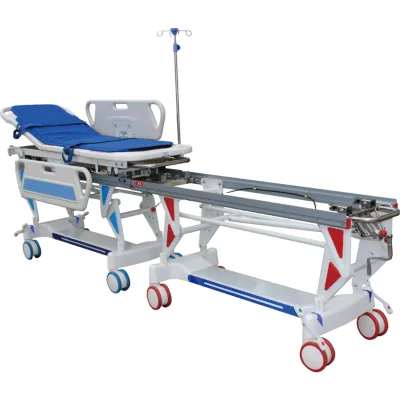

Emergency Rescue Stretcher Head Immobilizer Neck Blocks for Spinal Board
$12.00 - $20.00
MOQ: 10 Pieces


Stair Stretcher Wheelchair Rescue Evacuation Yellow Ambulance Stair Climbing Wheelchair
$110.00 - $140.00
MOQ: 10 Pieces


Immobilization Spine Board Stair Chair Cable Stretcher with Sling for Rescue
$209.00 - $215.00
MOQ: 1 Pieces


Luxurious Hydraulic Rise-and Fall Patient Transport Stretcher with Weight Scale
$1300.00 - $1500.00
MOQ: 1 Pieces

Medical Spine Board Stretcher, Plate Stretcher
$26.00 - $200.00
MOQ: 100 Pieces
Sainty International Group Jiangsu Yangzhou Sumex Imp. & Exp. Co., Ltd.


Comprehensive Sourcing Guide
Non-Slip Adjustable Incline Stretcher Block Sourcing Guide
Procuring medical transport equipment requires a rigorous understanding of mechanical stability, material durability, and regulatory compliance. The non-slip adjustable incline stretcher block represents a critical component in patient safety systems, designed to maintain secure positioning during transport and treatment. Buyers must distinguish between generic wheeled trolleys and specialized stretcher blocks that offer precise incline adjustments and anti-slip surfaces. This guide provides evidence-based procurement strategies for sourcing these devices, focusing on verified specifications, compliance documentation, and supplier qualification metrics.
The following sections outline the essential verification steps for buyers evaluating potential suppliers. By adhering to these guidelines, procurement teams can mitigate risks associated with product failure, regulatory non-compliance, and supply chain disruptions. The focus remains on observable product attributes and trusted industry standards, ensuring that sourcing decisions are grounded in factual data rather than marketing claims.
Product Scope and Observed Listing Signals
The market for stretcher blocks and trolleys exhibits a wide range of configurations, with observed price points spanning from $2.10 to $5,000 USD. This variance reflects differences in material quality, mechanical complexity, and certification levels. Buyers should note that lower price points may correspond to basic models with limited adjustability or fewer safety features, while higher-end units often include advanced mechanisms such as gas-spring backrests, hydraulic height adjustments, and specialized locking devices. Understanding this spectrum helps in aligning budget constraints with clinical requirements.
Observed minimum order quantities (MOQs) typically range from 1 to 100 units, indicating flexibility for both small-scale procurement and large institutional contracts. Suppliers often offer customization options, including logo placement and specific color schemes, which are critical for hospital branding and inventory identification. Additionally, packing methods vary, with some units shipped in polybags within cartons, while others are packed individually in larger cartons to protect delicate mechanical parts during transit. Buyers must verify packing dimensions to ensure compatibility with their storage and logistics infrastructure.
Technical Specifications to Verify
Mechanical adjustability is a primary differentiator in stretcher block performance. Key specifications to verify include height adjustment ranges, backrest inclination angles, and knee-rest flexibility. For instance, some models offer a height range of 590-910mm, allowing for ergonomic alignment with hospital beds and ambulance floors. Backrest adjustments typically span from 0 to 75 degrees, facilitating patient comfort during semi-recumbent positions. Knee-rest adjustments, often ranging from 0 to 35 degrees, further enhance patient stability and circulation during transport.
Load capacity and structural integrity are paramount for patient safety. Buyers should confirm the maximum safe load, which in observed models reaches up to 250kg, ensuring suitability for diverse patient demographics. The material composition, such as stainless steel frames or aluminum backboards, directly impacts durability and weight. Additionally, caster specifications, including wheel diameter (e.g., 150mm) and directionality (fixed front, auto-directional rear), influence maneuverability in tight clinical environments. Verify that the non-slip surface material meets friction standards to prevent patient slippage during incline adjustments.
Compliance and Safety Documentation
Regulatory compliance is non-negotiable in medical device procurement. Buyers must request and verify certifications such as CE and ISO marks, which indicate adherence to European and international quality management standards. These certifications ensure that the stretcher block has undergone rigorous testing for mechanical safety, electrical components (if applicable), and material biocompatibility. Suppliers should provide valid certificate numbers and issuing bodies for independent verification.
Safety features must be explicitly documented in product specifications. Key elements include vehicle locking devices to secure the stretcher in ambulances, IV poles for fluid administration, and collapsible side rails for patient access. Verify that the locking mechanisms are robust and easy to operate under stress. Additionally, confirm that the non-slip surface material is resistant to common disinfectants and does not degrade over time, ensuring long-term safety and hygiene.
Cost Drivers and Commercial Terms
Several factors influence the total cost of ownership for stretcher blocks. Material quality, such as the grade of stainless steel or the type of non-slip coating, directly impacts price. Mechanical complexity, including hydraulic or gas-spring systems, also adds to the cost. Buyers should evaluate whether premium features justify the higher price point based on clinical needs and usage frequency. Customization options, such as branded logos or specific color schemes, may incur additional fees.
Commercial terms, including payment methods, shipping costs, and warranty periods, significantly affect procurement economics. Suppliers may offer different payment terms based on order volume, with larger orders potentially qualifying for discounts. Shipping costs vary depending on packing dimensions and weight, so buyers should request detailed freight quotes. Warranty coverage should clearly define the duration and scope of support for mechanical and electrical components, ensuring protection against manufacturing defects.
Supplier Qualification and Quality Control
Supplier qualification is critical to ensuring consistent product quality and reliable supply. Buyers should assess suppliers based on their manufacturing capabilities, quality control processes, and track record in the medical device industry. Verify that the supplier has established quality management systems, such as ISO 9001, and conducts regular inspections during production. Request samples for physical inspection to evaluate build quality, material finish, and mechanical functionality.
Quality control measures should include pre-shipment inspections and third-party testing reports. Buyers should confirm that the supplier performs load testing, durability testing, and safety checks on each batch. Additionally, verify that the supplier provides clear documentation of material certifications and component origins. Establishing a strong relationship with a qualified supplier ensures consistent quality and facilitates prompt resolution of any issues that may arise during procurement or usage.
Long-Term Procurement Checks
Long-term procurement success depends on ongoing supplier performance monitoring and product lifecycle management. Buyers should establish key performance indicators (KPIs) for delivery times, product quality, and customer support. Regularly review supplier performance against these KPIs to identify areas for improvement or potential risks. Maintain open communication channels with suppliers to address any emerging issues promptly.
Product lifecycle considerations include availability of spare parts, maintenance requirements, and end-of-life disposal. Verify that the supplier offers a steady supply of replacement parts, such as casters, straps, and mattress covers, to extend the product's usable life. Inquire about maintenance guidelines and recommended service intervals to ensure optimal performance. Additionally, confirm that the product materials are recyclable or can be disposed of in compliance with local environmental regulations, supporting sustainable procurement practices.
FAQs
What customization options are available for the stretcher block?
Customization is available for this product, including the option to add a customized logo. Buyers can request specific branding or design modifications to meet their unique requirements before placing an order.
How is the height of the hydraulic stretcher adjusted?
The height adjustment range spans from 590mm to 910mm for the hydraulic model. This manual adjustment allows operators to set the stretcher to a comfortable working height for medical procedures or patient transport.
Which certifications do the stretcher products hold?
The products hold ISO and CE certifications, ensuring compliance with international safety and quality standards. These certifications verify that the manufacturing processes and final products meet rigorous regulatory requirements for medical equipment.
Can the stretcher be folded for storage or transport?
Yes, the stretcher is designed to be folded, which facilitates compact storage and easier transportation. This feature is particularly useful for ambulances or facilities with limited space for medical equipment storage.
What is the maximum safe load capacity of the stretcher?
The maximum safe load capacity is 250kg for the hydraulic model and 200kg for the aluminum backboard version. These limits ensure structural integrity and patient safety during use in various medical scenarios.
How is the product packed for shipment?
The product is packed in a polybag and carton, with one piece per carton for the hydraulic model. The aluminum version is packed in a carton measuring 207 by 62 by 38cm, ensuring safe delivery.
Where are these stretcher products manufactured?
These products originate from Jiangsu and Nanjing in China. The manufacturing locations indicate a regional concentration of medical equipment production, which often supports efficient supply chains and quality control.