Find Non-Slip Scaffolding Board for Building, Installation, and Internal Use
Source 30 verified listings for Non-Slip Scaffolding Board suitable for building, installation, and internal applications. Buyers can compare specifications including thickness, length, and material grades like Q195 and Q235 to find the right fit for their projects.
Key considerations
Products List




Comprehensive Sourcing Guide
Strategic Sourcing Guide for Non-Slip Scaffolding Boards
The procurement of non-slip scaffolding boards represents a critical decision point in construction logistics, where safety, structural integrity, and regulatory compliance intersect. In the global marketplace, buyers must navigate a complex array of materials, primarily steel and aluminum, each offering distinct advantages regarding weight, corrosion resistance, and load-bearing capacity. The core keyword "non-slip scaffolding board" encompasses a diverse range of products, from heavy-duty steel planks to lightweight aluminum platforms. Sourcing professionals must rely on verified product attributes and observed market data rather than unverified marketing claims to ensure that the selected equipment meets the rigorous demands of modern construction sites. This guide outlines the essential technical, regulatory, and operational factors that define a successful procurement strategy for these vital safety components.
Material Composition and Structural Variants
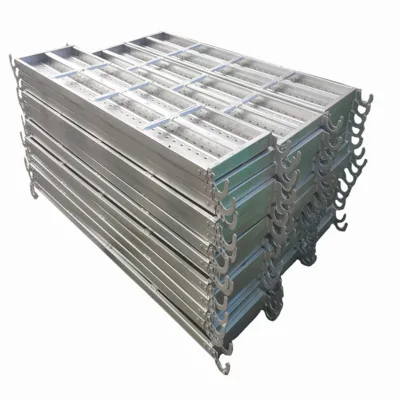
The fundamental distinction in scaffolding boards lies in the base material, which dictates the board's weight, durability, and application suitability. The observed market data indicates a clear bifurcation between steel and aluminum variants. Steel-based boards are frequently associated with grades such as Q195 and Q235, which are standard for high-strength applications requiring robust load-bearing capabilities. These boards often undergo surface treatments like pre-galvanizing or hot-dip galvanizing to mitigate corrosion, a critical factor for longevity in outdoor environments. In contrast, aluminum scaffolding boards, often constructed from 6061-T6 alloy, offer a significantly lighter alternative, with observed weight ranges typically falling between 10kg and 18kg depending on the specific model and dimensions.
The structural style of the board also varies significantly based on the intended erection position and support mode. Buyers may encounter designs categorized as "Combined Scaffolding" or "Multi-Pole Scaffolding," which influence how the boards integrate with the overall framework. Specific lapping forms, such as "Cross Ring Scaffolding" or "Full Scaffolding," determine the connection mechanisms and stability of the platform. Furthermore, the supporting mode can range from "Floor Type Scaffolding" to "Projecting Scaffolding," requiring boards with specific hook configurations. Some models are designed with hooks of 44mm or 50mm, while others are available with or without hooks, necessitating a precise match between the board and the scaffold system's geometry. The structural style may also be defined as "Soffit Scaffolding," indicating specific use cases for ceiling or underside work.
Technical Specifications and Dimensional Standards
Precision in dimensions is paramount for the interchangeability and safety of scaffolding boards. The supplied data reveals a wide spectrum of thickness options, ranging from 1.0mm to 2.0mm, with common increments including 1.1mm, 1.2mm, 1.5mm, and 1.8mm. The thickness selection is directly correlated with the load-bearing requirements and the specific span of the scaffold bay. Lengths are equally variable, with observed ranges extending from 0.5 meters to 4.0 meters, allowing for customization based on site-specific layout needs. Height specifications for the boards are also documented, with options including 38mm, 40mm, 45mm, 50mm, and 63mm, which affect the overall profile and stability of the working platform.
Standardization plays a crucial role in ensuring that boards from different manufacturers can be integrated into a cohesive system. The market data references several key standards, including BS1139 and EN74-1, which are widely recognized benchmarks for scaffolding components. Additionally, specific product standards such as 200/210/225/230/240/250/300/420/480/500mm may refer to width or spacing requirements, while length standards like 5', 7', 8', and 10' provide a framework for metric and imperial conversions. Buyers must verify that the specific model numbers, such as UTM-AB-142, UTM-AP-141, or WF0527, align with the project's engineering drawings and the scaffold system's compatibility requirements. The "All Aluminum Scaffold Board" and "Scaffolding Steel Plank" designations further highlight the need to match the material specification to the environmental conditions of the construction site.
Compliance, Certification, and Safety Verification
Ensuring that scaffolding boards meet international and local safety standards is a non-negotiable aspect of B2B procurement. The presence of standards like BS1139 and EN74-1 in the product data suggests that compliant products are available, but buyers must actively verify that the specific units they purchase carry the necessary certification documentation. These standards typically govern the mechanical properties, load testing, and dimensional tolerances of the boards. For steel products, the verification of the steel grade (Q195, Q235) is essential to confirm that the material meets the required yield strength and tensile properties.
Safety features, particularly the "non-slip" characteristic implied by the core keyword, must be validated through observable product attributes rather than assumed. While the term "non-slip" is often used in marketing, the actual anti-slip properties are derived from the surface finish, such as the galvanized coating or specific texturing processes. Buyers should request test reports or certification documents that explicitly address slip resistance under wet or oily conditions. The "Installation Scaffold" and "Building Scaffold" classifications indicate that these products are designed for specific construction phases, and compliance with the relevant safety regulations for those phases must be confirmed. Additionally, the "Fixed" type designation suggests that the boards are part of a permanent or semi-permanent installation, requiring rigorous adherence to structural integrity standards.
Cost Drivers and Procurement Economics
The cost of scaffolding boards is influenced by a complex interplay of material costs, manufacturing processes, and logistical factors. Steel boards, utilizing Q195 or Q235 grades, generally involve different cost structures compared to aluminum boards made from 6061-T6, with the latter often commanding a premium due to the material's weight-saving properties and corrosion resistance. The surface treatment process, such as hot-dip galvanizing versus pre-galvanizing, also impacts the final price, as the former offers superior protection against corrosion but incurs higher processing costs.
Minimum Order Quantities (MOQ) represent another significant economic factor. The observed MOQ range spans from 1 to 1000 units, with specific data points indicating an MOQ of 500 pieces for certain product lines. This variability allows buyers to tailor their orders to their immediate project needs, though larger orders may benefit from economies of scale. The packaging method, whether in cartons, bags, on pallets, or packed by steel strip in bulk, affects shipping costs and handling efficiency. Buyers should consider the total landed cost, including packaging and logistics, rather than focusing solely on the unit price. The observed price range of 1 to 89 USD highlights the vast difference between basic components and specialized, high-specification boards, necessitating a clear definition of requirements before engaging with suppliers.
Supplier Evaluation and Quality Assurance
Selecting a reliable supplier requires a thorough evaluation of their production capabilities and quality control systems. The origin of the products, predominantly China based on the available data, suggests a need for rigorous due diligence regarding the supplier's manufacturing standards and export compliance. Buyers should verify the supplier's ability to provide consistent product models, such as the "Aluminum Scaffolding Boards" or "Scaffolding Steel Plank," and ensure that the customization options available align with the project's unique requirements.
Quality assurance processes should be a central part of the supplier evaluation. This includes verifying the consistency of the steel grades, the uniformity of the galvanizing process, and the precision of the dimensional tolerances. The "Customization: Available" attribute indicates that suppliers may offer tailored solutions, but this requires clear communication and documented specifications to avoid errors. Buyers should also assess the supplier's track record in delivering products that meet the stated standards, such as BS1139 or EN74-1. The presence of specific model numbers and detailed specifications in the product data suggests a mature supply chain, but buyers must ensure that the specific batch they receive matches these documented attributes.
Long-Term Procurement and Operational Considerations
Beyond the initial purchase, long-term procurement considerations focus on the lifecycle of the scaffolding boards and their impact on project efficiency. The "Move Method" of "Attached Lifting Scaffolding" implies that the boards are designed for specific installation and removal procedures, which can affect labor costs and project timelines. The "Erection Position," whether internal or external, dictates the environmental exposure the boards will face, influencing the choice between steel and aluminum based on corrosion resistance needs.
Sustainability and maintenance are also critical factors. Galvanized steel boards offer a long service life, reducing the frequency of replacement and the associated environmental impact. Aluminum boards, being lighter, may reduce the carbon footprint of transportation and on-site handling. The "Packing" methods, such as "Bag / Pallet" or "Carton," should be evaluated for their reusability and impact on waste generation. Furthermore, the "Support Type," which includes "Common Support," "Ladder Support," and "Box Support," indicates the versatility of the boards in different scaffolding configurations, allowing for flexible use across various project phases.
Application Scenarios and Compatibility
The diverse range of scaffolding boards supports a wide array of construction applications, from general building scaffolding to specialized installation tasks. The "Construction Properties" of "Building Scaffold" and "Installation Scaffold" highlight the versatility of these products in different phases of construction. The "Structural Style" of "Soffit Scaffolding" suggests specific use cases for overhead work, while "Multi-Pole Scaffolding" indicates suitability for complex structural frameworks.
Compatibility with existing scaffold systems is a key consideration. The "Lapping Form" of "Cross Ring Scaffolding" or "Full Scaffolding" must align with the supplier's specific design to ensure a secure fit. The "Hook" configuration, whether present or absent, and the specific hook size of 44mm or 50mm, must match the scaffold's coupling mechanisms. The "Weight" of the boards, ranging from 10kg to 18kg, influences the ease of handling and the speed of installation, which are critical factors in high-paced construction environments. By carefully matching the board's specifications to the project's requirements, buyers can optimize safety, efficiency, and cost-effectiveness throughout the construction lifecycle.
FAQs
What materials are used for non slip scaffolding boards?
Non slip scaffolding boards are primarily made from steel or aluminum. Steel variants use grades Q195 or Q235, while aluminum boards utilize 6061-T6 alloy. These materials determine the weight and corrosion resistance suitable for specific construction environments.
Which standards apply to non slip scaffolding boards?
Relevant standards include BS1139 and EN74-1 for structural integrity and safety. Specific product standards also cover dimensions like 200mm to 500mm widths. Buyers must verify that the specific model matches these documented benchmarks for compliance.
How do thickness and length vary for these boards?
Thickness ranges from 1.0mm to 2.0mm depending on load requirements. Lengths are customizable from 0.5 meters to 4.0 meters. These dimensions ensure the boards fit specific scaffold bay spans and structural configurations on site.
Can non slip scaffolding boards be customized?
Yes, customization is available for various product attributes. Buyers can request specific dimensions, hook sizes of 44mm or 50mm, and surface treatments like hot-dip galvanizing. This flexibility allows adaptation to unique project geometry and safety needs.
What is the minimum order quantity for these boards?
The minimum order quantity typically starts at 500 pieces for certain product lines. However, observed ranges span from 1 to 1000 units depending on the supplier and specific model. Larger orders may benefit from economies of scale in pricing.
How are non slip scaffolding boards packaged for shipping?
Packaging options include cartons, bags, pallets, or bulk packing with steel strips. The method depends on the product type, such as aluminum boards in cartons or steel planks in bulk. Proper packaging ensures safe transport and handling efficiency.