Source Non Slip TPE Yoga Mat for Home, Gym, and Training
Compare 30 Non Slip TPE Yoga Mat options from verified suppliers with customizable features like thickness and anti-slip surfaces. Evaluate prices, MOQs, and certifications for home exercise, sports training, and yoga practice needs.
Key considerations
Products List


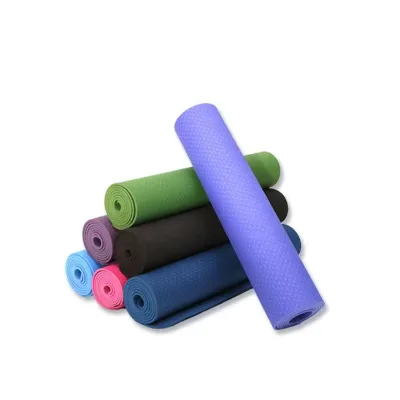


Waterproof and Sweatproof Two-Color TPE Yoga Mat
$2.50 - $6.00
MOQ: 1000 Pieces
Jiangsu Miaohong Environmental Protection New Material Co., Ltd.

Eco Friendly Anti Slip Wholesale TPE Yoga Mat
$2.50 - $6.00
MOQ: 1000 Pieces
Jiangsu Miaohong Environmental Protection New Material Co., Ltd.


Comprehensive Sourcing Guide
Strategic Sourcing Guide for Non-Slip TPE Yoga Mats
Understanding Material Composition and Performance Characteristics
When sourcing a non-slip TPE (Thermoplastic Elastomer) yoga mat, the primary focus must be on the specific material properties that differentiate TPE from other common alternatives like PVC or natural rubber. Based on available product data, TPE is a distinct material choice often paired with specific functional attributes such as being anti-slip, durable, washable, and waterproof. These characteristics are critical for buyers seeking a balance between performance and environmental considerations. The material composition directly influences the tactile experience, grip stability during dynamic movements, and the longevity of the product under repeated use.
It is important to note that while TPE is a primary material for many listings, the market also contains EVA (Ethylene-Vinyl Acetate) options. Buyers must carefully distinguish between these two when reviewing supplier catalogs. TPE products are frequently marketed with a "Solid Color" finish and are designed for applications ranging from home exercise to professional sports training. The material's density and texture are engineered to provide a non-slip surface, which is a non-negotiable requirement for safety during yoga and Pilates practices. When evaluating a potential supplier, request physical samples to verify the "Anti-Slip" claim through direct testing, as visual inspection alone cannot confirm the coefficient of friction required for safe practice.
Technical Specifications and Dimensional Standards
Technical specifications form the backbone of any procurement contract for yoga mats. The dimensions and thickness of the mat are not merely aesthetic choices but functional requirements that dictate the user's experience and the product's suitability for specific exercises. According to observed product data, standard dimensions for these mats typically align with industry norms such as 18361 cm, 18066 cm, or 17361 cm. However, variations exist, with some specifications listing sizes like 18371 cm or even 40X40X60 cm for specific storage or travel configurations.
Thickness is a critical variable that affects cushioning and stability. The observed data indicates a thickness range of 0.4 cm to 1 cm (or 4mm to 6mm). A thickness of 0.4 cm to 0.5 cm is generally preferred for practitioners who require a firm connection to the floor for balance poses, while 0.6 cm to 1 cm offers enhanced cushioning for joint protection during floor-based exercises. Buyers should verify that the supplier can consistently maintain these tolerances. The product model numbers, such as YM-TPE-001, TP19-TPEM-MT 501, or HDYM02, serve as unique identifiers for these specific configurations. When placing an order, the purchase order must explicitly state the required model number, thickness, and exact dimensions to avoid receiving a product that does not meet the intended application needs.
Compliance, Certification, and Regulatory Verification
In the B2B procurement of fitness equipment, compliance and certification are essential for mitigating risk and ensuring product safety. While specific certification statuses like CE or OEKO-TEX are mentioned in background contexts, buyers should not assume these apply to every listed product without verification. The provided data confirms that some products have "Certification Avai: Yes," indicating that certification is a possibility but not a universal guarantee for all SKUs.
Buyers must actively request and review valid certification documents from the supplier before finalizing a bulk order. This includes verifying that the TPE material meets relevant safety standards for chemical content, ensuring it is free from harmful phthalates or heavy metals. The HS Code 9506911900 is a standard classification for sports equipment, which is useful for customs clearance, but it does not replace the need for material-specific safety certifications. If the target market has strict regulatory requirements (such as the EU's REACH regulation or the US CPSIA), the supplier must provide test reports demonstrating compliance with those specific laws. Do not rely on marketing claims of "Eco Friendly" without documented proof of the material's environmental impact and safety profile.
Cost Drivers and Pricing Structure Analysis
The pricing of non-slip TPE yoga mats is influenced by several variables, including material costs, customization requirements, order volume, and packaging specifications. The observed price range in the market is between $1.50 and $12.50 USD, a significant spread that reflects differences in quality, thickness, and brand positioning. Lower-priced items in this range may correspond to thinner mats (0.4 cm) or simpler packaging, while higher-priced items likely include thicker cushioning, premium branding, or more complex customization.
Minimum Order Quantity (MOQ) is another major cost driver. The observed MOQ range spans from 20 to 10,000 units. Suppliers with lower MOQs (e.g., 20 or 100 PCS) may charge a higher unit price to cover setup and administrative costs, whereas suppliers requiring higher volumes (up to 10,000) can offer more competitive per-unit pricing. Buyers must balance their inventory needs with their budget constraints. Additionally, customization costs, such as adding a customized logo or specific color requirements, will impact the final price. The "Customization: Available" attribute confirms that branding is possible, but the cost implications must be clarified during the negotiation phase.
Supplier Evaluation and Operational Capabilities
Evaluating a supplier requires a holistic look at their operational capabilities, including their location, lead times, and sample policies. The majority of the observed products originate from China, with specific mentions of Jiangsu as a production hub. This regional concentration often indicates a mature supply chain for yoga mats, but it also necessitates careful logistics planning.
A critical factor in supplier selection is the sample policy. The data indicates that "Provided Samples" are available with a sample time of 5-7 working days. This is a crucial step for buyers to validate the "Anti-Slip" and "Durable" claims before committing to a large order. Buyers should request samples of the exact model they intend to purchase to test the material quality, thickness consistency, and finish. Furthermore, the supplier's willingness to accept OEM (Original Equipment Manufacturer) orders and provide customized logos is a strong indicator of their flexibility and capability to meet specific brand requirements. Payment terms such as PayPal, Western Union, TT, and Trade Assurance should be reviewed to ensure they align with the buyer's risk management protocols.
Quality Control and Packaging Standards
Quality control (QC) is paramount to ensuring that every unit in a shipment meets the agreed-upon specifications. The product data highlights various packaging methods, including "Carton Box," "Paper Wrap / Carry Strap," "Poly Bag," and combinations like "Each in Polybag Then in Carton." The choice of packaging affects both the protection of the product during transit and the unboxing experience for the end consumer. For instance, a "Paper Wrap / Carry Strap" suggests a focus on portability and eco-friendly presentation, while a "Carton Box" offers superior protection for bulk shipping.
Buyers must establish clear QC protocols that include checking the "Condition: New" status of the mats and verifying that the "Light Weight" attribute is consistent across the batch. The "Application: Yoga" and "Usage: Home Exercise" claims must be validated by ensuring the mats are free from manufacturing defects such as uneven surfaces, weak spots, or color inconsistencies. The "Solid Color" attribute implies a uniform dyeing process, which should be inspected for color bleeding or fading. Establishing a pre-shipment inspection is recommended to catch any deviations in thickness (0.4-1 cm) or dimensions (183*61 cm) before the goods leave the factory.
Long-Term Procurement and Supply Chain Considerations
Sourcing non-slip TPE yoga mats is not a one-time transaction but a strategic partnership that requires long-term planning. Buyers should consider the scalability of the supplier's production capacity to meet future demand fluctuations. The ability to provide samples quickly (5-7 working days) suggests a responsive supply chain, which is beneficial for rapid product iteration. However, lead times for bulk orders must be confirmed, as they can vary based on the complexity of customization and current production loads.
Sustainability is another long-term consideration. While TPE is often marketed as an eco-friendly alternative, buyers should inquire about the recyclability of the material and the environmental impact of the production process. The "Eco Friendly Yoga Mat" designation should be backed by verifiable data. Additionally, the "Function: Yoga Exercise.Sports Training" indicates a broad market application, suggesting that the product has versatility. Buyers should plan for potential product line extensions, such as different thicknesses or colors, to cater to diverse customer segments. Maintaining a relationship with a supplier who offers "OEM: Accept" and "Logo: Customized" allows for brand evolution and market adaptation over time.
Comparative Analysis of Product Variants
To assist in decision-making, the following table summarizes the key differences observed in the product data, highlighting the variations in models, materials, and specifications that buyers must navigate.
| Feature | TPE Yoga Mat (Model YM-TPE-001) | EVA Yoga Mat (Model TP19-EVAMT-MT 506) | TPE Yoga Mat (Model TP19-TPEM-MT 501) | Premium TPE (Model HDYM02) |
|---|---|---|---|---|
| Primary Material | TPE | EVA | TPE | TPE |
| Standard Size | 183*61 cm | 18066 cm / 17361 cm | 183*61 cm | 183*71 cm |
| Thickness Range | 0.4/0.5/0.6/0.8/1 Cm | Not Specified | Not Specified | 4mm/5mm/6mm |
| Packing | Carton Box | Paper Wrap / Carry Strap | Paper Wrap / Box | 1PC/Bag |
| Customization | Available | OEM Accept | Available | Accept Customized Logo |
| Origin | China | Jiangsu China | China | China |
| Key Feature | Anti-Slip, Waterproof | Home Exercise | Sports Training | Light Weight, New |
This comparison underscores the importance of specifying the exact model and material type when ordering. While TPE is the core keyword, the presence of EVA options and varying thicknesses requires precise communication with the supplier to ensure the final product matches the intended use case. By adhering to these detailed specifications and verification steps, buyers can secure a reliable supply of high-quality non-slip TPE yoga mats that meet both performance standards and market expectations.
FAQs
What materials are used for non slip tpe yoga mats?
The primary material is TPE, though some listings also feature EVA. TPE mats are designed to be anti-slip, durable, washable, and waterproof. Buyers should verify the specific material type before ordering to ensure it matches the intended exercise requirements.
How thick are the available non slip tpe yoga mats?
Thickness ranges from 0.4 cm to 1 cm, with specific options like 4mm, 5mm, and 6mm available. Thinner mats suit balance poses, while thicker options provide better joint protection. The exact thickness must be confirmed in the purchase order.
Can I get samples of the Non Slip TPE Yoga Mat?
Yes, provided samples are available with a lead time of 5 to 7 working days. Requesting samples allows verification of the anti-slip performance and material quality before committing to a bulk order. This step is critical for validating product claims.
What is the minimum order quantity for these mats?
The minimum order quantity ranges from 20 to 10,000 units depending on the supplier and customization needs. Lower MOQs like 100 pieces may have higher unit costs, while larger volumes often reduce the price per unit. Check specific supplier terms for exact limits.
Which certifications are available for non slip tpe yoga mats?
Certification availability is confirmed for some products, but it is not guaranteed for every SKU. Buyers must request valid test reports to ensure compliance with safety standards like REACH or CPSIA. Do not assume eco-friendly claims are certified without documentation.
Where are the non slip tpe yoga mats manufactured?
Most products originate from China, with specific production hubs mentioned in Jiangsu. This regional concentration indicates a mature supply chain but requires careful logistics planning. Verify the exact origin location to ensure it meets your sourcing preferences.
How are the mats packaged for shipping?
Packaging options include carton boxes, paper wraps with carry straps, or poly bags. Some items are packed individually in poly bags before being placed in cartons. The choice affects both transit protection and the end-user unboxing experience.