Source non-slip steering wheel cover for cars, trucks, and SUVs
Explore 30 listings for a non-slip steering wheel cover featuring PVC and leather materials with customizable options. Buyers can compare models like 105045 and SL010B from suppliers in Zhejiang and Guangdong with varying MOQs and packing standards.
Key considerations
Products List


Silicone Steering Wheel Cover High Quality Silicone Steering Wheel Cover
$1.80 - $2.35
MOQ: 1000 Pieces


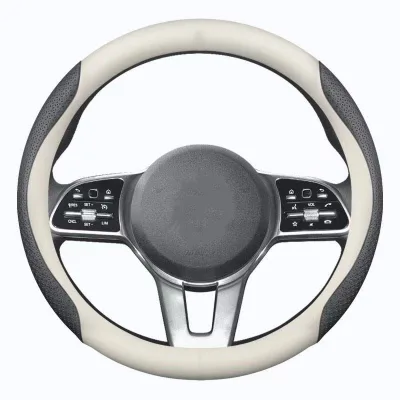

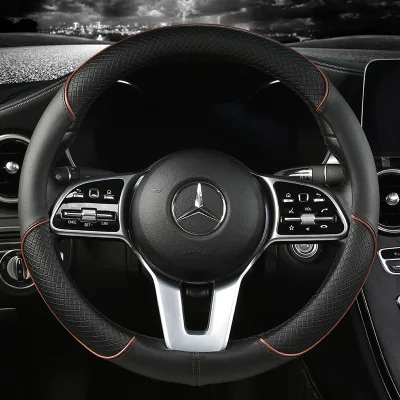
Universal One Time Use Disposable Non-Slip Steering Wheel Cover & Seat Cover
$0.21 - $0.23
MOQ: 10000 Pieces



Comprehensive Sourcing Guide
Strategic Sourcing Guide for Non-Slip Steering Wheel Covers
Understanding Material Composition and Surface Technology
The foundation of a reliable non-slip steering wheel cover lies in the selection of surface materials and their interaction with driver grip. Based on current market observations, the primary materials utilized in this category include Polyvinyl Chloride (PVC), Polyurethane (PU), and various forms of artificial leather. The supply chain frequently lists "PVC and PU" as a combined material profile, while other listings specify "Artificial leather" or "Leather/PVC/PU" blends. These materials are chosen for their durability and ability to provide a textured surface that resists slipping, a critical safety feature for drivers.
When evaluating product specifications, buyers must distinguish between the base material and the surface finish. Some products explicitly mention "Sheepskin" variants, including options that are sheared, embossed, or trimmed with fur. These variations often come in specific colors such as orange, coffee, or dark green, and may feature D-type or round shapes. The "Non-slip" attribute is often achieved through the embossing process or the inherent texture of the artificial leather. It is essential to verify that the "Surface material" listed matches the tactile requirements of the intended application, as a smooth PVC finish may not offer the same friction coefficient as an embossed PU or sheepskin alternative.
Furthermore, the customization capabilities of the manufacturer play a significant role in material selection. Many suppliers indicate that "Processing and customization" is available, allowing buyers to specify material thickness, texture depth, and color combinations. The "Color" attribute is frequently listed as "Optional," suggesting a high degree of flexibility in sourcing. However, buyers should note that while color options are broad, the underlying material composition (PVC vs. PU vs. Artificial Leather) dictates the long-term wear resistance and the specific non-slip performance characteristics.
Technical Specifications and Dimensional Compatibility
Precision in dimensions is paramount when sourcing steering wheel covers, as a poor fit can compromise both the non-slip function and driver safety. The technical specifications provided in the market data highlight several critical parameters. The "Match the diameter of the steering wheel" is a specific requirement, with observed data indicating a standard diameter of 38cm. This dimension must be cross-referenced with the vehicle's make and model to ensure a secure fit.
The "Car Fitment" attribute reveals that these covers are designed for a wide range of vehicles, including specific brands like AITO, AIFO (FIAT), ABG (Allg Baumasch Gesellsch), and Advance Mixer. This suggests that the covers are not limited to passenger cars but may also serve commercial or specialized machinery applications. The "Installation type" is generally described as "General," implying a slip-on design that does not require complex tools or adhesives.
Packaging and physical dimensions are also part of the technical specification. The "Single package size" is recorded as 38x38x6 cm, and the "Single gross weight" is approximately 0.900 kg. These figures are vital for logistics planning and cost estimation. Additionally, the "Number of spokes" is noted as 3 in some specifications, which may influence the design of the cover to accommodate steering wheel controls or airbag sensors. Buyers should verify if the cover design accounts for the specific spoke configuration of their target vehicles to avoid interference with safety systems.
The "Model Number" serves as a unique identifier for these technical specifications. Observed model numbers include 105045, 105056, 105041, 105053, 105029, 105067, 105088FG, 105008, 105139VB, SL010B, SL019, SL014, SL024, SL023, and SL022. Each model likely corresponds to a specific combination of material, size, and design feature. When placing orders, referencing the exact model number ensures that the buyer receives the precise non-slip characteristics and dimensions required.
Compliance, Standards, and Certification Verification
In the B2B procurement of automotive accessories, verifying compliance with industry standards is a critical step. The provided data indicates that some products adhere to an "Export Standard," while others are labeled with a "Universal" standard. However, the term "Universal" is broad and does not guarantee compliance with specific regional safety regulations such as those from the ECE (Economic Commission for Europe) or FMVSS (Federal Motor Vehicle Safety Standards) in the United States.
Buyers must actively verify the specific certification status of the product. The market data notes that for certain items, the "Is there a patent supply source" is "No," which may indicate that the design is generic or that the specific non-slip technology is not patented. This does not inherently imply a lack of quality, but it does mean that the buyer cannot rely on a unique patent as a differentiator for safety performance.
Regarding material safety, the use of PVC and PU requires scrutiny for chemical compliance, particularly regarding phthalates and heavy metals, which are often regulated in automotive interiors. While the "Standard" field in the data lists "Export Standard" or "Universal," it does not explicitly name specific chemical safety certifications. Therefore, procurement teams should request test reports from the supplier to confirm that the materials meet the chemical safety standards of the destination market. The "Origin" is listed as Zhejiang or Guangdong, China, regions known for manufacturing, but the specific factory's compliance history must be validated through on-site audits or third-party testing.
Cost Drivers and Pricing Dynamics
The pricing structure for non-slip steering wheel covers is influenced by several factors, including material composition, customization level, and order volume. The observed price range in the market is between $0.04 and $4.93 USD. This wide variance suggests that the final cost is heavily dependent on the specific model and the complexity of the customization.
The Minimum Order Quantity (MOQ) is a significant cost driver. Data shows an MOQ range from 1 to 10,000 units, with specific listings citing MOQs of 200 PC and 1000 PC. Buyers ordering small quantities may face a higher unit cost, while those placing large orders can leverage economies of scale to reduce the price per unit. The "Small Orders: Accepted" attribute indicates that some suppliers are flexible, which can be beneficial for startups or testing phases, though the unit price will likely be higher.
Customization is another key factor affecting cost. The "Customization: Available" and "OEM Logo: Accept" attributes suggest that adding a brand logo or altering the material composition will incur additional charges. The "Processing and customization: Yes" attribute confirms that these services are standard, but the cost impact must be negotiated. Additionally, the "Package" type, whether "OPP Pack" or "Cartons," influences the final price, as more robust packaging adds to the material and labor costs.
Lead times also impact the overall cost of procurement. The "prod_packing" attribute lists a time of 40 days for some models, which may refer to the production or packing lead time. Longer lead times can affect inventory planning and may require higher safety stock levels, indirectly increasing holding costs. Buyers should clarify whether the 40-day figure represents the production cycle or the total lead time including shipping.
Supplier Evaluation and Origin Analysis
Selecting the right supplier requires a thorough evaluation of their capabilities and location. The data indicates that the primary production origins are Zhejiang and Guangdong, China. These regions are established manufacturing hubs for automotive accessories, offering a mature supply chain for PVC, PU, and leather processing.
When evaluating suppliers, buyers should look for those who explicitly state "OEM Logo: Accept" and "Customization: Available," as these indicate a willingness to work with brand-specific requirements. The "Brand Name" field shows entries like "ANMA" and "YT," which can serve as reference points for existing market players, though buyers should not rely on these names exclusively for sourcing decisions.
The "Type" attribute, listed as "All-match," suggests that some suppliers offer versatile products suitable for various vehicle types. However, buyers must verify this claim against specific vehicle models, as the "Car Fitment" data shows specific compatibility with brands like AITO and FIAT. A supplier claiming "All-match" capability should be able to provide a comprehensive fitment chart to validate their claims.
Supplier reliability can also be assessed through their packaging and shipping practices. The "prod_packing" attribute mentions "Cartons" and "OPP Pack," indicating different levels of protection. Suppliers offering carton packaging may be better suited for bulk shipping, while OPP packs might be intended for retail display. The "Single gross weight" of 0.900 kg is a consistent metric that buyers can use to calculate shipping costs accurately.
Quality Control and Long-Term Procurement Considerations
Ensuring consistent quality in non-slip steering wheel covers requires a robust quality control (QC) framework. Buyers should implement a multi-stage QC process that includes material inspection, dimensional verification, and performance testing. The "Non-slip" attribute is critical, and buyers should request friction tests or grip tests to verify that the surface texture provides adequate traction under various conditions, including heat and humidity.
Long-term procurement considerations involve the durability of the materials. PVC and PU materials can degrade over time due to UV exposure and temperature fluctuations. Buyers should inquire about the UV resistance of the materials, especially for products intended for vehicles with large windows or sunroofs. The "Applicable season" attribute, listed as "Suitable for all four seasons," suggests that the products are designed to withstand varying temperatures, but this claim should be backed by specific testing data.
The "Style" attribute, described as "Simplicity," indicates a trend towards minimalist designs. However, buyers should ensure that the simplicity of the design does not compromise the functionality of the non-slip features. The "Color" options, including specific sheepskin variations, should be evaluated for colorfastness to prevent fading over time.
For long-term partnerships, buyers should prioritize suppliers who offer consistent quality and reliable lead times. The "40 days" packing time mentioned in the data highlights the importance of planning ahead. Buyers should establish clear communication channels to manage any delays and ensure that the "Export Standard" is consistently met. Regular audits and sample testing should be part of the ongoing relationship to maintain product integrity and supplier accountability.
Summary of Key Sourcing Parameters
To facilitate a streamlined sourcing process, the following table summarizes the key parameters observed in the market data for non-slip steering wheel covers. This summary serves as a checklist for buyers to ensure all critical aspects are addressed during the procurement process.
| Parameter Category | Key Observations & Verification Points |
|---|---|
| Material | PVC, PU, Artificial Leather, Sheepskin (Embossed/Fur-trimmed). Verify surface texture for grip. |
| Dimensions | Diameter: 38cm (Standard). Check fitment for specific vehicle models (AITO, FIAT, etc.). |
| MOQ | Range: 1 to 10,000. Specifics: 200 PC or 1000 PC. Negotiate based on volume. |
| Price | Range: $0.04 - $4.93 USD. Factors: Material, customization, packaging. |
| Customization | Available. Includes OEM Logo, Color, and Material selection. |
| Standards | "Export Standard" or "Universal". Verify specific chemical/safety certifications. |
| Origin | Zhejiang, Guangdong, China. Assess supplier location for logistics efficiency. |
| Packaging | OPP Pack or Cartons. Verify weight (0.900 kg) and dimensions (38x38x6 cm). |
| Lead Time | Observed: 40 days for packing/production. Plan inventory accordingly. |
By adhering to these guidelines and leveraging the specific data points available, buyers can effectively navigate the market for non-slip steering wheel covers, ensuring they source high-quality, compliant, and cost-effective products that meet their specific business needs.
FAQs
What materials are used for non-slip steering wheel covers?
Non-slip steering wheel covers are primarily made from PVC, PU, or artificial leather blends. Some variants feature sheepskin with embossed textures for enhanced grip. Buyers should verify the specific surface material to ensure it meets friction requirements for their application.
Which steering wheel diameter do these covers fit?
These covers are designed to match a steering wheel diameter of 38cm. This dimension is critical for ensuring a secure fit and maintaining safety. Buyers must cross-reference this specification with their vehicle model to avoid compatibility issues.
Can I customize the logo and color of the cover?
Yes, customization is available for both OEM logos and color options. Suppliers accept requests for specific colors like orange, coffee, or dark green. Buyers should confirm the customization lead time, which can be up to 40 days for certain models.
What is the minimum order quantity for these products?
The minimum order quantity ranges from 1 to 10,000 units depending on the supplier. Specific listings often cite MOQs of 200 or 1000 pieces. Small orders are accepted by some vendors, though unit costs may be higher for lower volumes.
Where are these steering wheel covers manufactured?
These products originate from manufacturing hubs in Zhejiang and Guangdong, China. These regions offer a mature supply chain for PVC and PU processing. Buyers should verify the specific factory location to assess logistics and compliance capabilities.
How are these covers packaged for shipping?
Packaging options include OPP packs or cartons depending on the order type. The single package size is typically 38x38x6 cm with a gross weight of 0.900 kg. Buyers should select packaging that aligns with their shipping and retail display needs.