Source Non-Stick Electric Sandwich Maker for Bread, Pizza, Cake
Find 30 Non-Stick Electric Sandwich Maker options with varying wattage, voltage, and plate sizes. Buyers can compare features like interchangeable plates, timing devices, and packaging types to select the right model for household or commercial kitchen use.
Key considerations
Products List


Double Plate Waffle Maker, Multi-Function Round Heart, Mini Sandwich Maker, Toaster
$11.18 - $11.48
MOQ: 1000 Pieces


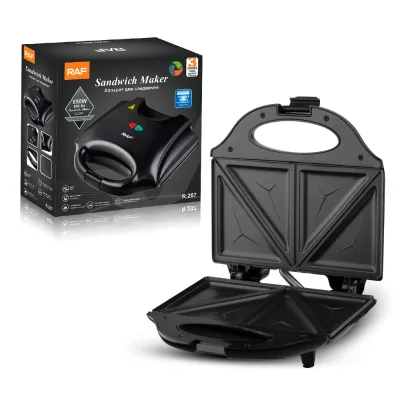

Multifunctional Electric Grill Non-Stick Electric Griddles Sandwich Maker for Home
$11.43 - $13.72
MOQ: 100 Pieces


Commercial Sandwich Maker Double Electric Contact Grill with Non Stick Surface
$63.00 - $70.00
MOQ: 50 Pieces


Electric Press Fixed 2-Slice Sandwich Maker with Non-Stick Coated Plates
$5.65 - $6.10
MOQ: 3180 Pieces


Mini Sandwich Maker with Non-Stick Coated Plate with Temperature Control
$7.00 - $7.15
MOQ: 2720 Pieces


Comprehensive Sourcing Guide
Strategic Sourcing Guide for Non-Stick Electric Sandwich Makers
The global demand for compact, efficient kitchen appliances has elevated the non-stick electric sandwich maker from a niche novelty to a staple in both residential and light commercial procurement. For B2B buyers, sourcing these units requires a disciplined approach that balances technical performance, regulatory compliance, and supply chain reliability. This guide synthesizes observed market data and technical specifications to provide a framework for evaluating suppliers and selecting products that meet rigorous operational standards. The focus remains on evidence-based attributes, ensuring that procurement decisions are grounded in verifiable product characteristics rather than unverified marketing claims.
Technical Specifications and Performance Parameters
When evaluating non-stick electric sandwich makers, the primary technical differentiators lie in power consumption, voltage compatibility, and heating efficiency. Market observations indicate a consistent power rating of 750 Watts for many units in this category, operating at a standard voltage of 120 Volts. This configuration suggests suitability for North American residential grids, though buyers must verify if alternative voltage options, such as 230 Volts, are available for international distribution. The power source is universally electric, driven by internal heating elements rather than external fuel sources.
The heating mechanism is a critical component of performance. Some models utilize a "Multiple Heat Pipe" system, which aims to distribute thermal energy more evenly across the cooking surface compared to single-point heating elements. This design choice directly impacts cooking consistency, ensuring that bread, pizza, cake, and biscuits are heated uniformly without cold spots. The presence or absence of a timing device is another significant variable. While some units are equipped with a built-in timing device to automate the cooking process and prevent burning, others operate without one, relying on user monitoring. Procurement teams must align this feature with the target market's expectations for automation and convenience.
Physical dimensions and weight are essential for logistics and storage planning. Observed product standards reveal a wide variance in dimensions, ranging from compact units measuring approximately 9 inches by 9 inches to larger models extending to 32 centimeters in length. Weight also varies, with specific models noted at 2.4 pounds and others at 2.46 pounds. These slight differences can influence shipping costs and packaging efficiency. Furthermore, the interchangeability of plates is a key functional attribute. Many units feature sandwich plates, but the specific plate size, such as 215mm by 125mm, must be verified against the intended product line to ensure compatibility with the desired sandwich or pastry formats.
Material Composition and Safety Standards
The safety and durability of the sandwich maker are heavily dependent on the materials used in its construction. The blade or cooking plate material is predominantly stainless steel, a choice that offers resistance to corrosion and ease of cleaning. However, the most critical safety attribute for food-contact surfaces is the coating. A high-confidence observation in this sector is the "Pfoa Free" designation. Perfluorooctanoic acid (PFOA) is a chemical historically used in non-stick coatings that has raised significant health concerns. Sourcing PFOA-free products is not merely a preference but a necessity for compliance with modern health regulations in many jurisdictions.
The housing material is typically plastic, which provides electrical insulation and reduces the overall weight of the unit. The color of the unit is often observed as white or flat finishes, though customization is available to meet specific branding requirements. The non-stick feature is explicitly marketed for "cleaning easily," a claim that buyers should verify through sample testing to ensure the coating adheres properly and does not degrade after repeated use. The switch mechanism is generally a plug-in type, indicating a direct connection to the power source without complex internal wiring for the user.
Regulatory Compliance and Certification Verification
Navigating the regulatory landscape is a paramount responsibility for B2B buyers. The supply chain for these appliances often originates from China (Mainland), a region known for high manufacturing volume but requiring strict quality assurance. To mitigate risk, buyers must demand comprehensive certification documentation. Observed certifications for compliant units include GS, EMC, LFGB, RoHS, and ERP.18PAHs.
The GS mark indicates safety compliance in German-speaking markets, often serving as a proxy for rigorous safety testing. EMC (Electromagnetic Compatibility) ensures the device does not emit excessive electromagnetic interference that could disrupt other electronics. LFGB is a German food safety standard that is particularly relevant for the non-stick coating and materials that come into contact with food. RoHS (Restriction of Hazardous Substances) confirms the absence of specific hazardous materials like lead and mercury, while ERP.18PAHs addresses the restriction of Polycyclic Aromatic Hydrocarbons, which are potential carcinogens.
Buyers should not assume that all listed products possess these certifications. The presence of these marks on a product page or datasheet must be validated against the specific batch being ordered. For markets outside of Europe, equivalent local standards must be requested. The absence of these certifications should be treated as a red flag, potentially indicating non-compliance with international safety norms.
Cost Drivers and MOQ Considerations
The cost structure of non-stick electric sandwich makers is influenced by several variables, including material quality, certification status, and order volume. The observed Minimum Order Quantity (MOQ) in the market ranges widely, from as low as 1 unit for sample purchases to as high as 4000 units for bulk industrial orders. Specific listings have indicated an MOQ of 3138 pieces, suggesting that some suppliers operate on a high-volume model that may not be suitable for smaller retailers or startups.
Pricing is observed within a range of 1 to 70 USD, a span that reflects the diversity in product quality, feature sets, and packaging. Lower-priced units may lack advanced features like timing devices or may use less durable housing materials. Conversely, higher-priced models often include premium packaging, such as gift boxes or OEM boxes, and come with more comprehensive certification suites. The quantity per carton (CTN) is another logistical factor; observed data shows configurations like 4 pieces per carton, which impacts palletization and shipping efficiency.
Customization is a significant cost driver. While customization is available, it often requires meeting a higher MOQ threshold and incurs additional tooling or setup fees. Buyers must weigh the cost of branding against the potential return on investment, especially if the target market is price-sensitive.
Supplier Evaluation and Packaging Logistics
Selecting a reliable supplier involves more than just comparing prices. The packaging method is a critical indicator of a supplier's attention to detail and commitment to product protection. Observed packaging types include Color Box, Brownbox, OEM Box, and Gift Box + Carton. The choice of packaging affects the perceived value of the product and its suitability for retail display. For instance, a "Gift Box" implies a premium positioning, while a "Brownbox" suggests a wholesale or bulk distribution channel.
The origin of the product is consistently listed as China, which necessitates a robust supply chain strategy. Buyers should evaluate the supplier's ability to handle the logistics of international shipping, including the coordination of freight forwarders and customs clearance. The "Quantity/CTN" metric is vital for calculating the total number of cartons required for a shipment, which directly influences freight costs.
Furthermore, the availability of interchangeable plates and the specific application scope (e.g., Bread, Pizza, Cake, Biscuit) should be confirmed. A supplier that offers a wide range of applications demonstrates versatility and a deeper understanding of market needs. The "Scence" of use is noted as "Kitchen&Dinning Room," reinforcing the domestic focus of these products, though the robustness of the build should be sufficient for light commercial use in cafes or bakeries.
Quality Control and Long-Term Procurement Strategy
Implementing a rigorous quality control (QC) protocol is essential to ensure that the received goods match the specifications provided. Given the variance in dimensions and weights observed in the market, a pre-shipment inspection should verify that the physical dimensions (e.g., 9.1"D x 8.9"W x 3.2"H vs. 272010cm) match the ordered model. The wattage and voltage must be tested to ensure they align with the stated 750 Watts and 120 Volts (or 230 Volts) to prevent electrical failures in the field.
Long-term procurement considerations include the availability of spare parts, such as replacement plates or heating elements. The "Nonstick for Cleaning Easily" feature must be durable; buyers should request sample units for stress testing to evaluate the longevity of the coating. Additionally, the "Customized" attribute suggests that suppliers may offer branding options, but the lead time for these custom orders must be clearly defined.
Buyers should also consider the "Driving Motor" status. Some listings indicate "No" driving motor, implying a static heating design, which is standard for sandwich makers. However, if a model claims motorized features, this must be verified. The absence of a timing device in some models requires the buyer to assess whether the target customer base prefers manual control or automated cooking cycles.
Summary of Key Product Attributes
To facilitate quick reference during the sourcing process, the following table summarizes the key attributes observed in the market data for non-stick electric sandwich makers. This table serves as a checklist for verifying product specifications against supplier claims.
| Attribute Category | Observed Values / Options | Verification Requirement |
|---|---|---|
| Power & Voltage | 750 Watts, 120 Volts / 230 Volts | Confirm voltage compatibility with target market. |
| Material | Stainless Steel Plates, Plastic Housing | Verify PFOA-Free status and coating durability. |
| Dimensions | ~9x9x3.5 inches / 27x20x10 cm | Measure actual samples to confirm fit for packaging. |
| Weight | 2.4 lbs / 2.46 lbs | Check for consistency in batch production. |
| Features | With/Without Timing Device, Interchangeable Plates | Confirm presence of timing device if required. |
| Certifications | GS, EMC, LFGB, RoHS, ERP.18PAHs | Request valid certificates for the specific batch. |
| Packaging | Color Box, Brownbox, OEM Box, Gift Box | Ensure packaging matches brand positioning. |
| Origin | China (Mainland) | Verify factory audit and supply chain transparency. |
| MOQ | 1 to 4000 units (e.g., 3138 PCS specific) | Negotiate MOQ based on initial order volume. |
In conclusion, sourcing non-stick electric sandwich makers requires a meticulous approach that prioritizes verified specifications over marketing rhetoric. By focusing on the tangible attributes of power, material safety, certification, and packaging, buyers can build a resilient supply chain that delivers high-quality products to their customers. The diversity in models, from simple plug-in units to those with timing devices and OEM packaging, offers flexibility for various market segments, provided that the procurement process remains grounded in evidence and rigorous quality control.
FAQs
What certifications are required for non stick electric sandwich makers?
Compliant units typically hold GS, EMC, LFGB, RoHS, and ERP.18PAHs certifications. Buyers must request valid certificates for the specific batch to ensure safety and regulatory compliance in their target markets.
How is the power consumption defined for these electric units?
Most units operate at 750 Watts with a standard voltage of 120 Volts. Some models support 230 Volts, so buyers must verify voltage compatibility with their local grid before placing bulk orders.
Which materials are used for the cooking plates and housing?
The cooking plates are made of stainless steel and are PFOA free for food safety. The housing is typically constructed from plastic to provide electrical insulation and reduce overall unit weight.
Can buyers customize the packaging and product color?
Yes, customization is available for both color and packaging types like OEM or Gift Box. However, custom orders often require meeting a higher Minimum Order Quantity threshold and may incur additional setup fees.
What is the typical minimum order quantity for these appliances?
The observed MOQ ranges from 1 unit for samples up to 4000 units for bulk industrial orders. Specific listings indicate an MOQ of 3138 pieces, which may not suit smaller retailers.
How do dimensions vary across different product models?
Dimensions vary significantly, ranging from compact units around 9 inches to larger models measuring 32 centimeters. Buyers should verify specific model dimensions to ensure they fit their packaging and storage requirements.