Source NSF Standard Potable Water Hose for Irrigation, Garden, Factory
Compare 30 listings for NSF Standard Potable Water Hose suitable for irrigation, garden, and factory applications. Buyers can evaluate service pressure, burst pressure, and material options like PU or rubber across various models.
Key considerations
Products List


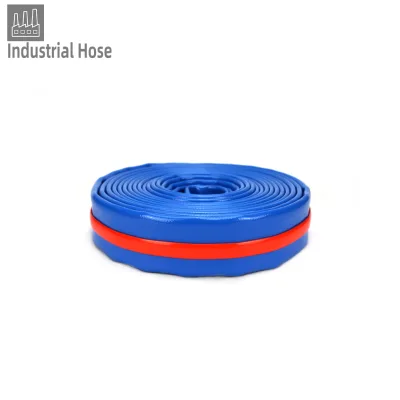
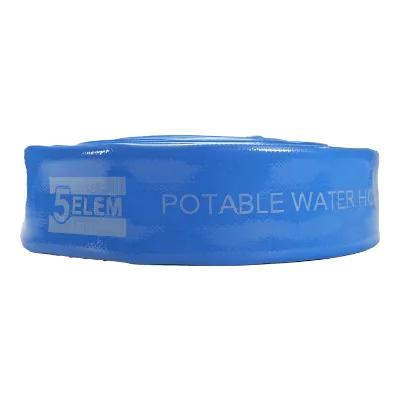
Comprehensive Sourcing Guide
Strategic Sourcing Guide for NSF Standard Potable Water Hoses
Understanding Technical Specifications and Material Integrity
When sourcing hoses designated for potable water applications, the primary objective is ensuring that the internal lining and structural components do not leach harmful substances into the water supply. The supplied product data reveals a diverse landscape of materials, including Polyurethane (PU), Rubber, and PVC. For potable water compliance, the material selection is critical. While the provided facts list "PU" and "Rubber" as materials, the specific requirement for an "NSF Standard Potable Water Hose" necessitates verifying that the rubber or plastic compounds used are certified for food-grade contact. The data indicates a "With Lining" attribute for certain fire hose manifolds, suggesting that internal barriers are a common feature in high-performance tubing. However, the presence of a lining alone does not guarantee NSF certification; the buyer must confirm that the lining material itself meets the specific migration limits defined by NSF/ANSI 61.
The structural integrity of the hose is equally vital. The observed data points to "Twill Weaving" as a weaving type, which is a robust construction method often used to enhance burst pressure resistance. In the context of potable water, the hose must withstand service pressures without deformation that could compromise the liner. The supplied facts list service pressures ranging from 10 Bar to 28 Bar, with burst pressures reaching up to 84 Bar. While these figures indicate high mechanical strength, the buyer must distinguish between general industrial pressure ratings and those specifically validated for drinking water systems. A hose with a 58 Bar burst pressure, as noted in one entry, demonstrates significant safety margins, but the operational safety factor for potable water often requires stricter adherence to working pressure limits to prevent fatigue failure over time.
Furthermore, the temperature range is a decisive technical factor. The provided data mentions temperature capabilities from -5 degrees to 60 degrees Celsius for PVC hoses and -35 to -80 degrees Celsius for air hoses. For potable water applications, the hose must remain flexible and non-leaching across the expected ambient and water temperature fluctuations. If the water source is subject to freezing or high-heat industrial processes, the material must be verified to maintain its chemical stability. The "High Tensile" and "Wear Resistant" characteristics noted in the data are beneficial for durability but must be balanced against the flexibility required for installation in potable water networks.
Compliance Verification and Certification Protocols
The core keyword "NSF standard" implies a specific regulatory framework that goes beyond general manufacturing standards. The supplied facts reference standards such as "Borehose," "Aquatran," and size ranges like "1''-20''" or "1/2'' 5/8'' 3/4'' 1''." While these are valid product identifiers, they do not automatically equate to NSF certification for potable water. The buyer must treat the term "NSF standard" as a verification requirement rather than an inherent attribute of the listed products. The data includes a "Customization: Available" flag, which is highly relevant for compliance. Manufacturers often offer customization to meet specific regional or application-based certification requirements, including NSF 61 for drinking water system components.
When evaluating a supplier, the buyer should not rely on the generic "Standard" labels found in the product data, such as "Aquatran" or "Borehose," as proxies for NSF compliance. Instead, the procurement process must demand explicit documentation. The supplier must provide a valid certificate from NSF International or an equivalent accredited body confirming that the specific hose model, including its liner, cover, and coupling materials, has been tested and approved for contact with drinking water. The absence of an explicit "NSF" tag in the provided facts for any specific item means the buyer cannot assume compliance based on the listing alone.
The "OEM & ODM Custom" capability listed in the data suggests that suppliers are open to tailoring products. This is a crucial lever for compliance. If a standard off-the-shelf hose does not carry the necessary certification, the buyer should utilize the customization option to request a formulation that meets NSF 61 standards. The verification process should also include checking the "Product Origin," which is listed as "China" and "Dongying, China." While these are major manufacturing hubs, the location of origin does not dictate certification status. The buyer must ensure that the manufacturing facility itself is audited and that the quality control processes at the source adhere to the rigorous testing protocols required for potable water safety.
Cost Drivers and Pricing Dynamics
The observed price range in the supplied data spans from $0.03 to $60 USD. This wide variance indicates that the cost of a potable water hose is heavily influenced by its specifications, length, diameter, and certification status. The lower end of the spectrum likely corresponds to basic PVC or rubber hoses intended for general irrigation or garden use, as suggested by the "Application: Irrigation, Garden, Factory" attribute. These products may not include the specialized liners or testing required for NSF compliance. Conversely, the higher price points, potentially approaching $60, likely reflect hoses with advanced features such as EPDM rubber covers, specific pressure ratings, or the additional costs associated with obtaining and maintaining NSF certification.
Several factors drive the cost of a compliant potable water hose. First, the material composition is a primary driver. The data lists "EPDM Rubber" as a cover material, noted for being "Weather and Ozone-Resistant." EPDM is generally more expensive than standard PVC or basic rubber compounds due to its superior chemical resistance and durability. Second, the certification process itself adds cost. The testing, documentation, and annual surveillance required to maintain NSF status are passed on to the buyer. Third, the "MOQ range: 1-2000" suggests that economies of scale play a significant role. Buyers purchasing small quantities may face a higher unit cost, while those ordering near the 2000-unit threshold may benefit from lower pricing.
The "Packing" methods listed, such as "Carton/Wooden Box/Container/Pallet," also influence the final cost. Specialized packaging for export and protection during transit, especially for hoses that require strict hygiene standards, adds to the logistics expense. Additionally, the "Length" specifications, ranging from 30m to 100m, directly impact the unit price. A 100-meter roll of certified potable water hose will naturally cost more than a 30-meter segment, but the cost per meter may decrease with length. Buyers must analyze the total cost of ownership, considering that a cheaper, non-certified hose that fails to meet NSF standards could result in significant regulatory fines or health liabilities, far outweighing the initial savings.
Typical Applications and Performance Requirements
The supplied product data highlights several application areas, including "Irrigation, Garden, Factory," and "Air Hose" usage. For a hose specifically marketed as an "NSF Standard Potable Water Hose," the primary application is the transport of drinking water in municipal, commercial, and residential settings. This includes temporary water supply lines for construction sites, emergency water distribution, and permanent plumbing connections where flexibility is required. The "High Tensile" and "Wear Resistant" attributes are particularly relevant for these applications, as the hose may be dragged across rough surfaces or subjected to frequent movement.
The "Service Pressure" and "Burst Pressure" data provide insight into the performance envelope. With service pressures listed up to 28 Bar and burst pressures up to 84 Bar, these hoses are suitable for high-pressure municipal water systems. However, the buyer must ensure that the specific pressure rating matches the local water supply pressure. Over-pressurizing a hose can lead to failure, while under-sizing can restrict flow. The "Temperature" range of -5 to 60 degrees Celsius covers most standard potable water applications, but extreme environments may require the -35 to -80 degree range noted for air hoses, though the latter's suitability for water must be verified.
The "Hose Coupling Type" and "Structure" are also critical for application success. The data mentions "Hose Coupling," "Adapter," and "Plug-in" structures. For potable water, the couplings must be made of materials that do not contaminate the water, such as brass or stainless steel with food-grade coatings. The "Plug-in" structure suggests a quick-connect mechanism, which is convenient for temporary setups but must be leak-proof to prevent water loss and contamination. The "Color" options, including "Blue" and "Black," are often used to distinguish hose types; blue is frequently associated with potable water, while black may indicate general-purpose or air hoses. Buyers should verify that the color coding aligns with local industry standards to prevent accidental cross-connection.
Supplier Evaluation and Quality Assurance
Evaluating a supplier for NSF standard potable water hoses requires a rigorous approach that goes beyond the basic product attributes listed. The "Product Origin" is consistently noted as "China," specifically "Dongying." While this region is a known hub for hose manufacturing, the buyer must verify the supplier's track record in exporting to markets with strict health regulations, such as the United States, Europe, or Canada. The "Customization" and "OEM & ODM Custom" capabilities are positive indicators, suggesting the supplier has the technical capacity to adapt products to specific compliance needs. However, the buyer should request references from other clients who have successfully sourced NSF-certified hoses from this supplier.
Quality control is paramount. The "Feature: Wear Resistant" and "Character: High Tensile" attributes suggest a focus on durability, but for potable water, the focus must shift to chemical stability and contamination prevention. The buyer should inquire about the supplier's internal quality control processes, specifically how they test for leaching and migration of substances. The "Burst Pressure" and "Service Pressure" data provided in the facts should be cross-referenced with independent test reports. The supplier should be able to provide batch-specific test results, not just generic product specifications.
The "Packing" methods, such as "Carton, Roll, Pallet, Bag," should be evaluated for their ability to maintain hygiene during transit. Contamination can occur if the hose is stored in dirty conditions or if the packaging is compromised. The buyer should ensure that the packaging is sealed and labeled to indicate the product's compliance status. Additionally, the "Lead Time" and "MOQ" factors should be considered in the context of supply chain reliability. A supplier with a flexible MOQ and reasonable lead time is better positioned to handle urgent procurement needs, such as emergency water supply situations.
Long-Term Procurement and Lifecycle Management
Sourcing an NSF Standard Potable Water Hose is not a one-time transaction but part of a long-term procurement strategy. The "Customization" and "OEM & ODM" options indicate that the supplier can support future needs, such as changing hose diameters or pressure ratings as the buyer's infrastructure evolves. The "Standard" attributes listed, such as "1''-20''" or "1/2'' 5/8'' 3/4'' 1''," suggest a wide range of sizes available, which is beneficial for scaling operations. However, the buyer must ensure that any future orders maintain the same level of certification and quality.
Lifecycle management involves monitoring the hose's performance over time. The "Temperature Range" and "Pressure" ratings provide the baseline for expected service life, but environmental factors like UV exposure, chemical exposure, and mechanical stress will affect longevity. The "Cover: EPDM Rubber, Weather and Ozone-Resistant" attribute is a strong indicator of durability, suggesting the hose can withstand outdoor conditions without degrading. Buyers should implement a regular inspection schedule to check for signs of wear, cracking, or leakage, especially in high-pressure applications.
The "Product Name" and "Keywords" in the data, such as "Fabric-Textured Air Hose" and "Air Hose," highlight the diversity of the supplier's portfolio. Buyers must be vigilant to ensure they are ordering the correct product type. A hose designed for air may not be suitable for water, even if it has similar pressure ratings. The "Application" field, listing "Irrigation, Garden, Factory," confirms the versatility of the products, but the buyer must explicitly specify "Potable Water" in all purchase orders to avoid receiving non-compliant goods.
Finally, the "Location" and "Origin" data suggest that the supply chain is centralized in China. Buyers should consider the logistics of importing, including customs regulations and potential tariffs. Establishing a long-term relationship with a supplier who understands the complexities of exporting certified hoses can streamline this process. The "Service Pressure" and "Burst Pressure" data should be reviewed periodically to ensure that the hoses remain suitable for the buyer's current operational pressures, as water systems may be upgraded or modified over time. By maintaining a proactive approach to procurement, buyers can ensure a continuous supply of safe, compliant, and high-performance potable water hoses.
FAQs
What materials are used for potable water hoses?
Common materials include Polyurethane, Rubber, and PVC. Some hoses feature a lining to prevent leaching, but specific NSF certification is required to confirm safety for drinking water contact.
Can these hoses handle high service pressures?
Yes, observed service pressures range from 10 to 28 Bar. Burst pressures can reach up to 84 Bar, providing a significant safety margin for high-pressure municipal applications.
Which temperature ranges do these hoses support?
PVC hoses typically operate between -5 and 60 degrees Celsius. Specialized air hoses may support ranges from -35 to -80 degrees Celsius, though water suitability must be verified.
How is the hose construction reinforced?
Many hoses utilize Twill Weaving for structural integrity. This method enhances burst pressure resistance and ensures the hose maintains shape under service pressure without deformation.
What customization options are available for buyers?
Customization is available for specifications and certifications. Buyers can request OEM or ODM services to tailor the hose for specific regional standards like NSF 61 compliance.
Where are these hoses typically manufactured?
Products originate from China, with specific hubs in Dongying. Buyers should verify that manufacturing facilities in these locations adhere to strict quality control for potable water safety.