Source NSF Certified Artificial Quartz Stone for Kitchen, Bathroom, and Bar
Compare 30 listings of NSF Certified Artificial Quartz Stone suitable for kitchen countertops, bathroom vanities, and bar tops. Buyers can evaluate specifications like thickness, edge processing, and surface finishing from verified manufacturers in Guangdong, China.
Key considerations
Products List
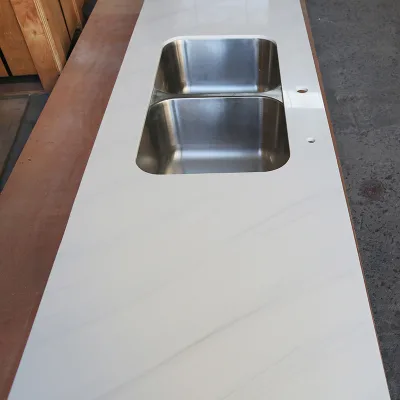


White Kitchen Stone Artificial Quartz Stone for Worktop/Kitchen Top
$9.36 - $25.48
MOQ: 50 Square Meters


Super White Artificial Quartz Stone for Floor 126''x63'' with Factory Price
$5.40 - $7.00
MOQ: 100 Square Feet


China Processing Supplier Artificial Stone for Quartz Engineered Stone Countertop
$280.00 - $300.00
MOQ: 30 Sets


Certificated Artificial Black Quartz Stone for Kitchen Countertop
$58.00 - $80.00
MOQ: 150 Square Meters

High Quality Artificial Quartz Stone for Quartz Countertop Slab
$58.00 - $80.00
MOQ: 150 Square Meters

Comprehensive Sourcing Guide
Strategic Sourcing Guide for NSF Certified Artificial Quartz Stone
The global demand for high-performance surface materials has elevated artificial quartz stone to a premier choice for commercial and residential applications. For procurement professionals, the specific query for "NSF Certified Artificial Quartz Stone" signals a requirement for materials that meet rigorous health and safety standards, particularly in environments where food contact and hygiene are paramount. While the core keyword implies a specific certification status, the reality of the global supply chain requires a nuanced approach to verification. Buyers must distinguish between marketing assertions and verified compliance data, ensuring that the materials selected for their projects align with both functional performance and regulatory mandates. This guide provides a structured framework for evaluating suppliers, understanding technical specifications, and navigating the complexities of sourcing certified artificial stone without relying on unverified claims.
Understanding Material Composition and Technical Specifications
The foundation of any successful procurement strategy lies in a precise understanding of the material's composition. Artificial quartz stone is an engineered surface composed primarily of natural quartz crystals, typically ranging from 90% to 93% by volume, bound together with a polymer resin matrix. This composition grants the material its renowned hardness, scratch resistance, and non-porous nature. When evaluating product listings, buyers should scrutinize the stated material type. The available data indicates that suppliers offer "Artificial Stone" and specifically "Artificial Quartz" variants, with some listings distinguishing between "solid surface" and "quartz stone" categories.
Thickness is a critical technical parameter that dictates the structural integrity and application suitability of the slab. Standard thicknesses for countertop applications often include 20mm, which provides a robust feel and allows for edge profiling without compromising strength. The surface finishing process is equally vital; a "Customized Polished" finish is standard for high-end applications, ensuring a smooth, non-porous surface that resists staining. Buyers must verify that the edge processing capabilities match their design requirements, as options such as "Bullnose" or "Flat" edges are common, though the specific profile must be confirmed during the design phase. The availability of "Pure Color" or "Glass Inside" variations suggests a range of aesthetic options, but the structural consistency of the quartz content remains the primary driver of performance.
Navigating Certification and Compliance Verification
The term "NSF certified" refers to compliance with standards set by NSF International, an organization that develops public health and safety standards. For artificial stone, this certification is particularly relevant for kitchen countertops and food preparation surfaces, ensuring the material does not leach harmful substances and can withstand rigorous cleaning protocols. However, procurement teams must exercise caution regarding how this certification is presented in product catalogs. The supplied data mentions "ISO" certification, which is a distinct standard focusing on quality management systems rather than specific product health safety for food contact.
It is a common misconception that all artificial quartz products are automatically NSF certified. While the material itself is non-porous and generally hygienic, the specific certification depends on the resin formulation and the manufacturing process. Buyers should not assume that a product labeled "Artificial Quartz" or "Solid Surface" automatically carries NSF certification unless explicitly documented. The verification process should involve requesting the specific certification number and the scope of the certification from the supplier. The certification should cover the specific product line, including the resin system used, rather than just the general category of artificial stone. Furthermore, buyers must ensure that the certification is current and valid for the intended market, as standards can vary by region.
Cost Drivers and Economic Factors in Procurement
The price of artificial quartz stone is influenced by a complex interplay of factors, including raw material costs, manufacturing complexity, and logistical expenses. The observed price range for these products can vary significantly, from approximately $3.53 to $363.23 per unit, depending on the specific configuration, thickness, and customization level. This wide variance highlights the importance of defining clear requirements before soliciting quotes. Factors that drive cost upward include custom sizing, specialized edge profiles, and the inclusion of specific certifications.
Minimum Order Quantity (MOQ) is another critical economic factor. The observed MOQ range spans from 1 to 500 units, offering flexibility for small-scale projects while accommodating large commercial contracts. For buyers seeking bulk procurement, negotiating based on volume can yield significant savings. Additionally, the "Supply Ability" of the manufacturer, noted as 100 sets per day for certain bathroom countertop configurations, indicates production capacity that can influence lead times and pricing stability. Buyers should also consider the packaging details, as "Standard safety export packing" and "Wooden Crates for Tiles" add to the overall cost but are essential for preventing damage during international transit. The "Single gross weight" of 0.500 kg per unit suggests that weight-based shipping calculations must be carefully managed to avoid unexpected freight costs.
Typical Applications and Functional Requirements
Artificial quartz stone is versatile, finding application in a wide array of environments ranging from residential kitchens to high-traffic commercial spaces. The data indicates usage in "Kitchen, bathroom, bar, restaurant, hotel, hospital, laboratory, etc." This broad applicability is due to the material's durability, resistance to heat, and ease of maintenance. In commercial settings such as hospitals and laboratories, the non-porous nature of the stone is crucial for preventing the growth of bacteria and mold, making it an ideal surface for sterile environments.
The "Load-Bearing" capacity is listed as "Medium," which is generally sufficient for standard countertop applications but may require engineering assessment for specialized industrial uses. The "Feature" of being "No-radioation" and "eco-friendly" addresses growing concerns regarding environmental impact and health safety. The "Design Style" is predominantly "Modern," characterized by clean lines and a sleek aesthetic that fits contemporary architectural trends. For buyers in the hospitality sector, the "Project Solution Capability" including "graphic design" and "3D model design" is a valuable asset, allowing for seamless integration of the stone into complex design schemes. The "Function" being "Multi-Function" further underscores the material's adaptability to various surfaces, including vanity tops, bar counters, and reception desks.
Supplier Evaluation and Quality Assurance Protocols
Selecting the right supplier is as critical as selecting the material itself. The supplied data identifies the business type as "Manufacturer," which often implies better control over quality and pricing compared to trading companies. However, buyers must verify this claim through due diligence. A key indicator of a reliable manufacturer is the presence of a dedicated "Professional QC Team" that performs "Quality Control" checks "Piece by Piece." This level of inspection ensures that every slab meets the required standards before leaving the facility.
The "After-sale Service" portfolio is another vital evaluation criterion. Suppliers offering "Online Technical Support," "Onsite Installation," "Onsite Training," and "Free Spare Parts" demonstrate a commitment to long-term customer satisfaction. These services are particularly important for large-scale projects where installation errors can be costly. The "Warranty" period, noted as "More Than 5 Years," provides a safety net for buyers, indicating the manufacturer's confidence in the product's longevity. Buyers should also assess the "Project Solution Capability," which includes "total solution for projects" and "Cross Categories Consolidation," suggesting the supplier can manage complex logistics and coordinate multiple product lines.
Long-Term Procurement Considerations and Maintenance
Sourcing artificial quartz stone is not merely a transactional event but a long-term investment in the facility's infrastructure. The "Warranty" of more than five years is a strong indicator of durability, but buyers must understand the terms of this warranty. It typically covers manufacturing defects rather than damage caused by misuse or improper installation. Therefore, ensuring that the "Onsite Installation" service is utilized by the supplier is crucial for maintaining warranty validity.
Maintenance requirements for artificial quartz are minimal compared to natural stone, as the material does not require sealing. However, the "Surface Finishing" must be maintained to preserve its aesthetic appeal. The "Inspection" process, described as "inspected piece by piece," should be mirrored by the buyer's own quality checks upon delivery. The "Single package size" of 10x10x1.2 cm suggests that sample availability is a standard practice, allowing buyers to verify color and texture before committing to a full order. The "Port of dispatch" being Shenzhen is a significant logistical detail for international buyers, as it influences shipping routes and transit times.
Comparative Analysis of Product Attributes
To facilitate decision-making, buyers can compare key attributes of available products using the following table. This comparison highlights the variations in specifications that may influence the final selection.
| Attribute | Standard Specification | Customization Options | Verification Requirement |
|---|---|---|---|
| Material Type | Artificial Quartz / Solid Surface | Pure Color or Glass Inside | Verify resin content and quartz percentage |
| Thickness | 20mm | Customized | Confirm structural load requirements |
| Surface Finish | Polished | Customized Polished | Request sample for texture verification |
| Edge Profile | Bullnose, Flat | Different edges for choice | Match with design specifications |
| Certification | ISO (Quality Management) | NSF (Health/Safety) | Request specific certification documents |
| Warranty | > 5 Years | Variable | Review terms and exclusions |
| Origin | Guangdong, China | Customized | Verify supply chain transparency |
Conclusion
Sourcing NSF Certified Artificial Quartz Stone requires a methodical approach that balances technical specifications, compliance verification, and supplier reliability. The market offers a diverse range of products with varying capabilities, from standard 20mm slabs to fully customized solutions with advanced edge profiling. Buyers must prioritize the verification of certifications, ensuring that the "NSF" claim is backed by valid documentation rather than marketing rhetoric. By focusing on manufacturers with robust quality control teams, comprehensive after-sale services, and transparent supply chains, procurement professionals can secure materials that meet the highest standards of hygiene and durability. The long-term value of artificial quartz stone lies in its resilience and low maintenance, making it a sound investment for modern commercial and residential projects when sourced with diligence and precision.
FAQs
What is the warranty period for artificial quartz stone?
The warranty period is more than 5 years. This coverage typically applies to manufacturing defects, ensuring long-term durability for kitchen and bathroom applications when installed correctly.
Can I get custom sizes and edge profiles for this stone?
Yes, customization is available for size and design. Suppliers offer various edge options like Bullnose or Flat, along with customized polishing to meet specific project requirements.
Which certifications do these artificial quartz products hold?
The products hold ISO certification for quality management systems. While the material is eco-friendly and non-radioactive, specific NSF certification for food contact requires direct verification from the supplier.
How is the quality of the stone ensured before shipping?
Quality is ensured through a professional QC team that checks every piece individually. This inspection process verifies the surface finish and structural integrity before the product leaves the factory.
What is the typical thickness for these countertop slabs?
The standard thickness for these slabs is 20mm. This dimension provides robust structural integrity suitable for kitchen countertops, vanities, and commercial surfaces requiring medium load-bearing capacity.
Where are these artificial quartz stone products manufactured?
These products are manufactured in Guangdong, China. The goods are dispatched from the Shenzhen port, facilitating international shipping to various global markets including the American region.
What after-sale services are provided for these countertops?
After-sale services include online technical support and onsite installation. Additional support covers onsite training, inspection, and the provision of free spare parts to ensure project success.