Source Oblique Tip Watercolor Pen for Art, School, and Office
Compare 30 listings of Oblique Tip Watercolor Pen options from Chinese manufacturers. Buyers can review specifications like point diameter, ink type, and customization features to find suitable supplies for promotional gifts and educational use.
Key considerations
Products List


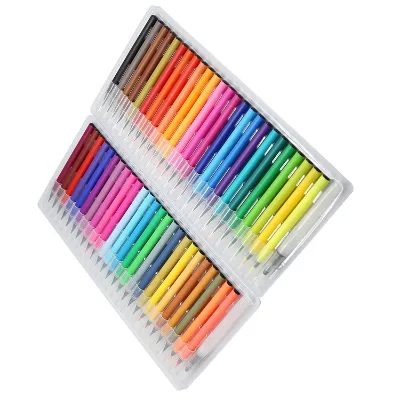
Colored Refillable Flexible Tip 20 Colors Watercolor Brush Pen for Art Painting
$0.52 - $5.17
MOQ: 3000 Minimum
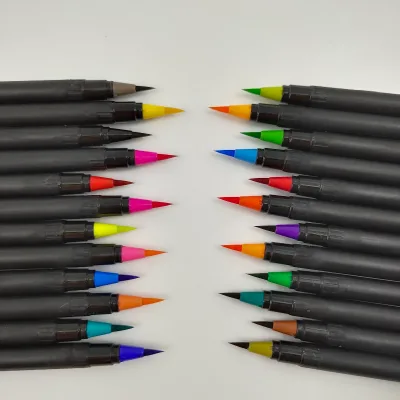
Color Set Dual Tips Watercolor Felt Tip Colored Watercolor Brush Pen in Opp Box
$0.13 - $0.30
MOQ: 2000 Minimum


Wholesale 12 Colors Watercolor Art Felt Tip Marker Pens for Kids Drawing
$0.29 - $1.00
MOQ: 10000 Sets

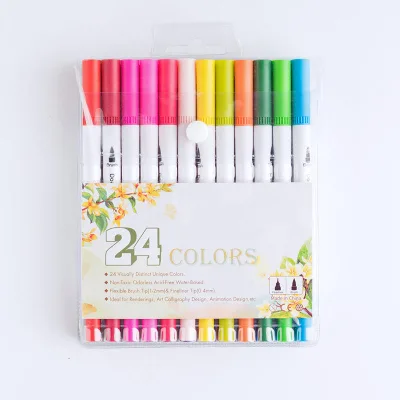
Wholesale 24 Colors Watercolor Art Felt Tip Marker Pens for Kids Drawing
$0.30 - $1.00
MOQ: 10000 Sets
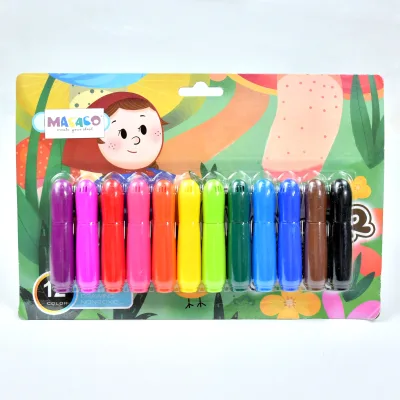
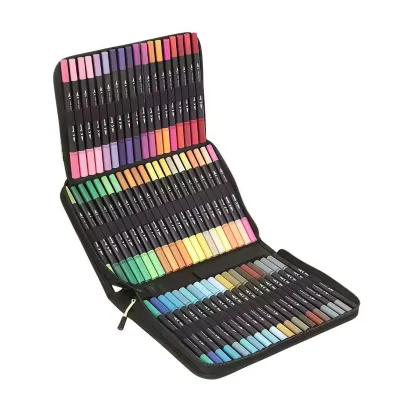


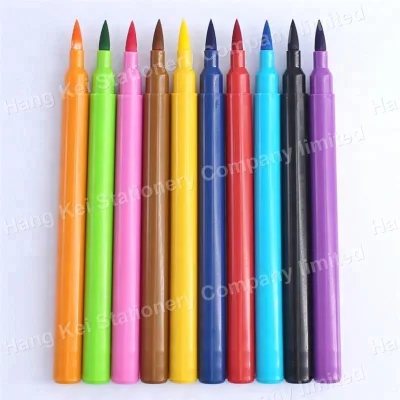
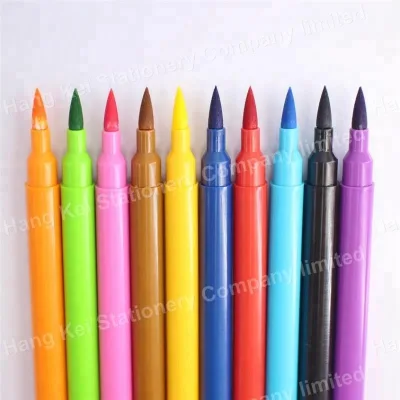
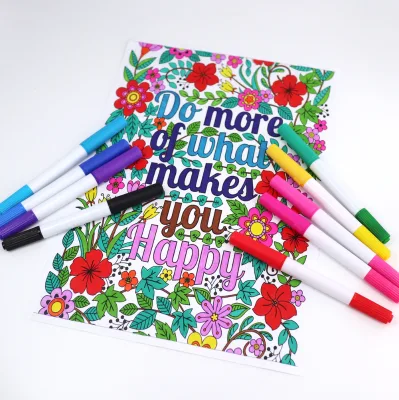
Stationery Regular Paint Brush Tip Water Color Calligraphy Marker Pen Set
$0.06 - $0.15
MOQ: 3000 Minimum

Comprehensive Sourcing Guide
Strategic Sourcing Guide for Oblique Tip Watercolor Pens
Understanding Product Variants and Technical Specifications
When sourcing oblique tip watercolor pens, buyers must first navigate the significant variance in product attributes present in the current market. The term "oblique tip" often implies a specific brush or angled felt design intended for calligraphy, lettering, or artistic shading. However, the available data indicates a complex landscape where "Oblique" may be conflated with broader categories like "Brush Pen," "Felt Tip Pen," or "Watercolor Pen." The observed inventory includes distinct models such as 33609-1, AM820, GC80812, and SF-MA22, each with unique technical profiles.
A critical observation is the divergence in tip geometry and ink formulation. Some listings specify a "Point Diameter" of 1.0mm, while others indicate 0.5mm, suggesting that the "oblique" characteristic may refer to the cutting angle of the tip rather than a fixed diameter. Furthermore, the ink types vary significantly between "Dry Erase & Wet Erase," "Permanent," and "Water-Based Markers." For a buyer specifically seeking watercolor capabilities, the distinction between "Water-Based Markers" and "Alcohol-Based Calligraphy Art Sketch" is paramount. The data confirms the existence of "Watercolor Pen" and "Art Marker" classifications, yet also lists "Permanent" ink options which are unsuitable for watercolor blending.
The material composition of the pen body also varies, with observations noting both "Plastic" and "Metal" constructions. This affects the weight, durability, and perceived premium nature of the product. Additionally, the "Hardness" of the tip ranges from "Medium Soft" to "Soft," which directly influences the line variation achievable by the user. Buyers must verify if the specific oblique tip design is compatible with the intended ink type, as a permanent ink pen with an oblique tip will not function as a watercolor tool. The "Double-Headed" attribute is also a key differentiator; some units are "Without Double-Headed," while others are explicitly "Double-Headed," offering dual tip functionality that may include a fine point and an oblique or brush tip.
Compliance, Certification, and Safety Standards
In the B2B procurement of art supplies, particularly those intended for school, office, or children's use, compliance with safety and environmental standards is non-negotiable. The supplied data highlights specific certifications associated with certain product models, providing a baseline for verification. For instance, the model AM820 is associated with "CE" and "ISO" certifications, while model SF-MA22 lists "RoHS" and "CCC" (China Compulsory Certification). These certifications indicate adherence to specific regional safety and environmental regulations.
The "CE" mark suggests conformity with health, safety, and environmental protection standards for products sold within the European Economic Area. "ISO" certification implies adherence to international management system standards, though the specific ISO standard (e.g., ISO 9001 for quality management) is not detailed in the provided facts. "RoHS" (Restriction of Hazardous Substances) is critical for electronic and plastic components, ensuring the absence of specific hazardous materials like lead or mercury. "CCC" is a mandatory certification for products sold in the Chinese market, covering safety and quality requirements.
Buyers must verify that the "Non-Toxic" and "Erasable" claims found in the product descriptions are backed by valid test reports corresponding to the claimed certifications. The data mentions "Erasable Non-Toxic Brush Tip," which is a strong selling point for educational and office markets. However, the presence of "Permanent" ink in other listings (such as model SF-MA22) creates a compliance risk if the product is marketed as non-toxic or suitable for children without proper labeling. The "Certification" field in the data is not uniform across all models; therefore, a blanket assumption of compliance is unsafe. Procurement teams must request specific test reports for the exact model number being ordered to confirm that the ink formulation and material composition meet the destination market's regulatory requirements.
Cost Drivers and Pricing Dynamics
The pricing structure for oblique tip watercolor pens is influenced by a combination of material costs, customization levels, and order volume. The observed price range in the market spans from $0.02 to $280, a variance that reflects the difference between basic single-unit promotional items and premium, bulk, or specialized sets. The lower end of the spectrum likely corresponds to simple plastic-bodied pens with standard ink, while the higher end may involve metal bodies, complex packaging, or large sets with multiple colors.
A primary cost driver is the "Customization" factor. The data confirms that "Customized" options are available, including "Logo Printing." Products with "With Logo Printing" will inherently carry a higher unit cost due to the setup and execution of branding processes. Conversely, "Without Logo Printing" options may offer a lower price point but lack the marketing utility for corporate gifts or promotional campaigns. The "prod_packing" attribute also plays a role; items packed in a "Carton" may have different logistics costs compared to those in a "Color Set Box," which often implies higher-value presentation.
Order volume is another significant determinant of cost. The observed "MOQ" (Minimum Order Quantity) ranges from 40 to 100,000 units. Suppliers offering lower MOQs, such as 40 units, may charge a premium per unit to cover setup costs for smaller batches. In contrast, orders approaching the upper limit of 100,000 units may benefit from economies of scale, potentially reducing the unit price significantly. The "Factory Direct Price" mentioned in the specifications suggests that sourcing directly from manufacturers can mitigate middleman markups. Buyers should also consider the "Number of Colors" as a cost factor; a set with "12" colors will naturally cost more than a single-color unit. Understanding these variables is essential for accurate budgeting and negotiation.
Typical Applications and Market Segmentation
The versatility of oblique tip watercolor pens allows them to serve a wide array of market segments, from educational institutions to corporate promotional campaigns. The data explicitly lists "Usage" categories including "Promotional," "Office & School," and "DIY Drawing." This broad applicability means that buyers must tailor their sourcing strategy to the specific end-user requirements.
For the "Office & School" segment, the focus is often on functionality, safety, and durability. The "Non-Toxic" and "Erasable" attributes are critical here, as these products are frequently used by children and students. The "Ideal Gift Age" range of 3 to 12 years further emphasizes the importance of safety certifications for this demographic. In this context, "Water-Based Markers" and "Washable" inks are preferred to prevent permanent staining on clothing or furniture.
The "Promotional" segment, which includes "Promotion Gift" and "Christmas" items, prioritizes branding and aesthetic appeal. The availability of "Logo Printing" and "Multi Color" options makes these pens ideal for corporate giveaways. The "Amazon Hot Sale" and "Supermarket Hot Selling" tags indicate high demand in retail channels, suggesting that these products have mass-market appeal. For this segment, the "Colorful Drawing Pens" and "Art Marker" classifications are relevant, as the visual impact is a key driver of purchase decisions.
Additionally, the "DIY Drawing" and "Art Supplies" categories target professional artists and hobbyists. These users require specific performance characteristics, such as "Alcohol-Based" inks for blending or "Fine Line" capabilities for detailed work. The "Brush Pen" and "Paint Marker" classifications cater to this group, offering the flexibility needed for creative expression. The "Oblique" tip design is particularly valuable in calligraphy and lettering, where the angled cut allows for variable line widths.
Supplier Evaluation and Sourcing Strategy
Evaluating suppliers for oblique tip watercolor pens requires a rigorous assessment of their capabilities, reliability, and alignment with buyer requirements. The data indicates that the "prod_origin" is "China," which is a major manufacturing hub for stationery and art supplies. However, the specific supplier names are not provided, and buyers should avoid relying on unverified supplier reputations. Instead, focus on verifying the supplier's ability to meet the specific technical and compliance needs of the order.
Key evaluation criteria include the supplier's capacity to handle "Customized" orders, their experience with "Logo Printing," and their ability to provide the necessary certifications. The presence of models like "AM820" and "SF-MA22" suggests that suppliers have diverse product lines, but buyers must ensure the specific model meets the "oblique tip" requirement. The "Double-Headed" attribute is another feature that requires careful verification, as not all suppliers may offer this configuration.
Buyers should also assess the supplier's logistical capabilities, including "prod_packing" standards and lead times. The "Carton" and "Color Set Box" options indicate different packaging capabilities, which can impact shipping costs and product presentation. The "MOQ" range of 40 to 100,000 suggests flexibility, but buyers must confirm the supplier's ability to meet their specific volume requirements without compromising quality.
Quality Control and Performance Verification
Ensuring the quality of oblique tip watercolor pens is essential to maintain brand reputation and customer satisfaction. The data highlights several quality indicators, such as "Hardness" (Medium Soft, Soft), "Point Diameter" (0.5mm, 1.0mm), and "Ink Type" (Water-Based, Permanent, Alcohol-Based). These attributes must be verified through physical inspection and performance testing.
Buyers should establish clear quality control protocols that include sampling and testing of the pen tips. The "Oblique" angle must be consistent across the batch to ensure uniform line quality. The "Ink Flow" and "Color Vibrancy" are critical performance metrics; "Bright" and "Assorted Color" claims should be validated against actual samples. The "Washable" and "Non-Toxic" claims require laboratory testing to confirm compliance with safety standards.
The "Certification" status, such as "CE," "ISO," "RoHS," and "CCC," must be verified with valid documentation. Buyers should request certificates of analysis (CoA) and test reports from independent laboratories to ensure the ink and materials meet the required specifications. The "Material" composition, whether "Plastic" or "Metal," should be checked for durability and finish quality. Any defects in the "prod_packing" or "Logo Printing" should be addressed immediately to prevent customer dissatisfaction.
Long-Term Procurement Considerations
Sourcing oblique tip watercolor pens is not just a one-time transaction but a long-term partnership that requires strategic planning. Buyers should consider the scalability of the supply chain, the potential for product evolution, and the stability of the supplier. The "Factory Direct Price" and "Wholesale" options suggest opportunities for cost reduction over time, but these benefits depend on maintaining a consistent order volume.
The "Customization" aspect offers a unique advantage for building brand loyalty. By consistently using the same supplier for "Logo Printing" and "Customized" designs, buyers can ensure brand consistency across their product lines. However, this also creates a dependency on the supplier's ability to maintain quality and delivery schedules.
Buyers should also monitor market trends, such as the shift towards "Eco-Friendly" materials or "Bi-Colors" and "Metallic" inks. The data mentions "Neon," "Pastel," and "Metallic" colors, indicating a demand for diverse color palettes. Staying ahead of these trends can provide a competitive edge. Finally, maintaining open communication with the supplier regarding "Lead Times" and "Stock" levels is crucial for managing inventory and avoiding stockouts. The "Best Top Seller" status of certain models suggests that some products have high demand, and buyers should plan accordingly to secure supply.
FAQs
What certifications do oblique tip watercolor pens typically have?
Some models carry CE, ISO, RoHS, or CCC certifications depending on the specific product line. Buyers must verify these standards against the exact model number to ensure compliance with regional safety regulations for school or office use.
Which ink types are available for oblique tip watercolor pens?
Available ink types include water-based markers, permanent ink, and alcohol-based formulations. Users should select water-based or washable options for children, while permanent ink is unsuitable for watercolor blending techniques.
Can these pens be customized with a company logo?
Yes, logo printing is available on many units, though some listings specify no logo printing. Customization adds to the unit cost and requires a minimum order quantity that varies by supplier and packaging type.
What is the minimum order quantity for these pens?
The minimum order quantity ranges from 40 to 100,000 units depending on the supplier and customization needs. Lower MOQs often carry higher per-unit costs, while bulk orders may benefit from factory direct pricing.
How do tip hardness and diameter affect performance?
Tip hardness ranges from medium soft to soft, and diameters include 0.5mm and 1.0mm options. Softer tips with oblique cuts allow for variable line widths, while diameter determines the precision of the stroke.
Where are these pens manufactured and what is the origin?
The products originate from China, which is a major manufacturing hub for stationery. Buyers should confirm specific factory details and lead times as shipping durations vary based on the destination and order volume.