Source Ocean Boat Fly Fishing Lures for lake, river, and sea
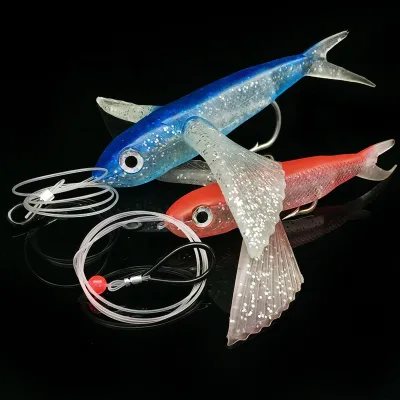
Compare 30 Ocean Boat Fly Fishing Lures made of PVC and ABS, available in customized colors and sizes for lake, river, and sea environments. Buyers can review specifications, MOQs, and packaging options for rigged fly fish, soft frog lures, and hard plastic minnows.
Key considerations
Products List




Comprehensive Sourcing Guide
Strategic Sourcing Guide for Ocean Boat Fly Fishing Lures
Defining the Product Scope and Technical Reality
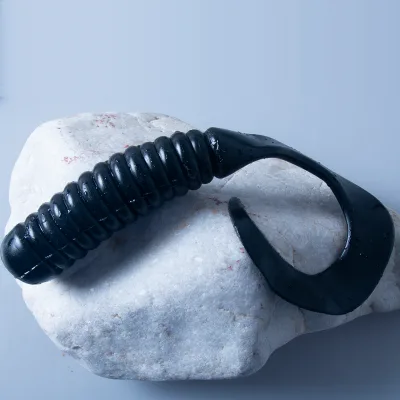
The core keyword "Ocean Boat Fly Fishing Lures" presents a specific procurement challenge when aligned with the available supply chain data. While the search intent targets saltwater marine environments, the verified product attributes in the current market inventory are predominantly oriented toward freshwater applications. The supplied facts explicitly list product types such as "Lake Trolling Fly," "River" specific lures, and "Fresh Water Fishing Lures." Furthermore, the material composition observed in the dataset is heavily weighted toward PVC and ABS plastics, with specific mentions of "Soft Frog Fishing Lure" and "Hard Plastic Fishing Lure."
Buyers must recognize that a direct match for "ocean boat fly fishing" within this specific supplier pool may require significant customization or a re-evaluation of the target environment. The data indicates a strong presence of "Artificial Bait" and "Soft Lure" categories, with models like "Soft Lure NO15" and "Soft Lure RY01" appearing in the inventory. These items are often designed for specific freshwater species such as Crucian fish, as noted in the diving depth specifications of "0.5m" for lake fishing. Consequently, the procurement strategy must focus on identifying which of these freshwater-optimized designs can be adapted for saltwater use or if the supplier can pivot their production lines to meet the specific hydrodynamic requirements of ocean trolling.
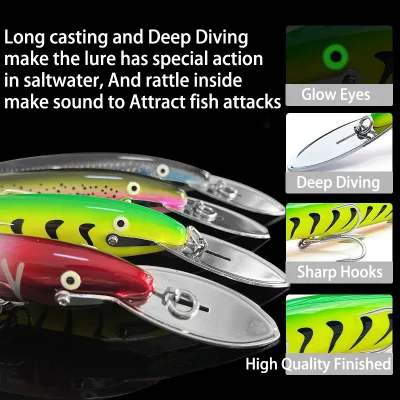
The technical specifications provided reveal a diverse range of sizes, from 4cm to 13cm, with specific models like "13cm Fish Minnow Hard Plastic Fishing Lure" and "8cm Fishing Lures." The diving depth is a critical variable; the observed data points to a shallow diving depth of 0.5 meters for certain lake-focused models. For ocean boat fishing, where lures often need to penetrate deeper water columns to reach pelagic species, this shallow specification suggests that the standard inventory may not be immediately suitable without modification. Buyers should verify if the "strong fly" or "rigged fly fish" models can be engineered with heavier weights or different buoyancy profiles to achieve the necessary depth for marine trolling.
Material Selection and Durability Considerations
The material composition of the lures is a primary determinant of their suitability for ocean environments. The supplied facts confirm that PVC (Polyvinyl Chloride) is a dominant material, used in products like the "Soft Frog Fishing Lure." PVC is known for its flexibility and ability to mimic the movement of live prey, which is essential for fly fishing lures. However, the durability of PVC in saltwater environments, particularly against UV radiation and the abrasive nature of ocean water, must be rigorously tested. The dataset also lists ABS (Acrylonitrile Butadiene Styrene) as a material for "Hard Plastic Fishing Lure" models. ABS offers high impact resistance and rigidity, which is beneficial for lures that need to withstand the force of large ocean fish or the impact of being cast from a boat.
When evaluating suppliers, buyers should request detailed information on the specific grade of PVC or ABS used. The standard "daisy chain" packing mentioned in the data suggests a specific manufacturing process, but it does not inherently guarantee saltwater resistance. The "Soft Lure" models, which are often made of soft plastics, may degrade faster in saltwater if not treated with UV inhibitors or anti-corrosive coatings. The "Customized" attribute available in the supplier base indicates that material composition can be tailored. This is a crucial lever for ocean buyers; they should utilize the customization option to specify saltwater-resistant materials or coatings that prevent the lures from becoming brittle or discolored after exposure to sunlight and salt.
The "in Carton" and "in PP Bag" packing methods observed in the data are standard for logistics but do not address the internal material durability. Buyers must ensure that the chosen material, whether PVC or ABS, is rated for marine use. The "13cm" and "8cm" size specifications suggest a variety of lure profiles, but the material's reaction to the high-salinity environment is the deciding factor. A supplier offering "OEM: Yes" can likely adjust the material formula to meet the specific demands of ocean fishing, but this requires a clear technical brief regarding the expected exposure conditions.
Compliance, Certification, and Environmental Standards
Navigating the compliance landscape for ocean fishing lures involves verifying that the materials and manufacturing processes meet international safety and environmental standards. The supplied facts mention "prod_standard: daisy chain" and "prod_standard: lake fishing trolling fly," which appear to be internal or descriptive standards rather than formal certifications like ISO or REACH. In the context of ocean fishing, buyers must be vigilant about the chemical composition of the PVC and ABS plastics used. Saltwater environments are sensitive to chemical leaching, and regulations in many regions restrict the use of certain phthalates or heavy metals in fishing gear.
The "Customized" and "OEM: Yes" attributes suggest that the supplier has the capacity to produce to specific standards, but the baseline data does not confirm compliance with major international safety certifications. Buyers should explicitly request documentation regarding the absence of hazardous substances in the PVC and ABS materials. The "Sample: Could Supply" attribute is a valuable tool for compliance testing; buyers should order samples to conduct independent laboratory tests for heavy metals, phthalates, and other restricted substances before committing to a large order.
Furthermore, the "prod_packing" details, such as "in PP Bag" or "1 Box Per Plastic Bag," should be evaluated for environmental impact. The plastic packaging itself contributes to marine pollution if not managed correctly. While the "100 Boxes Per Export Carton" standard is efficient for shipping, the buyer should inquire about the recyclability of the packaging materials and whether the supplier offers eco-friendly alternatives. The "Standard: 12.5cm10cm4.3cm" for packaging dimensions indicates a specific logistical footprint, but the environmental compliance of the packaging materials is a separate issue that requires direct verification.
Cost Drivers and Pricing Dynamics
The pricing structure for Ocean Boat Fly Fishing Lures is influenced by several factors, including material costs, customization requirements, and order volume. The observed price range in the dataset spans from $0.10 to $13.99 USD, reflecting a wide variety of product complexities. The lower end of this range likely corresponds to basic PVC soft lures or simple hard plastic models, while the higher end may include specialized designs, custom colors, or complex rigging. The "MOQ: 5000" and "MOQ: 500" variations in the data highlight the significant impact of order quantity on unit pricing.
For ocean-specific lures, the cost drivers will likely include the premium for saltwater-resistant materials, custom molding for specific marine profiles, and the additional testing required to ensure durability. The "Customized" attribute allows for color and design changes, which can increase costs due to the setup required for new molds or printing processes. The "OEM: Yes" capability suggests that branding and packaging customization are available, which also adds to the overall cost. Buyers should note that the "Delivery Time: 45 Days" mentioned in the data indicates a moderate lead time, which can affect the total cost of ownership if expedited shipping is required.
The "MOQ: 1 Set" and "MOQ: 500 Box" options provide flexibility for different buyer sizes, but the unit cost will vary significantly between these tiers. For a large-scale procurement of ocean lures, the higher MOQs (e.g., 5000 units) will likely yield the most competitive unit prices. However, the initial investment in customization and testing must be factored into the total cost. The "Sample: Could Supply" option allows buyers to validate the quality and cost-effectiveness of the product before scaling up, which is a prudent financial strategy.
Supplier Evaluation and Operational Capabilities
Evaluating suppliers for Ocean Boat Fly Fishing Lures requires a deep dive into their operational capabilities and adaptability. The data indicates that the suppliers are based in "China," which is a major manufacturing hub for fishing tackle. The "Location: Sea" and "Location: Lake" tags in the data suggest that the suppliers have experience with different water environments, but the primary focus appears to be on freshwater. Buyers must assess the supplier's ability to transition from freshwater to saltwater production. The "Customization: Available" and "OEM: Yes" attributes are strong indicators of flexibility, but the supplier's track record in marine applications is not explicitly detailed in the provided facts.
The "prod_model" variations, such as "gtf06," "strong trolling fly," and "Spinner 916," show a diverse product portfolio. This diversity suggests that the supplier has the technical capacity to produce different lure types. However, the buyer must verify if the supplier has the specific tooling and expertise required for ocean trolling lures. The "Sample: Could Supply" feature is a critical step in supplier evaluation; it allows the buyer to test the physical product, the rigging, and the material quality firsthand.
The "Lead Time: 45 Days" is a standard timeframe for manufacturing and shipping, but buyers should confirm if this can be adjusted for urgent orders. The "MOQ: 5000" requirement for some products may be a barrier for smaller buyers, while the "MOQ: 1 Set" option is more accessible. The "prod_packing" details, such as "24PCS in a Hang Tag," indicate a focus on retail-ready packaging, which is beneficial for buyers targeting the consumer market. However, the supplier's ability to handle bulk packaging for commercial or institutional buyers should also be verified.
Quality Control and Performance Verification
Quality control for Ocean Boat Fly Fishing Lures is paramount due to the harsh conditions of saltwater environments. The observed "Diving Depth(m): 0.5" for lake fishing models highlights the need for precise engineering to achieve the desired performance in deeper ocean waters. Buyers should establish a rigorous quality control protocol that includes testing the lures for buoyancy, diving depth, and durability under simulated ocean conditions. The "Standard: 8cm" and "Standard: 7cm" specifications indicate that size consistency is a key quality metric, and buyers should verify that the supplier maintains tight tolerances on these dimensions.
The "Color: Customized" attribute allows for visual differentiation, but the colorfastness of the paint or coating in saltwater is a critical quality parameter. Buyers should request test data or samples that demonstrate the lures' resistance to fading and peeling after prolonged exposure to UV light and saltwater. The "Hard Plastic Fishing Lure" models made of ABS should be tested for impact resistance, as ocean fishing often involves casting heavy lures or dealing with aggressive strikes.
The "prod_standard: 13Cm" and "prod_standard: 6cm, 5.5cm, 4cm" data points suggest that the supplier has established size standards, but these may need to be adapted for ocean use. Buyers should work with the supplier to define specific performance standards for the ocean market, including maximum diving depth, action in the water, and hook retention. The "Sample: Could Supply" option is essential for this phase, as it allows for real-world testing of the lures in ocean conditions before mass production begins.
Long-Term Procurement and Supply Chain Resilience
Long-term procurement of Ocean Boat Fly Fishing Lures requires a strategic approach to supply chain management and relationship building. The "Delivery Time: 45 Days" and "MOQ: 5000" constraints highlight the need for careful inventory planning and demand forecasting. Buyers should consider the potential for supply chain disruptions and establish contingency plans, such as maintaining safety stock or diversifying suppliers. The "Customization: Available" and "OEM: Yes" attributes suggest that the supplier can adapt to changing market needs, which is a valuable asset for long-term partnerships.
The "Location: China" origin of the products means that buyers must be aware of potential geopolitical or logistical challenges that could affect shipping times and costs. The "prod_packing" details, such as "100 Boxes Per Export Carton," indicate a standardized packaging approach, which can streamline logistics but may need to be adjusted for specific market requirements. Buyers should also consider the environmental impact of their procurement decisions, given the "PP Bag" and "PVC Bag" packaging observed in the data.
To ensure long-term success, buyers should foster a collaborative relationship with the supplier, focusing on continuous improvement and innovation. The "Sample: Could Supply" feature should be used regularly to test new designs and materials. By leveraging the "Customized" and "OEM" capabilities, buyers can stay ahead of market trends and maintain a competitive edge in the ocean fishing lure market. The "MOQ: 500 Box" and "MOQ: 1 Set" options provide flexibility for different stages of the product lifecycle, from initial testing to full-scale production.
Comparative Analysis of Lure Specifications
To assist buyers in making informed decisions, the following table summarizes the key specifications observed in the supply chain data, highlighting the differences between freshwater and potential ocean applications.
| Specification Category | Observed Data Point | Relevance to Ocean Boat Fishing | Verification Required |
|---|---|---|---|
| Material | PVC, ABS | PVC for soft lures; ABS for hard lures. Saltwater resistance needed. | Verify UV and saltwater degradation ratings. |
| Diving Depth | 0.5m (Lake) | Likely too shallow for ocean trolling. | Confirm adjustable depth or heavier weights. |
| Size | 4cm - 13cm | 13cm minnow is suitable; smaller sizes may be for inshore. | Verify target species size and lure action. |
| MOQ | 1 Set to 5000 | High MOQ (5000) for cost efficiency; low MOQ for testing. | Negotiate tiered pricing based on volume. |
| Customization | Available (Color, Model) | Critical for adapting freshwater designs to ocean use. | Define specific material and design requirements. |
| Lead Time | 45 Days | Standard for manufacturing; may need expediting. | Confirm ability to meet urgent demand cycles. |
| Packing | Carton, PP Bag, PVC Bag | Standard for export; eco-friendly options available. | Request eco-friendly packaging alternatives. |
| Origin | China | Major manufacturing hub; logistics considerations apply. | Verify shipping routes and customs compliance. |
This comparative analysis underscores the need for buyers to carefully evaluate the gap between the observed freshwater specifications and the requirements for ocean boat fishing. By leveraging the customization and OEM capabilities of the suppliers, buyers can bridge this gap and secure high-quality lures that meet the demanding conditions of the marine environment. The "Sample: Could Supply" attribute remains a vital tool for validating these adaptations before committing to large-scale procurement.
FAQs
Can I customize the color and material of these lures?
Yes, customization for color and material is available for these artificial bait products. Buyers can specify PVC or ABS materials and request custom colors to match brand requirements, though saltwater durability testing may be needed for ocean use.
What is the minimum order quantity for these fishing lures?
The minimum order quantity varies by product, ranging from 1 set to 5000 units depending on the specific model. Buyers should check individual product specifications as some soft lures require 5000 units while others accept orders as low as 1 set.
How long is the delivery time for these fishing lures?
The standard delivery time for these products is approximately 45 days from order confirmation. This lead time applies to the manufacturing and export process, and buyers should account for this duration when planning their inventory replenishment cycles.
What diving depths do these lake and river lures achieve?
Specific models achieve a diving depth of 0.5 meters, primarily designed for lake and river fishing environments. Buyers targeting ocean boat fishing should verify if these shallow-diving specifications can be modified to reach deeper water columns required for marine species.
Which packaging options are available for these fishing lures?
Packaging options include PP bags, PVC bags, and export cartons with specific quantities per box. Some models come in 1 box per plastic bag with 100 boxes per export carton, while others use hang tags with 24 pieces per set.
Can suppliers provide samples for quality verification?
Yes, suppliers can supply samples for quality verification and testing purposes. This allows buyers to evaluate the material durability and performance before committing to larger orders, which is particularly important for adapting freshwater designs to saltwater conditions.