Source Orange Polyester Ratchet Tie Down for Cargo, Industrial, and Strapping
Compare 30 listings for Orange Polyester Ratchet Tie Down with widths from 25mm to 50mm and capacities up to 10T. Buyers can evaluate options for cargo lashing, industrial control, and strapping applications with CE, GS, and ISO certifications.
Key considerations
Products List




Comprehensive Sourcing Guide
Strategic Sourcing Guide for Orange Polyester Ratchet Tie Down Systems
Understanding Technical Specifications and Material Composition
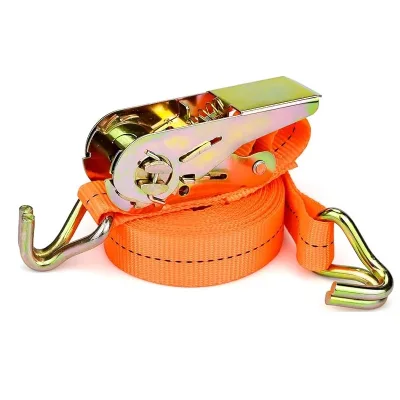
When sourcing Orange Polyester Ratchet Tie Down systems, the primary focus must be on the interplay between material composition, dimensional specifications, and mechanical performance. The core material for these lashing systems is consistently identified as polyester, a synthetic fiber chosen for its superior resistance to environmental degradation compared to natural fibers. Polyester offers a critical advantage in this application: it is lightweight and possesses high UV resistance, ensuring that the webbing retains its structural integrity even when exposed to prolonged sunlight during outdoor transport or storage. This characteristic is particularly vital for the orange color variant, which serves not only as a visibility aid but also as an indicator of specific load ratings or application zones in industrial settings.
The dimensional specifications of the webbing are non-negotiable parameters that dictate the compatibility of the tie-down with specific cargo and vehicle constraints. Available data indicates that webbing widths typically range from 25mm to 50mm. The 25mm width is often associated with lighter duty applications, while the 50mm width is standard for heavier cargo control scenarios. Length is another variable that requires precise verification; observed specifications include lengths of 5 meters and 10 meters. Buyers must match these lengths to the specific geometry of the cargo being secured to avoid excess slack or insufficient reach. The color orange is a standard offering alongside blue, black, white, red, yellow, and green, allowing for color-coding strategies in fleet management.
The mechanical performance of the tie-down is defined by its working load and breaking load. For standard duty ratchet tie-downs, the working load limit (WLL) is often cited around 400kg, with a corresponding breaking load of approximately 800kg. However, the market also presents systems with capacities ranging from 1 ton to 10 tons, indicating a broad spectrum of duty classes. The elongation rate is a crucial metric for stability; high-quality polyester webbing typically exhibits an elongation of less than 7%, which prevents excessive stretching under load that could compromise cargo security. The ratchet mechanism itself, which provides the tensioning force, is available in various handle materials including steel, aluminum, plastic, and rubber, each offering different tactile feedback and durability profiles.
Compliance Standards and Certification Verification
Navigating the compliance landscape for cargo lashing equipment requires a rigorous verification of standards and certifications. The primary standard governing the design and testing of cargo lashing systems is EN 12195-2. This European standard provides the framework for calculating the number of lashing points required and the strength of the equipment used. Any supplier claiming compliance with this standard must be able to demonstrate that their products have undergone the specific testing protocols outlined within the document.
In addition to the EN 12195-2 standard, certification marks such as CE (Conformité Européenne) and GS (Geprüfte Sicherheit) are frequently observed on product listings. These marks indicate that the product meets specific safety and quality requirements for the European market. The GS mark, in particular, is a German safety certification that is highly regarded for its rigorous testing of consumer and industrial goods. The presence of ISO certification, often referenced in conjunction with CE and GS, suggests that the manufacturer adheres to international quality management systems, although the specific ISO standard (such as ISO 9001) should be verified against the supplier's actual documentation rather than assumed.
Buyers must be cautious when interpreting certification claims. While "CE, GS, ISO" appears as a combined attribute in several product descriptions, the specific color variants (e.g., Blue, Yellow, Orange) may have different certification statuses depending on the manufacturing batch or specific model. For instance, some listings explicitly link the CE, GS, and ISO certifications to specific colors like blue or yellow. When sourcing orange tie-downs, it is essential to request the specific test reports or certificates that correspond to the orange variant to ensure that the color coding does not inadvertently compromise the certified load rating. Furthermore, the inspection process should include a request for a Mill Test Certificate, which provides traceability of the raw materials and confirms the mechanical properties of the polyester webbing used in the final assembly.
Cost Drivers and Pricing Structure Analysis
The pricing structure for orange polyester ratchet tie-downs is influenced by a complex matrix of factors, including material costs, manufacturing complexity, and order volume. The observed price range in the market spans from 0 to 30 USD, but this wide variance often reflects differences in duty class, length, and included accessories. Lower-priced items in this range may correspond to standard duty models with shorter lengths or basic ratchet mechanisms, while higher-priced items likely represent heavy-duty systems with larger capacities (e.g., 5T or 10T) and premium components.
The Minimum Order Quantity (MOQ) is a significant cost driver. The observed MOQ range is extensive, spanning from 1 unit to 2,000 units. For buyers requiring small quantities for immediate operational needs, the ability to source single units or small batches is critical, though the unit cost will naturally be higher. Conversely, large-scale procurement can leverage economies of scale, potentially reducing the per-unit cost significantly. However, buyers must balance the cost savings of bulk ordering against inventory holding costs and the risk of obsolescence.
Customization is another factor that impacts pricing. The availability of OEM (Original Equipment Manufacturer) and ODM (Original Design Manufacturer) services allows buyers to tailor the tie-downs to specific branding or functional requirements. Customization options include the length of the webbing, the color (orange being a specific request), the type of handle, and the packaging method. While customization adds value, it typically incurs additional setup costs and may increase the MOQ. The production origin is consistently listed as China, which influences logistics costs and lead times. Buyers should factor in shipping costs, which can vary based on the weight and volume of the order, especially when dealing with heavy-duty ratchet systems that may require palletized shipping.
Typical Applications and Operational Use Cases
Orange polyester ratchet tie-downs are versatile tools designed for a wide array of industrial and commercial applications. The primary application is cargo lashing, where these systems are used to secure freight on trucks, trailers, and shipping containers. The high visibility of the orange color makes it an ideal choice for safety-critical applications where the lashing points must be easily identifiable during pre-trip inspections. This visibility helps prevent accidents caused by forgotten or improperly secured loads.
Beyond general cargo lashing, these tie-downs are utilized in cargo control scenarios where precise tensioning is required. The ratchet mechanism allows for incremental tightening, ensuring that the load is held firmly without damaging the cargo surface. The material's resistance to UV radiation and its lightweight nature make these tie-downs particularly suitable for outdoor storage and long-haul transportation. In industrial settings, they are used for securing heavy machinery, construction materials, and raw materials that require stable positioning during transit.
The specific duty class of the tie-down dictates its suitability for different applications. Standard duty models, with a working load of 400kg, are appropriate for securing lighter loads such as pallets of goods, small equipment, or automotive parts. Heavy-duty models, with capacities ranging from 1 ton to 10 tons, are necessary for securing large vehicles, industrial containers, or heavy construction equipment. The choice of handle material also influences the application; for instance, rubber handles may be preferred in cold environments to prevent hand injury, while steel handles offer maximum durability in harsh industrial conditions.
Supplier Evaluation and Sourcing Strategy
Evaluating suppliers for orange polyester ratchet tie-downs requires a multi-faceted approach that goes beyond price comparison. The first step is to verify the supplier's ability to provide the specific technical attributes required, such as the 25mm or 50mm width, the 5m or 10m length, and the specific orange color. Buyers should request product samples to physically inspect the quality of the polyester webbing, the smoothness of the ratchet mechanism, and the durability of the handle.
The supplier's certification status is a critical evaluation criterion. Buyers should demand proof of CE, GS, and ISO certifications, ensuring that these certifications are current and applicable to the specific product model being sourced. The ability to provide a Mill Test Certificate is another indicator of a supplier's commitment to quality and traceability. Additionally, the supplier's capacity to handle customization requests, such as OEM branding or specific packaging requirements, should be assessed. The observed availability of "Customized Service: OEM ODM" suggests that many suppliers are flexible, but the buyer must confirm the lead times and minimum order quantities associated with these customizations.
Logistics and lead time are also key factors in supplier evaluation. The observed delivery times range from 20 to 30 days, which is a standard timeframe for manufacturing and shipping from China. Buyers should clarify whether these lead times include packaging and palletization, as the product packing options vary from simple polybags to complex carton and pallet configurations. The supplier's ability to meet the required delivery schedule without compromising quality is essential for maintaining operational continuity. Finally, the supplier's reputation for after-sales support and warranty policies should be considered, as ratchet mechanisms can wear out over time and may require replacement parts or technical assistance.
Quality Control and Long-Term Procurement Considerations
Implementing a robust quality control (QC) process is essential for ensuring the reliability of orange polyester ratchet tie-downs. The QC process should begin with the verification of raw materials, specifically the polyester webbing, to ensure it meets the specified elongation and strength requirements. The inspection of the ratchet mechanism is equally important; it must operate smoothly without jamming and provide the necessary tensioning force. Visual inspections should be conducted to check for defects in the stitching, which is the primary method of fixing the webbing to the ratchet ends.
For long-term procurement, buyers should consider the lifecycle of the tie-downs. Polyester webbing is durable, but it is subject to wear and tear, particularly in high-friction environments. Regular inspections of the webbing for cuts, abrasions, or UV degradation are necessary to prevent failure. The ratchet mechanism should also be periodically checked for signs of wear, such as worn teeth or loose springs. Establishing a replacement schedule based on usage intensity can help mitigate the risk of unexpected failures.
The packaging of the tie-downs also plays a role in long-term quality. Options such as "Polybag+Carton," "Shrink Wrap," or "Carton+ Bag+Pallet" offer varying levels of protection during transit and storage. Proper packaging prevents damage to the ratchet mechanism and keeps the webbing clean and free from contaminants. Buyers should specify the packaging requirements based on their storage conditions and the duration of the shipment.
Finally, the procurement strategy should include a review of the supplier's capacity to scale. As the buyer's needs grow, the supplier must be able to increase production volumes without compromising quality. The observed capacity range of 1T to 10T suggests that suppliers can accommodate a wide range of demand, but buyers should confirm the supplier's ability to handle large orders within the specified lead times. By focusing on these quality control and long-term considerations, buyers can ensure a reliable supply of orange polyester ratchet tie-downs that meet their operational and safety requirements.
Comparative Analysis of Product Attributes
To facilitate informed decision-making, the following table summarizes the key attributes observed in the market for orange polyester ratchet tie-downs. This comparison highlights the variability in specifications and helps buyers identify the product that best fits their specific needs.
| Attribute Category | Observed Variations | Key Considerations for Buyers |
|---|---|---|
| Webbing Width | 25mm, 50mm | Match width to cargo size and required load distribution. |
| Webbing Length | 5m, 10m | Ensure length is sufficient for the specific cargo geometry. |
| Working Load | 400kg, 1T, 5T, 10T | Verify WLL matches the maximum expected load; safety factor is critical. |
| Breaking Load | 800kg (for 400kg WLL) | Confirm breaking load is at least double the working load for safety. |
| Elongation | <7% | Lower elongation ensures better load stability during transit. |
| Material | Polyester | Preferred for UV resistance and lightweight properties. |
| Color | Orange (Primary), Blue, Black, etc. | Orange is standard for high visibility; verify color consistency. |
| Certifications | CE, GS, ISO | Must be verified for the specific model and color variant. |
| Standard | EN 12195-2 | Essential for compliance with European cargo lashing regulations. |
| Packaging | Polybag, Carton, Pallet, Shrink Wrap | Select based on shipping requirements and storage conditions. |
| Customization | OEM, ODM, Color, Length | Available but may affect MOQ and lead time. |
| Origin | China | Standard for this product category; factor in logistics. |
| Lead Time | 20-30 Days | Plan procurement cycles accordingly to avoid delays. |
This table serves as a reference point for buyers to compare different product offerings and ensure that all critical parameters are addressed during the sourcing process. By systematically evaluating these attributes, buyers can make data-driven decisions that optimize safety, cost, and operational efficiency.
FAQs
What certifications do orange polyester ratchet tie downs have?
Orange polyester ratchet tie downs typically carry CE, GS, and ISO certifications. These marks indicate compliance with European safety standards and quality management systems, though specific certification status may vary by color variant and manufacturing batch.
Which material is used for the webbing in these tie downs?
The webbing is made from polyester, which offers lightweight properties and high UV resistance. This material ensures structural integrity during outdoor transport and prevents degradation from prolonged sunlight exposure compared to natural fibers.
How wide is the standard webbing for cargo lashing applications?
Standard webbing widths are available in 25mm and 50mm sizes. The 25mm width suits lighter duty applications, while the 50mm width is standard for heavier cargo control scenarios requiring higher load capacity.
Can I request custom lengths for the polyester webbing?
Yes, customization is available for webbing lengths such as 5 meters or 10 meters. Buyers can specify dimensions to match cargo geometry, avoiding excess slack or insufficient reach during the securing process.
What is the working load limit for standard duty models?
Standard duty ratchet tie downs often have a working load limit of 400kg. Heavy-duty models are also available with capacities ranging from 1 ton to 10 tons depending on the specific product configuration.
How long is the delivery time for these tie down systems?
Delivery times typically range from 20 to 30 days for manufacturing and shipping. This timeframe accounts for production, packaging, and logistics from the origin in China to the final destination.