Source Orange Square Corkboard for Office, School, and Display
Find 28 orange square corkboard options from Chinese manufacturers. Compare features like waterproofing, soundproofing, and thermal insulation. Evaluate customization, density, and thickness to select the right board for your office, school, or advertising display needs; compare the available evidence and request quotations based on your requirements.
Key considerations
Products List


Comprehensive Sourcing Guide
Orange Square Corkboard Sourcing Guide
Sourcing orange square corkboards requires distinguishing between standard natural cork and custom-dyed variants, as the supplied data indicates that color options are typically natural or fully customizable. Buyers must verify if the specific orange hue is a factory-standard offering or a bespoke request, since the observed listings emphasize custom shapes and colors rather than pre-defined stock colors. This distinction directly impacts lead times and minimum order quantities, as custom dyeing processes often require higher volume commitments to be economically viable for the supplier.
The square geometry is a frequent configuration in the observed product range, with specific dimensions like 12x12 inches appearing in standard specifications alongside fully custom sizing. Procurement teams should confirm whether the square format is available in the desired thickness, as the data shows a wide range from 0.5mm to 12mm, with 1/2 inch being a common structural choice. Ensuring the square shape aligns with the intended display or teaching application is critical, as the board's aspect ratio influences both the aesthetic appeal and the functional utility of the final installation.
Product Scope and Observed Listing Signals
The product scope for cork boards in this market segment spans from single-sided teaching boards to double-sided office and advertising displays, with customization available for nearly every attribute. Buyers should note that while the core material is cork, the functional features vary significantly, including waterproof, moistureproof, soundproof, and thermal insulation properties that are frequently listed across different models. These feature sets suggest the product is engineered for diverse environments, ranging from humid classrooms to professional office spaces where acoustic control and moisture resistance are essential.
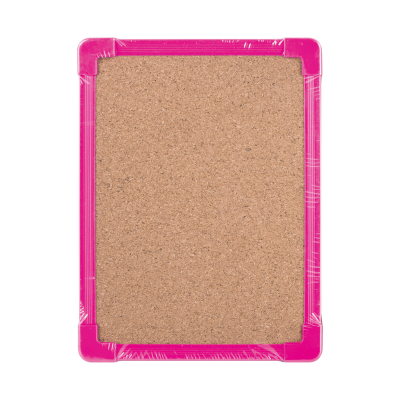
Listing signals indicate a high degree of flexibility in production, with models ranging from specific stock numbers like NCB-ZCB-001 to fully custom designations. The observed data shows that packing methods can vary from single-piece shrink wrapping to bulk carton shipments of 20 pieces, depending on the order size and specific product model. This variability means that logistics planning must be tailored to the specific SKU, as the packaging density and protection level will differ based on whether the buyer is ordering a single unit or a large commercial batch.
Technical Specifications to Verify
Thickness and density are the primary technical parameters that define the structural integrity and performance of the cork board, with observed ranges spanning from 0.5mm to 12mm and densities between 180 and 220 kg/m³. Buyers must explicitly request the density specification for their order, as higher density materials offer better pin retention and durability for heavy use, while thinner profiles may be suitable for lightweight decorative applications. Verifying the exact thickness is equally critical, as the 1/2 inch standard found in some listings may not be available for all custom color requests or specific model numbers.
Installation methods and surface finishes are equally vital technical considerations, with adhesive application being a standard method noted in the product data. The boards are described as having features like being wearable and elastic, which implies a specific surface texture that must be compatible with the intended fastening method. Procurement teams should confirm whether the adhesive is included or if the board requires a separate mounting system, and verify if the surface treatment supports the specific orange color without compromising the material's natural elasticity or soundproofing capabilities.
Compliance and Safety Documentation
While the supplied facts do not explicitly confirm specific certification statuses, the product features such as retardant and thermal insulation properties suggest a need for fire safety compliance in commercial installations. Buyers should request documentation verifying that the cork material meets local fire codes, particularly for use in schools or offices where retardant properties are a key selling point. The presence of these features in the product description indicates that the manufacturer likely has access to relevant testing data, but the specific standard, such as ISO or EN classifications, must be confirmed before finalizing the purchase.
Environmental and material safety is another critical area, given the emphasis on eco-friendly cork material in the product attributes. Although specific eco-certifications like OEKO-TEX are listed in the background knowledge, they should not be assumed as standard without explicit confirmation from the supplier. Buyers must ask for material safety data sheets (MSDS) and any available environmental compliance reports to ensure the orange dye and cork binder do not contain hazardous substances, especially for products intended for educational environments or areas with strict indoor air quality regulations.
Cost Drivers and Commercial Terms
The cost of orange square corkboards is heavily influenced by the level of customization required, particularly regarding color, shape, and thickness. The observed data shows a wide price range from $0.06 to $400, which reflects the difference between standard natural cork units and highly customized, large-format boards with specific density and feature requirements. Buyers should anticipate that custom colors like orange and non-standard square dimensions will incur higher unit costs and potentially higher minimum order quantities compared to standard natural cork products.
Minimum order quantities (MOQ) and lead times are significant commercial variables, with observed MOQs ranging from 5 to 10,000 units depending on the supplier and product model. The flexibility in packing, such as 1 piece per shrink wrap versus 20 pieces per carton, also affects the total landed cost and shipping efficiency. Procurement teams must negotiate these terms carefully, as the ability to meet a low MOQ for a custom color order may come at a premium, while larger orders might unlock better pricing tiers and more favorable shipping arrangements.
Supplier Qualification and Quality Control
Supplier qualification should focus on verifying the origin of the cork material and the manufacturing capabilities for custom colors and shapes. The observed data lists origins in Zhejiang, Shandong, and Jiangsu, indicating a concentration of suppliers in specific Chinese provinces. Buyers should confirm the specific factory location for their order to ensure consistency in quality and to assess the logistical feasibility of the supply chain, as different regions may have varying standards for cork processing and dyeing techniques.
Quality control protocols must address the consistency of the orange color and the uniformity of the board's density and thickness. Since the product attributes highlight features like being waterproof and soundproof, buyers should request sample testing to verify that these performance claims hold true for the specific custom order. Establishing a clear acceptance criteria for color matching and dimensional accuracy is essential, as the custom nature of the product means that standard tolerances may not apply, and visual inspection of the first production run is often necessary before full-scale manufacturing begins.
Long-Term Procurement Checks
Long-term procurement success depends on maintaining consistent quality across multiple production runs, especially for custom-colored cork boards where color fading or variation can be a risk. Buyers should establish a protocol for periodic quality audits that includes checking the retention of the orange dye and the structural integrity of the cork over time. This is particularly important for boards used in high-traffic areas where the elastic and wearable features are frequently tested, ensuring that the product does not degrade prematurely.
Supply chain resilience is another critical factor, as the reliance on specific raw materials like high-density cork and custom dyes can create bottlenecks. Buyers should verify the supplier's ability to source consistent raw materials and their capacity to handle volume fluctuations without compromising the custom specifications. Developing a relationship with the supplier that includes regular communication about production schedules and potential material shortages will help mitigate risks and ensure a steady supply of orange square corkboards for ongoing projects.
FAQs
What customization options are available for orange square corkboards?
Customization is available for colors, shapes, sizes, and thickness. Buyers can select natural color or custom hues. Square shapes are standard, but other forms are possible. Thickness ranges from 0.5 to 12mm, with 1/2 inch options. This flexibility allows tailored solutions for specific office or teaching board requirements.
Can orange square corkboards be used for office and teaching purposes?
Yes, these boards serve as teaching boards, office boards, advertising boards, and display boards. They feature waterproof, moistureproof, and soundproof properties. The material offers thermal insulation and elasticity. This versatility makes them suitable for corporate environments, educational settings, and commercial advertising displays effectively.
What are the key features of high-quality cork boards?
Key features include waterproof, moistureproof, soundproof, and thermal insulation properties. They are also retardant, elastic, and wear-resistant. The material is high-density and eco-friendly. These attributes ensure durability and functionality. Such boards provide excellent performance for daily use in various professional and educational environments.
How are orange square corkboards typically packed and shipped?
Packing methods vary by supplier. Some use 1PC shrink wrap with 20PCS per carton. Others use standard cartons or pack as per request. The boards are available in unfolded or folded states. This ensures safe transport. Buyers should confirm specific packing details with manufacturers to meet their logistical needs.
What densities are available for cork board materials?
Densities typically range from 180 to 220kgs/M3. Some specific products list a density of 200. Higher density often correlates with better durability and soundproofing. Buyers should verify density requirements for their specific application. This ensures the board meets structural and acoustic needs for office or teaching environments.
Where are these cork boards manufactured?
Manufacturing locations include Zhejiang, Shandong, and Jiangsu in China. These regions are known for producing cork-based products. Buyers can source from multiple origins. The specific origin may influence lead times and shipping costs. It is advisable to check the place of origin for each supplier to align with sourcing preferences.