Source Ore Size Rotative Screener for Mining, Fertilizer, and Experiments
Compare 30 Ore Size Rotative Screener models from verified Chinese manufacturers. These units support continuous operation with capacities up to 1700t/H and feature customizable mesh sizes for mining, fertilizer processing, and laboratory experiments; compare the available evidence and request quotations based on your requirements.
Key considerations
Products List


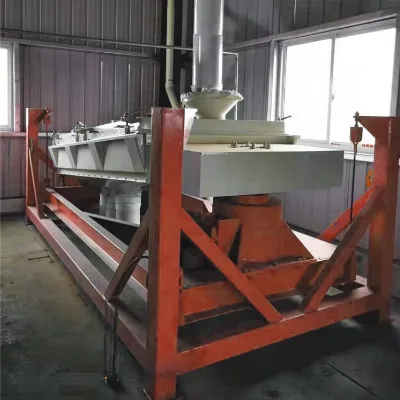
Mining Screening Equipment of Small Rotary Screen, Cylinder Drum Screen
$1000.00 - $70000.00
MOQ: 1 Pieces


Comprehensive Sourcing Guide
Ore Size Rotative Screener Sourcing Guide
Procuring an Ore Size Rotative Screener requires a nuanced understanding of screening dynamics, as the term often conflates distinct mechanical principles. Buyers must distinguish between true rotary drum screens and linear or circular vibrating screens, which are frequently listed under similar keywords in global marketplaces. The supplied data indicates a prevalence of linear vibrating screens, such as the PXZS and YA series, which utilize eccentric shafts to generate specific motion tracks. These machines are engineered for continuous operation, making them suitable for high-volume mineral processing environments where throughput consistency is paramount. Understanding this mechanical distinction is critical for aligning equipment capabilities with specific material handling requirements.
The observed market signals reveal a wide spectrum of capacities, ranging from small laboratory-scale units to massive industrial plants. Listings show capacities extending up to 1700 tons per hour, indicating that sourcing decisions must be heavily weighted by projected daily volume. Furthermore, the presence of customization options suggests that standard models may not fit unique ore characteristics. Buyers should prioritize suppliers who offer flexible configuration options, including varying screen areas and power ratings, to ensure the selected screener can handle the specific feed size and moisture content of the target ore without premature wear or bottlenecking.
Product Scope and Observed Listing Signals
The current market landscape for ore screening equipment is dominated by linear vibrating screens rather than traditional rotary drums, a fact that significantly impacts procurement strategy. Listings frequently highlight models like PXZS and YA, which are characterized by their ability to handle feed sizes under 75mm and offer screening areas between 1.8 and 14.4 square meters. These units are designed for continuous operation and are often constructed from carbon or stainless steel, depending on the corrosiveness of the ore. Buyers should note that while the keyword suggests rotary motion, the actual mechanical action is often linear or circular vibration, which provides superior separation efficiency for fine to medium-sized particles in mining applications.
Capacity ranges observed in listings vary dramatically, from less than 23 tons per hour for specialized fine shakers to over 1700 tons per hour for heavy-duty industrial units. This variance underscores the importance of matching the screener’s throughput to the specific stage of the processing plant. Additionally, the power consumption profiles differ significantly, with options ranging from 0.37 kW for lightweight units to 30 kW for large-scale separators. Buyers must evaluate these energy requirements against their operational budget, as higher capacity units typically demand more robust electrical infrastructure and result in higher ongoing operational costs.
Technical Specifications to Verify
When evaluating technical specifications, the aperture size and mesh count are primary determinants of separation precision. Listings indicate aperture sizes ranging from 3 to 150mm, with mesh sizes available from 2 to 200, allowing for fine classification of materials. Buyers must verify that the screen media, whether woven wire mesh or perforated plate, is compatible with the abrasive nature of the ore. The amplitude and frequency settings, such as 750-1000 rpm for certain models or 1460/960 r.p.m. for others, directly influence the screening efficiency. It is essential to confirm that the machine’s vibration parameters can be adjusted to optimize the balance between throughput and separation accuracy for the specific ore grade.
The structural integrity and construction materials are equally critical for long-term reliability. Units are often built with carbon steel or stainless steel, with some models featuring single-shaft designs for simplified maintenance. Buyers should inspect the transmission structure and supporting devices, such as rubber springs, which dampen noise and protect the main frame from excessive stress. Additionally, the length of the screening deck, ranging from 2400mm to 5000mm, affects the residence time of the material. Longer decks generally provide better separation efficiency for complex mixtures, so buyers must align the deck length with their desired purity levels and processing speed requirements.
Compliance and Safety Documentation
Compliance with international quality and safety standards is a non-negotiable aspect of sourcing industrial screening equipment. Many listed products carry ISO9001:2008 and CE certifications, indicating adherence to recognized quality management systems and European safety directives. Buyers should request valid certification documents to verify that the manufacturer maintains consistent production standards. The presence of SGS reports further suggests that independent third-party inspections have been conducted, providing an additional layer of assurance regarding the machine’s performance and safety features. Ensuring that all documentation is current and verifiable is crucial for avoiding regulatory hurdles during installation and commissioning.
Safety features and operational safeguards must be explicitly detailed in the product specifications. Buyers should verify that the screener includes proper guarding for moving parts, emergency stop mechanisms, and adequate grounding for electrical components. The warranty terms, often listed as one year, should be clearly defined, including coverage for motors, bearings, and screen decks. It is also important to confirm that the equipment meets local occupational health and safety regulations in the destination country. Proper documentation of safety protocols and maintenance procedures provided by the supplier will facilitate smoother integration into existing mining operations and reduce the risk of workplace accidents.
Cost Drivers and Commercial Terms
The cost of an Ore Size Rotative Screener is influenced by several key factors, including capacity, construction materials, and customization requirements. Larger units with higher throughput capacities, such as those exceeding 100 tons per hour, naturally command higher prices due to the increased material and engineering involved. The choice between carbon steel and stainless steel construction also impacts the initial investment, with stainless steel offering greater durability against corrosive ores at a premium cost. Buyers should obtain detailed quotations that break down these components to understand the true value proposition and avoid hidden costs associated with optional features or upgraded components.
Commercial terms, including minimum order quantities and payment structures, vary among suppliers. While some listings indicate an MOQ of one unit, suggesting flexibility for small-scale operations, others may require bulk purchases for optimal pricing. Buyers should negotiate clear terms regarding shipping, insurance, and installation support. Additionally, the availability of after-sales service and spare parts should be considered as part of the total cost of ownership. Establishing a comprehensive agreement that covers maintenance schedules and technical support will help mitigate long-term operational risks and ensure the screener remains productive throughout its lifecycle.
Supplier Qualification and Quality Control
Supplier qualification is a critical step in ensuring the reliability of the screening equipment. Buyers should prioritize manufacturers with a proven track record in the mining and mineral processing industries, as evidenced by their product portfolios and client testimonials. Verifying the supplier’s production capabilities, including their facility size and quality control processes, is essential. Suppliers based in regions like Henan, China, often have extensive experience in producing vibrating screens, but buyers must conduct due diligence to ensure that the specific manufacturer meets international quality standards. Requesting references from previous clients can provide valuable insights into the supplier’s responsiveness and product performance.
Quality control measures should be rigorously enforced throughout the manufacturing and delivery process. Buyers should insist on pre-shipment inspections to verify that the screener meets all specified technical parameters, including amplitude, frequency, and power consumption. Documentation of factory acceptance tests should be reviewed to confirm that the machine has undergone rigorous testing before dispatch. Additionally, buyers should establish clear communication channels with the supplier to address any discrepancies or issues that may arise during installation. A proactive approach to quality assurance will help prevent costly delays and ensure that the equipment performs as expected in the field.
Long-Term Procurement Checks
Long-term procurement success depends on establishing a sustainable relationship with the supplier and ensuring ongoing support for the screening equipment. Buyers should negotiate service level agreements that include regular maintenance checks, timely delivery of spare parts, and access to technical expertise. The availability of replacement screens, bearings, and motors is crucial for minimizing downtime during unexpected failures. Suppliers who offer comprehensive training programs for operational staff can significantly enhance the efficiency and longevity of the screener by ensuring proper usage and maintenance practices are followed.
Continuous monitoring of the screener’s performance metrics is essential for identifying potential issues before they lead to major breakdowns. Buyers should implement a preventive maintenance schedule that includes regular inspections of the screen media, vibration motors, and structural components. Tracking key performance indicators, such as throughput rates and separation efficiency, will help assess the equipment’s health and identify opportunities for optimization. By maintaining a proactive approach to equipment management and fostering a collaborative relationship with the supplier, buyers can maximize the return on investment and ensure consistent production output over the long term.
FAQs
What is the capacity range for these ore size rotative screeners?
The capacity ranges from 5 to 120 cubic meters per hour for smaller units, while larger models handle 80 to 1700 tons per hour. These variations depend on the specific model selected, such as the PXZS or YA series, ensuring suitability for different production scales.
Which certifications do these ore size rotative screeners hold?
These machines typically hold ISO9001:2008, CE, and SGS Report certifications. Such standards confirm that the manufacturing processes meet international quality and safety requirements, providing assurance for buyers sourcing equipment from manufacturers in Henan, China.
Can I customize the Ore Size Rotative Screener for my needs?
Yes, customization is available for these units to meet specific customer requirements. Buyers can request tailored packing solutions or specific model configurations, ensuring the equipment aligns precisely with their operational needs and site conditions.
What is the warranty period for these ore size rotative screeners?
The standard warranty period provided for these machines is one year. This coverage helps protect buyers against initial defects, ensuring peace of mind during the critical early operational phase of the equipment in mining or fertilizer applications.
How is the Ore Size Rotative Screener installed on site?
Installation is performed using a hanging method for these units. This approach simplifies the setup process and ensures stability during operation, making it suitable for various industrial environments where continuous separation of fertilizer or ore is required.
What materials are used to construct these ore size rotative screeners?
Construction utilizes carbon steel or stainless steel depending on the specific model requirements. These durable materials ensure longevity and resistance to wear, making the equipment ideal for heavy-duty applications like mining and fertilizer processing in harsh conditions.
What is the power consumption for these ore size rotative screeners?
Power options range from 0.37 kilowatts up to 30 kilowatts based on the model. This flexibility allows buyers to select a unit that matches their energy infrastructure, ensuring efficient operation without unnecessary power consumption for their specific screening tasks.