Source Organic Wool Dryer Balls for Laundry, Dehumidifying, and Odor Removal
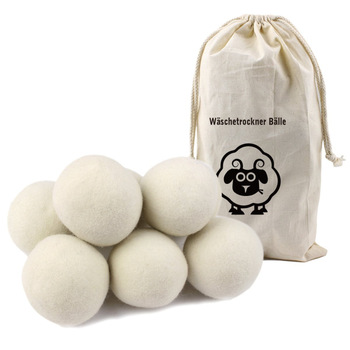
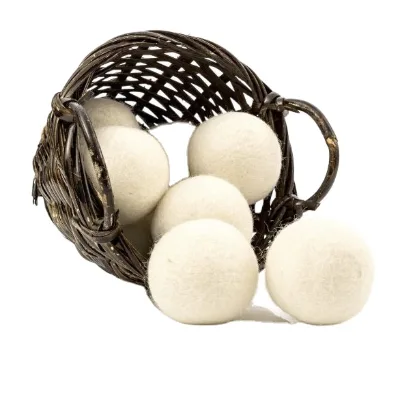
Compare 30 listings of Organic Wool Dryer Balls sourced from Hebei, China. Options include natural eco-friendly wool felt and 100% New Zealand wool in various sizes and colors. These reusable balls help shorten drying time, absorb moisture, and remove odors in laundry rooms.
Key considerations
Products List




Comprehensive Sourcing Guide
Organic Wool Dryer Balls Sourcing Guide
Buyers must first distinguish between generic wool felt products and those explicitly marketed as organic or eco-friendly, as the supply chain varies significantly in material sourcing. The observed listings indicate a primary origin in Hebei, China, with brands like Kangnai and Jioute offering variations in size and weight. Procurement teams should verify whether the "Natural Eco Friendly Organic" descriptor refers to the raw wool source or merely the manufacturing process, as this distinction impacts the final product's environmental certification and marketability.
The commercial landscape reveals a wide range of customization options, from standard 6cm to 10cm diameters and specific weight profiles like 40g for 7cm units. While some suppliers offer free samples and accept custom logos, the minimum order quantities fluctuate between 5 and 1000 pieces depending on the specific model and customization level. Buyers need to align their volume requirements with these MOQ thresholds early to avoid unnecessary costs or inventory bottlenecks during the initial procurement phase.
Product Scope and Observed Listing Signals
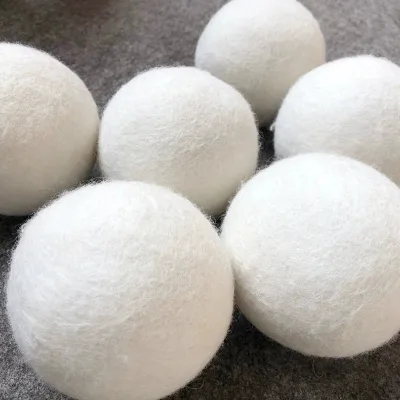
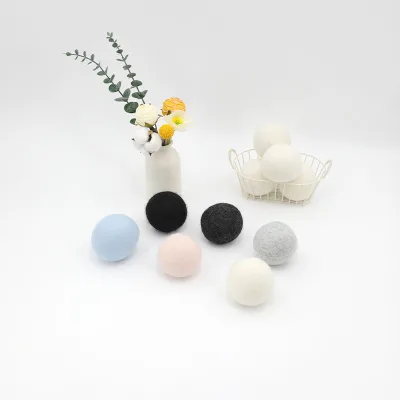
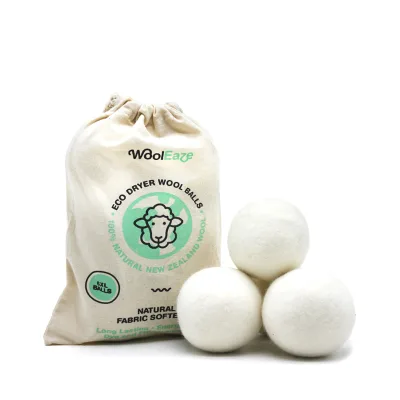
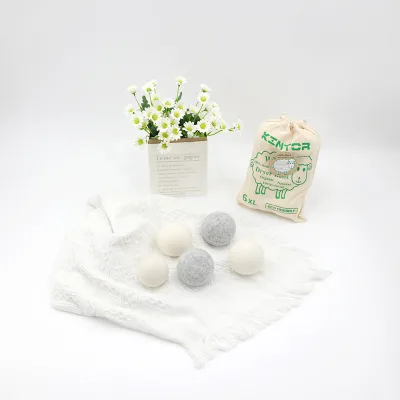
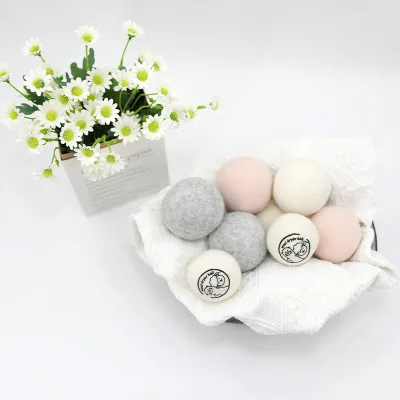
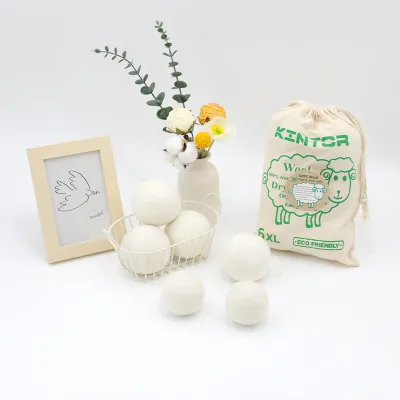
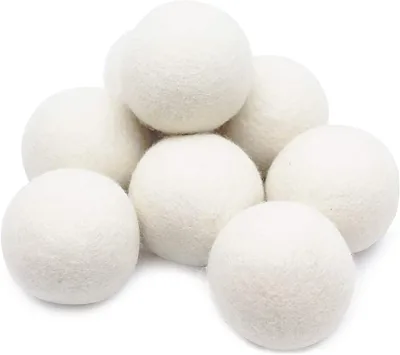
The product scope encompasses reusable wool dryer balls designed for laundry rooms, with specific functions including water absorption, odor removal, and dehumidification. Listings consistently highlight features such as shortened drying times and durability, with materials ranging from 100% New Zealand wool to general organic wool felt. Buyers should note that while some products are strictly white, others offer a palette including gray, sky blue, pink, and black, which may influence consumer appeal in different regional markets.
Listing signals also reveal diverse packaging formats, including cartons, felt bags, and PP bags, with single package sizes typically ranging from 7x7x7 cm to 8x8x8 cm. The weight specifications are critical for logistics planning, as a 7cm ball weighs approximately 40g while a 10cm unit can reach 110g. Procurement teams must verify if the "customized size" option allows for precise dimensional control or if it is limited to standard increments, as this affects the final product's performance in different dryer models.
Technical Specifications to Verify
Technical verification begins with confirming the exact material composition, as some listings specify 100% New Zealand wool while others simply state "Wool" or "Natural Eco Friendly Organic Wool Felt." Buyers should request mill certificates or material test reports to validate the fiber origin and ensure the absence of synthetic blends that could compromise the eco-friendly claim. The weight-to-size ratio is another critical parameter, with specific data points like 60g for 8cm and 80g for 9cm units serving as benchmarks for quality consistency across different batches.
Dimensional accuracy and packaging integrity are equally vital, as the single package size and gross weight directly impact shipping costs and storage efficiency. Specifications such as the 7.8x7.8x7.8 cm package size for certain models must be cross-referenced with the actual product dimensions to ensure they meet the buyer's logistical requirements. Additionally, the durability of the handmade construction and the effectiveness of the water-absorption function should be validated through sample testing to confirm that the product performs as advertised in real-world laundry cycles.
Compliance and Safety Documentation
While the provided data mentions OEKO-TEX as a potential standard, it is not confirmed as a universal attribute for all listed products. Buyers must explicitly request current compliance documentation, such as OEKO-TEX Standard 100 certificates, to verify that the wool is free from harmful substances and safe for direct contact with clothing. Relying on general "Eco-Friendly" or "Environmental Friendly" claims without third-party verification can lead to regulatory issues in markets with strict textile safety regulations.
Safety documentation should also cover the manufacturing process to ensure that the "handmade" or "durable" claims do not mask the use of non-compliant dyes or chemical treatments. Since the products are intended for use in laundry rooms and involve direct contact with fabrics, buyers need to ensure that the colorfastness and chemical residue levels meet international safety standards. Without concrete test results or certification numbers, procurement teams should treat all safety claims as unverified until supported by independent laboratory reports.
Cost Drivers and Commercial Terms
Cost drivers in this category are heavily influenced by the raw material source, with 100% New Zealand wool commanding a premium over generic organic wool felt. The customization of size, color, and logo adds significant variable costs, as seen in the wide range of MOQs from 5 to 1000 pieces. Buyers must analyze the trade-off between unit price and order volume, as higher customization levels often require larger minimum orders to achieve economies of scale in production.
Commercial terms vary significantly, with some suppliers offering free samples and accepting custom logos, while others have strict MOQs of 500 pieces. The observed price range of 0.1 to 5.1 USD suggests a broad spectrum of quality and branding, requiring buyers to carefully evaluate the value proposition of each supplier. Lead times and payment terms should be negotiated based on the specific model number and customization requirements, as these factors can drastically alter the total landed cost and delivery schedule.
Supplier Qualification and Quality Control
Supplier qualification should focus on verifying the consistency of material sourcing and the reliability of the manufacturing process in Hebei, China. Buyers need to assess whether the supplier can maintain the specific weight and size tolerances required, such as the 40g weight for 7cm balls, across large production runs. The presence of multiple brands like Kangnai and Jioute indicates a competitive market, but buyers must ensure that the specific supplier has a track record of meeting quality standards for organic wool products.
Quality control protocols must include rigorous inspection of the finished goods for defects in the felt structure, color consistency, and packaging integrity. Since the products are marketed as reusable and durable, buyers should implement a sampling plan that tests the product's ability to shorten drying time and absorb moisture effectively. Regular audits of the supplier's production line and material storage facilities are essential to ensure that the "Eco-Friendly" claims remain valid throughout the manufacturing process.
Long-Term Procurement Checks
Long-term procurement success depends on establishing a robust relationship with suppliers who can consistently deliver high-quality Organic Wool Dryer Balls. Buyers should monitor the supplier's ability to maintain material consistency, particularly regarding the wool source and the absence of synthetic additives, as these factors directly impact the product's performance and environmental credentials. Regular communication regarding market trends and material availability will help mitigate supply chain disruptions and ensure a steady flow of inventory.
Continuous performance monitoring is essential to validate that the products continue to meet the buyer's specifications for weight, size, and functionality over time. Buyers should track customer feedback and return rates to identify any emerging quality issues, such as color fading or structural degradation. By maintaining a proactive approach to supplier management and quality assurance, procurement teams can ensure that the Organic Wool Dryer Balls remain a reliable and profitable addition to their product portfolio.
FAQs
What material are these Organic Wool Dryer Balls made from?
These dryer balls are crafted from natural eco-friendly organic wool felt or 100% New Zealand wool. The material is durable, reusable, and designed to be gentle on fabrics while providing effective drying assistance in laundry rooms.
How does the size affect the weight of the product?
The weight scales directly with the diameter of the wool felt ball. For instance, a 7cm ball weighs approximately 40g, while a 10cm variant weighs around 110g. Custom sizes are also available to meet specific bulk requirements.
Can buyers request a custom logo on the wool balls?
Yes, custom logos are accepted for these Organic Wool Dryer Balls. Manufacturers offer customization options to allow brands to imprint their identity on the product, making them suitable for promotional gifts or private label retail distribution.
What are the available color options for these wool dryer balls?
Buyers can choose from several colors including white, gray, dark, sky blue, pink, and black. Natural white and gray are common standard options, while other hues may be available depending on the specific manufacturer's inventory and customization capabilities.
What is the typical minimum order quantity for these products?
The minimum order quantity typically ranges from 5 to 1000 pieces, with some suppliers setting a standard MOQ of 500 pieces. This flexibility allows both small businesses and large retailers to place orders that fit their inventory needs.
How do these balls help with laundry drying times?
These wool dryer balls help shorten drying time by separating clothes in the dryer, allowing hot air to circulate more efficiently. They also absorb moisture and reduce static, making them a functional and eco-friendly alternative to chemical dryer sheets.