Source Osteosynthesis Anterior Cervical Plate for fracture fixation, cervical implant surgery, orthopedic surgery
Find 30 listings for Osteosynthesis Anterior Cervical Plate designed for fracture fixation, cervical implant surgery, and general orthopedic surgery. Compare specifications, certifications, and prices from verified Chinese manufacturers offering customizable options.
Key considerations
Products List


Orthopedic Implants Titanium Anterior Cervical Plate for Surgical Spine Surgery
$88.00 - $129.50
MOQ: 10 Pieces


Canwell Orthopedic Screw Neck Plate Spine Implants Anterior Cervical Plate
$10.00 - $150.00
MOQ: 1 Pieces


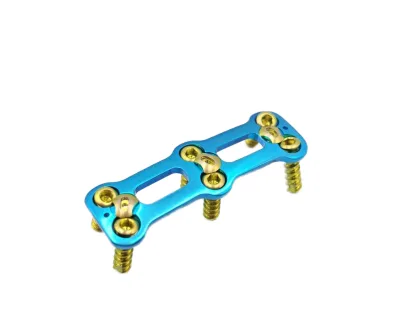


Titanium Orthopedic Spine System Spine Anterior Cervical Plate in CE Certificate
$100.00 - $200.00
MOQ: 1 Sets


Comprehensive Sourcing Guide
Strategic Sourcing Guide for Anterior Cervical Osteosynthesis Systems
The procurement of anterior cervical osteosynthesis systems, specifically titanium anterior cervical plates, represents a critical decision point for medical device distributors and surgical supply chains. These devices are essential for stabilizing the cervical spine following trauma, degenerative conditions, or surgical decompression. The market presents a complex landscape where technical precision, regulatory compliance, and supply chain reliability intersect. Buyers must navigate a diverse array of product attributes, ranging from specific model numbers like CanACP and SPN66 to varying sterilization states and packaging configurations. This guide provides a structured approach to evaluating suppliers and products, ensuring that the selected osteosynthesis systems meet the rigorous demands of orthopedic surgery while adhering to international safety standards.
Technical Specifications and Product Variability
When sourcing anterior cervical titanium plates, the primary focus must be on the precise technical specifications that align with surgical requirements. The market offers a wide spectrum of dimensions to accommodate the anatomical variations of the cervical spine. Observed product data indicates that plate lengths typically range from 35mm to 65mm, with specific models adhering to standards such as 25-65mm or specific screw hole configurations like 5.5/6.0mm. The diameter of the associated screws or the plate profile often falls within a 4.0mm to 9.0mm range, necessitating a comprehensive inventory to cover different patient needs.
Material composition is another non-negotiable specification. The core material for these implants is consistently identified as titanium, chosen for its biocompatibility, strength-to-weight ratio, and radiolucency, which allows for clear post-operative imaging. The shape of the product is generally described as a strip, designed to contour to the anterior surface of the vertebral bodies. Buyers should verify that the "Single package size" and "Single gross weight" align with logistical expectations; for instance, specific listings indicate a gross weight of 0.500 kg per single item with package dimensions around 30x10x10 cm.
Furthermore, the classification of the instrument is a vital technical parameter. These devices are frequently categorized as Class III medical devices, indicating a high risk level that requires stringent regulatory oversight. The application is explicitly defined as orthopedic surgery, with specific usage in fracture fixation and cervical implant surgery. It is crucial to distinguish between products labeled as "Disposable" and those intended for long-term implantation, as the latter must meet specific biocompatibility and fatigue resistance standards. The model numbers, such as T, 8002-T20, or SPN66, serve as unique identifiers for specific configurations, and procurement strategies should ensure compatibility with existing surgical instrumentation sets.
Regulatory Compliance and Certification Verification
Navigating the regulatory landscape is perhaps the most critical aspect of sourcing medical implants. The presence of certifications such as CE and ISO is a baseline requirement for market entry in many regions. However, buyers must exercise caution, as the provided data lists variations including "CE, ISO," "ISOCE," and standalone "CE" marks. The term "ISOCE" may represent a specific regional or combined certification notation, but it should be verified against the specific regulatory body's database to ensure validity.
The classification of the product as "Class III" or "Instrument classification: Class Iii" underscores the necessity for robust quality management systems. While some background information suggests ISO9001, the explicit product data highlights "CE" and "ISO" as the primary observed certifications. Buyers must confirm that the supplier holds valid certificates for the specific model being purchased, as certifications are often model-specific rather than blanket company-wide approvals.
Sterilization status is another compliance factor that directly impacts clinical readiness. Products are available in both "None Sterilized" and "Sterilized" states, with Ethylene Oxide Sterilization being a specific method noted in the data. The choice between sterilized and non-sterilized units affects the supply chain timeline and the hospital's internal processing capabilities. If the hospital requires ready-to-use sterile kits, the supplier must provide proof of valid sterilization validation and biological safety testing. The "Condition" is consistently listed as "New," but this must be paired with evidence of the product's integrity post-sterilization.
Cost Drivers and Pricing Structures
Understanding the cost structure of anterior cervical plates requires analyzing multiple variables beyond the unit price. The observed price range in the market spans from 1 to 200 USD, a significant variance that reflects differences in brand reputation, material quality, packaging complexity, and included services. The "Price Term" is frequently listed as "Fob" (Free on Board), which means the buyer is responsible for freight and insurance costs from the port of origin. This distinction is vital for accurate total cost of ownership calculations.
Several factors drive the final cost. First, the level of customization plays a role; while "Customization" is available and "OEM" is acceptable, custom-molded or specific branding solutions will incur higher costs than standard off-the-shelf inventory. Second, the packaging method influences price. Options range from simple "Carton" or "PE Inner Bag" to more complex "PE Film & Carton" or "DHL/Express" shipping configurations. The latter implies a higher service level and potentially higher unit cost due to logistics handling.
The "MOQ" (Minimum Order Quantity) is another significant cost driver. Data indicates an MOQ range of 1 to 10 pieces, with specific listings showing an MOQ of "1 Piece" or "1 Pcs." This low barrier to entry allows for smaller initial orders, reducing capital expenditure risk for new distributors. However, bulk purchasing may offer better unit economics. Buyers should also consider the "After-Sale Service" component, such as "Online Technical Support," which, while not a direct product cost, adds value and reduces the risk of surgical complications. The "Warranty" period, observed as "5 Years" in some listings, is a critical financial consideration that reflects the manufacturer's confidence in the product's durability.
Typical Applications and Clinical Utility
The clinical utility of anterior cervical titanium plates is centered on their application in orthopedic surgery, specifically for cervical spine stabilization. The primary usage scenarios include fracture fixation and cervical implant surgery. These devices are designed for the "Adult" group, meaning they are not typically indicated for pediatric use without specific engineering adjustments. The "Application" is broadly defined as orthopedic, but the specific context is the anterior approach to the cervical spine, where the plate is fixed to the vertebral bodies to maintain alignment and promote fusion.
The "Properties" of these implants are described as "orthopedic implants," emphasizing their structural role in the musculoskeletal system. The "Shape" being a "Strip" allows for adaptation to the curvature of the cervical spine. The "Color" of the product, noted as "blue" in some instances, may be a coating or anodization process intended to aid in visual identification during surgery or to provide corrosion resistance.
Buyers must ensure that the product's specifications match the surgical techniques employed by their hospital partners. For example, the "Specification" of 25-65mm covers a wide range of vertebral levels, but specific surgeries may require narrower or longer plates. The "Model Number" serves as the key to matching the implant to the surgical procedure. Whether the procedure involves trauma repair or elective decompression, the plate must provide sufficient rigidity to support the spine during the healing process. The "Feature" of being "Disposable" suggests a single-use protocol, which is standard for many orthopedic implants to prevent cross-contamination and ensure material integrity.
Supplier Evaluation and Origin Analysis
Evaluating suppliers requires a deep dive into their geographical and operational capabilities. The "prod_origin" data indicates that the majority of these products originate from China, with specific locations cited as Changzhou, Jiangsu, and Fujian. These regions are known for their manufacturing clusters in the medical device sector. However, the mere presence of a location does not guarantee quality; buyers must verify the supplier's track record in these specific industrial zones.
The "Brand Name" is another factor, with "haixing" appearing as a specific identifier. While buyers should not rely on a single brand, the existence of a named brand suggests a level of market presence and accountability. In contrast, generic listings without a brand name may indicate a contract manufacturer or a white-label product. The "Customized service" being "Supported" and "OEM" being "Acceptable" are positive indicators of a supplier's flexibility and willingness to adapt to buyer needs.
Logistics capabilities are also part of supplier evaluation. The "Shipping" options listed include DHL, FedEx, UPS, and TNT, indicating that suppliers have established relationships with major international couriers. The "prod_packing" options, such as "PE Inner Bag+Carton" or "DHL/Express," suggest that the supplier is prepared for direct-to-hospital or distributor delivery. The "Place of Origin" being Fujian or Jiangsu implies a specific supply chain ecosystem, and buyers should assess the reliability of local infrastructure to prevent delays.
Quality Control and Long-Term Procurement Strategy
Ensuring long-term success in procurement requires a robust quality control framework. The "Classification" as Class III demands that suppliers maintain rigorous internal controls. Buyers should request documentation regarding the manufacturing process, including material traceability for the titanium used. The "Ethylene Oxide Sterilization" method must be validated, and the supplier should provide certificates of sterilization for each batch.
The "Warranty" of 5 years is a significant indicator of quality, but it must be backed by clear terms and conditions. Buyers should understand what the warranty covers, such as material defects or structural failure, and the process for claiming it. The "After-Sale Service" of "Online Technical Support" is a valuable asset for troubleshooting surgical issues, but it should be complemented by on-site support capabilities if available.
For long-term procurement, buyers should consider the "Customization" aspect. As surgical techniques evolve, the ability to customize plate dimensions or configurations becomes increasingly important. Suppliers that offer "Customized service" can help hospitals adapt to new procedures. Additionally, the "MOQ" flexibility allows for a just-in-time inventory strategy, reducing storage costs and the risk of product expiration.
Finally, buyers must remain vigilant about the "Specification" and "Standard" alignment. The "prod_standard" may be listed as "See the table" or specific dimensions like "5.5/6.0." This ambiguity requires buyers to demand detailed specification sheets for every order. The "Single package size" and "Single gross weight" should be verified to ensure they match the logistical constraints of the hospital's receiving department. By maintaining a strict focus on these technical and operational details, buyers can secure a reliable supply of anterior cervical osteosynthesis systems that meet the highest standards of patient care.
Comparative Analysis of Product Attributes
To facilitate decision-making, the following table summarizes the key attributes observed in the market for anterior cervical titanium plates. This comparison highlights the variability in specifications, certifications, and logistics that buyers must navigate.
| Attribute Category | Observed Values | Procurement Implication |
|---|---|---|
| Material | Titanium | Essential for biocompatibility and strength. |
| Classification | Class III / Class Iii | High regulatory scrutiny required; strict QC needed. |
| Certifications | CE, ISO, ISOCE | Verify validity per model; ISO9001 is background only. |
| Dimensions | Length: 35-65mm; Diameter: 4.0-9.0mm | Inventory must cover full range for surgical versatility. |
| Sterilization | Ethylene Oxide / None Sterilized | Confirm status matches hospital protocol. |
| Packaging | Carton, PE Bag, PE Film & Carton | Check for integrity and logistics compatibility. |
| MOQ | 1 Piece to 10 Pieces | Low entry barrier; suitable for trial orders. |
| Origin | China (Changzhou, Jiangsu, Fujian) | Verify local supplier reputation and logistics. |
| Warranty | 5 Years (observed) | Confirm terms and coverage scope. |
| Shipping | DHL, FedEx, UPS, TNT | Ensure reliable international delivery channels. |
This structured approach ensures that buyers can systematically evaluate potential suppliers, mitigating risks associated with medical device procurement. By focusing on verified facts and avoiding unconfirmed claims, procurement teams can build a resilient supply chain for critical orthopedic implants.
FAQs
What certifications do these anterior cervical plates hold?
These plates hold CE and ISO certifications. Some listings also show ISOCE marks. Buyers must verify specific model validity against regulatory databases before purchase.
Which material is used for the titanium anterior cervical plate?
The core material is titanium. This choice ensures biocompatibility and strength. The shape is typically a strip designed to contour to the anterior vertebral surface.
How is the product sterilized and packaged?
Products are available as None Sterilized or Sterilized via Ethylene Oxide. Packaging includes PE Inner Bag with Carton or PE Film with Carton. DHL Express is also an option.
Can buyers request customization for these orthopedic implants?
Customization is available and OEM services are acceptable. Suppliers support customized services to meet specific surgical needs. This allows for tailored dimensions or branding solutions.
What is the minimum order quantity for these implants?
The minimum order quantity is 1 piece or 1 PCS. Some listings show a range of 1 to 10 pieces. This low barrier allows for smaller initial orders.
Where are these anterior cervical plates manufactured?
Products originate from China, specifically Changzhou, Jiangsu, and Fujian. These regions are known for medical device manufacturing clusters. Buyers should verify local infrastructure reliability.
What warranty period is offered for these orthopedic devices?
A 5-year warranty is observed in some listings. This reflects manufacturer confidence in durability. Buyers must review specific terms regarding material defects or structural failure.