Source Outdoor Freestanding Tabletop Fireplace for Garden Home Decor
Source 30 Outdoor Freestanding Tabletop Fireplace units from verified suppliers. Compare ethanol fuel options, heating capacities, and customization features for garden, apartment, and indoor use. Explore metal construction, safety protections, and various styles to find the perfect heating solution for your specific needs and requirements.
Key considerations
Products List


Outdoor Table Set Steel Fireplace Stainless Fire Pit Indoor Alcohol Fireplace
$7.90 - $10.90
MOQ: 100 Pieces


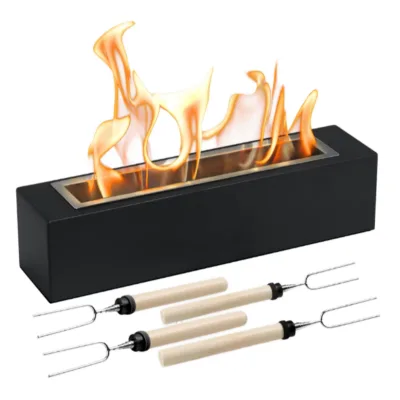


Sleek Modern Design Tabletop Fire
$39.00 - $49.00
MOQ: 50 Pieces
Suzhou Tuoshenghe Mechanical and Electrical Technology Co., Ltd.

Aesthetic Tabletop Fire for Glamping Setup
$39.00 - $49.00
MOQ: 50 Pieces
Suzhou Tuoshenghe Mechanical and Electrical Technology Co., Ltd.

Comprehensive Sourcing Guide
Outdoor Freestanding Tabletop Fireplace Sourcing Guide
Sourcing outdoor freestanding tabletop fireplaces requires a careful balance between aesthetic appeal and functional safety, particularly when selecting units for mixed indoor and outdoor environments. Buyers must prioritize products that explicitly support dual-environment usage, ensuring the design withstands varying weather conditions while maintaining the classic or modern styles often requested for garden and apartment settings. The observed market data indicates a strong preference for metal construction, which offers durability against the elements, and ethanol liquid fuel, which provides a clean-burning flame without the need for complex venting systems.
Procurement teams should also evaluate the physical footprint and installation type, as freestanding units offer flexibility but require stable placement. The presence of features like removable fixation and adjustable components allows for versatile deployment in diverse scenarios, from private patios to commercial hospitality spaces. Understanding these physical attributes is crucial for logistics planning, as packaging dimensions and weight directly impact shipping costs and handling requirements at the destination site.
Product Scope and Observed Listing Signals
The current market landscape for these units reveals a diverse range of models, identified by codes such as TT-10, TT-119, TT-68, and TT-15, each catering to specific design and capacity needs. Listings show a wide variation in packaging sizes, ranging from compact dimensions like 21.5cm L21cm W28.5cm H to larger boxes measuring 36.5X24.5X16cm, reflecting differences in unit size and protective packaging requirements. Buyers should note that while some products emphasize classic styles, others offer modern aesthetics, allowing for tailored procurement based on end-user preferences for garden or home decor applications.
Observed listing signals also highlight significant differences in fuel capacity and burning times, with capacities ranging from 130ml to 175ml and burning durations extending up to 70 minutes or one hour. These operational metrics are critical for determining the unit’s suitability for extended outdoor events or shorter indoor gatherings. Additionally, the availability of customization options and supported packaging designs suggests that suppliers are willing to adapt to specific branding or logistical needs, providing an opportunity for buyers to secure unique product configurations that align with their market positioning.
Technical Specifications to Verify
When evaluating technical specifications, buyers must closely examine the glass size and material thickness, as these components are critical for safety and heat retention. Observed data includes glass dimensions such as Dia 120*330mmh and L31 * W19 * T0.4 Cm, indicating variations in viewing area and structural integrity. It is essential to verify that the glass meets appropriate thermal resistance standards, as it directly contains the ethanol flame and protects users from excessive heat exposure. The stone weight, observed at 0.4 Kg/PCS or 250 G/PCS, also plays a role in stability and heat distribution, so confirming these weights ensures the unit remains secure during operation.
Furthermore, the heat output and flame height are key performance indicators that influence the user experience. Specifications such as a flame height of 10~25 Cm and a heat output of 1167 (units unspecified in context) provide insight into the unit’s warming capability. Buyers should request detailed technical sheets that clarify the exact heat output units and verify the burning time consistency under different wind conditions, especially for outdoor use. Ensuring that the fuel consumption rate aligns with the stated burning time helps in calculating operational costs and planning fuel supply logistics for large-scale deployments.
Compliance and Safety Documentation
Safety is paramount when sourcing ethanol fireplaces, particularly those marketed for both indoor and outdoor use. Buyers must verify that all products carry relevant certifications, such as CE, which indicates conformity with health, safety, and environmental protection standards for products sold within the European Economic Area. It is crucial to confirm that the certification covers the specific model and fuel type, as ethanol combustion produces carbon dioxide and water vapor, requiring proper ventilation considerations even for freestanding units. Documentation should also include test reports demonstrating the unit’s ability to handle ethanol liquid safely without leakage or uncontrolled flame spread.
Overheating protection mechanisms are another critical safety feature that must be explicitly confirmed. While some listings indicate the presence of overheating protection, others note its absence, creating a significant safety disparity. Buyers should prioritize units with robust thermal cutoffs or automatic shut-off features to prevent accidents during prolonged use. Additionally, verifying that the product includes clear labeling, such as printed logos on glass, ensures that safety warnings and operational instructions are visible to the end-user, reducing the risk of misuse in residential or commercial settings.
Cost Drivers and Commercial Terms
Several factors influence the total cost of ownership for outdoor freestanding tabletop fireplaces, including material quality, customization requirements, and order volume. The observed minimum order quantities (MOQ) range from 1 to 500 pieces, with specific models requiring 500 or 1000 PCS, which can impact initial capital expenditure for smaller buyers. Buyers should negotiate tiered pricing structures that reward larger orders, as production costs for metal fabrication and glass assembly often decrease with scale. Additionally, the availability of customization options, such as logo printing or specific packaging designs, may incur additional fees that should be factored into the budget.
Lead times and production schedules also play a significant role in cost planning. Observed production times of 40 days highlight the need for early procurement planning to avoid rush fees or stockouts during peak seasons. Buyers should clarify whether the quoted price includes packaging design support and advertising picture assistance, as these services can reduce marketing costs. Understanding the gross weight (G.W.) of each unit, observed at 0.86 Kg for some models, is essential for calculating accurate shipping costs, which can vary significantly based on destination and freight method.
Supplier Qualification and Quality Control
Selecting a reliable supplier involves verifying their manufacturing capabilities and quality control processes. Buyers should request evidence of the supplier’s ability to produce metal and glass components with consistent quality, as defects in these materials can compromise safety and aesthetics. It is advisable to conduct factory audits or request third-party inspection reports to ensure that the production environment meets international standards. Suppliers who offer customization and packaging design support should also demonstrate a robust design team capable of translating buyer requirements into manufacturable product specifications without compromising structural integrity.
Quality control checks should include rigorous testing of the ethanol fuel system, flame stability, and thermal performance. Buyers should specify that pre-shipment inspections cover critical dimensions, such as packaging size and glass fit, to ensure that products arrive without damage. Additionally, verifying the supplier’s ability to provide consistent burning times and flame heights across batches is essential for maintaining product reliability. Establishing clear communication channels for addressing defects or discrepancies during production can help mitigate risks and ensure that the final delivered goods meet the buyer’s expectations for performance and appearance.
Long-Term Procurement Checks
Long-term success in sourcing these fireplaces depends on establishing ongoing performance monitoring and supplier relationship management. Buyers should implement a feedback loop with end-users to gather data on product durability, ease of refueling, and overall satisfaction in both indoor and outdoor settings. This information can guide future procurement decisions, such as adjusting MOQs or selecting models with improved overheating protection. Regularly reviewing supplier performance metrics, including on-time delivery rates and defect percentages, helps maintain high standards and identifies areas for improvement in the supply chain.
Additionally, staying informed about evolving safety regulations and market trends is crucial for maintaining compliance and competitiveness. As ethanol fireplace technology advances, buyers should monitor for new features, such as improved fuel efficiency or enhanced safety mechanisms, that could offer competitive advantages. Building a diversified supplier base can also mitigate risks associated with production delays or quality issues. By maintaining a proactive approach to procurement, buyers can ensure a steady supply of high-quality outdoor freestanding tabletop fireplaces that meet the dynamic needs of their customers.
FAQs
What fuel do these outdoor freestanding tabletop fireplaces use?
They use ethanol liquid fuel, so no chimney, gas line, or electricity is needed. You simply pour ethanol into the burner and light it. This makes the units suitable for indoor and outdoor use, including gardens and apartments. Always use the fuel capacity specified for your model and let the burner cool completely before refilling.
How long does one filling burn on a tabletop ethanol fireplace?
Burning time depends on the model and its fuel capacity. Listed models show burn durations of roughly 70 minutes to 1 hour per filling, with capacities around 130ml and 175ml. Smaller decorative units burn shorter, while larger burners last longer. Refill only after the flame is fully extinguished and the burner has cooled down.
Can I order these fireplaces with my own logo and packaging?
Yes, customization is available. Logo printing on glass is supported on some models, and packaging design can be customized to your brand requirements. Some suppliers also provide advertising pictures with some support available. Minimum order quantities vary by model, typically 500 or 1000 pieces, so confirm the exact terms with the supplier before placing a trial order.
What safety features are included with these ethanol fireplaces?
Features differ by model. Some units include overheating protection, while others are simple open-burner designs without it. All models use tempered glass construction and are designed for stable freestanding placement. Because they burn liquid ethanol, keep them away from flammable materials, never leave a burning unit unattended, and confirm which safety protections each specific model offers before ordering.
How long is the production time after I confirm an order?
The listed production time is 40 days from order confirmation. This covers manufacturing and standard quality checks before shipment, and it may extend slightly during peak seasons or for fully customized packaging and logos. Plan your purchasing calendar accordingly, and ask the supplier to confirm the current lead time for your chosen model and quantity.
Which certifications should I look for when sourcing these fireplaces?
CE certification is listed for these products, which covers European safety compliance for consumer use. When sourcing, ask suppliers to provide the actual CE documentation for the specific model rather than a general certificate. If you sell into other regions, check local requirements separately, since certification needs vary by destination market and product category.
What are the typical sizes and packaging dimensions of these models?
Sizes vary by model. Examples include a glass size of Dia 120 by 330mm with packaging of 33.5 by 34 by 63.5cm, and a compact unit with 31 by 19cm glass packing at 36.5 by 24.5 by 16cm. Units ship in individual cartons, some as one piece per carton. Check the specification sheet for the exact model you plan to import.
How do I choose between different tabletop fireplace models for retail?
Consider your target usage scenario first, since listed models suit gardens, apartments, homes, and outdoor decor. Compare fuel capacity, burn time, glass dimensions, and price per unit against your retail positioning. Higher-capacity burners around 175ml with longer burn times suit premium buyers, while compact decorative units work well as gift and home decor items.