Source Outdoor Inflatable Santa Archway for Festivals Exhibitions
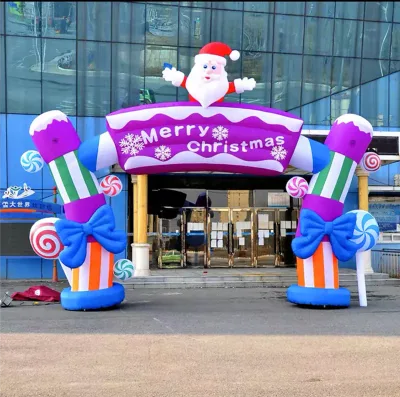
Compare 30 listings for the Outdoor Inflatable Santa Archway available from suppliers in China. Buyers can review specifications like size, material, and customization options to find the right decoration for celebrations.
Key considerations
Products List


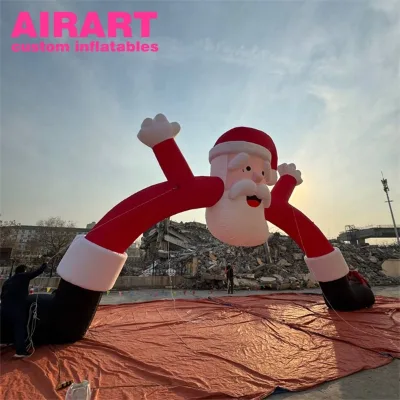
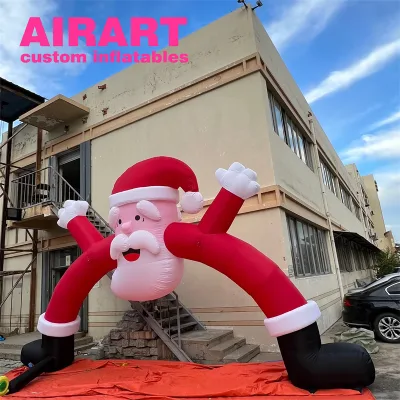

Outdoor Inflatable Santa Arch for Sale, Advertising Inflatable Santa Arch
$50.00 - $400.00
MOQ: 1 Pieces


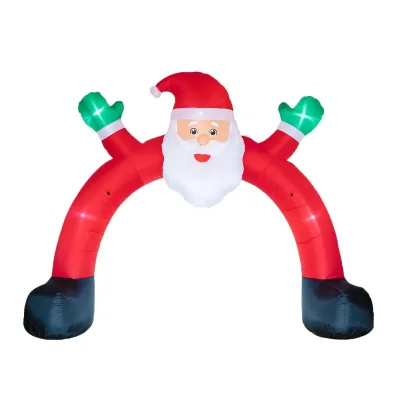
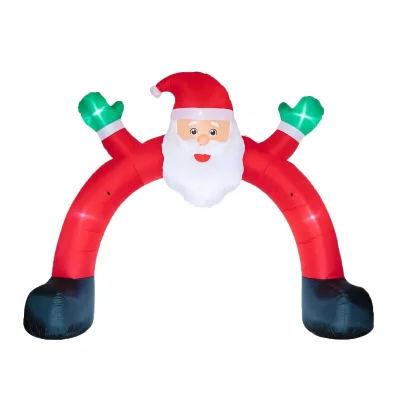
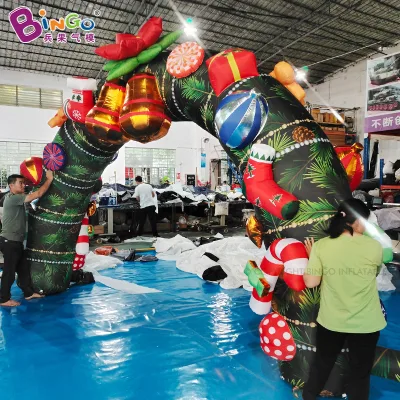
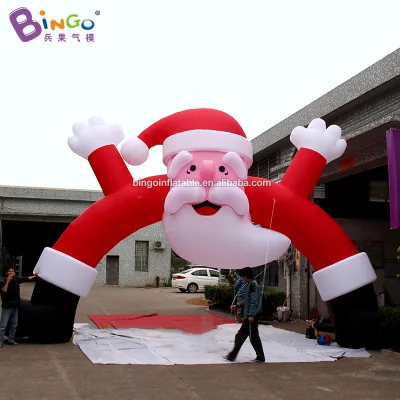

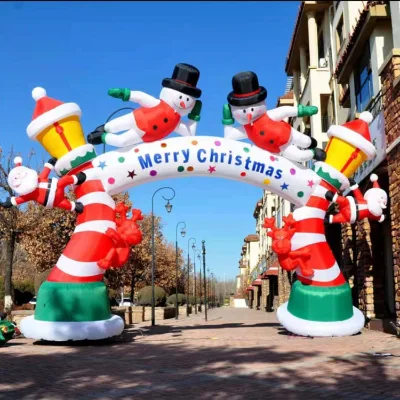
26 Feet /32 Feet Inflatable Christmas Inflatable Archway with Santa Claus and Snow Man
$407.62 - $612.46
MOQ: 1 Minimum
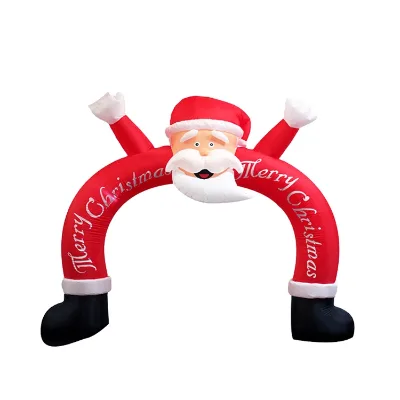


Comprehensive Sourcing Guide
Strategic Sourcing Guide for Outdoor Inflatable Santa Archways
Procuring outdoor inflatable Santa archways requires a disciplined approach that balances festive aesthetics with rigorous engineering standards. These structures serve as high-visibility anchors for holiday events, retail displays, and public celebrations. The market offers a diverse range of configurations, from standard arches to fully customized installations. Buyers must navigate a complex landscape of material specifications, power requirements, and safety certifications to ensure the selected product meets operational needs while adhering to international trade standards. This guide outlines the critical factors for evaluating suppliers and products, focusing on the specific attributes observed in the current market inventory.
Technical Specifications and Material Integrity
The foundation of a reliable inflatable archway lies in its material composition and structural dimensions. Market observations indicate that the primary fabric used for these structures is typically Oxford Cloth, selected for its durability and resistance to tearing. However, some high-performance variants utilize Strong PVC Tarpaulin, which offers enhanced weather resistance and longevity. The craftsmanship is predominantly achieved through stitching and sewing techniques, which are critical for maintaining air tightness and structural integrity under wind loads.
Dimensions vary significantly based on the intended application and model. Standard configurations often feature an inflated height ranging from 4 meters to 8 meters, with widths spanning from 6 meters to 10 feet. Specific models in the current inventory, such as those designated by model numbers like AD111 or IA-100, offer customized sizes, including a 6-meter width and 4-meter height configuration. Others are specified as 8 meters in height with a 20-foot width. Buyers must verify the exact inflated dimensions against their venue constraints, as the physical footprint is determined by the inflated length and width, which typically fall between 8 to 10 feet in standard units.
The inflation mechanism is another vital technical consideration. Most units rely on an electric air pump powered by AC220-240V, ensuring consistent pressure for large-scale displays. Some smaller or portable models may utilize battery power, though this is less common for large outdoor installations. The inflation gas is strictly air, and the system is designed to be windproof, a crucial feature for outdoor stability. The product shape is consistently a standard arch or a Santa Clause theme, with the latter requiring specific printing and assembly techniques to achieve the festive appearance.
Compliance, Certification, and Safety Standards
Safety and regulatory compliance are non-negotiable when sourcing inflatable structures for public use. The market data reveals a range of certifications that buyers should actively verify. Commonly cited standards include CE, UL, RoHS, and SGS. These certifications indicate that the electrical components, materials, and manufacturing processes meet specific safety and environmental requirements. For instance, the CE mark is frequently associated with European safety standards, while UL certification is essential for electrical safety in North American markets.
Specific product listings mention certifications such as CE and EN71, which is particularly relevant for products intended for environments where children may be present. EN71 covers safety requirements for toys, ensuring that materials are non-toxic and structures do not pose entrapment hazards. Additionally, some suppliers provide documentation for SGS testing, which validates the quality of the raw materials and the final product assembly.
Buyers must be cautious when interpreting these claims. While the data lists these standards as available, it does not guarantee that every unit from a specific supplier possesses them. It is imperative to request current, valid test reports and certificates of conformity before finalizing a purchase. The absence of these documents should be treated as a red flag, regardless of the supplier's marketing claims. Furthermore, the warranty period is a key indicator of manufacturer confidence; observed data suggests a standard warranty of 1 year, with a product lifespan estimated between 3 to 5 years under normal usage conditions.
Cost Drivers and Pricing Dynamics
The pricing of outdoor inflatable Santa archways is influenced by a complex interplay of factors, including material quality, size, customization level, and order volume. The observed price range in the market spans from 9 USD to 2000 USD, reflecting the vast difference between small, simple inflatables and large, custom-engineered installations. The lower end of the spectrum typically corresponds to basic models with standard dimensions and minimal customization, often utilizing Oxford Cloth. The higher end is reserved for large-scale arches with custom dimensions, advanced windproofing features, and premium PVC materials.
Order Volume (MOQ) is a significant driver of unit cost. The market shows an MOQ range from 1 to 1000 units. Buyers purchasing small quantities, such as single units for private events, will face higher per-unit costs. Conversely, bulk orders for corporate events or retail chains can leverage economies of scale to reduce the average cost. The production time, typically cited as 7 days, also impacts the final price; expedited production or rush orders may incur additional fees.
Other cost factors include the complexity of the design. Custom logos, specific color schemes, and unique themes like the Santa Clause require additional design and printing time. The packaging requirements, which range from export cartons to PVC bags with repair kits, also contribute to the overall cost. Buyers should request a detailed breakdown of costs, including the price of the arch, the blower, and the packaging, to understand the true value proposition.
Typical Applications and Usage Scenarios
Outdoor inflatable Santa archways are versatile assets deployed across various sectors. The primary application is for festival celebrations and holiday events, where they serve as grand entrances or photo opportunities. They are frequently used in Christmas decorations for shopping malls, retail stores, and public squares. The theme is often Santa Clause, but other options like cartoon themes are available for broader appeal.
The usage extends to exhibitions and anniversary celebrations, where the arch acts as a branding tool. The ability to customize the logo allows businesses to integrate their corporate identity directly into the festive display. These structures are suitable for both indoor and outdoor applications, provided the power supply and anchoring systems are adequate. The "windproof" feature is specifically designed to withstand outdoor conditions, making them ideal for open-air venues.
When selecting a product for a specific application, buyers must consider the environment. For high-traffic areas, a larger arch with a higher inflation height (e.g., 8 meters) provides better visibility. For indoor use, a smaller footprint may be sufficient. The power supply requirements must match the venue's electrical infrastructure; AC220-240V units require access to standard mains power, while battery-powered options offer flexibility for locations without immediate access to electricity.
Supplier Evaluation and Origin Verification
Evaluating suppliers requires a focus on transparency and geographic origin. The market data indicates that these products originate primarily from Guangdong and Guangzhou, China, which are major manufacturing hubs for inflatable structures. Buyers should verify the specific factory location to ensure it aligns with their logistics and quality expectations.
Key criteria for supplier evaluation include the clarity of product specifications and the availability of documentation. A reputable supplier will provide detailed model numbers, such as CM-006, IC-017, or IA-100, along with precise dimensions and material descriptions. The presence of a warranty and a defined lifespan (3-5 years) is a strong indicator of a supplier's commitment to quality. Additionally, the packaging method, whether it is a strong PVC bag, export carton, or a combination with repair kits, reflects the supplier's attention to detail during shipping.
Buyers should avoid suppliers who cannot provide clear information about their production time or who are vague about their certifications. The standard production time of 7 days suggests a well-organized manufacturing process, but deviations from this norm should be investigated. It is also crucial to verify that the supplier does not make unverifiable claims about performance or safety. The focus should remain on tangible evidence, such as test reports and material samples, rather than marketing rhetoric.
Quality Control and Long-Term Procurement Considerations
Ensuring long-term value requires a robust quality control (QC) strategy. The primary QC checkpoints should focus on the stitching quality, the integrity of the seams, and the functionality of the inflation system. Buyers should request pre-shipment inspections to verify that the product matches the agreed-upon specifications, including the inflated height, width, and color. The "windproof" attribute must be validated through testing or detailed technical descriptions of the anchoring system.
For long-term procurement, the lifespan of the product is a critical factor. With an expected lifespan of 3 to 5 years, the initial investment must be weighed against the durability of the materials. Oxford Cloth and PVC Tarpaulin offer different levels of resistance to UV radiation and weathering. Buyers should inquire about the specific grade of material used and its resistance to tearing and fading. The inclusion of repair kits in the packaging is a positive sign, indicating that the supplier anticipates the need for maintenance and supports the product's longevity.
Procurement strategies should also account for the storage and transportation requirements. The product packing, which includes export cartons or PVC bags, must be suitable for the intended shipping method. Buyers should ensure that the packaging protects the inflatable from damage during transit. Finally, establishing a clear communication channel with the supplier for after-sales support is essential. This includes access to technical support for troubleshooting inflation issues and the availability of replacement parts if needed. By adhering to these rigorous standards, buyers can secure reliable outdoor inflatable Santa archways that enhance their events and withstand the demands of the holiday season.
FAQs
What materials are used for outdoor inflatable santa archways?
Primary materials include Oxford Cloth and Strong PVC Tarpaulin. These fabrics are selected for durability and weather resistance, with stitching or sewing techniques ensuring structural integrity and air tightness for long-term outdoor use.
Which certifications should I verify for safety compliance?
Common certifications include CE, UL, RoHS, SGS, and EN71. These indicate compliance with electrical safety, environmental standards, and toy safety requirements, ensuring the product meets international trade regulations for public events.
How long is the production time for custom orders?
The standard production time is typically 7 days. This duration applies to customized units, though expedited options may vary, and buyers should confirm specific timelines based on order volume and design complexity before purchasing.
Can I customize the logo and dimensions of the arch?
Yes, customization is available for logos and specific dimensions. Buyers can request unique sizes such as 6 meters wide by 4 meters high or 8 meters in height, ensuring the arch fits specific venue constraints and branding needs.
What is the expected lifespan and warranty period?
The product lifespan is estimated between 3 to 5 years under normal usage. A standard warranty of 1 year is typically provided, offering protection against manufacturing defects and ensuring manufacturer confidence in material quality.
How are these archways powered and inflated?
Most units use an electric air pump powered by AC220-240V for consistent inflation. Some portable models may utilize battery power, but the system relies on air and is designed to be windproof for outdoor stability.
Where are these products typically manufactured?
Products originate primarily from Guangdong and Guangzhou, China. These regions are major manufacturing hubs for inflatable structures, and buyers should verify specific factory locations to align with logistics and quality expectations.